Good to Have You Back

The right bridal earrings depend on four things: how you're wearing your hair, your dress neckline, your face shape, and how long you'll be wearing them. Start with hair and neckline together, since they determine how visible your earrings actually are, then fine-tune with face shape from there.
Earrings are one of the few pieces of bridal jewelry that stay visible in nearly every photo of the day, from getting-ready shots to the first look to the dance floor. Getting them right is less about finding "the prettiest pair" and more about finding the pair that works with everything else you've already decided.
The earring styles most brides choose
Technically, any earring can be worn to a wedding. What actually makes a style feel bridal isn't its shape, it's a combination of factors: classic materials like diamonds, pearls, and precious metals that photograph well and won't look dated in twenty years of anniversary photos, a secure backing that holds up through hours of hugging and dancing, and a level of formality that fits the rest of the day. The six styles below are the ones brides return to most often, each for a slightly different reason.
| Earring type | Popularity | Hairdo it pairs with | Neckline it pairs with | Face shape it suits |
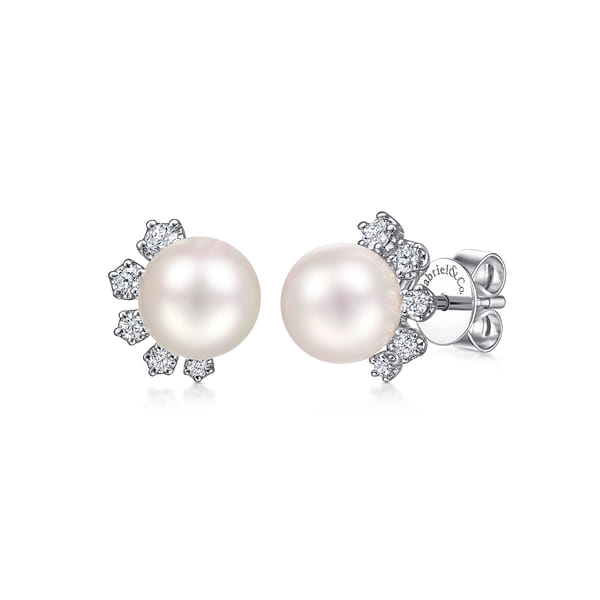
| Studs and huggies | Most commonly chosen style | Hair down, loose waves | Off-the-shoulder; works well with or without a necklace | Long or oblong faces |
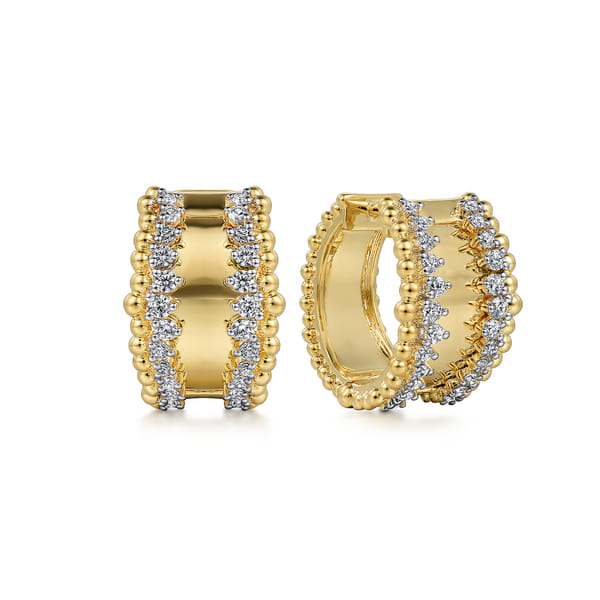
| Drop earrings | Widely considered the most versatile bridal choice | Half-up hairstyle | V-neck; works well with or without a necklace | Round faces |
| Chandelier earrings | Chosen less often, favored for one clear jewelry moment | Updo | Strapless or sweetheart; worn without a necklace | Heart-shaped faces |
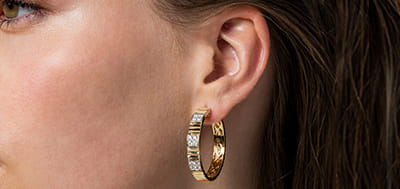
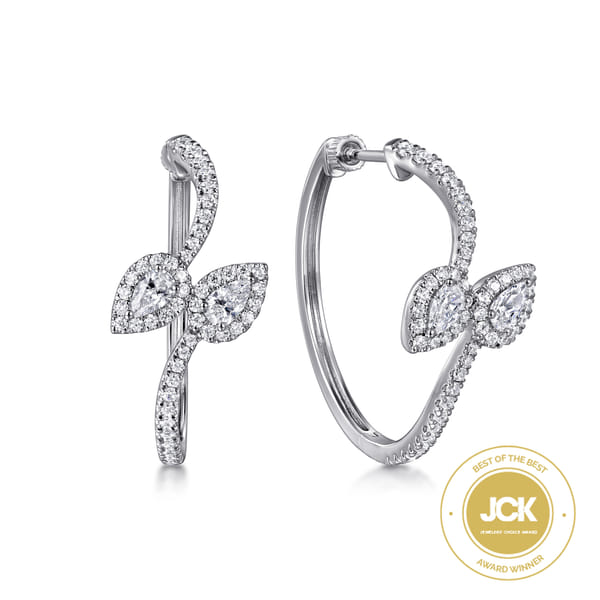
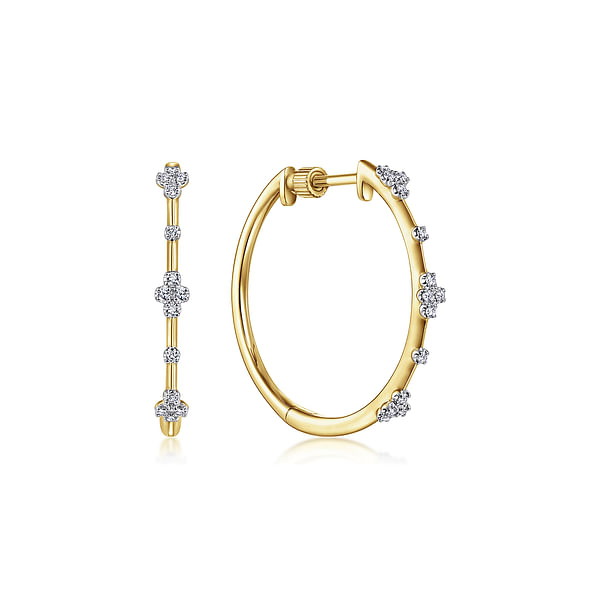
| Hoops | Growing in popularity as bridal style trends more modern and minimal | Sleek low bun | V-neck; works alone or with a delicate necklace | Square faces |
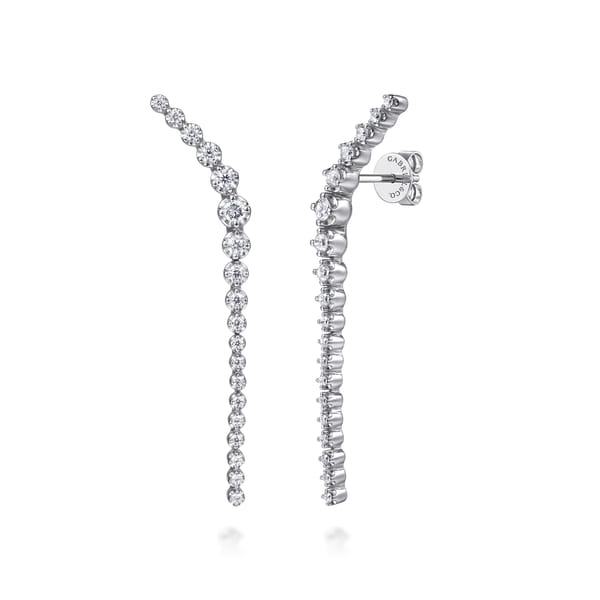
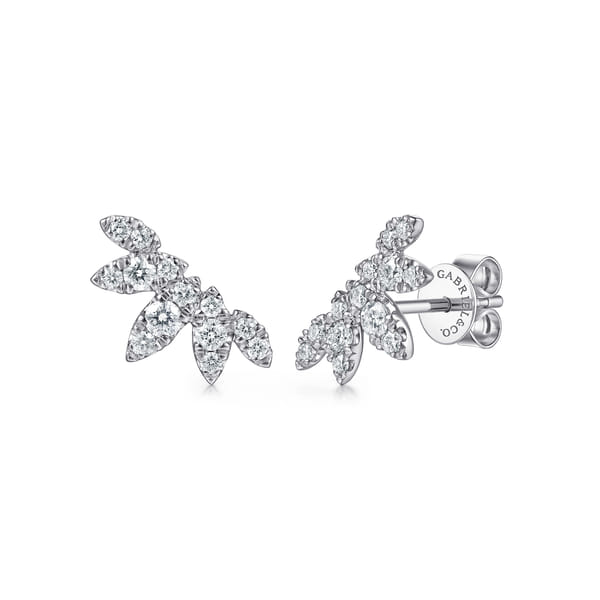
| Ear climbers (crawlers) | A less traditional pick | Updo, or side-swept | High neckline or halter; typically worn without a necklace | No specific face shape called out; suits most shapes |
Five bridal earring looks to try
Hairstyle and neckline work together, not separately, to determine how an earring actually reads on the day. Rather than choosing each on its own, here are six complete looks that pair an earring style with a hairstyle and neckline that work well together. Use these as a starting point, then adjust for your own dress and hair.
Studs or huggies, hair down, off-the-shoulder neckline
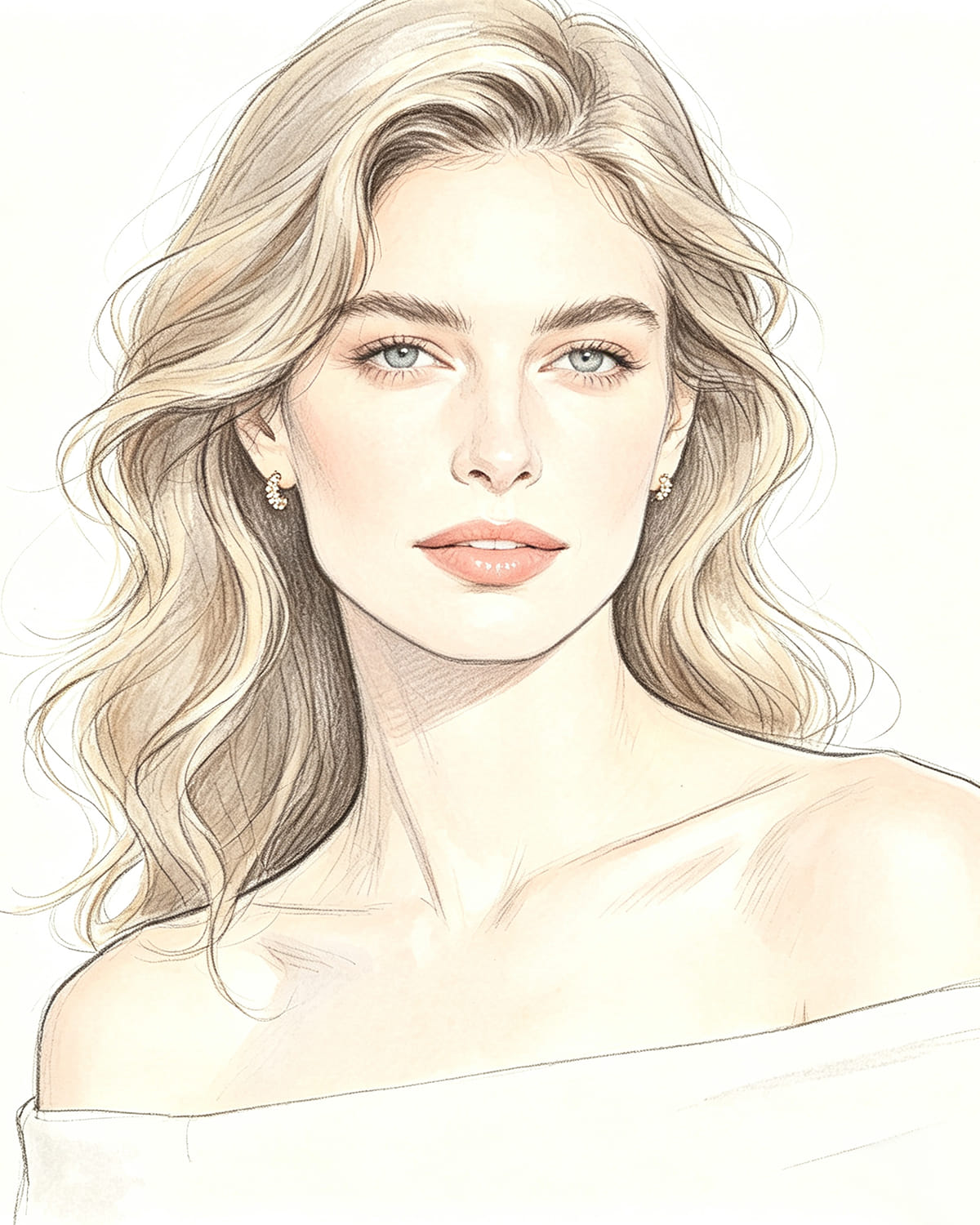
With hair worn down in loose waves, a small earring stays visible without disappearing every time you turn your head, and its understated size keeps the focus on the shoulder line an off-the-shoulder neckline is designed to show off.
Drop earrings, half-up hairstyle, V-neck dress
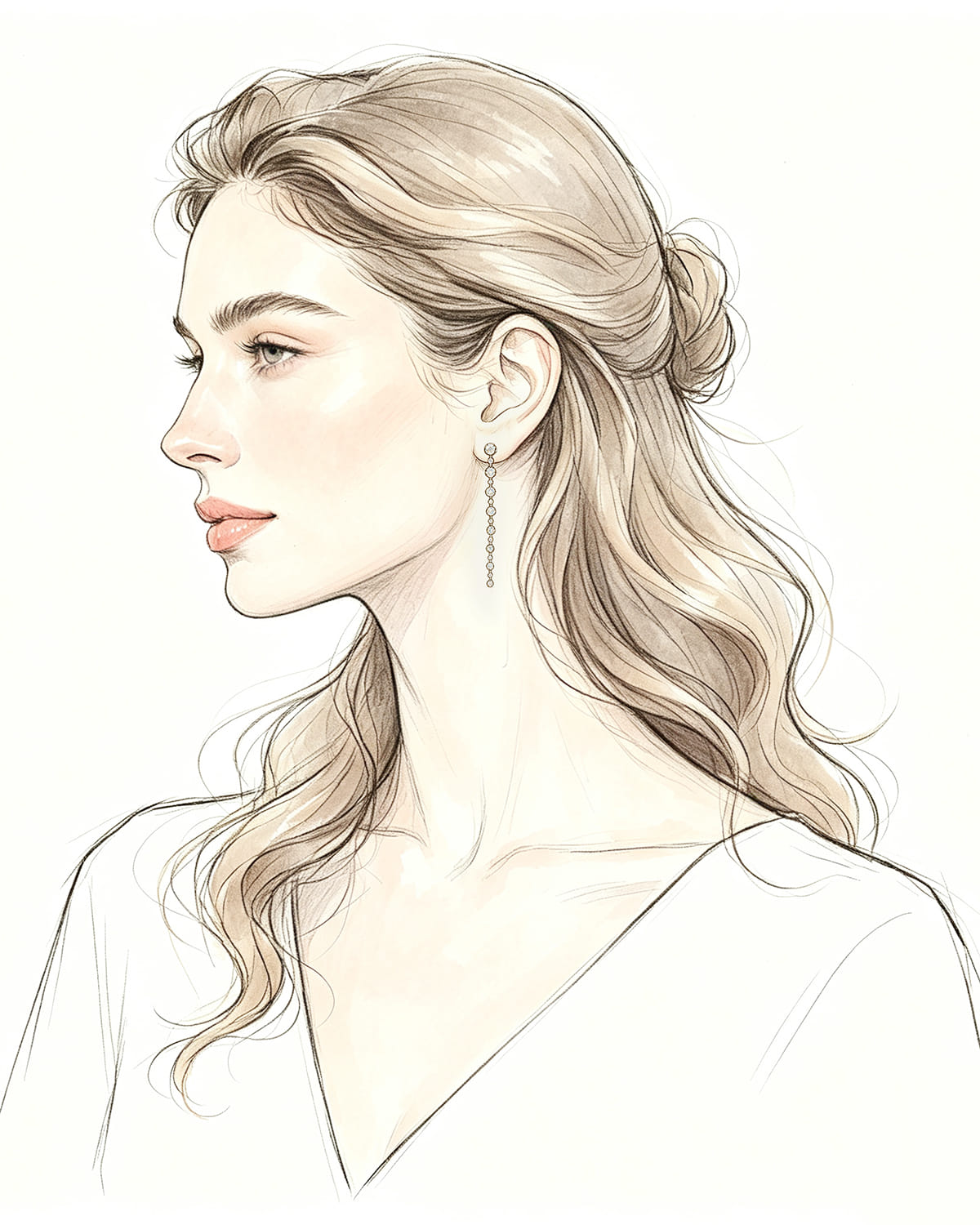
A half-up style is the most flexible hairstyle for earrings, and a medium-length drop adds just enough movement to read as elegant without overpowering a V-neck's clean line.
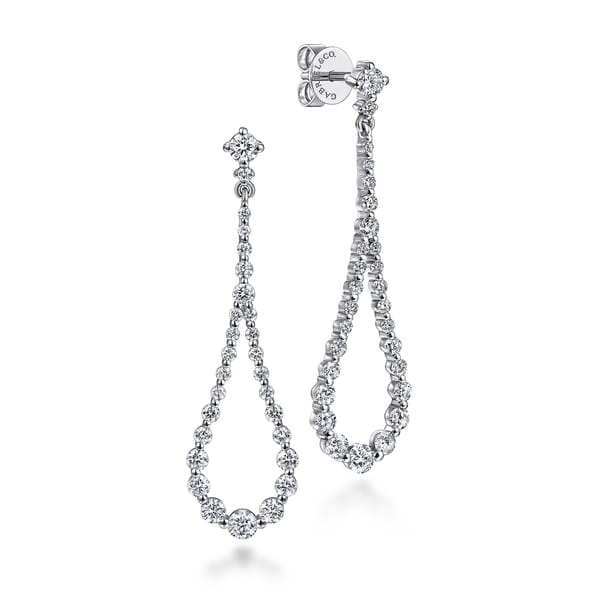
Chandelier earrings, updo, strapless or sweetheart neckline
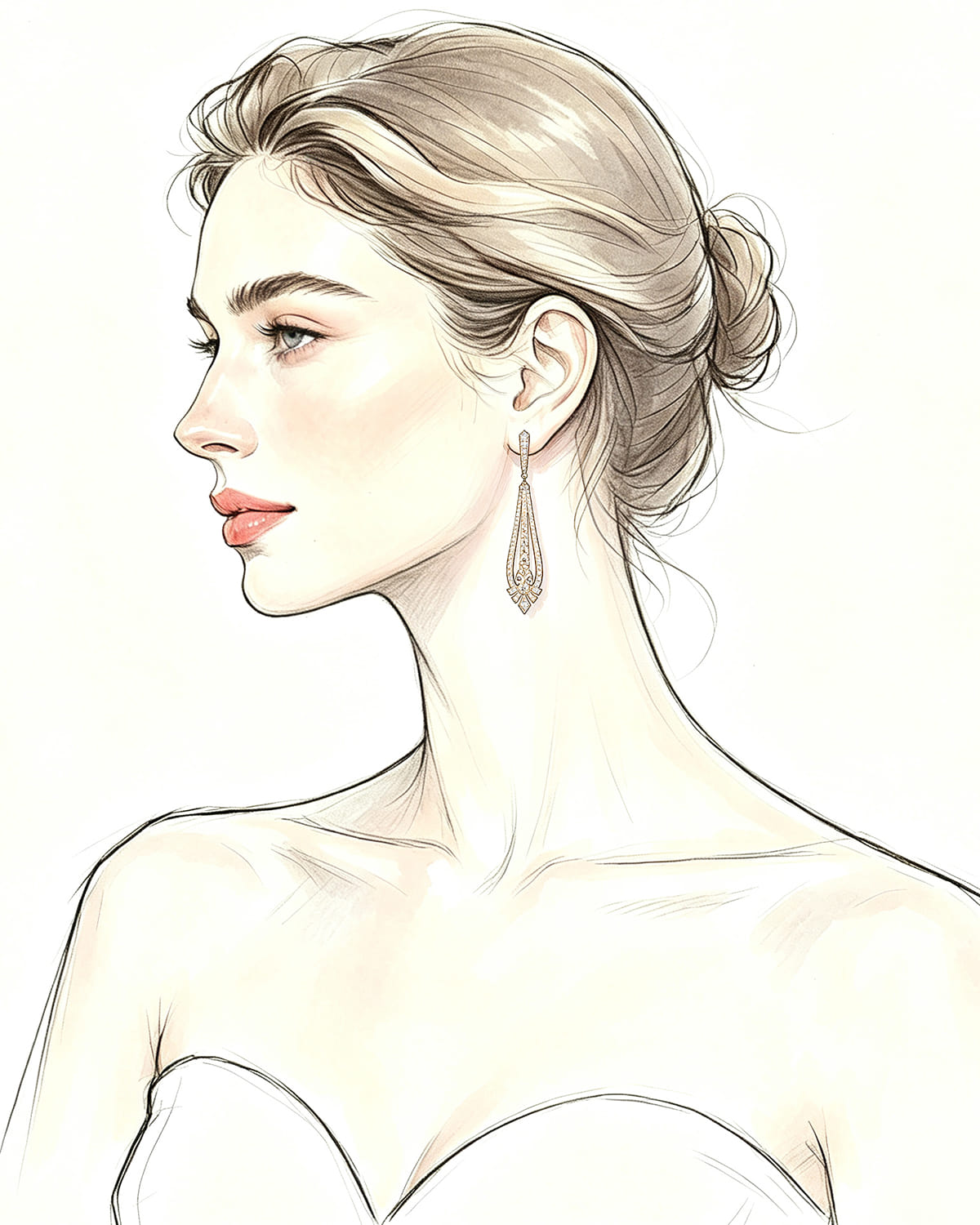
An updo clears the neck and ears completely, and with no strap or collar competing for attention, a strapless or sweetheart neckline lets a full chandelier earring be the one statement piece, worn without a necklace.
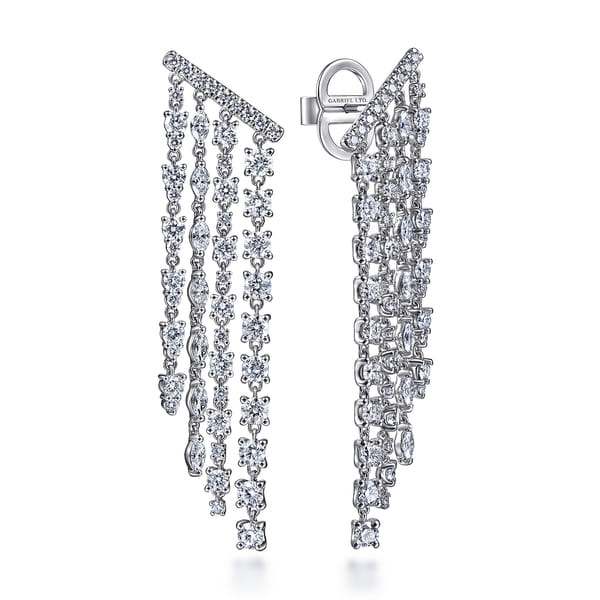
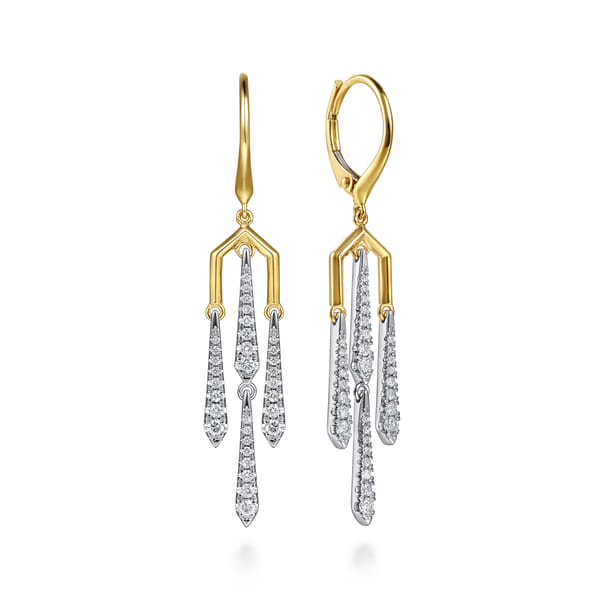
Hoops, sleek low bun, V-neck dress
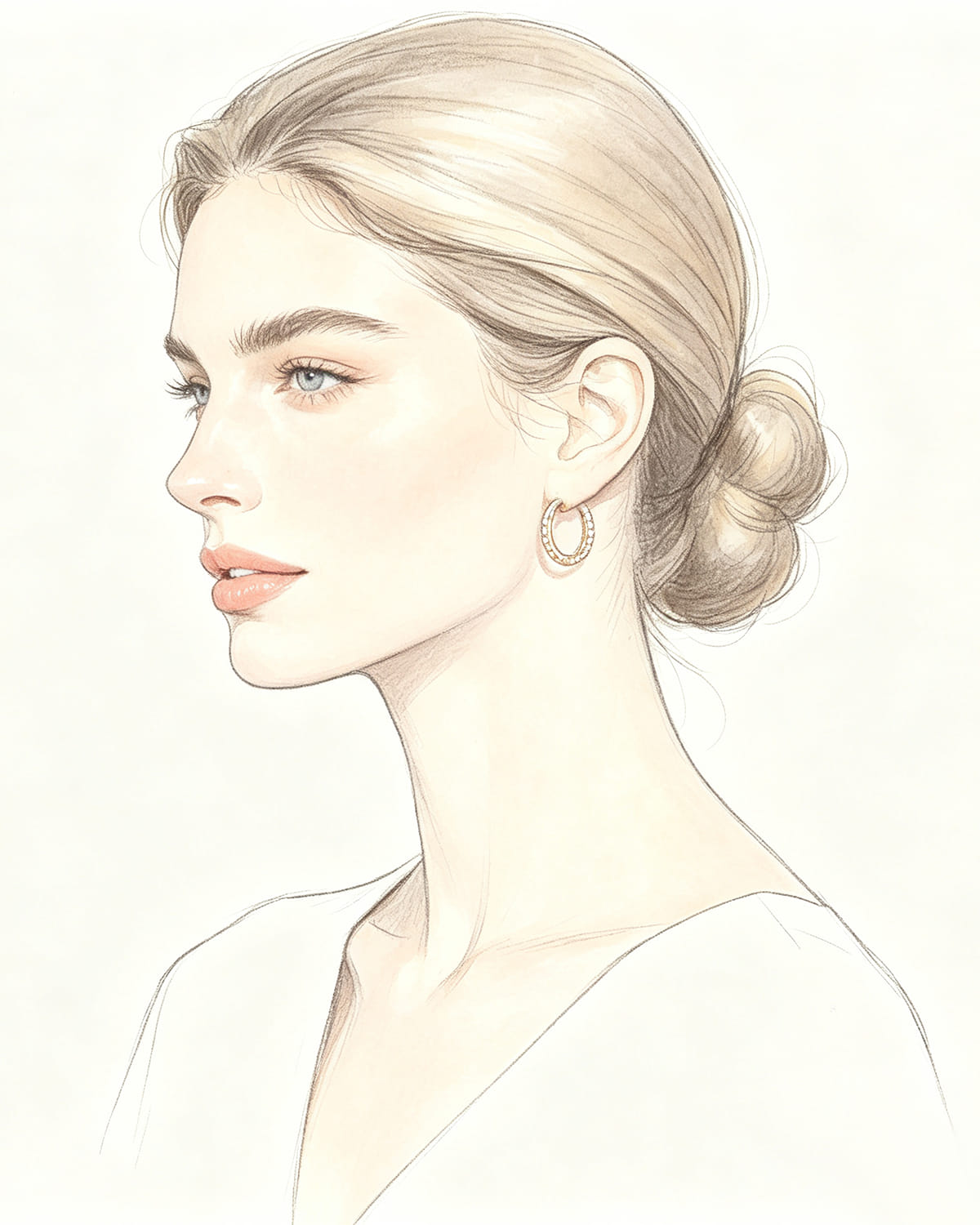
A sleek, close-to-the-head style like a low bun leaves the ear fully exposed, letting a hoop's clean shape stand on its own against a simple V-neck.
Ear climbers, side-swept waves, high neckline or halter
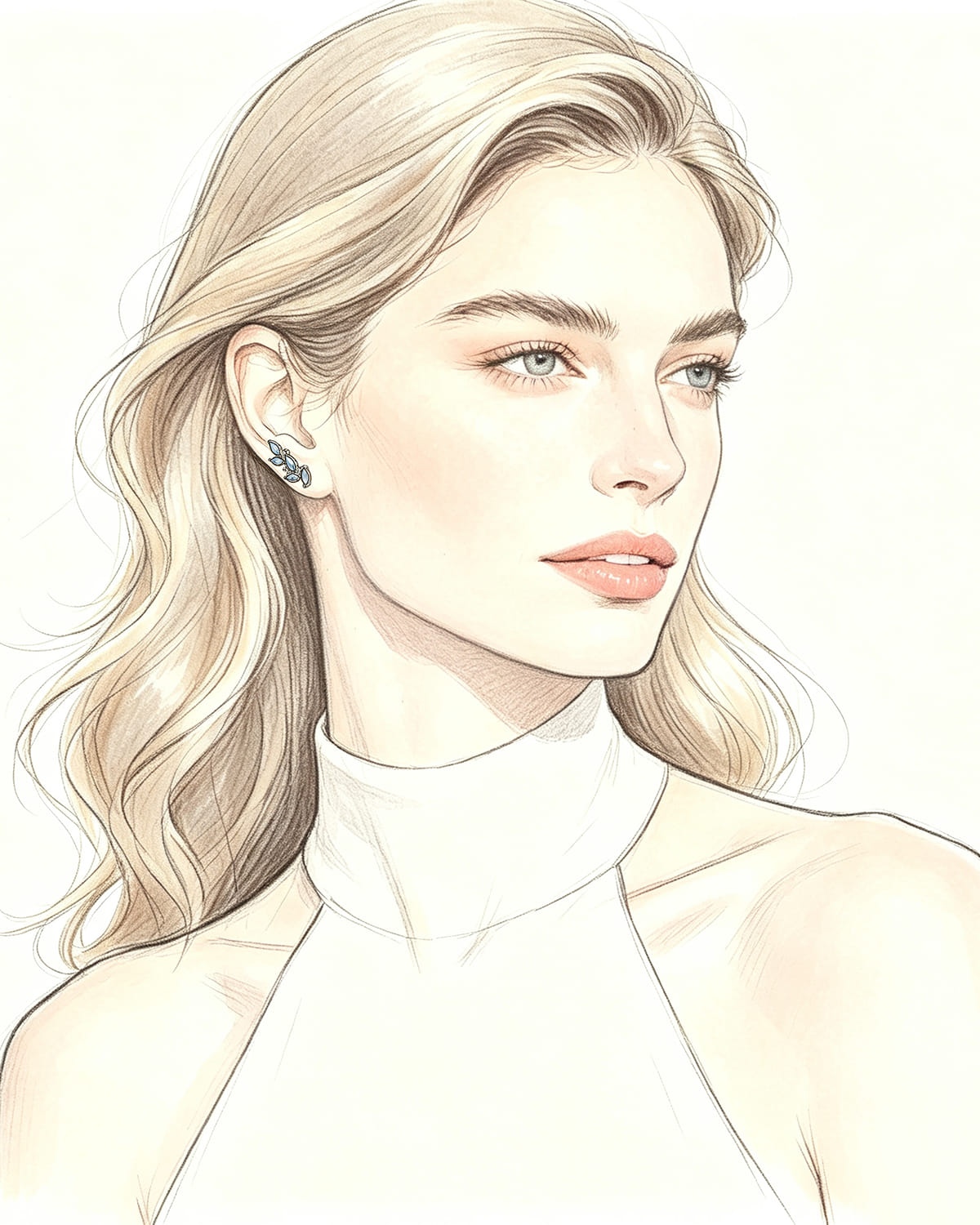
Hair swept to one side keeps the ear visible on at least one side, showing off the line of stones tracing the ear's curve, while the high neckline or halter gives the climbers room to be the focal point near the face.
Which earrings suit your face shape
This is the one factor most brides don't think about until they're trying on earrings in the mirror and can't figure out why a pair everyone loved on Pinterest doesn't look right on them.
Round faces. Elongating shapes, such as drops, dangles, or anything with vertical length, help create the appearance of length. Rounded studs or hoops that mirror the face's curve tend to emphasize width instead.
Oval faces. The most flexible face shape for earrings; nearly every style works, from studs to chandeliers. Use this as permission to choose based on hairstyle and neckline rather than face shape.
Square faces. Soft, rounded shapes, such as hoops, curved drops, or teardrop styles, balance strong jawlines. Sharp geometric studs can emphasize angles that a bride may want to soften on her wedding day.
Heart-shaped faces. Earrings that are wider at the bottom than the top (chandeliers, teardrops, and dusters) balance a narrower chin against a wider forehead.
Long or oblong faces. Studs, huggies, or earrings with more width than length add balance rather than reinforcing length the way a long, narrow drop would.
For a full breakdown of earring shapes by face shape, see our dedicated guide.
Coordinate with your engagement ring and other jewelry
Your earrings don't need to match your engagement ring exactly, but they should feel like they belong to the same jewelry family. If your ring is a diamond solitaire, diamond studs or drops keep things cohesive. If your ring features a colored stone or a vintage-inspired setting, repeating that detail subtly in your earrings, rather than introducing a completely different design language, keeps the whole look intentional rather than assembled piece by piece.
Consider your veil or headpiece
A veil, comb, or tiara introduces its own sparkle near your face and head, and it changes how much visual room your earrings actually have. A heavily embellished veil or a jeweled comb calls for simpler earrings, such as studs or small drops, so the two don't compete. A plain tulle veil or a bare updo, on the other hand, leaves plenty of room for a more dramatic earring to be the statement piece.
Comfort for a full day of wearing them
Wedding days run long, with ceremony, photos, dinner, and dancing, and heavy earrings that felt fine for twenty minutes in a store can become genuinely uncomfortable by hour six. Lever backs and screw backs tend to hold heavier styles more securely than standard posts, which matter more as earring weight increases. Try your earrings on for a few hours before the wedding, not just a few minutes, so you know how they'll actually feel by the end of the night.
Bridal earring mistakes to avoid
Choosing the earrings before trying them with the dress and hair. An earring that looks perfect on its own can disappear or clash once it's actually next to your dress neckline and hairstyle.
Mixing metal tones unintentionally. A little metal mixing is fine when it's a deliberate choice; it reads as a mistake when it happens by accident because the earrings were chosen separately from the rest of the jewelry.
Prioritizing trend over comfort. A dramatic earring you saw on Pinterest isn't worth it if it pulls at your ear or won't stay secure through a full reception.
Skipping the hairstyle test. Since hairstyle is the single biggest factor in how visible your earrings are, choosing earrings before your hair trial is one of the easiest ways to end up with a pair that doesn't actually show up in photos.
Final thoughts
Bridal earrings get chosen last far too often, when they should be chosen alongside your hairstyle and dress neckline, not after. Once you know how you're wearing your hair and what your neckline is doing, the right earring style narrows quickly. If you haven't settled on the rest of your bridal jewelry yet, our guide “How to Choose Your Wedding Jewelry” walks through the dress, ring stack, and veil decisions that pair with everything above.
FAQs
FAQs
What is the most popular type of bridal earring? ⌄
Can I wear hoop earrings with a wedding dress? ⌄
Should bridal earrings match the engagement ring's metal? ⌄
What earrings work best for an updo? ⌄
How do I choose earrings for my face shape? ⌄
Do bridal earrings need to match the necklace? ⌄
What's the most comfortable earring backing for a full wedding day? ⌄