Good to Have You Back

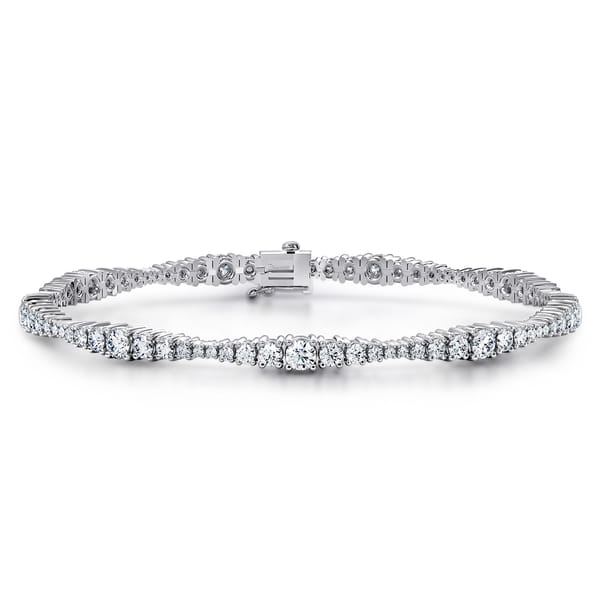
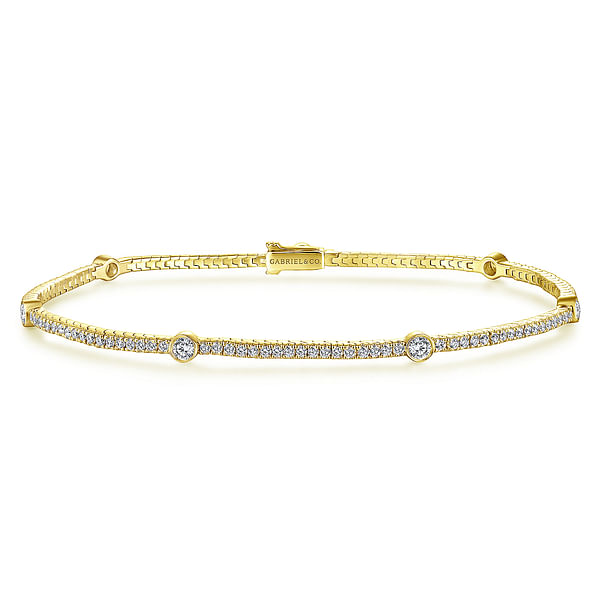
A tennis bracelet is a slim, flexible line bracelet made with a continuous row of matched gemstones, traditionally diamonds, set closely together to create a fluid, light-catching strand. Today it’s considered a jewelry essential, but its story goes deeper than courtside glamour. Over time, the tennis bracelet has evolved to include more styles, with unmatched or asymmetrically sized stones, playful proportions, and creative gemstone choices that give the classic design a modern twist.
Tennis Bracelet Meaning and History
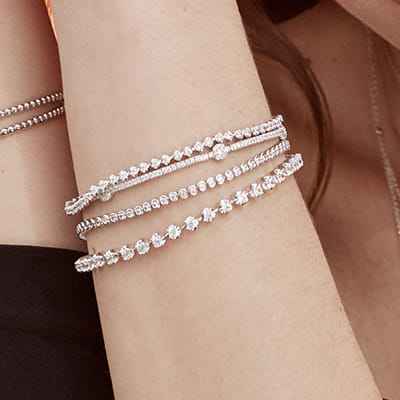
The earliest versions of tennis bracelets appeared long before the name existed. In the mid-20th century, jewelers crafted “line bracelets” or “eternity bracelets,” featuring evenly matched stones arranged in a single row. These pieces were admired for their clean silhouette and the way they moved naturally with the wrist, making them easier to wear than rigid bangles.
In the 1960s and 70s, the style evolved into a more refined form: slimmer links, stronger clasps, and better-matched stones. The bracelet became a symbol of modern fine jewelry, invested in quality, but still practical enough for daily wear.
As fashion shifted toward minimalist jewelry in the 80s and 90s, the bracelet’s popularity surged again. It remained recognizable for its uninterrupted line of stones and the graceful confidence it carried. Even as designers experimented with colored gems, mixed metals, and geometric links, the bracelet kept its essential identity: a flexible, seamless row of gems that feels effortless on the wrist.
Why Is It Called a Tennis Bracelet?
The name came from one unforgettable moment. During a high-profile tennis match in the late 1970s, champion Chris Evert was wearing her diamond line bracelet when it slipped off mid-game. She stopped the match until it was found, telling the umpire she had lost her “tennis bracelet.”
That televised moment stuck. Jewelers, editors, and shoppers adopted the phrase, and the classic line bracelet became forever linked with the sport, representing movement, energy, and a piece you don’t need to take off to live your life.
What to Consider Before Buying a Tennis Bracelet
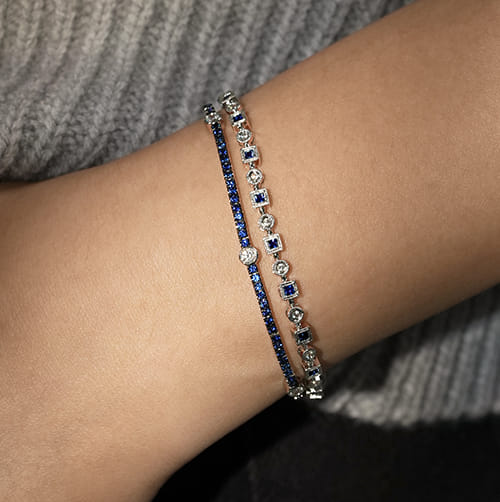
A tennis bracelet looks simple, but choosing the right one means paying attention to the details that affect durability, comfort, and long-term value.
Metal
Your metal impacts the bracelet’s strength, color, and maintenance.
- White gold: Bright, sleek, and popular for matched diamonds.
- Yellow gold: Warm tone that gives the bracelet a vintage-leaning character.
- Rose gold: Subtle blush color that pairs well with both diamonds and colored stones.
- Platinum: Strong and naturally white, ideal for wearers who prioritize durability.
Gemstone Choice
While diamonds remain the classic option, many modern designs feature gemstones such as sapphire, ruby, emerald, and black diamonds. Choosing gemstones affects the bracelet’s personality and price.
Carat Weight
Carat weight in tennis bracelets refers to total carat weight, not individual stones.
Higher carat weights give a more noticeable presence, while lower totals create a subtle, everyday-friendly line.
Stone Cut (Gemstone Shape)
Tennis bracelets can feature all gemstone shapes, and each one affects how the bracelet reflects light and flows along the wrist. Here are some of the most popular:
Round Shaped:
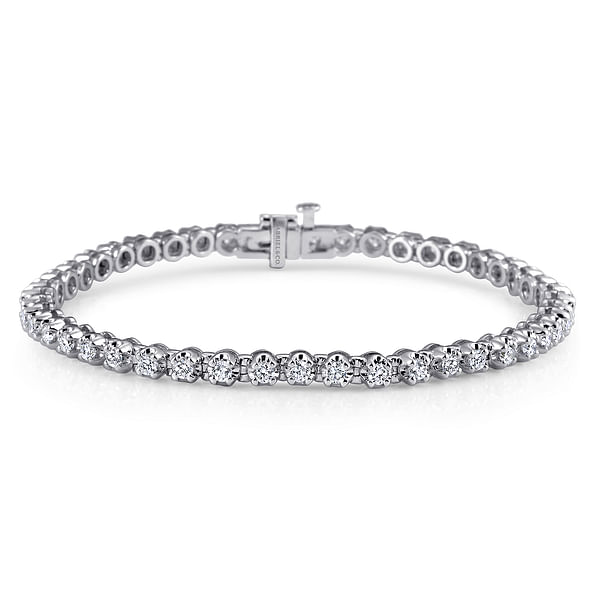
The classic choice for tennis bracelets. Its symmetrical, circular design maximizes light return, creating bright flashes with every wrist movement.
Princess Shaped:
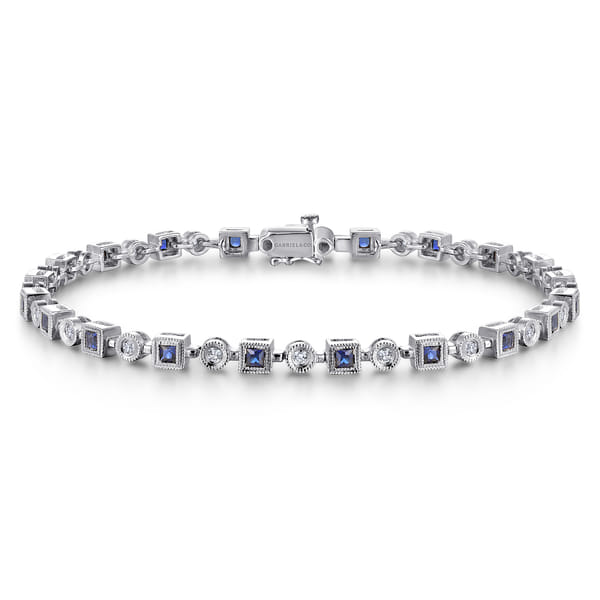
A square or rectangular shape with crisp, geometric angles. It offers a modern alternative to the round cut while still delivering strong brilliance.
Emerald Shaped:
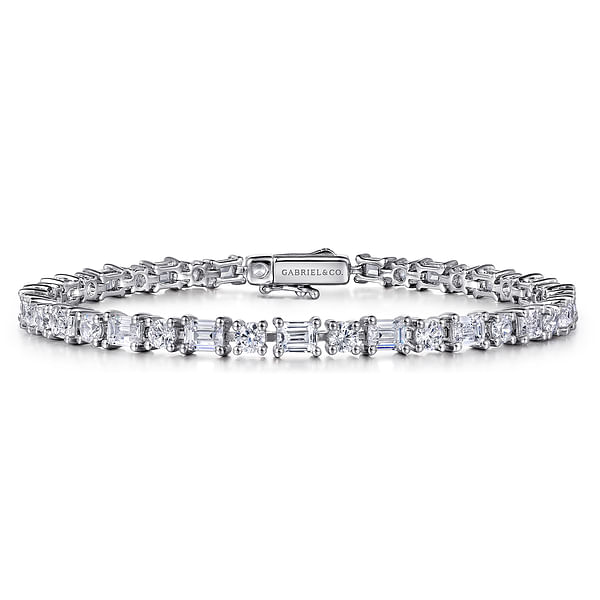
Recognized by its elongated, rectangular silhouette and step-cut facets. Instead of high-intensity sparkle, it emphasizes clarity and produces elegant, mirror-like flashes of light.
Oval Shaped:
An elongated variation that maintains strong brilliance. Its stretched shape can make each stone appear slightly larger, giving the bracelet a more fluid, graceful line.
Clasp & Flexibility
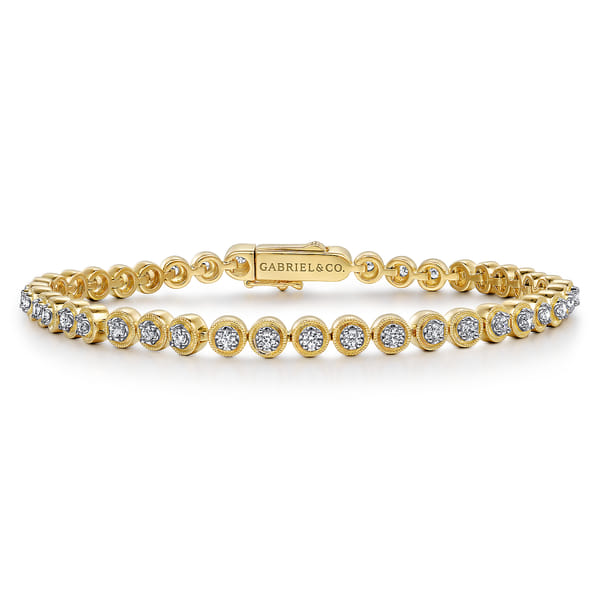
A secure clasp (often double-locking) and smooth, articulated links matter as much as the stones. These elements ensure the bracelet moves comfortably while staying secure, something the origin story makes impossible to ignore.
Setting Style
The setting affects both the look of the bracelet and how securely each stone sits.
Prong Setting:
The most common choice. Small prongs hold each stone in place and allow plenty of light to enter, creating strong brilliance. They offer an open, airy look but may occasionally catch on clothing.
Bezel Setting:
A thin rim of metal surrounds each stone for added protection. This style reduces snagging and increases security while showing slightly less of the gemstone.
Channel Setting:
Stones are set between two smooth strips of metal. This creates a clean, structured line and offers excellent stability for everyday wear.
How to Style a Tennis Bracelet
Styling a tennis bracelet is about exploring contrast, personal rhythm, and the mood you want your wrist to set for the day. Because the design is so clean, it blends into almost any look. You simply decide how visible you want it to be.
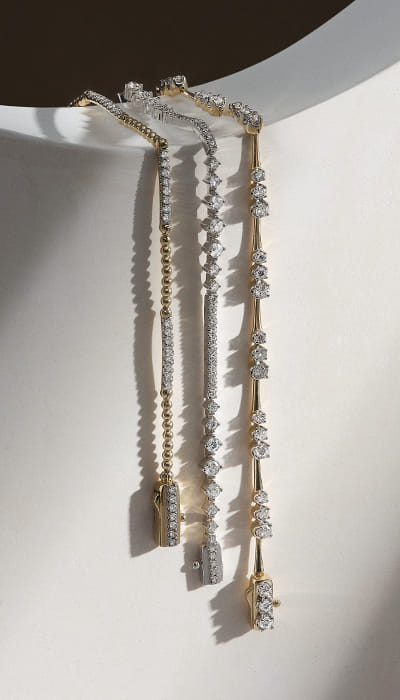
Wear it solo when you want something quiet but confident.
A single tennis bracelet on a bare wrist creates a calm, effortless presence. It does not overpower anything. It just moves with you. Think everyday outfits, work days, coffee runs, errands. Simple moments where a little shimmer feels right without needing extra styling.
Stack it with pieces you already love.
Layering brings out a new character in your bracelet. Pair it with other designer bracelets or accessories, such as:
- A slim gold bangle bracelet for contrast.
- Your everyday watch for a structured, balanced look.
- A few thin chain bracelets for soft texture.
- A cuff for a sculptural, modern feel.
Experiment with metals.
Your metals do not need to match. White gold next to yellow gold is beautiful. Rose gold tucked between them works too. A tennis bracelet acts like a connector between colors, which helps mixed metals look intentional and relaxed.
Double up for the evening.
If you are getting ready for a dinner or an event, try stacking two tennis bracelets together. The movement becomes more fluid and the wrist gains a touch of extra drama. It’s still tasteful but has more presence.
Coordinate with your rings or create a contrast.
Some prefer everything to align, such as round diamonds on the wrist and round diamonds on the hand. Others like a mix. For example, an emerald-cut engagement ring paired with an oval-cut tennis bracelet, or a diamond ring paired with a gemstone bracelet. Both approaches work, and each creates its own rhythm.
Lean into color for personality.
If you have gemstone tennis bracelets such as sapphire, emerald, ruby, or black diamonds, treat them like mood pieces. A ribbon of color on the wrist can shift an entire outfit.
Wear it daily if you want it to become part of your signature style.
One of the most effective styling choices is consistency. Wearing your tennis bracelet regularly helps it blend into your look in a very natural way.
Wrapping things up
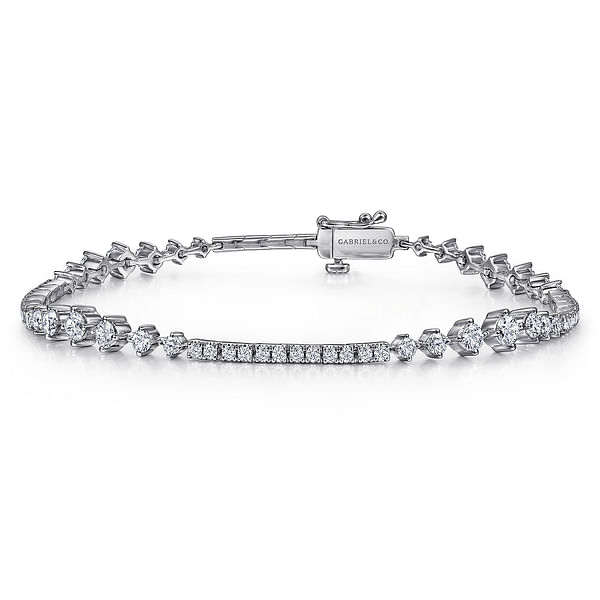
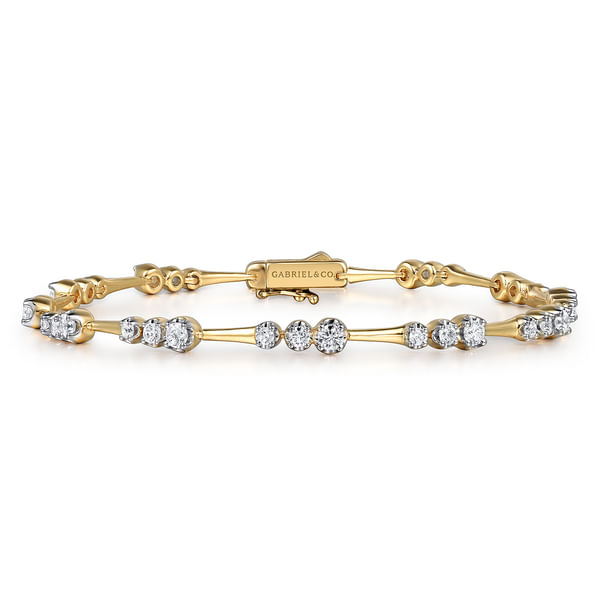
From its courtside origins to its modern reinventions, the tennis bracelet has earned its place as a versatile and cherished piece of jewelry. From a classic line of matched diamonds to contemporary designs with playful stones, there is a tennis bracelet to suit every style. Explore our fine jewelry collection today and discover the bracelets, rings, and gemstones that can add your own touch of sparkle to any moment.