Good to Have You Back

Choosing a diamond shape is one of the most defining decisions when selecting an engagement ring. Among the many shapes available today, cushion cut and princess cut diamonds remain two of the most popular choices. Both feature a square-based outline and are known for their brilliance, yet they create very different visual impressions once set into a ring.
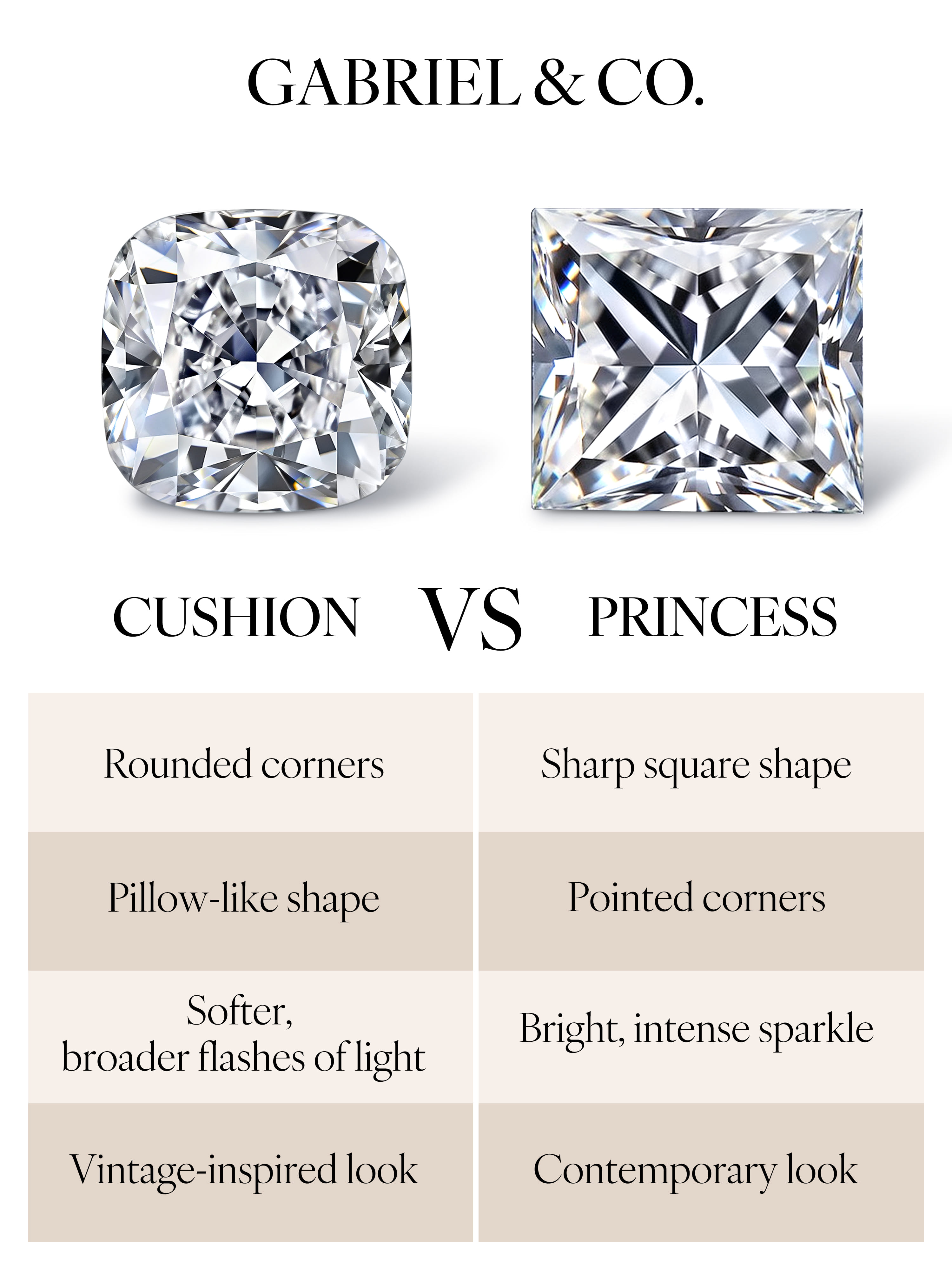
The cushion cut carries a soft, romantic look rooted in historic diamond cutting styles, while the princess cut delivers crisp lines and bright, contemporary sparkle. Understanding how these two shapes differ in appearance, brilliance, durability, and price can make the decision much easier when selecting the diamond that feels right for you.
Let’s take a closer look at how cushion cut and princess cut diamonds compare.
What is a cushion cut diamond?
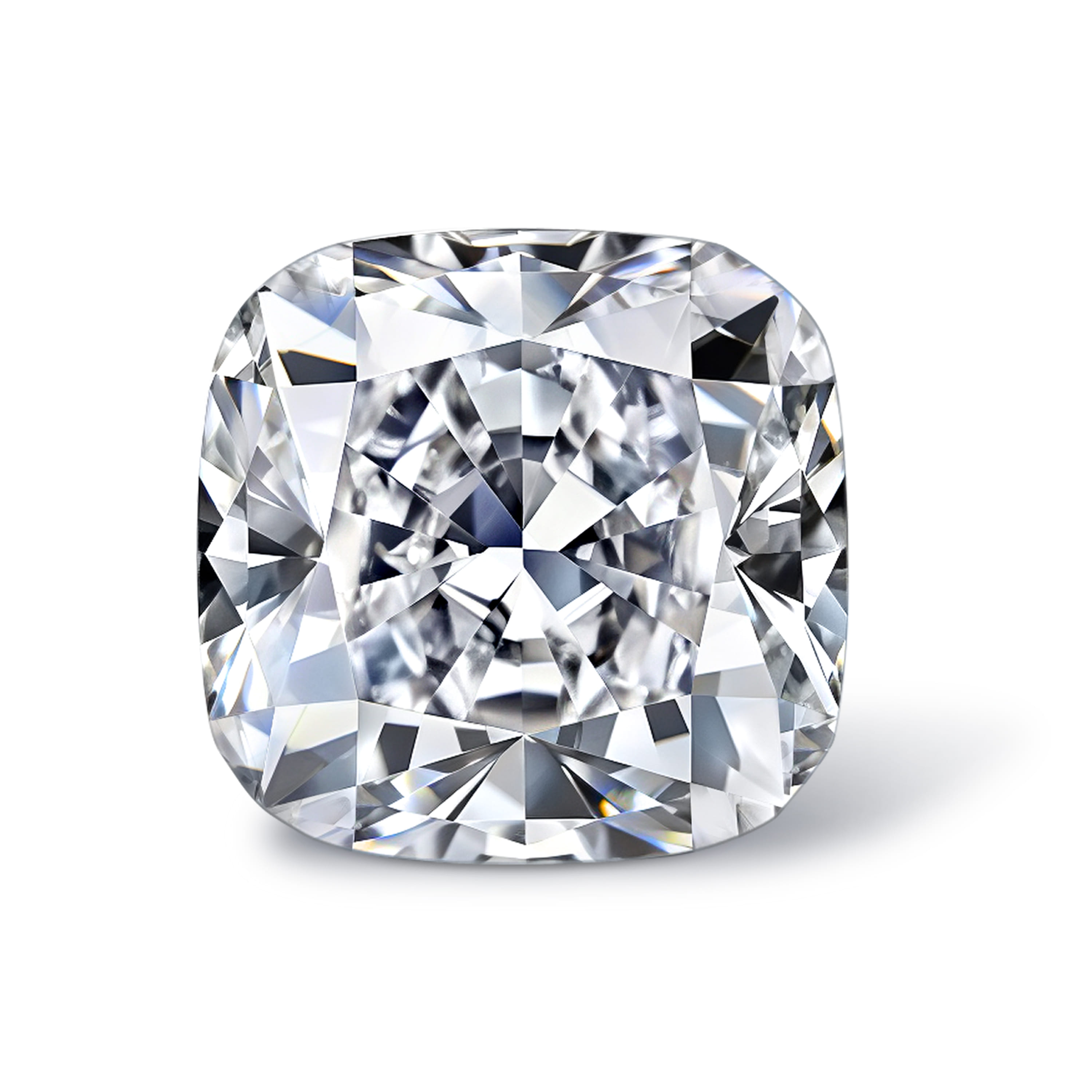
A cushion cut diamond is a square or slightly rectangular diamond with softly rounded corners, creating a pillow-like shape. The cut evolved from the historic old mine cut, which was widely used in the 18th and 19th centuries. Today’s cushion cut diamonds preserve that soft outline while incorporating modern faceting techniques that improve light performance. In recent years, elongated cushion diamond cuts have become especially popular, offering a slightly rectangular silhouette that can create a more lengthening effect on the finger.
Key characteristics of cushion cut diamonds
- Shape: square or slightly rectangular with rounded corners
- Facet count: typically 58 facets (varies depending on style)
- Sparkle style: broader flashes of light, sometimes called chunky brilliance
- Facet variations: standard cushion, modified cushion, and elongated cushion
- Visual style: often associated with vintage-inspired engagement rings
- Corner durability: rounded corners help reduce chipping risk
What is a princess cut diamond?
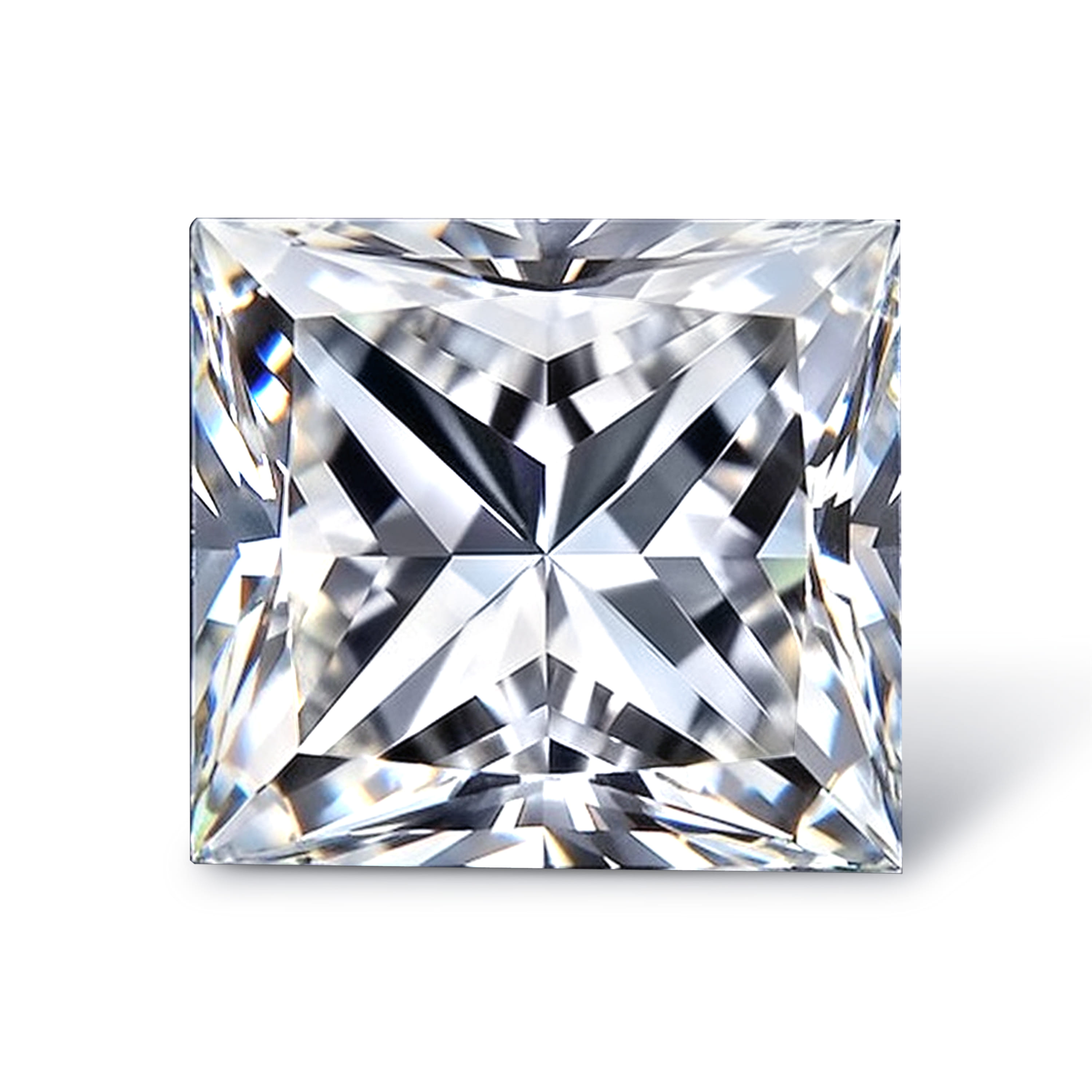
A princess cut diamond is a square diamond known for its sharp corners and bright sparkle. Introduced in the 1970s, it became popular for engagement rings because it combines a modern geometric shape with strong brilliance.
Key characteristics of princess cut diamonds
- Shape: square with sharp, pointed corners
- Facet count: typically 57 or 76 facets, depending on the cut style
- Sparkle style: bright, intense brilliance with sharp flashes of light
- Cut efficiency: preserves more of the original rough diamond crystal
- Visual style: often associated with contemporary and minimalist designs
- Setting considerations: corners usually protected with V-prongs or bezel settings
For a deeper look at how diamonds are graded, read our guide to The 4Cs of Diamonds: cut, color, clarity, and carat.
Cushion cut vs princess cut diamonds: Key differences
| Feature | Cushion cut diamond | Princess cut diamond |
| Overall shape | Square or slightly rectangular with rounded corners | Square shape with sharp, pointed corners |
| Visual style | Soft, romantic, vintage-inspired appearance | Sleek, geometric, contemporary look |
| Facet pattern | Larger facets that create broader flashes of light | Complex faceting that produces intense brilliance |
| Sparkle type | Softer glow with larger flashes of light | Bright, sharp sparkle with high brilliance |
| Face-up appearance | Can appear slightly larger due to curved edges | More compact square appearance |
| Corner durability | Rounded corners help reduce chipping risk | Pointed corners require protective prongs or settings |
| Setting compatibility | Often used in halo, pavé, and vintage-inspired rings | Popular in solitaire, channel-set, and modern designs |
| Historical origin | Inspired by historic “old mine cut” diamonds | Developed in the 1970s as a modern diamond cut |
| Cutting efficiency | May lose more rough diamond during cutting | Efficient use of rough diamond crystal |
| Typical price range | Varies depending on cut style and proportions | Often slightly more affordable than round diamonds |
| Overall impression | Romantic, soft, and classic | Bold, structured, and modern |
Cushion cut vs princess cut: Shape and appearance
Although cushion cut and princess cut diamonds are often described as square shapes, their outlines create very different visual impressions. A cushion cut diamond has softened corners and gently curved sides, giving it a rounded, pillow-like appearance. In contrast, a princess cut diamond features sharp edges and pointed corners that create a crisp geometric silhouette. These structural differences influence not only how the diamond looks on the finger, but also the overall style of the engagement ring.
| Feature | Cushion cut diamond | Princess cut diamond |
| Overall shape | Square or slightly rectangular with rounded corners | Square shape with sharp, pointed corners |
| Visual impression | Soft, fluid, and romantic | Clean, structured, and geometric |
| Edge style | Curved sides and softened corners | Straight edges with defined angles |
| Style influence | Often associated with vintage-inspired designs | Often associated with modern and minimalist designs |
| Setting compatibility | Pairs well with halo, pavé, and ornate settings | Works well in solitaire and contemporary settings |
If you’d like to explore how cushion and princess cuts compare to other styles, read our guide to the Different Diamond Shapes.
Cushion cut vs princess cut: Sparkle and brilliance
Sparkle is one of the most important factors when choosing a diamond. While both cushion cut and princess cut diamonds reflect light beautifully, they produce very different types of brilliance. Cushion cuts tend to display broader flashes of light that create a softer glow, while princess cuts are known for sharper, more intense sparkle. The difference comes from how each diamond is faceted and how light moves through the stone.
| Feature | Cushion cut diamond | Princess cut diamond |
| Sparkle style | Softer glow with broader flashes of light | Bright, intense sparkle with sharp flashes |
| Facet pattern | Larger facets that create slower flashes | Complex faceting designed to maximize brilliance |
| Light effect | Often described as “chunky brilliance.” | Lively sparkle similar to round diamonds |
| Overall impression | Romantic and slightly softer sparkle | Energetic and highly brilliant appearance |
Because of this difference in light performance, many buyers choose cushion cuts for their softer glow, while princess cuts are often preferred for their bright, high-energy sparkle.
If sparkle is your top priority, read our guide “Which Diamond Shape and Cut Shines the Brightest” to see how different diamonds compare.
Cushion cut vs princess cut: Size appearance
Many engagement ring shoppers wonder which diamond shape appears larger. While carat weight determines the actual weight of a diamond, different shapes can appear bigger or smaller depending on their outline and proportions. Cushion cut diamonds tend to have a broader face-up appearance because of their rounded corners, while princess cut diamonds often look slightly more compact due to their sharp edges and tightly arranged facets.
| Feature | Cushion cut diamond | Princess cut diamond |
| Face-up appearance | Often appears slightly larger for its carat weight | Appears more compact and structured |
| Shape influence | Rounded corners create a broader outline | Sharp corners create a tighter square shape |
| Visual presence | Can look more open from above | Strong sparkle draws attention even with a smaller outline |
| Effect of settings | Halo settings can enhance the perceived size | Clean settings emphasize the square shape |
Cushion cut vs princess cut: Durability and wearability
Durability is an important factor when choosing an engagement ring since it is typically worn every day. While diamonds are extremely hard, certain shapes can be more vulnerable to chipping depending on their corners and edges. Cushion cut diamonds feature rounded corners that naturally reduce the risk of damage, while princess cut diamonds have pointed corners that may require more protective settings.
| Feature | Cushion cut diamond | Princess cut diamond |
| Corner structure | Rounded corners | Sharp, pointed corners |
| Chipping risk | Lower risk due to softer edges | Corners are more vulnerable if unprotected |
| Setting requirements | Typically requires less corner protection | Often secured with protective prongs |
| Common protective settings | Halo, prong, or pavé settings | V-prongs, bezel settings, or channel-set designs |
| Everyday wear | Naturally durable for daily wear | Durable when set with proper corner protection |
To see how other diamond shapes compare in terms of durability, read our guide “Which Are the Best Diamond Shapes for Durability?”
Cushion cut vs princess cut: Price and value
When comparing diamonds of the same carat weight and quality, princess cut diamonds are often slightly more affordable than cushion cut diamonds. The difference is usually modest, but it comes from how efficiently each shape can be cut from the original rough diamond.
For example, a 1-carat natural diamond in the popular G–H color and VS clarity range typically falls within the following price ranges:
| Princess cut value | Cushion cut value |
| Price range: $3,100 – $4,500* | Price range: $2,400 – $4,300* |
| More consistent pricing across stones | Pricing can vary more depending on shape and facet style |
| Often offers strong value per carat | Value depends more on proportions and cut quality |
| Typically priced below round diamonds | Typically priced below round diamonds |
| Easier to compare stones at similar price points | Careful comparison can uncover strong value |
*Price comparison based on 1-carat natural diamonds in the G–H color and VS clarity range. Actual prices may vary depending on grading, cut quality, and market availability.
If you’re planning a proposal and wondering about budget, read our guide on How Much Should You Spend on an Engagement Ring?
Cushion cut vs princess cut engagement rings
Both diamond shapes can be used in a wide range of engagement ring designs. The choice often depends on the overall aesthetic you want the ring to convey.
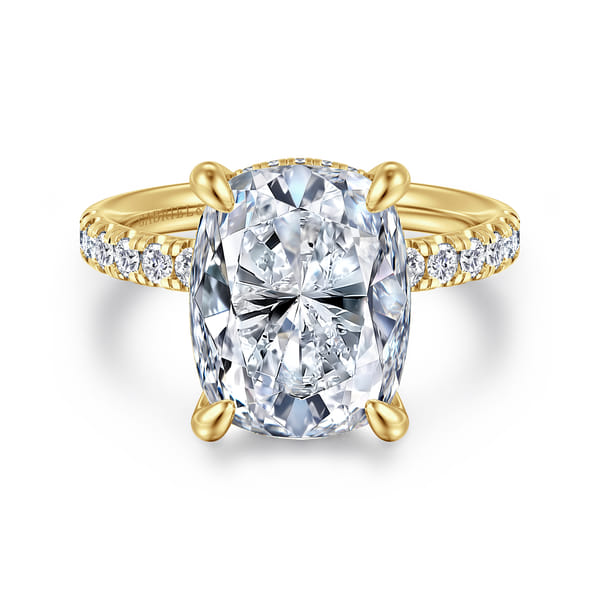
Popular cushion cut engagement ring styles
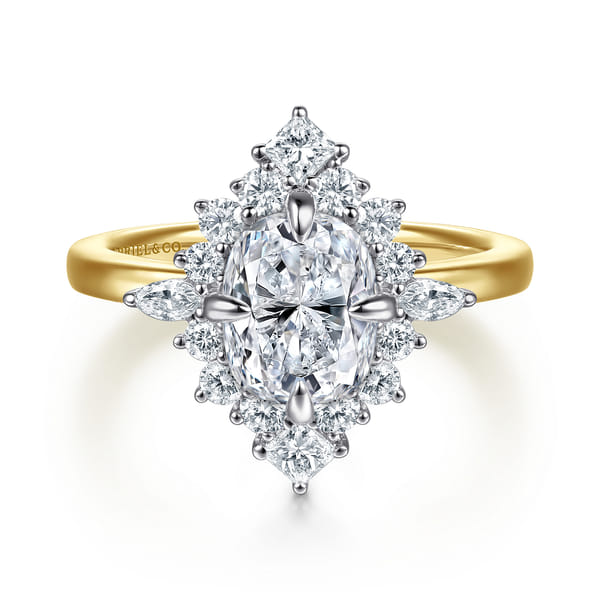
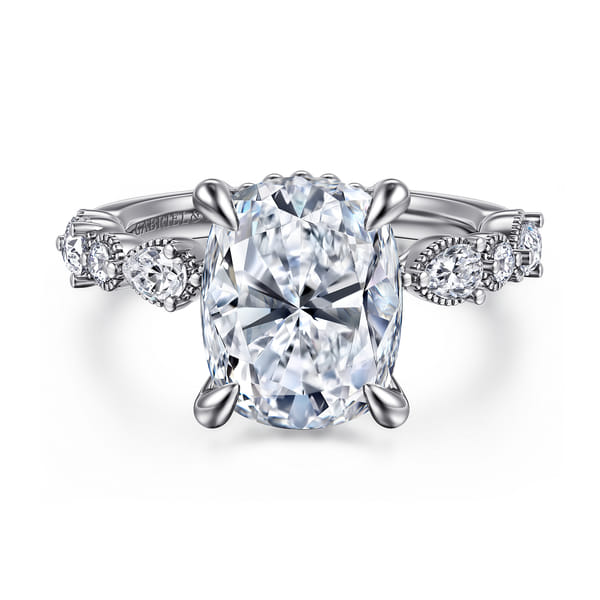
Cushion cut diamonds are frequently featured in designs that highlight their soft shape and vintage character.
Popular styles include:
- Halo settings, which surround the cushion diamond with smaller diamonds to enhance its size and glow
- Vintage-inspired rings, often featuring milgrain edges or intricate band details
- Pavé bands, where small diamonds line the ring shank and add additional sparkle around the center stone
Popular princess cut engagement ring styles
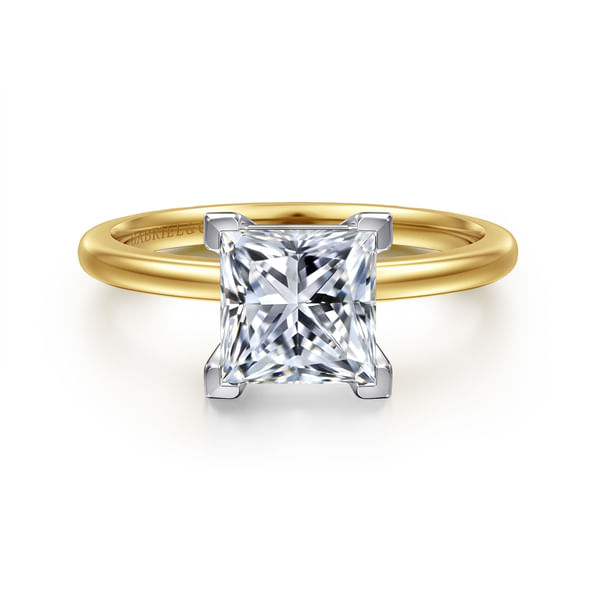
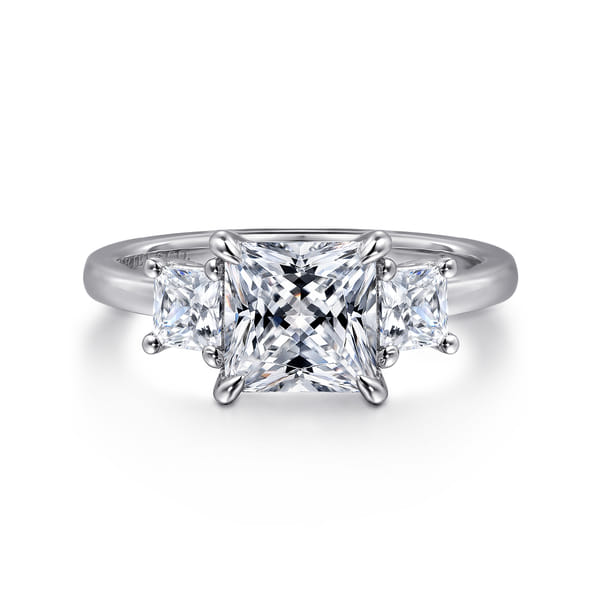
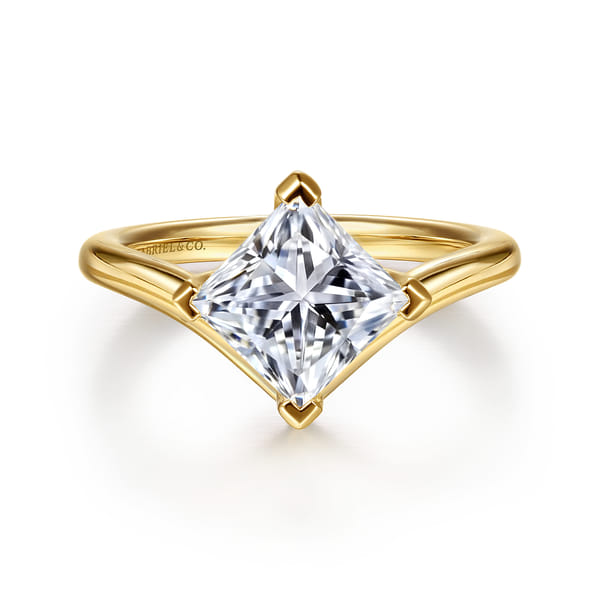
Princess cut diamonds tend to pair well with settings that emphasize clean lines and symmetry.
Common styles include:
- Solitaire rings, where the square diamond stands alone as the focal point
- Three-stone settings, where two side stones frame the princess cut center diamond and highlight its geometric shape
- Contemporary settings, which highlight geometric shapes and minimal design
How to choose between cushion cut and princess cut
When deciding between these two diamond shapes, the best choice often comes down to personal preferences and lifestyle.
Consider the following factors:
- Personal style: Cushion cuts lean toward a romantic, vintage-inspired look, while princess cuts feel sleek and contemporary.
- Ring setting preference: If you love halo or vintage designs, cushion cuts often integrate naturally. If you prefer minimal or geometric settings, princess cuts can feel more aligned.
- Sparkle preference: Cushion cuts offer broader flashes of light, while princess cuts deliver sharp brilliance and high sparkle intensity.
- Durability considerations: Cushion cuts have rounded corners that naturally reduce chipping risk, while princess cuts rely more heavily on protective prongs.
If you’re still deciding on the ring, explore our guide How to Pick an Engagement Ring for a step-by-step look at the factors that influence the right choice.
Cushion cut vs princess cut: Which diamond shape is right for you?
Both cushion cut and princess cut diamonds have earned their place among the most beloved diamond shapes used in engagement rings. Cushion cuts offer softness, warmth, and a nod to historic diamond cutting traditions, while princess cuts bring sharp brilliance and contemporary structure.
Ultimately, the best diamond shape is the one that feels right when you see it on your hand.
If you are exploring engagement rings and deciding between these two shapes, take the time to view them side by side and notice how each reflects light, complements different settings, and aligns with your personal style.
FAQs
What is the main difference between cushion cut and princess cut diamonds?
The main difference lies in their shape and facet pattern. Cushion cut diamonds feature soft rounded corners and a pillow-like appearance, while princess cut diamonds have a sharp square shape with pointed corners and a more modern geometric look.
Which diamond sparkles more: cushion cut or princess cut?
Princess cut diamonds typically display stronger brilliance because of their faceting style, which maximizes light return. Cushion cut diamonds tend to produce a softer sparkle that many people appreciate for its vintage-inspired character.
Does a cushion cut diamond look bigger than a princess cut?
Cushion cut diamonds can sometimes appear slightly larger due to their broader facet pattern and softer edges. Princess cut diamonds often retain more of the original rough diamond weight, which can also help maximize visible size.
Which diamond cut is more durable for everyday wear?
Cushion cut diamonds are generally considered more durable because their rounded corners are less prone to chipping. Princess cut diamonds have pointed corners that may require protective settings, such as prongs or a halo, to help guard against damage.
Is a cushion cut or princess cut diamond more expensive?
Prices vary depending on quality, carat weight, and overall proportions. In many cases, princess cut diamonds can offer slightly better value because they retain more of the rough diamond during cutting, while cushion cuts may require additional shaping.
Which diamond shape is better for engagement rings?
Both shapes are popular choices for engagement rings. Cushion cut diamonds appeal to those who prefer a romantic or vintage-inspired aesthetic, while princess cut diamonds suit modern designs with crisp, structured lines.
Do cushion cut and princess cut diamonds work with the same ring settings?
Yes. Both diamond shapes can be set in a variety of styles, including solitaire, halo, three-stone, and pavé settings. The choice of setting often depends on personal preference and how prominently you want the diamond shape to stand out.