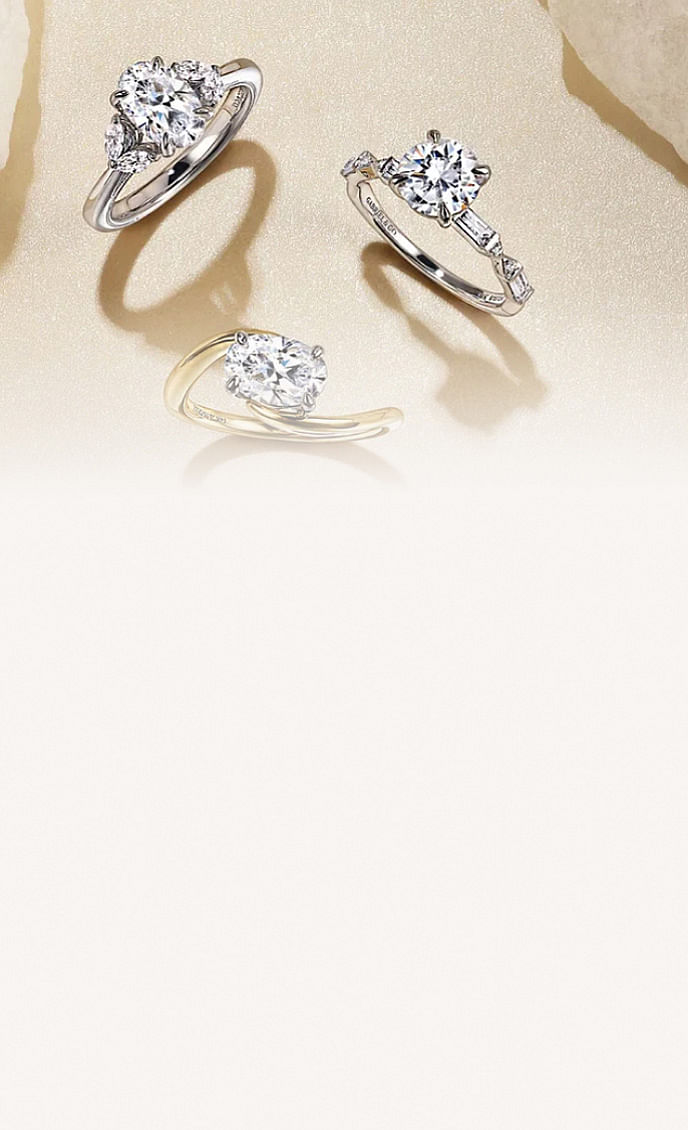
Good to Have You Back

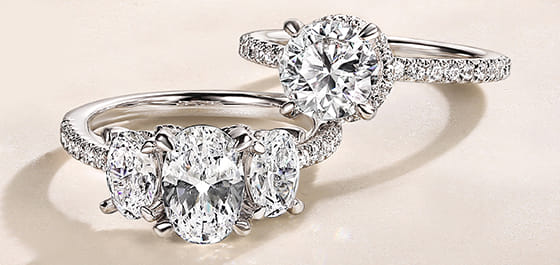
Solitaire engagement rings feature a single center diamond for a timeless, minimalist look, while three stone engagement rings use a trio of stones to symbolize a couple's past, present, and future. The right choice comes down to personal style, symbolism, and budget, and both styles remain among the most requested engagement ring silhouettes in fine jewelry today.
Solitaire vs. three stone at a glance
| Solitaire | Three stone | |
| Symbolism | Simplicity, timeless commitment | Past, present, and future |
| Sparkle | Focused on one center stone | More brilliance, wider coverage |
| Budget | More carat weight per dollar in the center stone | Spend split across three diamonds |
| Profile on hand | Lower profile, less likely to snag | More substantial, bolder presence |
| Best for | Classic, minimalist style | Couples who want extra sparkle and meaning |
| Popular settings | Prong, cathedral, bezel | Round side stones, tapered baguette, split shank |
What is a solitaire engagement ring?
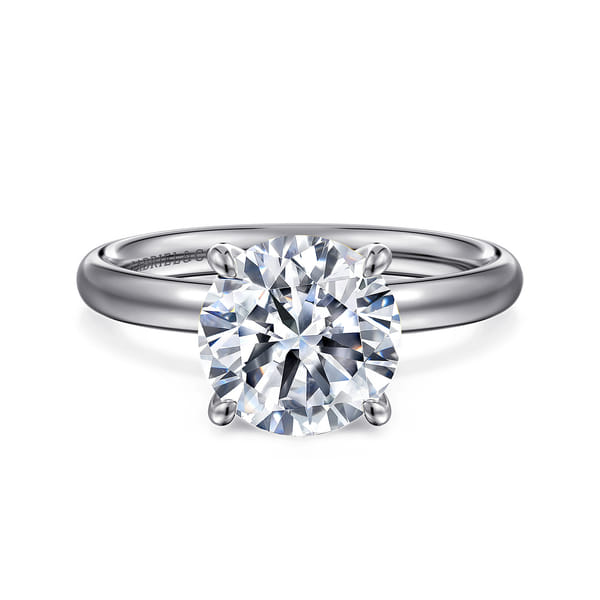
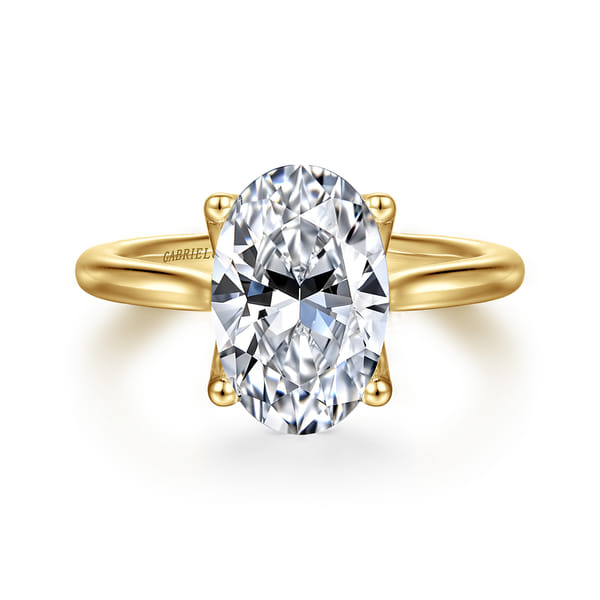
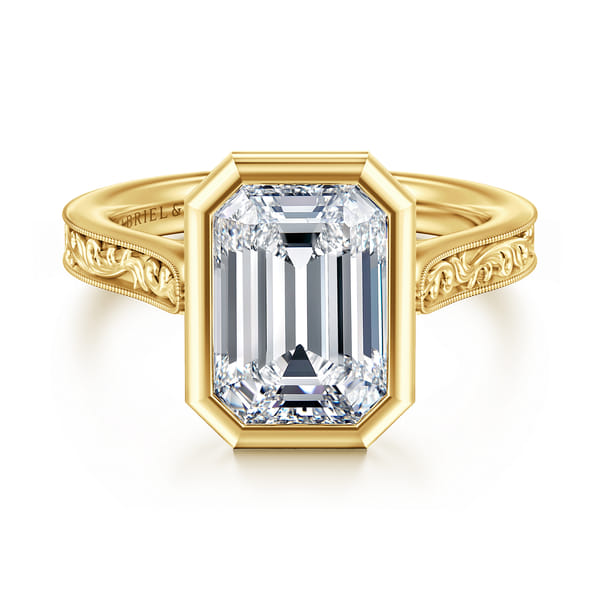
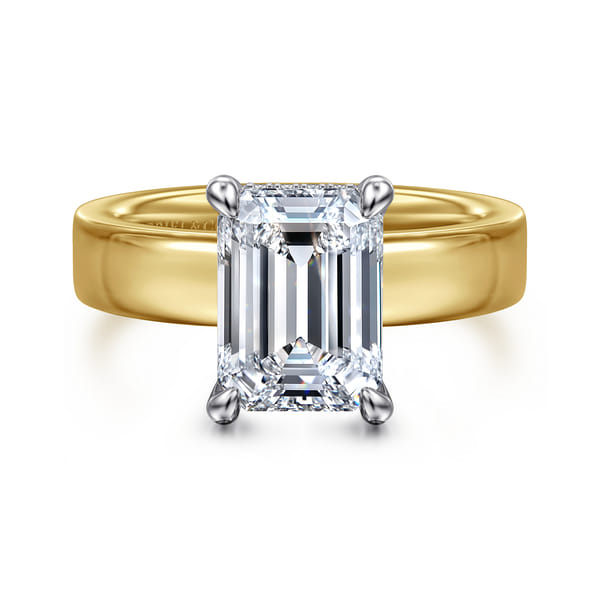
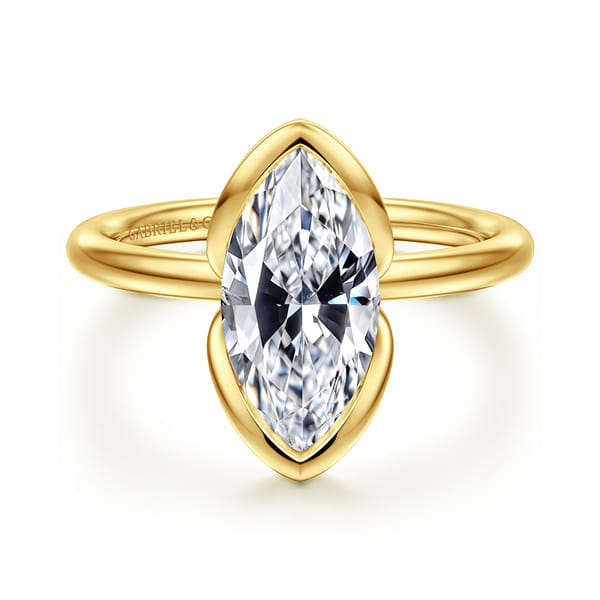
A solitaire engagement ring is built around one center diamond, set alone on a plain or diamond-accented band. The style puts all the visual focus on the center stone's cut, clarity, and brilliance, which is why it remains the most classic and best-selling engagement ring silhouette. Popular solitaire settings include prong, bezel, and half-bezel, and the style pairs with nearly every diamond shape, from round brilliant solitaires to emerald, radiant, and oval solitaire engagement rings.
Most popular solitaire styles:
- Classic 4-prong or 6-prong setting: the timeless choice, with slim prongs that keep the focus on the center diamond.
- Cathedral setting: arched shoulders lift the center stone for extra height and a graceful profile.
- Solitaire with a pavé or diamond-accented band: adds subtle sparkle along the shank while keeping a single center stone.
- Hidden halo solitaire: a halo of small diamonds tucked beneath the center stone for hidden sparkle from certain angles.
- Bezel setting: a metal rim wraps fully or partially around the diamond for a modern, low-profile, and secure look.
- Wide or tapered band solitaire: a broader shank for a bolder, more substantial feel on the finger.
- Knife-edge or trellis setting: a sleek, tapered band or crisscrossed prongs for a delicate, architectural look.
What is a three stone engagement ring?
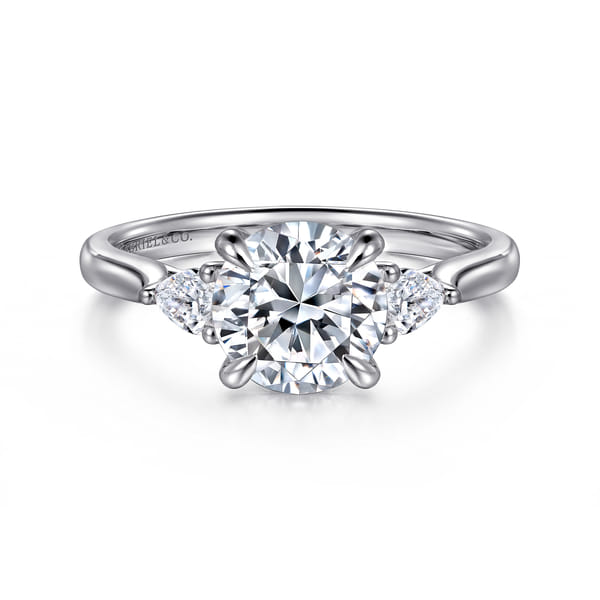
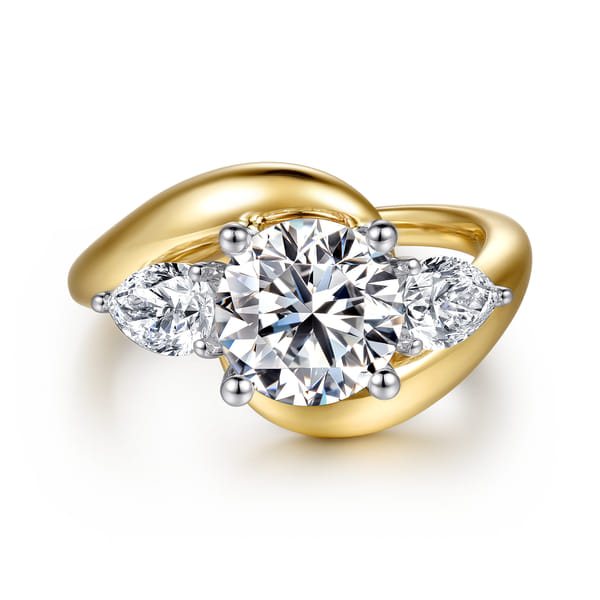
A three stone engagement ring features a center diamond flanked by two smaller side stones, traditionally interpreted as representing a couple's past, present, and future together. The style adds extra sparkle and a wider silhouette on the finger compared to a solitaire, and it's a popular choice for couples who want more visual presence without moving into a full halo design. Three stone rings are available in all diamond shapes, with oval three-stone engagement rings paired with side stones in different cuts among the most popular designs, often finished with a Lotus-style or split-shank band.
Most popular three stone styles, from most to least requested:
- Classic three stone with round side stones: a center diamond flanked by two smaller round brilliants for a balanced, timeless look.
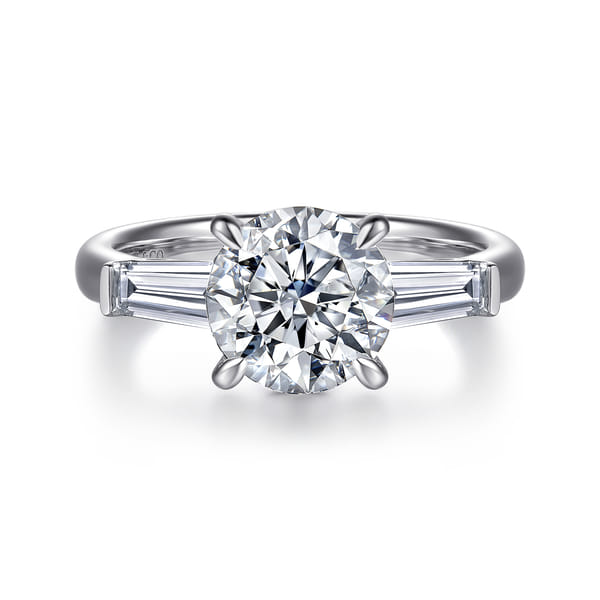
- Tapered baguette side stones: elongated baguette diamonds narrow toward the shank for a sleek, art deco-inspired line.
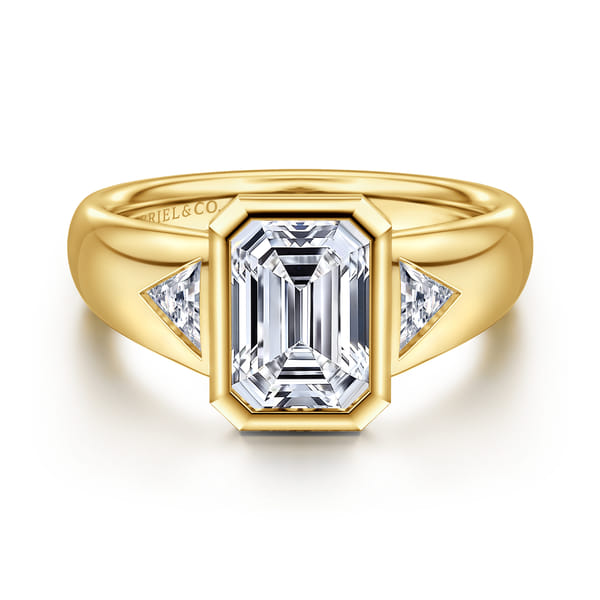
- Trapezoid side stones: geometric trapezoid-cut diamonds hug the center stone for a more architectural, modern shape.
- Three stone with a hidden halo: small pavé diamonds tucked under the center stone add sparkle without changing the classic three-stone look.
- Split shank three stone: the band splits into two strands as it approaches the center setting, adding extra shine and dimension.
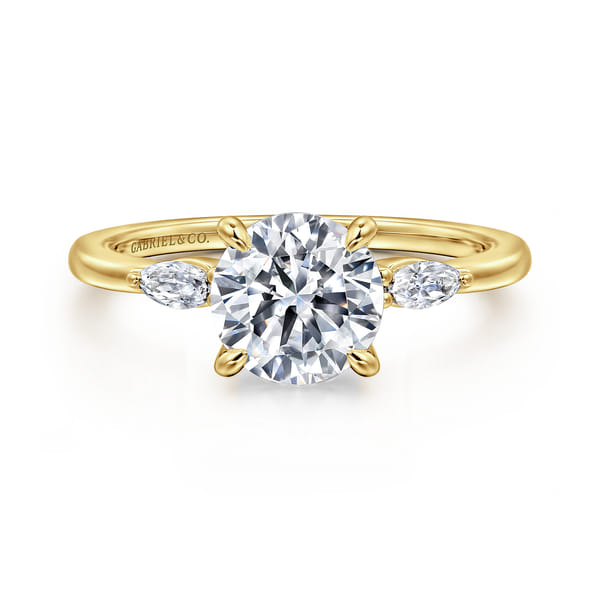
- Pear or marquise side stones: fancy-shaped side stones flank the center diamond for a more elongated, vintage-inspired silhouette.
- Vintage-inspired three stone: milgrain edging and filigree detailing on the band for an heirloom feel.
How to choose between a solitaire and a three stone ring
Symbolism
Choose a three stone ring if the past, present, and future meaning matters to you. Choose a solitaire for a clean, timeless statement built around one stone.
Sparkle and presence
Three stone rings generally show more brilliance and cover more of the finger, thanks to the extra side stones. Solitaires keep all the sparkle and attention on a single center stone.
Budget
Solitaires typically offer more carat weight per dollar in the center stone, since the spend isn't split across three diamonds. Three stone rings put part of the budget into the side stones instead.
Everyday wear
Solitaires tend to sit lower profile and snag less on daily activities like gloves or sleeves. Three stone rings can feel more substantial on the hand for those who want a bolder look.
Pairing with a wedding band
Both styles pair well with straight or curved wedding bands. Three stone rings may need a slightly contoured or curved band to sit flush against the side stones, depending on the setting.
Why choose Gabriel & Co.
Since 1989, Gabriel & Co. has been in the business of marking life's most meaningful moments, and an engagement ring is the one piece of jewelry meant to be worn and loved every single day for a lifetime. That's why every ring we create, whether a classic solitaire or a symbolic three-stone design, is held to a standard that goes beyond how it looks in a photo.
Each piece is crafted in recycled gold, so the ring on your finger carries a story of responsibility as well as romance. Every diamond is GIA-verified, meaning the sparkle you fell in love with is backed by the same rigorous grading trusted by jewelers worldwide, not just a claim on a product page. And because a ring this meaningful deserves more than a receipt, every purchase includes a Certificate of Authenticity with a unique serial number, a permanent record of your ring for insurance, resizing, or the day you pass it down.
This is what setting a standard for nearly four decades looks like: a ring you can propose with, celebrate with, and trust will still be telling your story for generations to come.
Caring for your engagement ring
Whether you choose a solitaire or a three stone style, a little routine care keeps the setting secure and the diamonds bright. Clean your ring at home every one to two weeks with warm water and a drop of mild dish soap, using a soft-bristled brush to reach the underside of the stone and the setting. Rinse well and dry with a lint-free cloth.
Beyond regular at-home cleaning, have a jeweler check the prongs or side-stone settings every six to twelve months, especially for three stone styles where extra settings mean extra points of wear. Remove your ring before workouts, cleaning, or swimming, and store it separately from other jewelry to avoid scratches.
Frequently Asked Questions
Is a solitaire or three stone engagement ring more expensive? ⌄
Which style is more popular right now? ⌄
Can a three stone ring use gemstones instead of diamonds for the side stones? ⌄
Do solitaire rings work with a hidden halo or pavé band? ⌄
What diamond shapes work best with a three stone ring? ⌄
Can a solitaire ring be upgraded to a three stone or halo style later? ⌄
What metal options are available for solitaire and three stone rings? ⌄
How do I know what ring size to order? ⌄