Good to Have You Back

Choosing an engagement ring is one of the most personal purchases you'll ever make. It needs to reflect who you are, hold up to daily wear, and feel just as right years from now as it does the day you say yes. With so many options across metals, shapes, settings, stones, and budgets, it helps to approach the decision systematically. This guide walks you through the 10 most important factors to consider, so you can find the ring that's genuinely yours.
What Should I Consider When Choosing an Engagement Ring?
#1 The Choice of Engagement Ring Metal
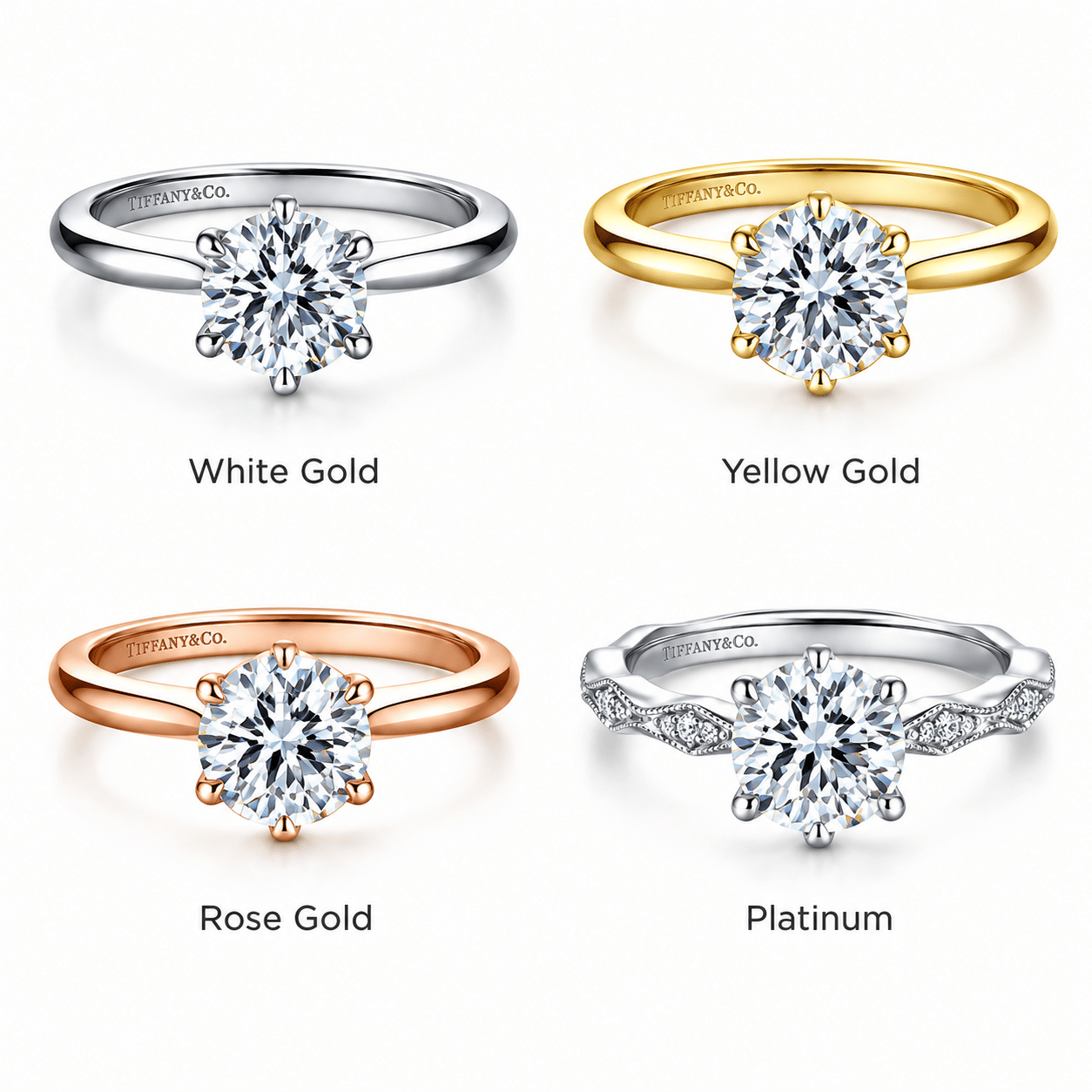
Choosing a ring can be tricky, so let’s start with the metal, because it affects everything from the overall cost and style to your center stone options. If you’re open to spending a little more, platinum engagement rings are an excellent choice. Platinum is not only sophisticated and high-end, but also incredibly durable and low-maintenance. If your days are busy and you don’t have time to regularly polish or care for your ring, platinum is ideal. It’s also 30 times rarer and purer than its more popular counterpart: gold engagement rings.
So, why do so many people still gravitate toward gold? Two big reasons. First, it’s far more cost-effective than platinum. And second, if you’re after a more traditional look, the warm hue of a yellow gold engagement ring is hard to beat. As Shakespeare once said, “Gold—what can it not do and undo?”
In color, white gold is closer to platinum since the gold is mixed with nickel alloys and then coated in rhodium to form a protective layer. You can achieve the same shimmery white sheen as platinum at a fraction of the cost. Rose gold is the third gold variant that comes in a beautiful warm pink hue, created by alloying copper and gold together. Vintage and charming, a rose gold engagement ring is apt for a woman who is gracefully feminine and romantic. Silver is one of the most pocket-friendly metals to use in your engagement ring, but it is also softer and requires a lot of extra care and regular polishing. Make informed choices based on your lifestyle and how much you’re willing to spend.
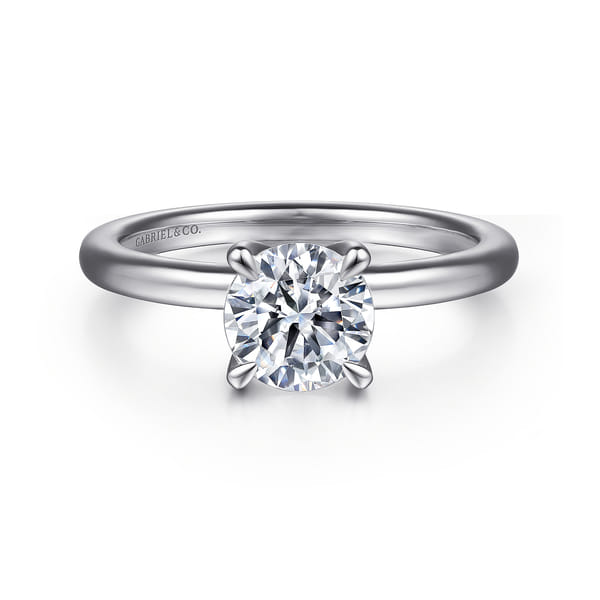
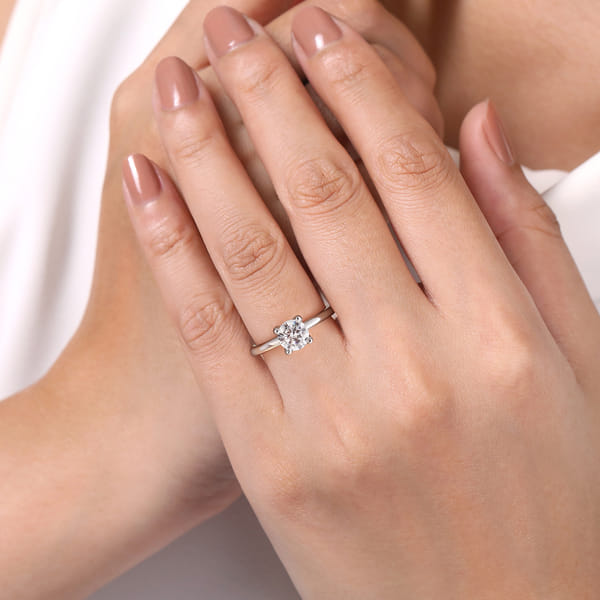
White gold engagement rings are very popular among contemporary brides. Not only does the cool moonlight hue look like platinum, but it also showcases the center stone and settings beautifully without drawing attention away from them.
#2 Engagement Ring Cuts: The Shape of the Center Stone
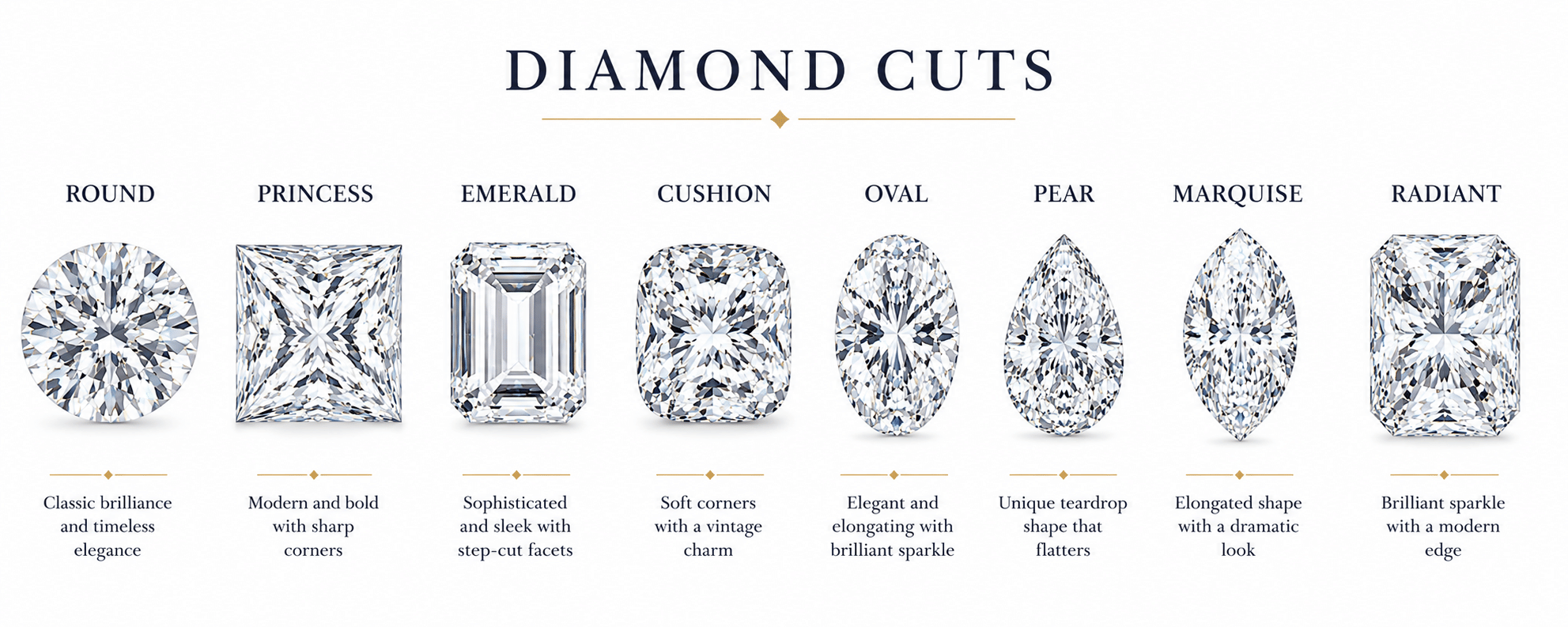
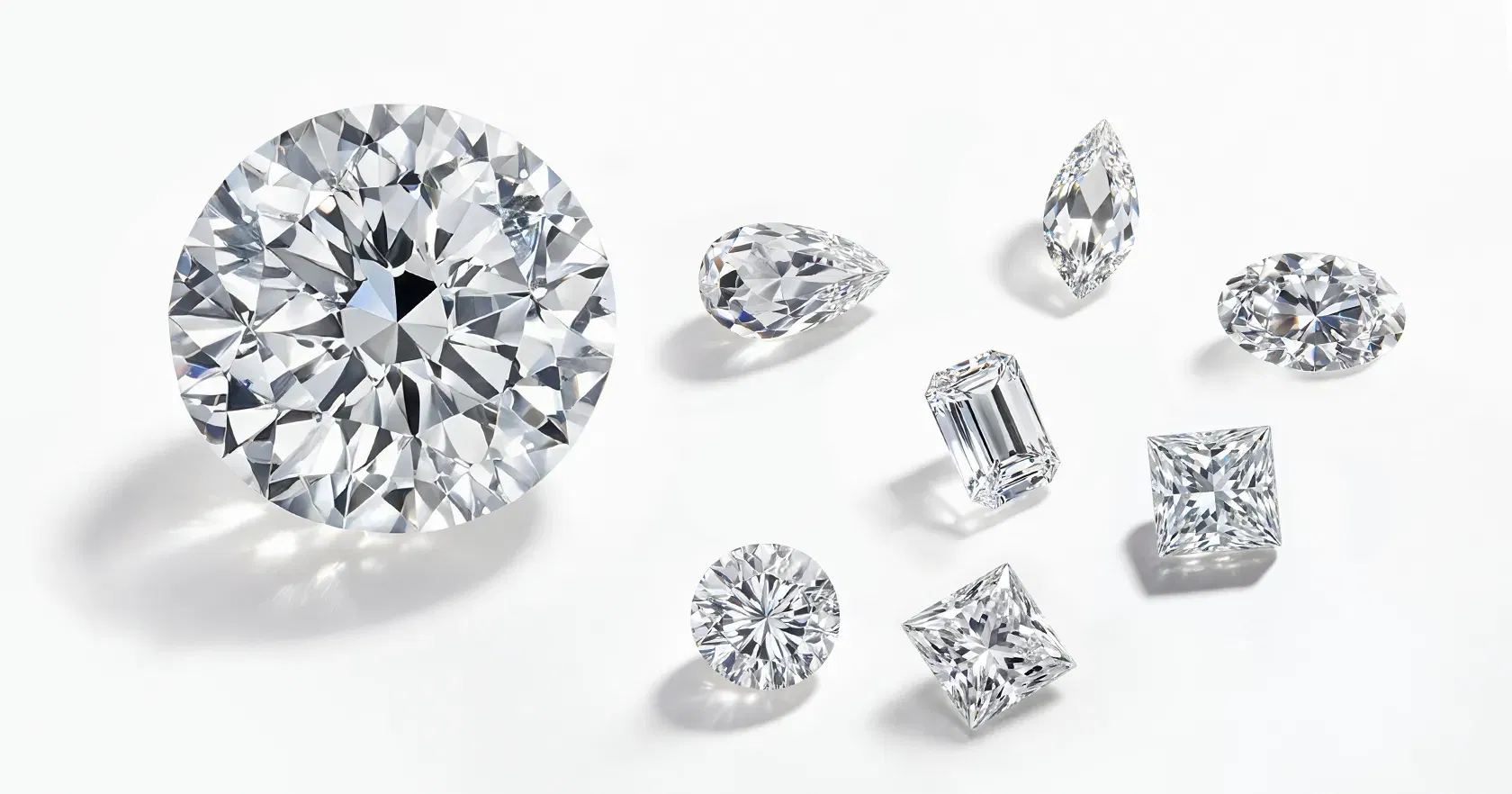
The shape of your center stone is one of the most personal decisions in the entire process. It defines the ring's silhouette and sets the tone for everything else.
- Round cut engagement rings remain the most popular choice by a wide margin, prized for its unmatched brilliance and timeless versatility. Over half of all engagement rings feature a round diamond, and for good reason: the 58-facet brilliant cut is engineered to maximize light return.
- Oval cut engagement rings have surged in recent years and now rival the round cut in popularity. It offers similar brilliance in an elongated shape that flatters the finger and appears larger per carat than a round of the same weight, making it a smart choice if size is a priority.
- Emerald cut engagement rings are the choice for those who prefer clean lines over sparkle. Its step-cut facets create a hall-of-mirrors effect: sophisticated, understated, and distinctly editorial. Pairs especially well with sleek solitaire and three-stone settings.
- Cushion cut engagement rings feature soft, rounded square-shaped diamonds with larger facets that give it a vintage warmth. they suits both classic and contemporary settings and hold their appeal across design eras.
- Pear-shaped engagement rings feature an elongated center stone that visually lengthens the finger. They offer excellent size-to-carat value and work beautifully in east-west settings or with a simple solitaire band.
- Radiant cut engagement rings deliver the brilliance of a round in a rectangular or square shape, a good middle ground for those who love sparkle but want something less traditional than a round.
- Marquise diamond rings are one of the most striking styles in the collection, with pointed ends on both sides that create a dramatic, elongated look. They have one of the highest surface areas of any cut relative to carat weight, making them an excellent choice for maximizing the appearance of size.
Before committing to a shape, consider how it will pair with your intended setting and band, and whether you'll want to stack it with a wedding band later.
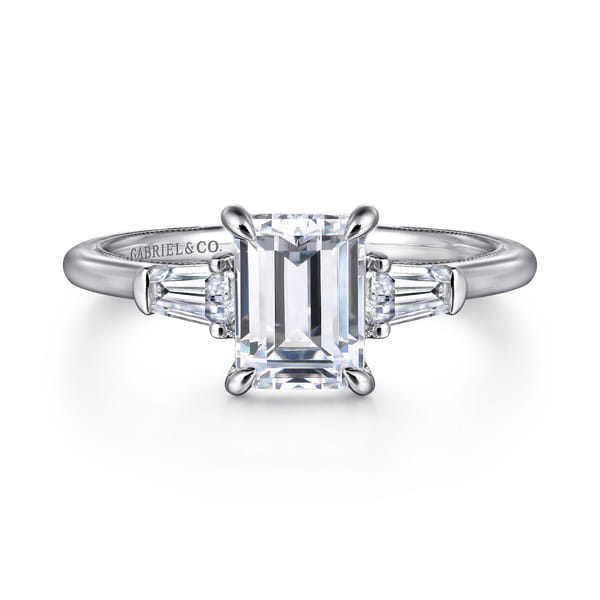
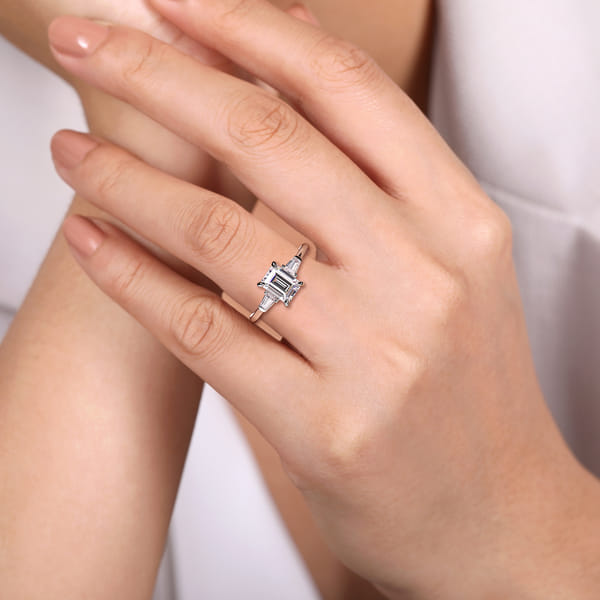
One of the earliest diamond cuts in the world, the Emerald cut is reminiscent of old Hollywood glamor. Understated, yet exquisite. Crafted out of 14k white gold, this ring features a 2.5-carat emerald cut ring in a three-stone setting.
#3 How to Choose an Engagement Ring Setting
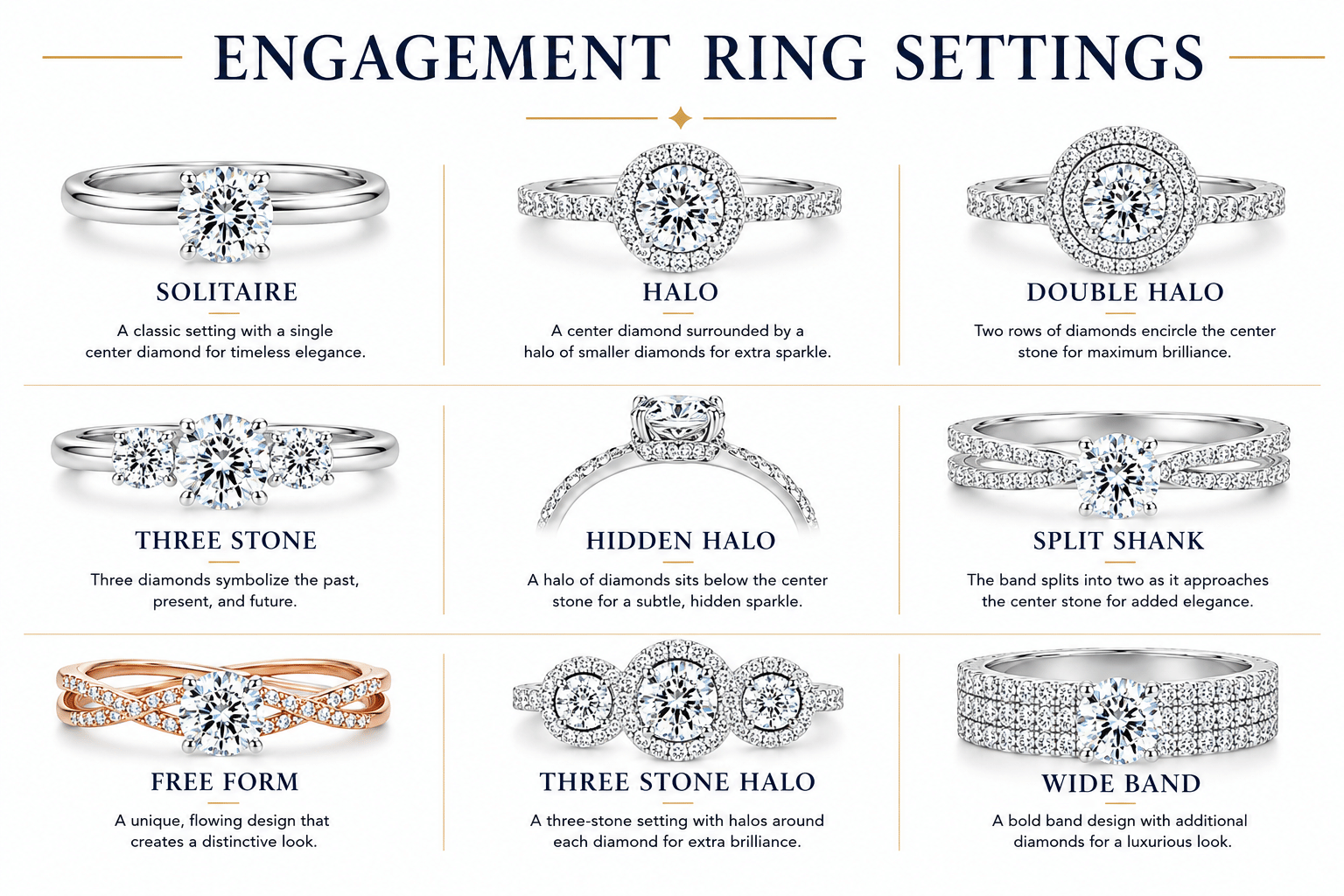
The perfect setting is an aspect often overlooked, although it shouldn’t be. When you choose a diamond setting, it should be for a mix of practicality and aesthetics. The durability of the metal you use and the features of your center stone should impact your choice of setting.
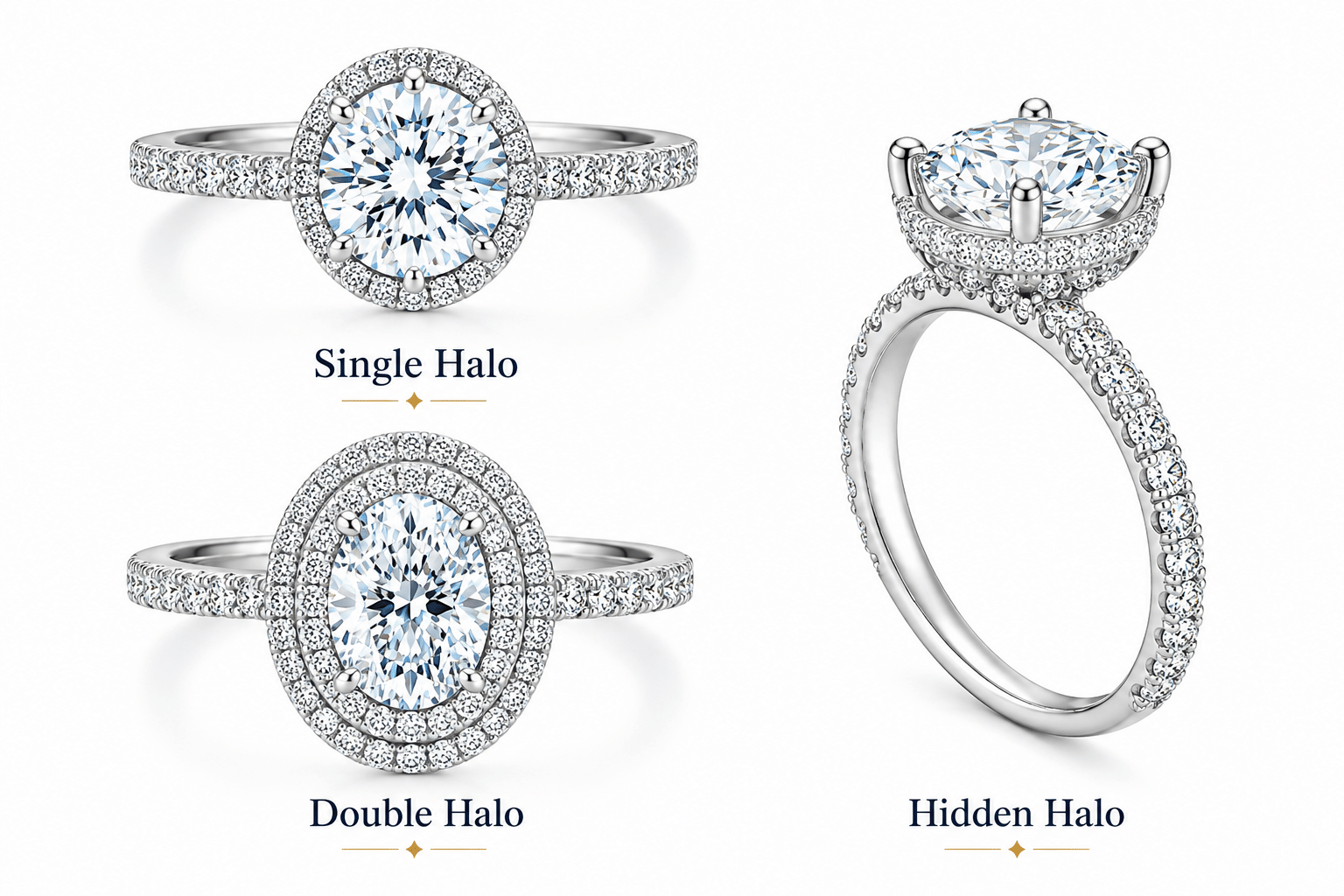
The halo setting is immensely popular because it comprises a row of tiny diamonds encircling your center stone. It protects the diamond while accentuating its shine and giving the illusion of a bigger center stone. Hidden halos are also highly desirable for the understated way they play diamond peekaboo and add extra sparkle.
Want to add even more volume to your solitaire? A double halo setting is the way to go. This means two rows of tiny diamonds encircle your center stone. Even a small center stone is enough for this kind of setting since the double halo adds much volume. For more subtle cuts, like the Asscher or Emerald, a double halo is wonderful for enhancing brilliance and impact.
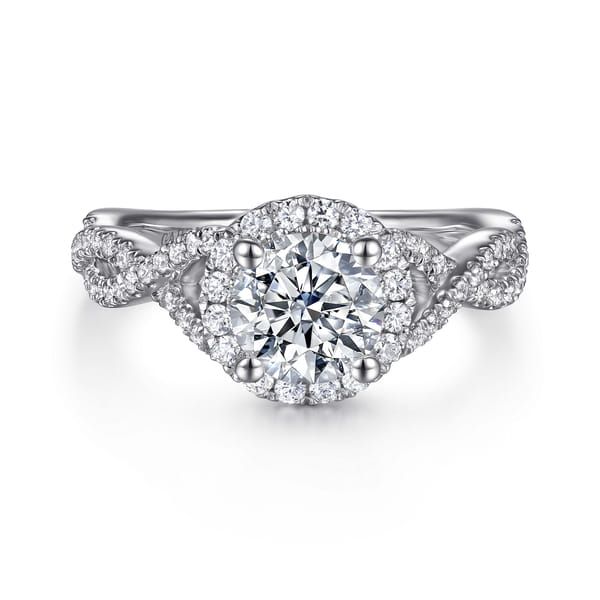
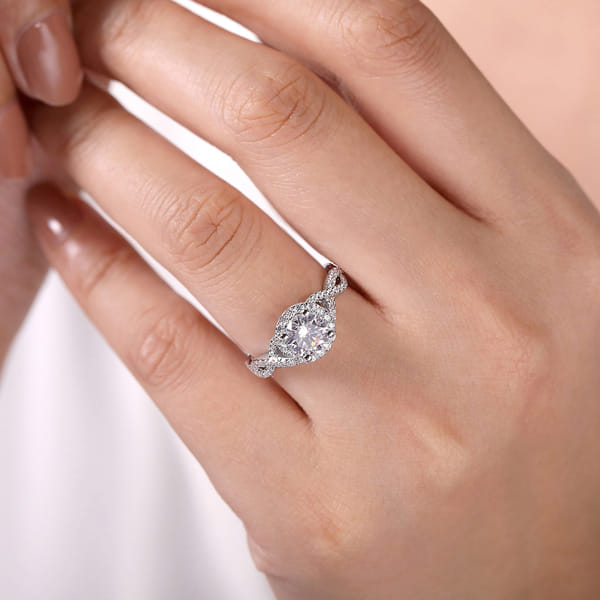
Don’t you just love a halo that is also high on design? This 14k white gold ring features 0.23 carats of diamonds in a halo that glitter symmetrically around the 1-carat diamond center stone.
The prong setting for solitaire engagement rings is apt since it is minimalistic and shows off the stone to its best advantage. However, if your stone is huge and the metal needs extra care, look for an alternative setting, or at least increase the number of prongs from four to six.
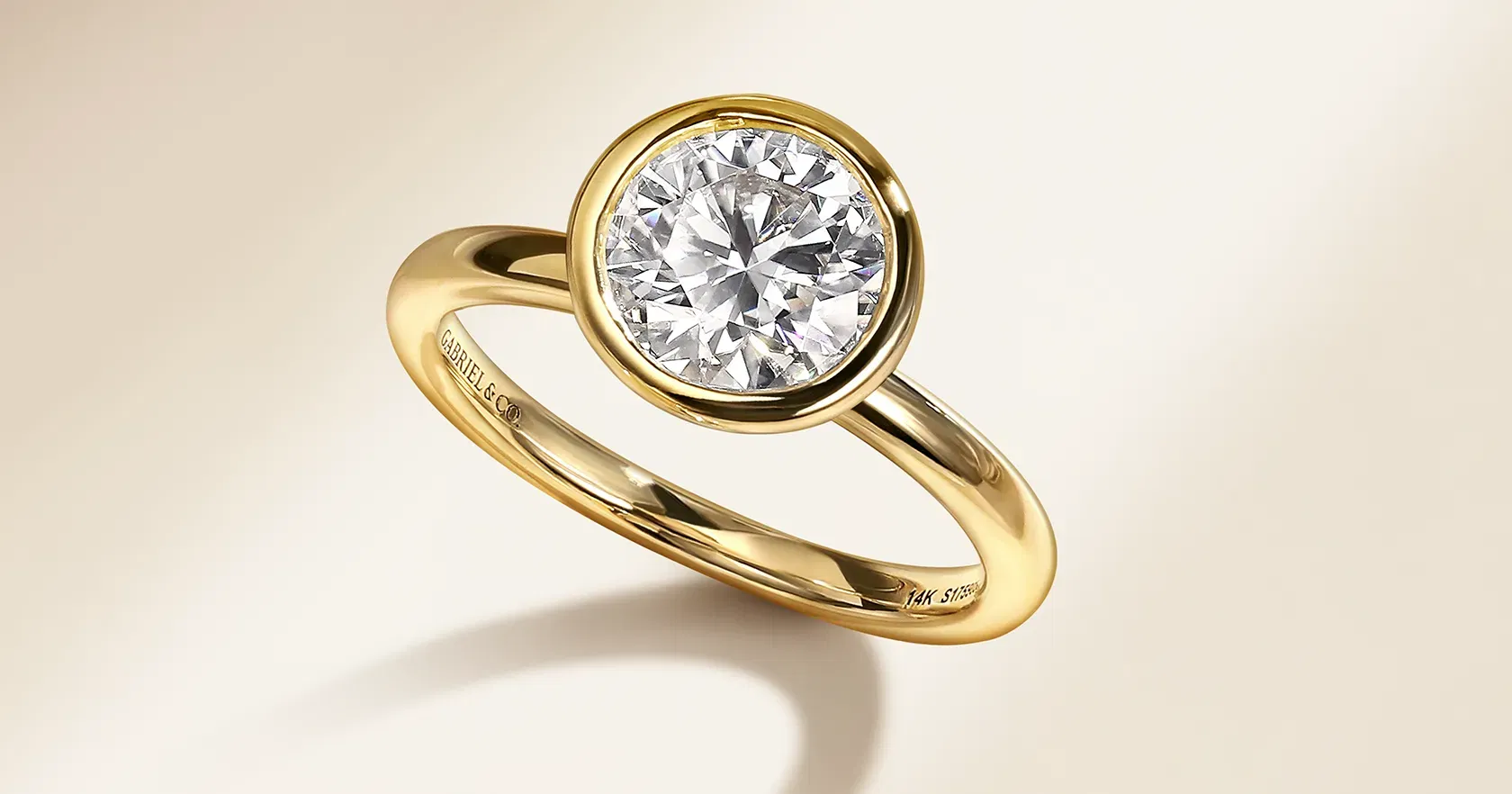
Consider the bezel setting if your stones are softer or larger or if you lead a fast-paced routine where they are likely to fall out. It may not be as flattering as the other setting options since the diamond is surrounded by metal, but if crafted well, they offer sleekness along with security for your center stone.
#4 Carat Weight of the Center Diamond Stone
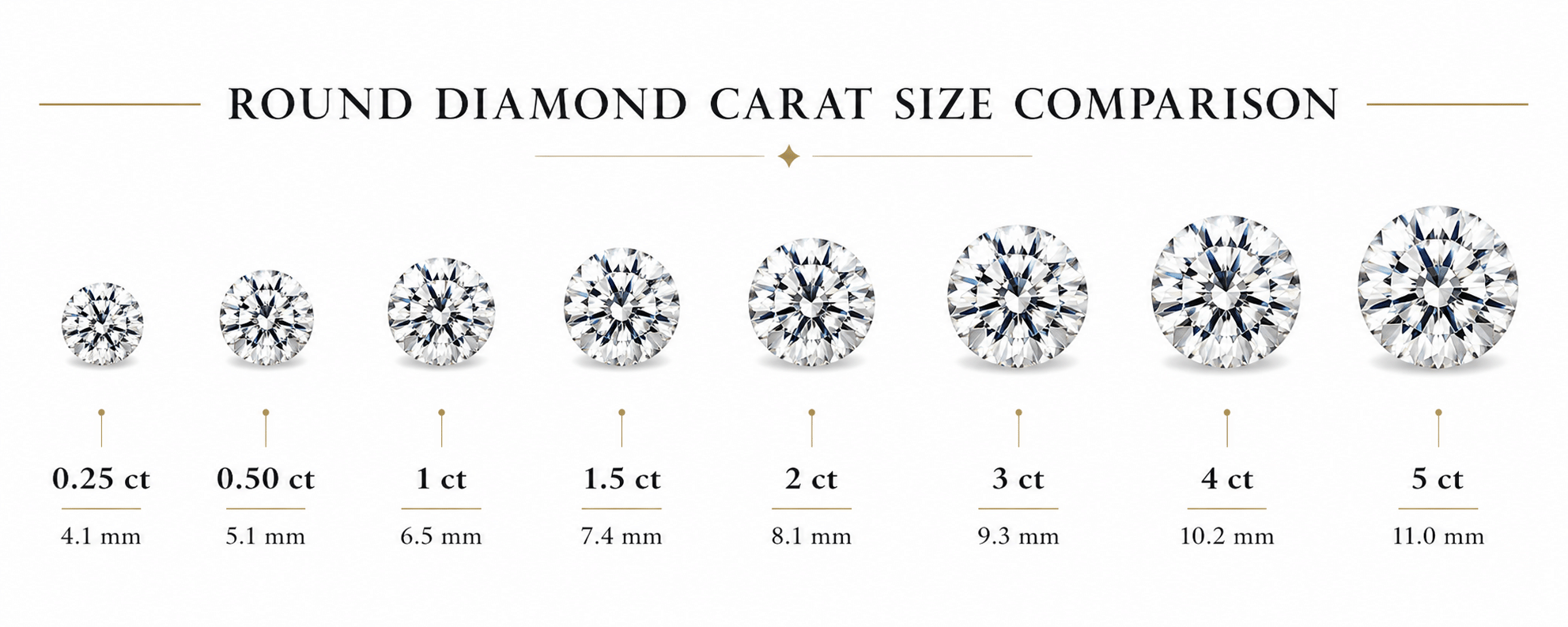
Carats are often confused with size, but they actually refer to weight. One carat weighs 0.200 grams, so it’s reasonable to assume that a heavier diamond is also larger and more coveted. If only big rocks were that simple to lay our hands on. Budget is often the most common constraint when choosing your diamond carat. But there is a solution to that.
If you have a limited amount set aside for your engagement ring, ask yourself a question – would you rather have a larger stone with some flaws or a smaller stone with fewer flaws? If it is the former, choose a lower color grade or clarity grade – nothing too noticeable but pocket-friendly at the same time.
Another way around is to pick up something that’s very slightly lighter than your desired carat weight. Let’s say you’ve set your heart on a 2-carat diamond ring. Picking up a 1.8-carat ring instead is far cheaper, and the size difference is barely discernible. Factor in that the price increases exponentially with every extra carat – so a 2-carat ring is not just double of a 1-carat ring. It is far more, simply because larger stones are much rarer to find, cut, and polish.
The diamond cut and shape can also impact your choice of the carat weight. Pear, marquise, and oval cuts look apparently heavier and bigger than they are because of the elongated shape. You can play it smart and opt for these as well.
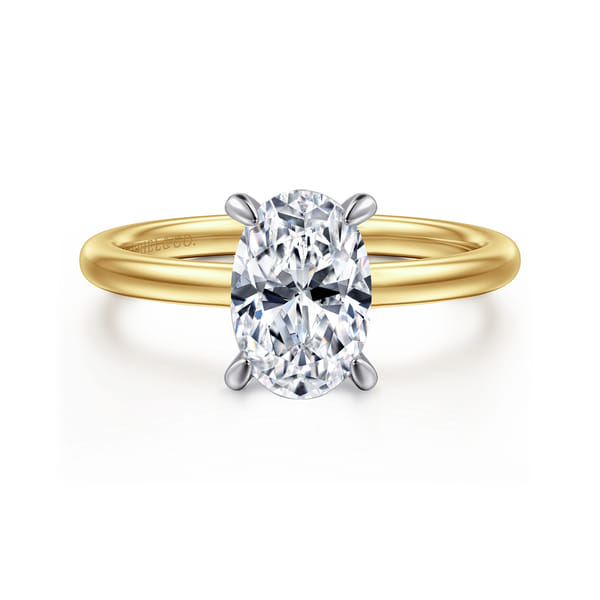
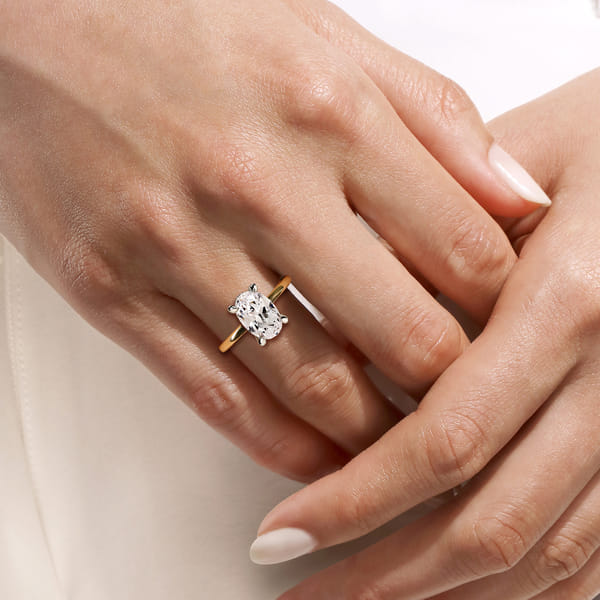
This ring is all set to accommodate a 1.5 carat diamond oval cut center stone that is sure to look fabulous on your finger! Crafted out of both white and yellow gold juxtaposed against each other, it also features a hidden halo for some subtle shimmer.
#5 Preference for Any Colored Gemstones, and Birthstones
Diamonds are the traditional choice, but they're far from the only ones. Colored gemstone engagement rings have grown steadily in popularity, and for the right wearer, a sapphire, ruby, or emerald center stone can be more meaningful and more distinctive than a diamond.
When evaluating a colored gemstone, hardness matters. Diamonds score 10 on the Mohs scale, making them the most durable option for daily wear. Sapphires and rubies both score 9, making them excellent alternatives with strong long-term wearability. Emeralds score around 7.5 to 8, but are naturally more included and require more careful handling. Softer stones like opal or pearl are beautiful but demand extra attention and may not be ideal as a center stone in a high-wear setting.
Beyond hardness, look for certification. A reputable colored gemstone should come with documentation verifying its origin, treatment status, and quality grade, just as a diamond comes with a GIA certificate.
Blue sapphire engagement rings are among our most requested alternative styles, offering deep color, exceptional durability, and a regal presence. Explore our gemstone engagement ring collection for the full range of color options.
#6 Engagement Ring Styles: Bands and Shanks
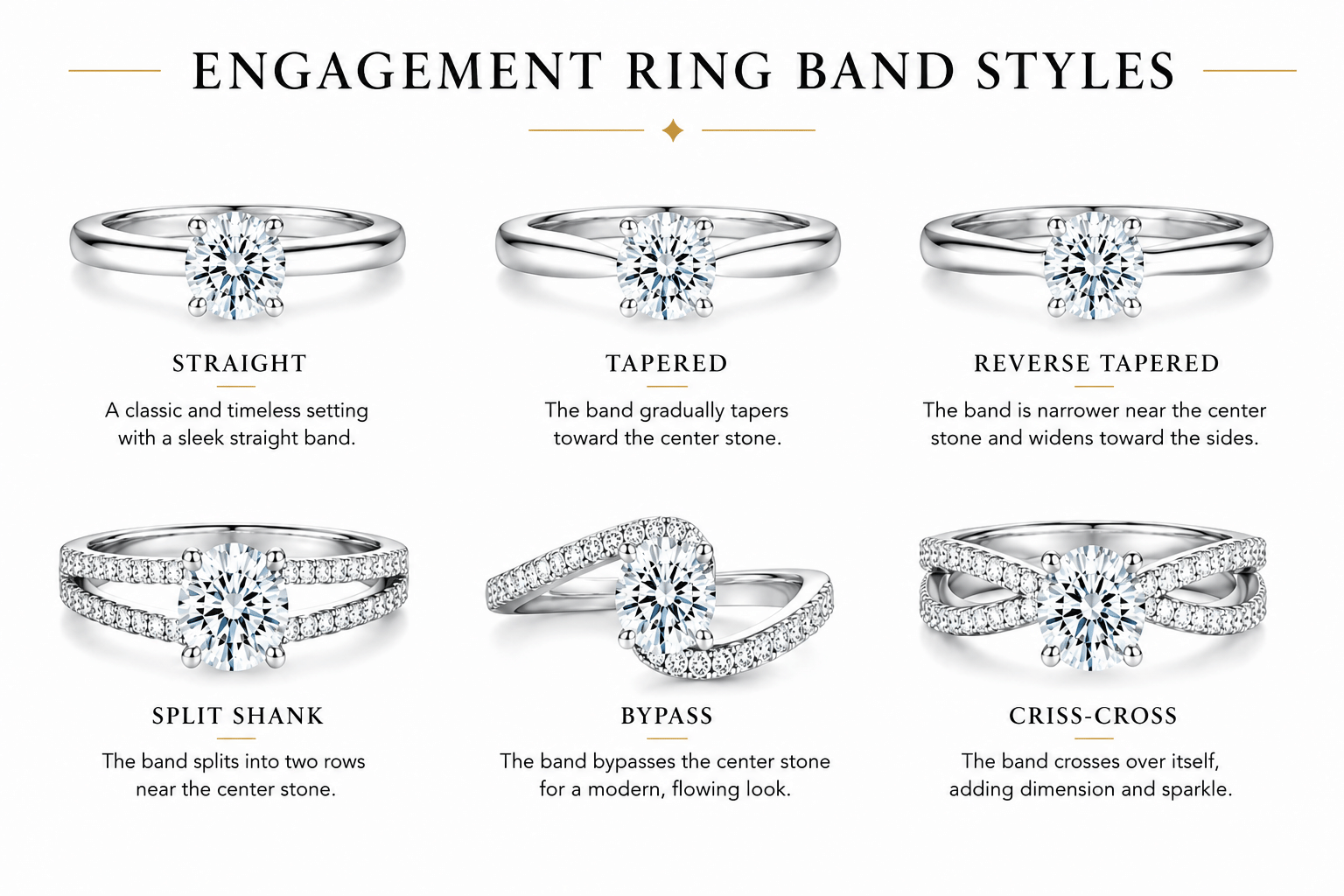
All the attention is usually on the stone and setting, but the ring's shank style visually impacts how the ring looks. The types of engagement rings out there are many, but the most unadorned shank style is a plain band, which holds the center stone. It can be flat or rounded, depending on your preference. The tapered shank is a wonderful variant if you find this too boring. It is the same as a plain band, except it tapers off at both ends where the shank meets the stone.
Not only is this sleek and contemporary, but it also makes the stone appear bigger. Want some glitter? Add a row of diamonds across the shank to impart added glamor to your ring. Split shank, free form, bypass, and twisted bands are some other shank styles for those who look for a distinct appeal in their engagement ring designs.
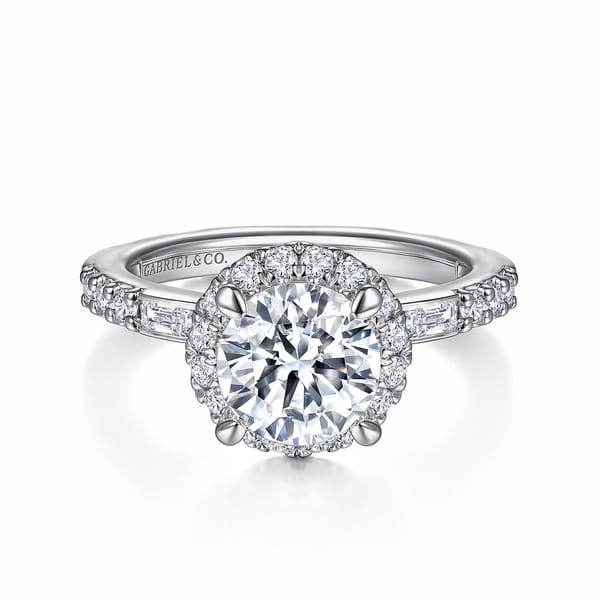
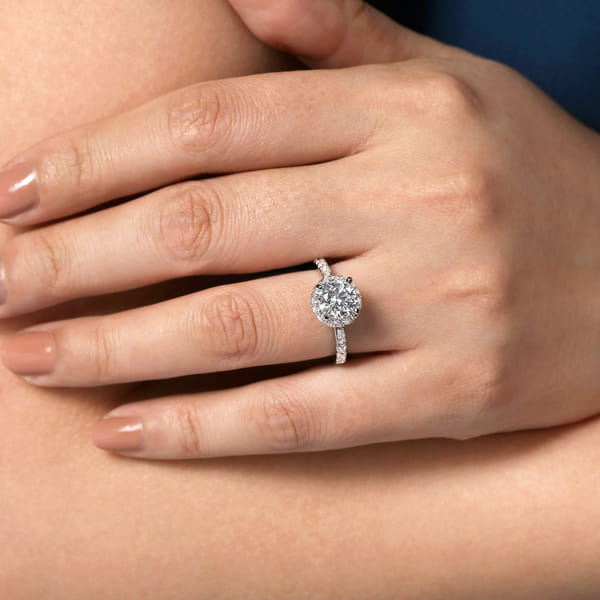
This tapered shank is encrusted with a row of diamonds that weigh 0.36 carat and is perfect to hold a 1 carat round cut diamond center stone. Set in 14k white gold, it is ideal for the classic bride who doesn’t want her style to be predictable.
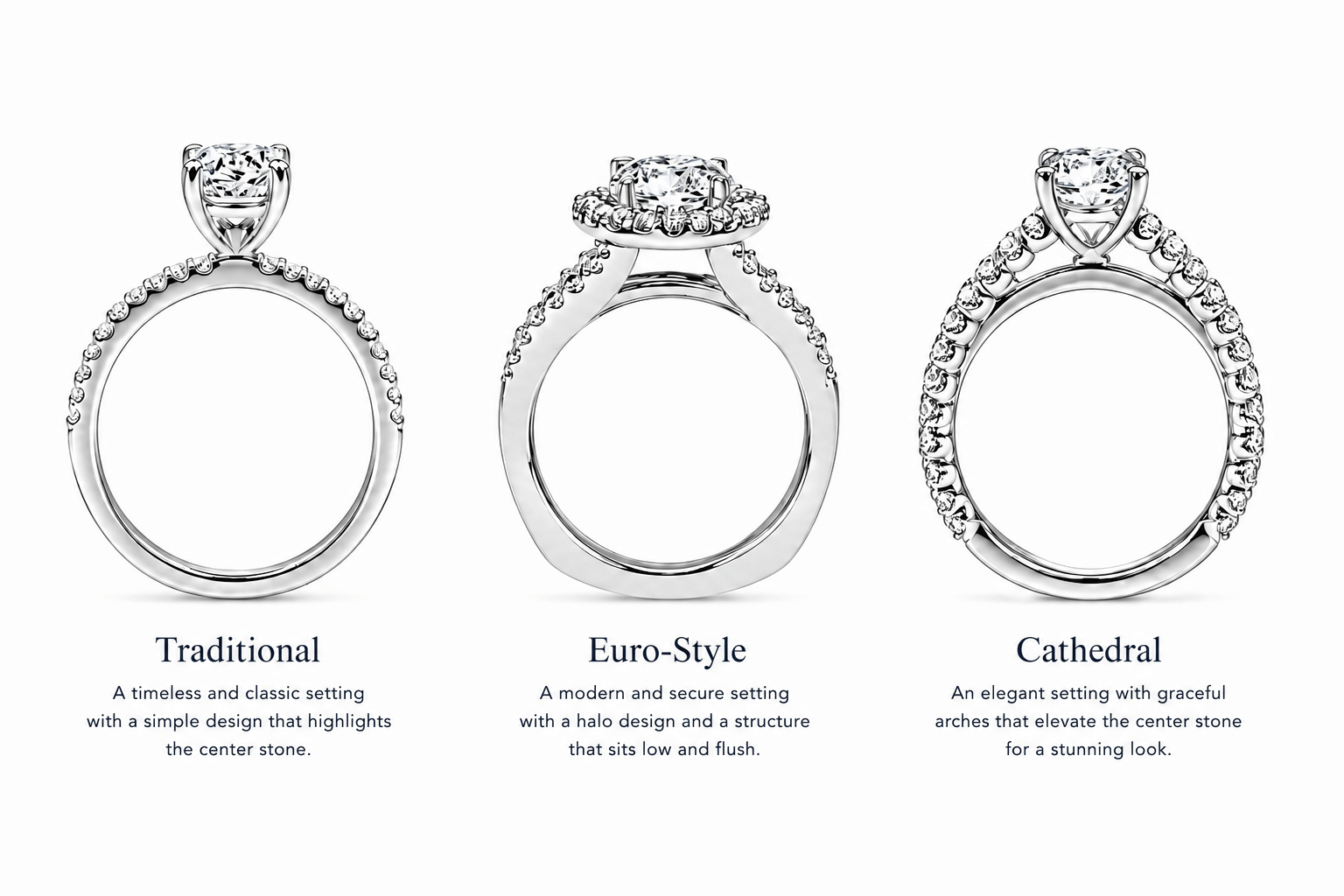
Split shanks have risen in popularity because they’re affordable and give the illusion of more metal and volume. A single shank splits into two on either side of the center stone and conjoins on the opposite side. If you seek something ultramodern and Avante-garde, bypass shank is your answer. The bypass shank is called so because the two ends of the shank never meet – instead, they wrap themselves around the diamond on opposite ends like swirling ribbons.
The cathedral shank is slightly raised at the center stone, putting the diamond on a pedestal. The raised disposition makes the diamond look bigger, but it also means you’ve got to be more careful with it. If you want the focus on your ring rather than just the center stone, a wide band is a great way to draw attention to the shank and its elements.
#7 Engagement Ring Cost and Budget
Choosing an engagement ring is one of the most significant purchases you'll ever make, and the budget you set should reflect that. The three months' salary guideline has long served as a helpful starting point for many couples, and it remains a reasonable benchmark when you consider the lifelong sentimental and financial value of the piece. That said, the right number is ultimately personal. Whether you're working with a defined budget or open to exploring, the goal is to find the best possible ring within the range you're comfortable with.
The average spend on an engagement ring in the U.S. has landed closer to $4,600 to $6,000 in recent years. But that number spans a wide range: many couples spend under $2,000 and find exactly what they're looking for, while others set aside $10,000 or more for a statement piece. However much you have to work with, these strategies help you get the most out of it:
-
Go just under a carat threshold. A 0.90ct diamond costs meaningfully less than a 1.0ct stone, but the visual difference is imperceptible to the naked eye. The same applies at the 1.5ct and 2.0ct marks.
-
Prioritize cut over carat. A smaller, well-cut diamond will outshine a larger one with a mediocre cut every time. Cut is the one quality factor that directly controls sparkle.
-
Consider elongated shapes. Oval, pear, marquise, and radiant cuts offer more surface area per carat than round, so they face up larger for the same weight and price.
-
Adjust color and clarity strategically. A G to H color and VS2 to SI1 clarity diamond looks visually clean to the naked eye and is considerably more affordable than D to E flawless stones, with no visible trade-off in everyday wear.
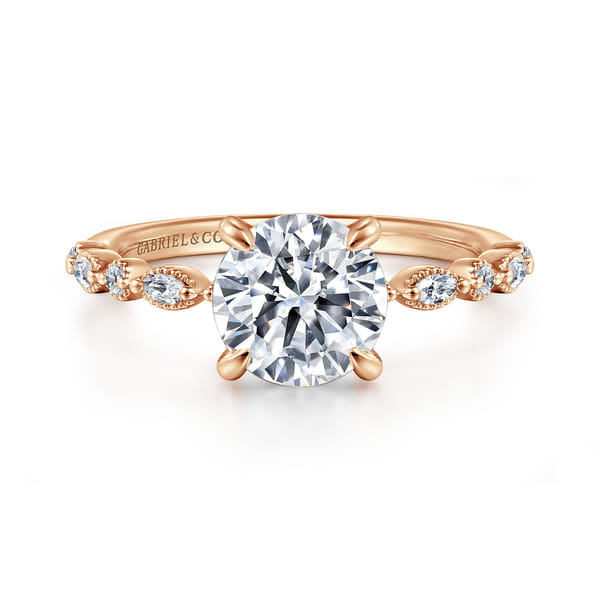
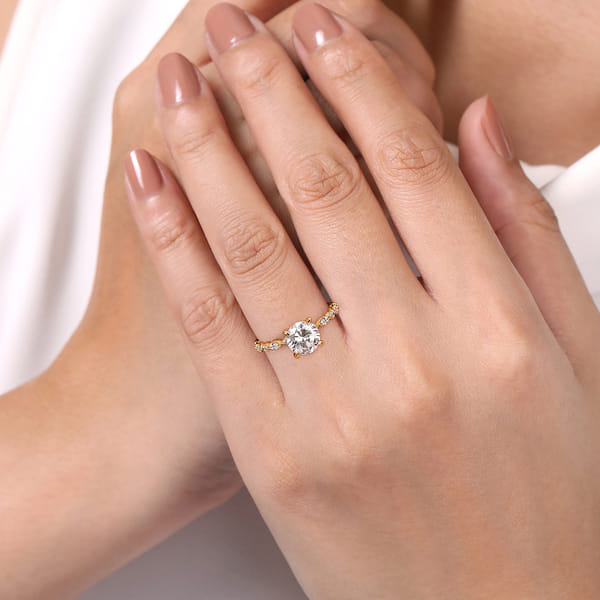
Channel your inner princess with this stunning vintage-inspired ring made from 14k rose gold. The gorgeous shank is dotted with diamonds weighing 0.26 carat, while the center stone is the gleaming 1-carat round cut diamond.
#8 Considering the Personality and Preference of the Wearer
We all love surprises, don't we? But if it’s something as precious as a diamond ring, it’s prudent to include the preference of the one wearing it or, even better, go shopping together. After all, you don’t want to let your partner's expectations down or lose money remaking or exchanging the ring. In fact, 62 percent of couples endorse the idea of shopping together for engagement rings for women.
If you want a giant rock and can compromise a bit on the diamond clarity, or there is a certain kind of metal you're allergic to, tell your partner upfront. Return the favor and ensure your partner's ring is also chosen with the same care and consideration. It’s one of the significant initial decisions you make as a couple, and it says a lot about relationship compatibility. In an ideal scenario, both of you should agree on and like both engagement rings.
#9 Engagement Ring Size and Fit
It may seem like a trivial aspect that you can always deal with later, but don’t assume that. Ensure the ring fits snugly from the word go – not too tight to get stuck or too loose to fall off. Just like your spouse-to-be, the ring should be a perfect fit. The best way to achieve that is by trying it on before you make a purchase. You can also buy a ring sizer, which helps you easily shop for a specific size. Even if your band is being customized or resized, always try it out and don’t settle until it is perfect to the T. That’s not all - your fingers may change size over time, so make sure your ring can be resized without much fuss or compromise on the appearance or quality.
Looking for the easiest way to measure your ring size at home? We’ve put together a detailed guide just for you. Refer to our ring size guide to ensure a perfect fit every time.
#10 Functionality and Versatility of the Ring
The final qualities to look for in your ring are functionality and versatility. Your ring needs to seamlessly blend in with your lifestyle and be an adorned extension of your personality. For instance, if you do a lot of gardening or heavy work with your hands, a sturdy platinum band should hold your diamond in a bezel setting. If you'd like to stack it with your wedding band on the same finger, ensure the two complement each other well. Remember, you have to wear it every day so choose wisely. And for women who need variation in their daily style, the ring's versatility is a crucial criterion. You should be able to stack it up with other rings in your collection, and also, it should complement your personal style of dressing really well!
We hope our engagement ring buying guide helped point you in the right direction. Your fairy-tale ring is perhaps something you don't want to give up on, but remember, your choice has to comply with real life. Keep a balance of romance and sensibility in mind when choosing your favorites. Head to Gabriel and Co. for a fine selection of engagement rings and wedding rings to suit every style preference and budget.
FAQ: How to Choose an Engagement Ring
Q: What is the most important factor when choosing an engagement ring?
A: Cut quality is widely considered the most important factor. A well-cut diamond maximizes light return and sparkle regardless of carat size. After cut, prioritize the factors that matter most to the wearer — whether that's metal color, stone shape, or overall setting style.
Q: How much should I spend on an engagement ring?
A: There's no universal rule. The traditional "three months' salary" guideline is largely outdated — the average spend in the U.S. was around $4,600–$6,000 in recent years, but the right budget is simply one you're comfortable with. Prioritizing cut quality and choosing a slightly under-carat weight (e.g., 1.9 instead of 2.0) can stretch your budget significantly.
Q: What is the most popular engagement ring shape in 2026?
A: Round cut remains the most classic choice, but oval has surged dramatically in popularity and now rivals round in market share. Emerald, cushion, and pear are also strong contenders, depending on personal style.
Q: Should I shop for an engagement ring together or alone?
A: Either works, but shopping together is increasingly common — research shows nearly 4 in 5 ring recipients are involved in the selection process. Shopping together ensures the ring matches the wearer's taste and avoids costly resizes or exchanges.
Q: What metal is best for an engagement ring?
A: It depends on lifestyle and preference. Platinum is the most durable and hypoallergenic, ideal for low-maintenance wearers. White gold offers a similar look at a lower price point. Yellow gold has seen a major resurgence and suits both vintage and modern styles. Rose gold is a romantic, warm-toned option best for those who prefer feminine, distinctive designs.
Q: How do I find out my partner's ring size without them knowing?
A: Borrow a ring they already wear on the correct finger and bring it to a jeweler to measure, or trace it on paper. Most rings can be resized after purchase, so don't delay the proposal over an uncertain size — one to two sizes in either direction is usually resizable.
Q: What's the difference between an engagement ring setting and style?
A: The setting refers to how the diamond is secured (prong, bezel, pavé, channel), while the style or shank refers to the overall design of the band (solitaire, halo, three-stone, split shank, etc.). Both work together to define the ring's final look.