Good to Have You Back

Choosing side stones really comes down to three things: your center stone's shape, how much sparkle you want on either side, and how you'll wear the ring day to day. Round, pear, and marquise cuts are the shapes we see chosen most, but the right pick is really whatever feels like you.
It helps to see these pairings in real designs as you read, so feel free to browse our three stone engagement ring collection alongside this guide.
Quick glance: which side stones are people choosing?
- Round: The classic, easy choice that pairs with almost any center stone.
- Pear: A soft, teardrop shape that adds a graceful curve next to the center.
- Marquise: Adds movement and a bit of drama, matched or mixed with the center.
- Oval, baguette, emerald cut, princess cut, heart, kite: Less common, but great for a more architectural or personal look.
What to consider before choosing side stones
To match or not to match
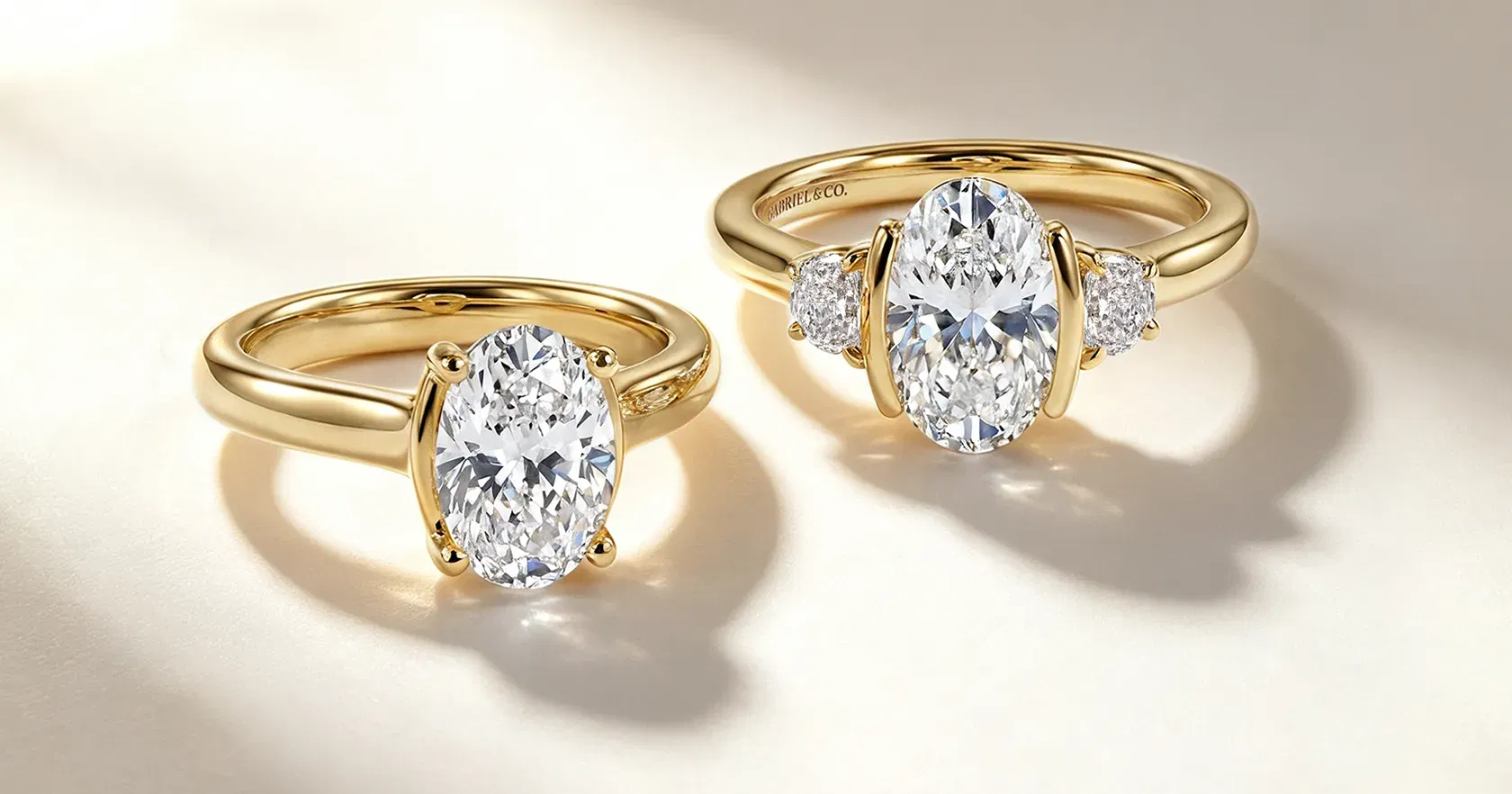
Before getting into each shape, it helps to decide on one thing first: do you want your side stones to match your center stone, or would you prefer mixing it up? Matching, like an oval center with oval sides, keeps every line moving in the same direction for a clean, cohesive look. Mixing, like an oval center with marquise sides, adds a bit of contrast and makes the ring feel more custom. Neither is more "correct"; it just depends on whether you want the ring to read as classic or a little more unexpected.
Getting the size ratio right
Side stones are almost always smaller than the center, and that's intentional: you want the center stone to stay the star of the show, with the sides adding balance rather than competing for attention. If the side stones are too large, the ring can lose that focal point; too small, and they can look like an afterthought. A good jeweler will help you land on a ratio that looks balanced for your specific center stone size.
The side stones people are choosing most
These three shapes make up the bulk of our best-selling three stone styles, and each brings something a little different to the ring.
Round side stones
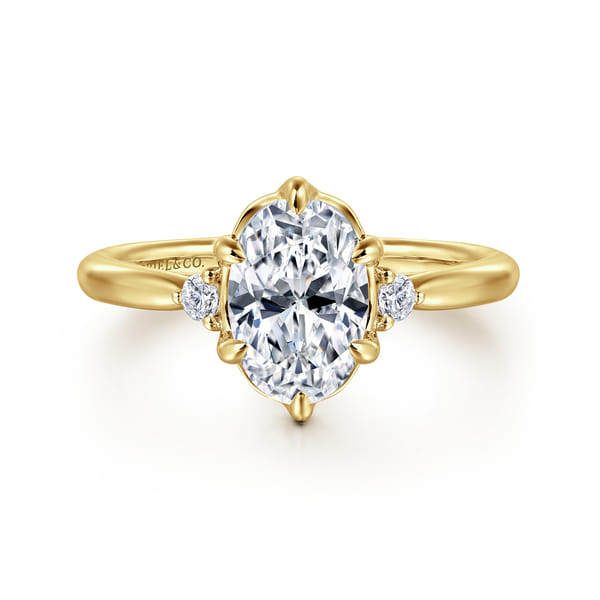
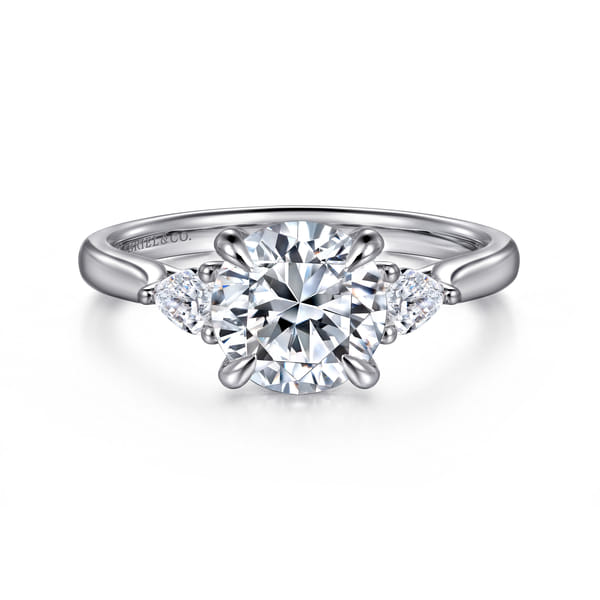
Round side stones are the classic, foolproof choice, and there's real logic behind why they've stuck around so long. Their brilliant-cut faceting is engineered for maximum light return, so even at a smaller size they throw off nearly as much sparkle as the center stone, and that same faceting is forgiving of small variations in color or clarity, which keeps the cost sensible without sacrificing brilliance.
They're also the most versatile side stone shape on this list. Paired with a round cut diamond center, they create one seamless, symmetrical line from end to end. Set beside an oval cut diamond or cushion cut center, their soft curves echo the primary stone without competing with it, which is why round side stones show up across so many different center shapes.
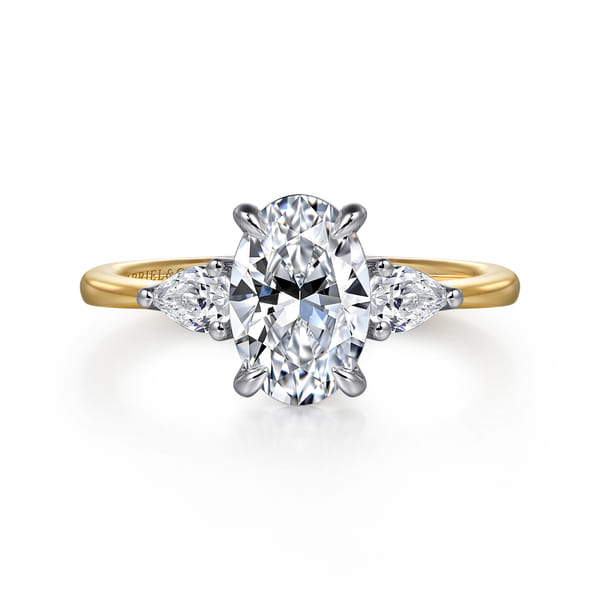
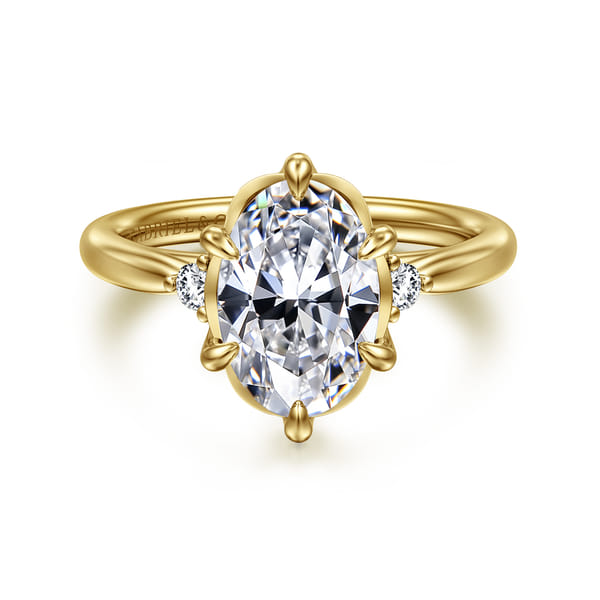
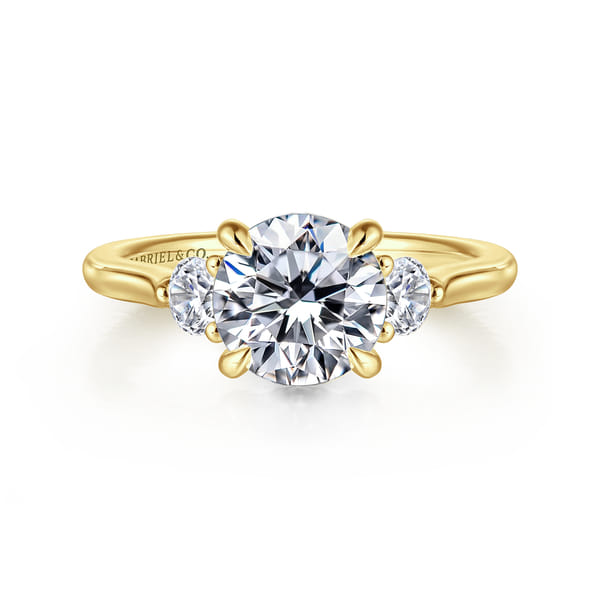
Pear side stones
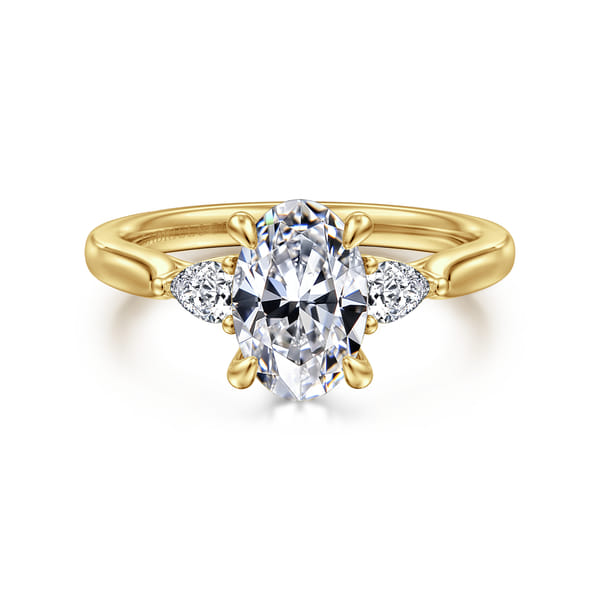
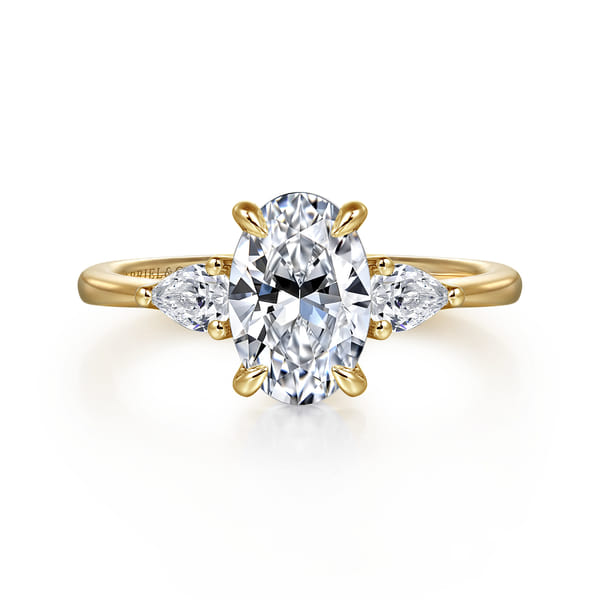
Pear side stones bring a soft, teardrop silhouette, essentially a hybrid of a round and a marquise cut, so they read as classic but a little more expressive. The tapered point adds gentle movement along the shank, and jewelers typically set the points facing outward, away from the center stone, so the whole ring reads as one flowing shape rather than two competing directions.
Pear side stones pair especially well with a round or oval center, since the curved edge of the pear echoes the curve of the primary stone, and they also complete a fully matched, romantic look next to a pear-shaped diamond. It's one of the shapes our best-seller data points to most, right alongside round and marquise.
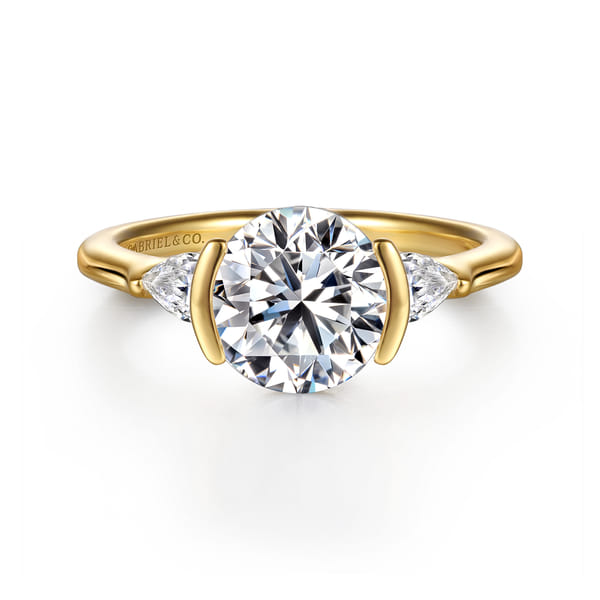
Marquise side stones
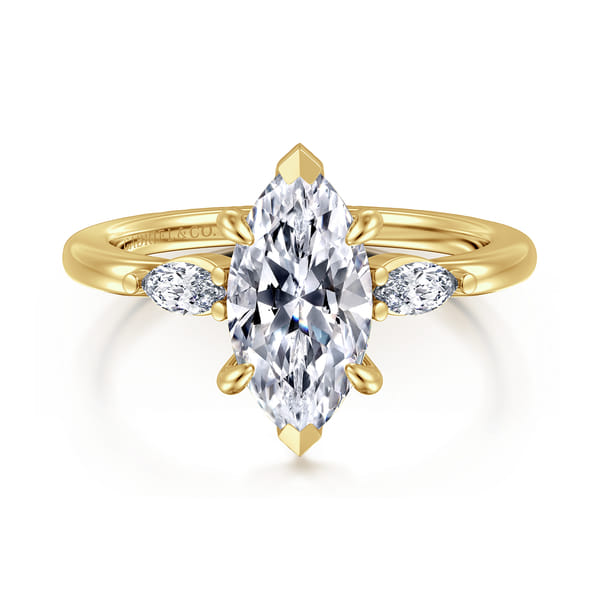
Marquise side stones are the boldest of the three, and that's exactly their appeal. Their elongated, pointed silhouette stretches the eye down the finger, adding a sense of length and drama that a rounder shape simply can't match. Because the points draw so much visual attention, they're often used to deliberately contrast with the center stone rather than match it.
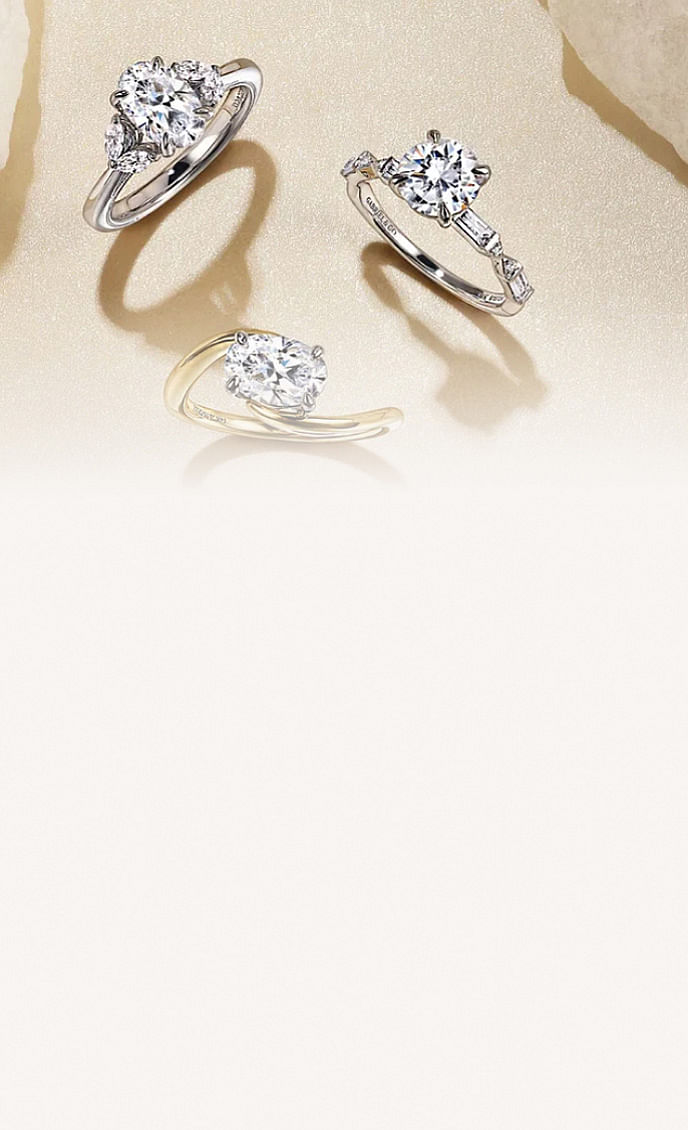
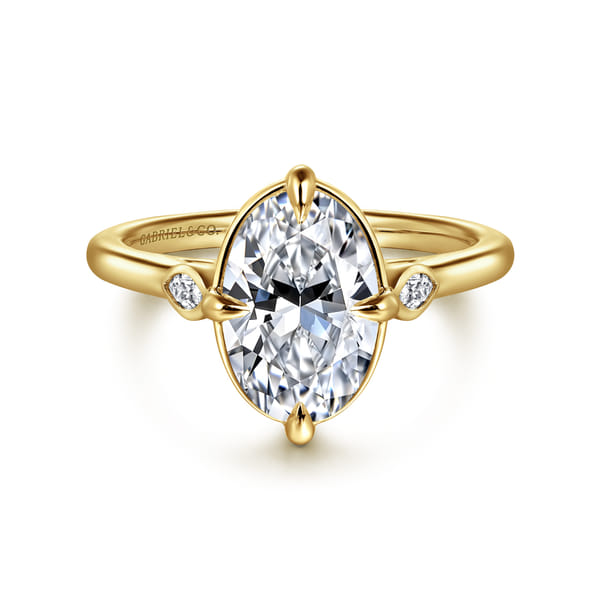
That's exactly what happens in our Charli style, where marquise side stones flank an oval center to add movement without competing with its curves, all set in a bezel for extra durability. Marquise side stones also look striking alongside a round center for a more classic pairing, or matched with a marquise cut diamond center for one fully elongated, dramatic silhouette from end to end.
Other side stone shapes worth considering
These shapes don't sell in quite the same volume, but they're all available and each one gives the ring a distinct personality. We don't have a best-seller example to link yet for these, so treat them as good options to explore rather than a track record of specific styles.
Oval side stones
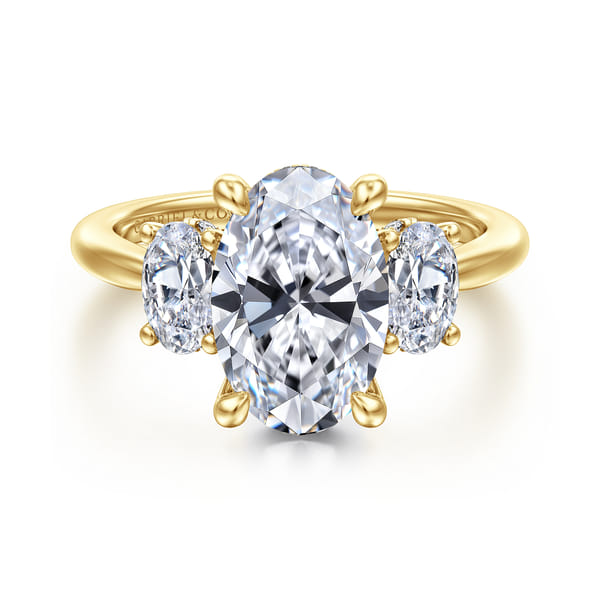
Oval side stones stretch the eye outward along the finger, giving the whole ring a more elongated, elegant look. They're most at home next to an oval center, where they extend that same soft curve in both directions for one continuous, flowing shape across all three stones, but they also work well flanking a round center if you want a slightly more elongated overall silhouette without changing the primary stone.
Baguette side stones
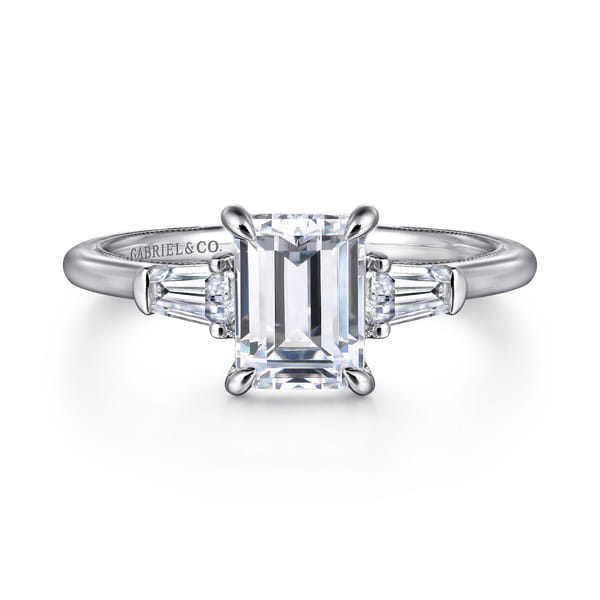
Baguettes are long, rectangular, and step-cut, giving the ring a sleek, art deco feel that reads as more architectural than romantic. A baguette rarely appears as a center stone itself, so it's almost always chosen to complement a fancy-shaped center: it pairs beautifully with an emerald cut diamond or a princess cut diamond center stone, where the straight lines of both stones echo each other for a clean, streamlined look.
Emerald cut side stones
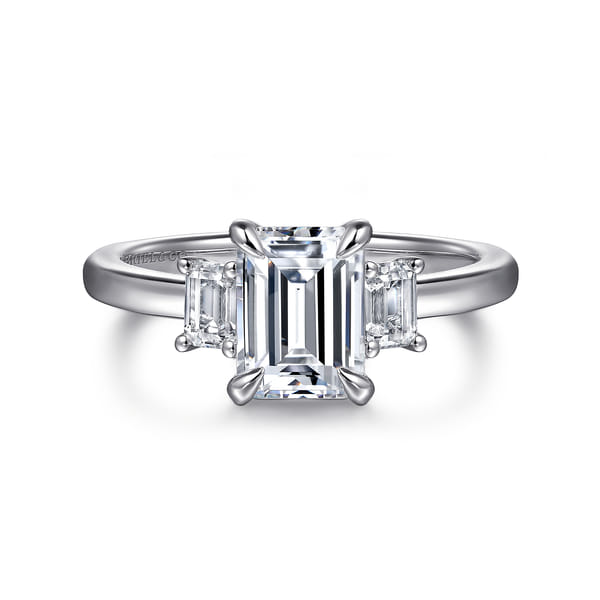
Emerald cut side stones bring the same open, step-cut faceting as the popular emerald cut center stone shape, just scaled down, so they photograph beautifully next to an emerald cut or a cushion cut diamond center for a fully matched, architectural look. Because emerald cuts show off clarity more than sparkle, this pairing looks best when the center and side stones are graded consistently, so there's no visible difference in clarity between them.
Princess cut side stones
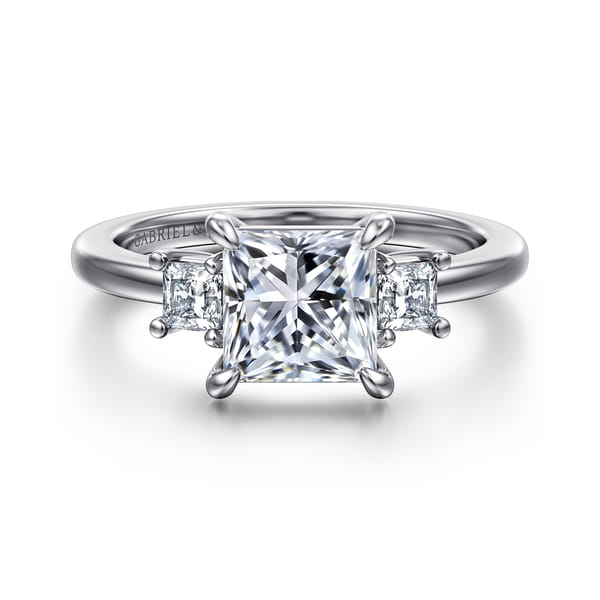
Princess cut side stones have crisp, square corners that give the ring a clean, geometric edge, and unlike some fancy shapes, princess cuts are cut to maximize brilliance, so they sparkle almost as much as a round stone. They're a natural match for a princess cut center for a fully coordinated, modern look, and they also work well as a crisp, structured accent next to a round or cushion cut center.
Heart-shaped side stones
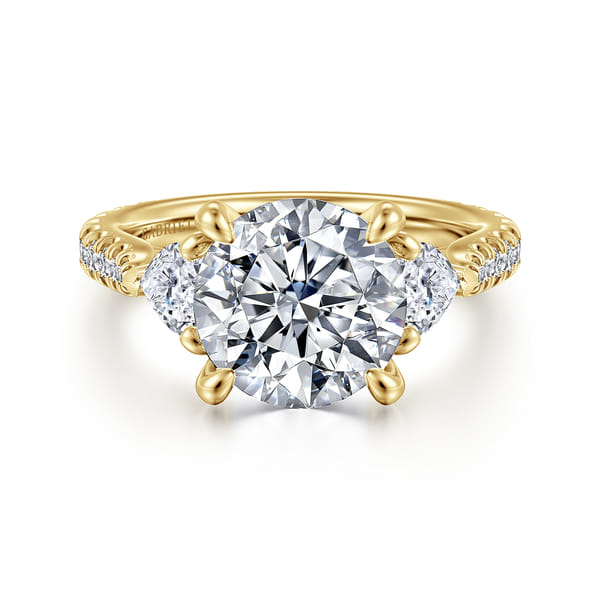
Heart-shaped side stones are the most overtly romantic option on this list, and they carry real symbolism for a piece that's already meant to represent past, present, and future. They're a sweeter, more playful choice for a couple who wants the ring to carry a little extra meaning, and they pair especially well with a round or cushion cut center, since the softer curves of both shapes complement each other rather than compete.
Kite-shaped side stones
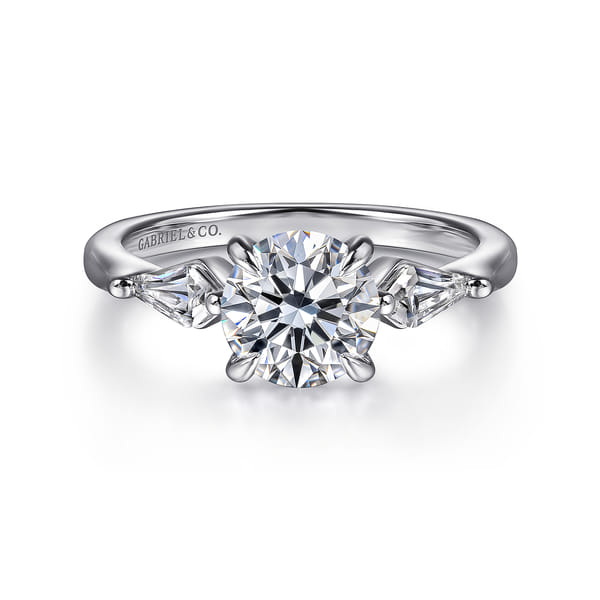
Kite-shaped side stones have four straight edges that meet at sharp points, giving the ring a bolder, more architectural line than any of the softer shapes on this list. They're a newer, more fashion-forward choice, and they pair especially well with an emerald cut or princess cut center, where the geometric lines of the side stones echo the same structured feel of the center stone.
Picking a setting that protects (and shows off) the sides
Prong settings leave more of the side stone exposed, which means more light gets in and more sparkle comes out. It's a classic look, but the prongs are something to be mindful of if you work with your hands a lot.
Bezel settings wrap a thin edge of metal around the stone instead. You lose a little bit of exposed surface, but you gain a lot of durability, plus a cleaner, more modern line, which is part of why the bezel-set Charli style has caught on.
Diamonds or colored stones on the sides?
All-diamond three stone rings are the most classic choice, and they keep the whole ring monochromatic and bright. But colored gemstones, like sapphires or emeralds, are a lovely way to add contrast and make the ring feel more personal, especially if the color has meaning to you as a couple.
FAQs
What are side stones on a three stone ring? ⌄
Do side stones have to match the center stone's shape? ⌄
How big should side stones be compared to the center stone? ⌄
What's the difference between prong and bezel-set side stones? ⌄
Can side stones be a colored gemstone instead of a diamond? ⌄
What's the most popular side stone shape right now? ⌄
Is a five stone ring different from a three stone ring? ⌄