Good to Have You Back

Garnet and ruby are two of the most confused red gemstones in fine jewelry, but they are not related. Ruby is the red variety of corundum, ranking 9 on the Mohs hardness scale, while garnet is a group of silicate minerals ranking 6.5 to 7.5. Ruby is rarer and significantly more expensive, typically running $1,000 to $20,000 or more per carat compared to $50 to $500 for fine garnet.
Garnet vs. ruby at a glance
| Feature | Garnet | Ruby |
| Composition | Silicate mineral group (multiple species: almandine, pyrope, spessartine, rhodolite) | Corundum, the red variety of aluminum oxide |
| Hardness (Mohs scale) | 6.5 to 7.5 | 9, one of the hardest natural gemstones |
| Color | Wine red to brownish red, often with orange undertones | Vivid, saturated red, finest stones show a blue undertone ("pigeon blood") |
| Typical price per carat | $50 to $500 for fine red stones | $1,000 to $20,000+ for fine natural stones |
| Birthstone month | January | July |
| Everyday wear | Best in earrings, pendants, and occasional-wear rings | Excellent for rings worn daily, including engagement rings |
| Lab-created options | Rare, most garnet on the market is natural | Common, lab-created rubies are widely available and budget-friendly |
Garnet vs ruby color and appearance
Both stones read as red at a glance, but the tone is different once you look closely. Ruby's finest examples show a vivid, saturated red, sometimes called "pigeon blood," with a subtle blue undertone that gives the stone extra brightness. Garnet tends to run warmer and deeper, showing wine red, burgundy, or brownish red, and it often carries a hint of orange.
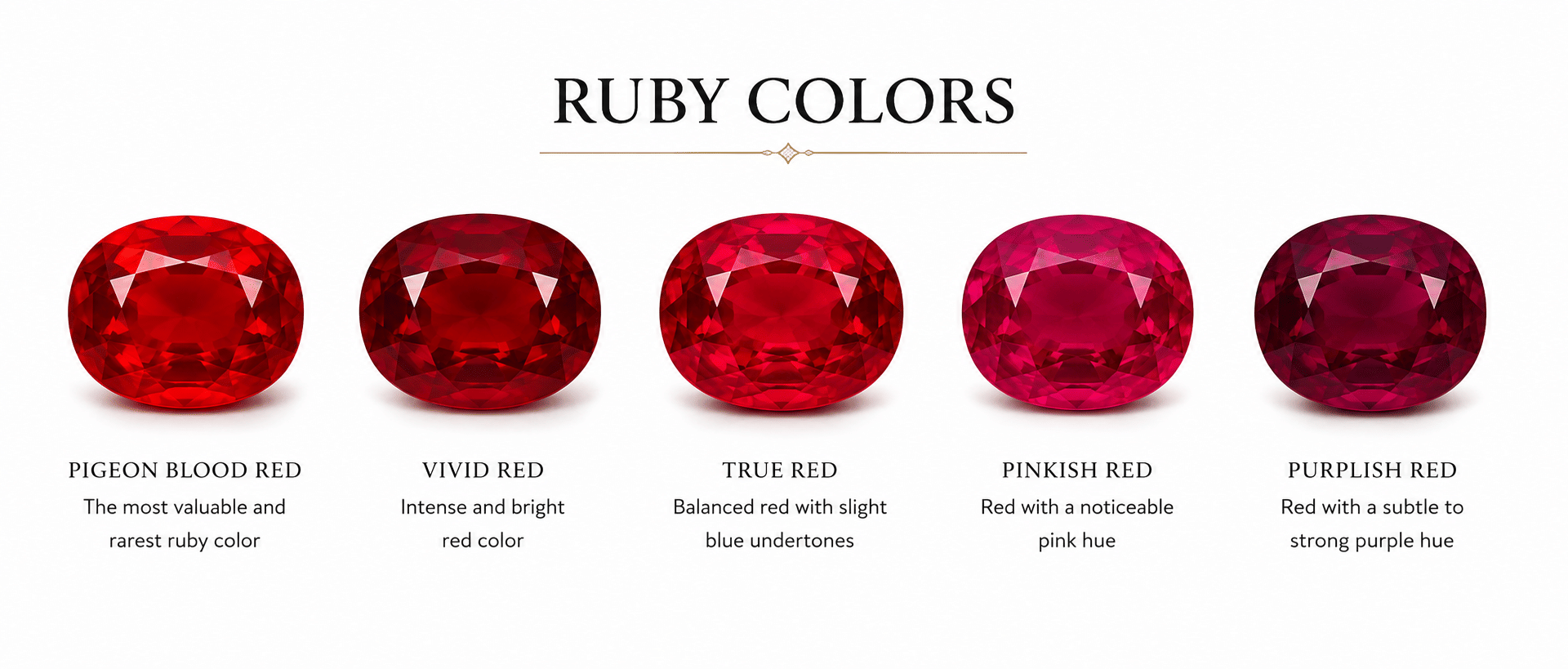
Garnet also behaves differently in light. Because it is singly refractive, it can show a rainbow-like flash across its surface when tilted. Ruby, a doubly refractive stone, shows a more concentrated glow and can display pleochroism, meaning it shows a different shade of red depending on the angle it is viewed from.
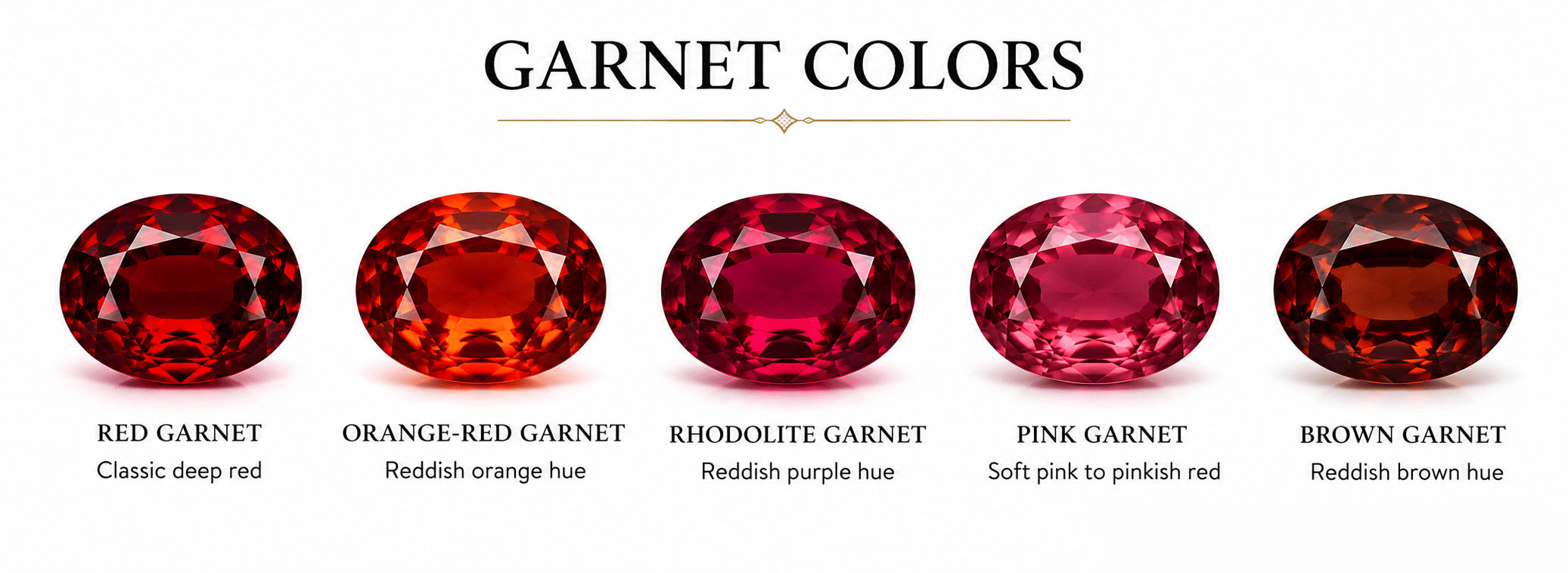
It is worth noting that red is only one option within the garnet family, not the whole story. Garnet is a group of related silicate minerals, and different species produce different colors: tsavorite and demantoid garnets are green, spessartine runs orange, and rhodolite leans purplish pink. Ruby, by contrast, is defined specifically as the red variety of corundum, so "ruby" always means red by definition. When people say "garnet," they usually mean the red varieties, pyrope and almandine, since those are the most common in jewelry and the closest comparison to ruby.
Learn more about these two gemstones in our guides:
Composition and durability
Ruby is composed of aluminum oxide colored by trace chromium, the same mineral family as sapphire. Its hardness of 9 on the Mohs scale makes it one of the toughest gemstones available for jewelry, second only to diamond, which is why it holds up well in rings worn every day.
Garnet is not one mineral but a family of related silicate species, including almandine, pyrope, spessartine, and rhodolite, each with a slightly different chemical makeup and color range. At 6.5 to 7.5 on the Mohs scale, garnet is durable enough for regular wear but more prone to scratching over time than ruby. It is a better fit for earrings, pendants, and rings that see occasional rather than daily wear.
Garnet vs ruby price and value
Price is where the two stones diverge the most. Fine natural ruby is one of the rarest gemstones in the world, while garnet is abundant by comparison, which keeps it accessible even at larger carat weights.
Per-carat value (loose stone)
- Ruby: approximately $500 to $15,000 per carat for fine natural stones, with exceptional "pigeon blood" quality able to exceed $100,000 per carat
- Garnet: approximately $50 to $500 per carat for fine natural red garnet, such as almandine and pyrope.
Gabriel & Co. jewelry price range (finished pieces)
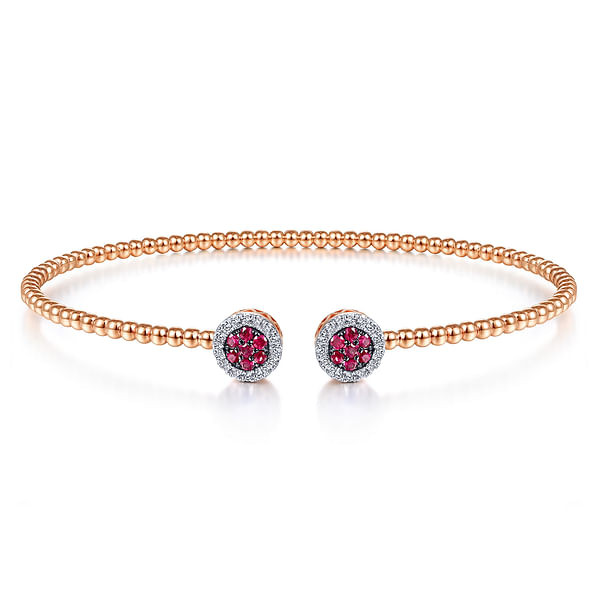
- Ruby jewelry: $145 to $5,300, spanning sterling silver styles to 14K gold designs with diamond accents
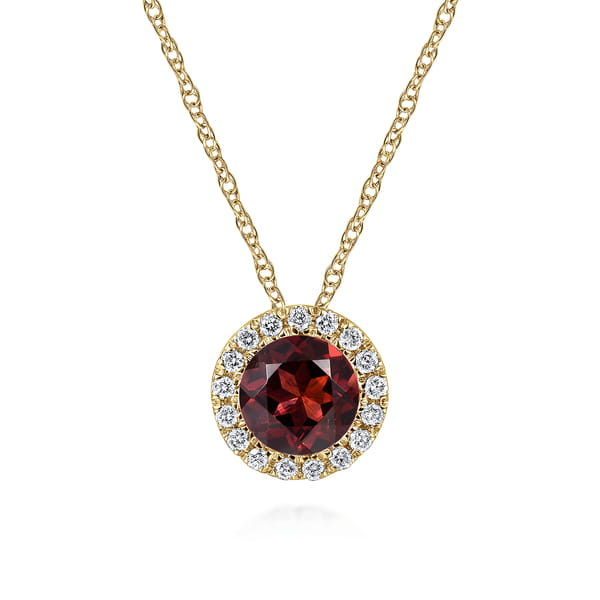
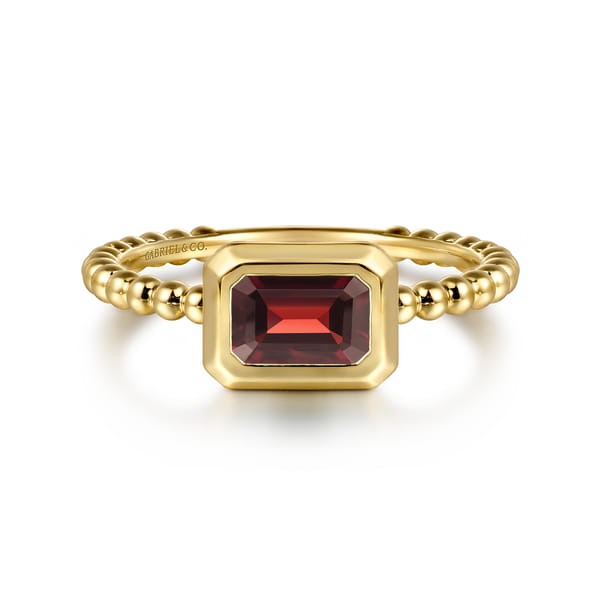
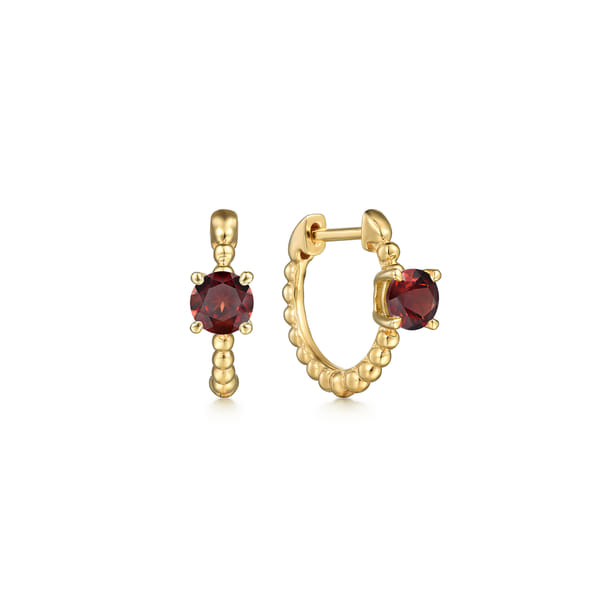
- Garnet jewelry: $120 to $4,200, spanning sterling silver styles to statement 14K gold pieces
How to choose between garnet and ruby
The right stone depends less on which one is "better" and more on how the piece will be worn and what the budget allows.
Choose ruby if:
- You want a piece worn daily, such as an engagement ring, and need maximum durability
- You are drawn to a brighter, more saturated red
- You want a stone with long-term investment value
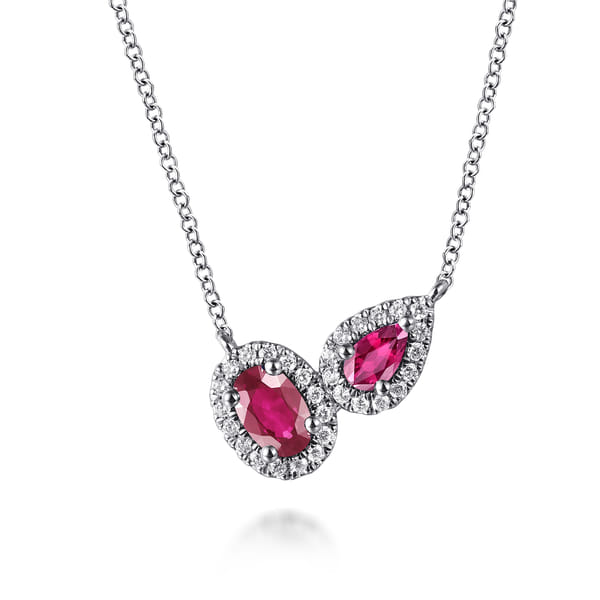
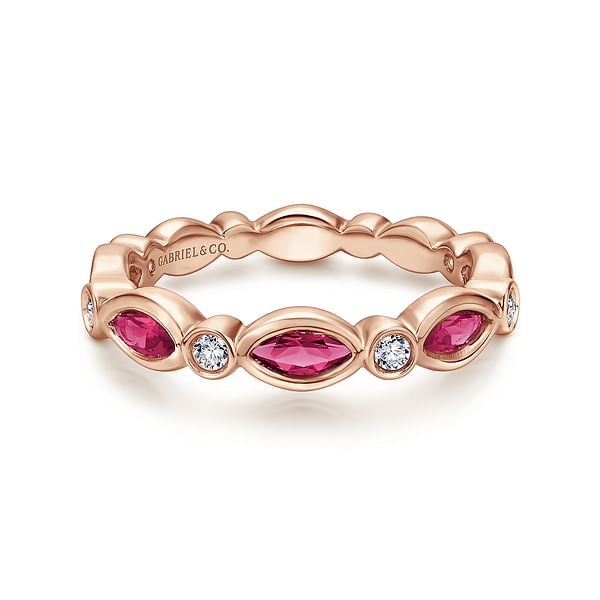
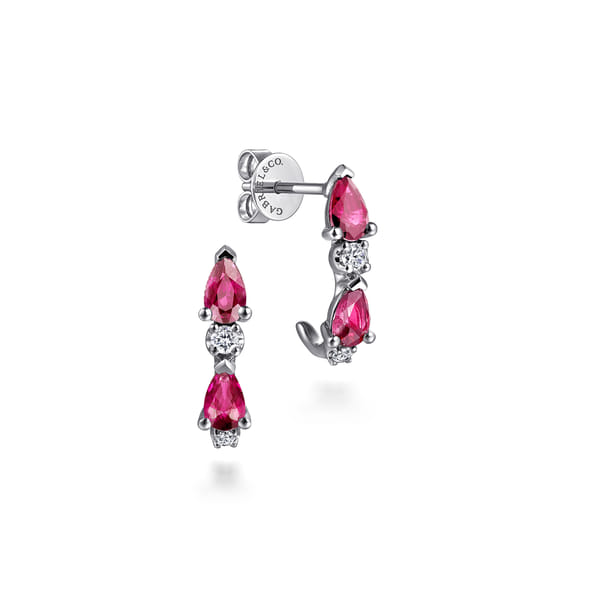
Choose garnet if:
- You want the look of a rich red gemstone at a more accessible price
- The piece is an earring, pendant, or occasional-wear ring
- You prefer a warmer, deeper red tone with vintage character
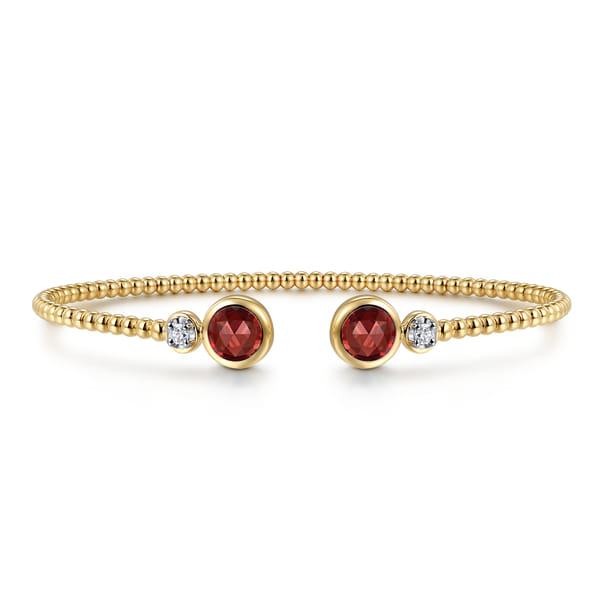
Ruby vs. garnet: which is the better birthstone gift?
Garnet is the birthstone for January, and ruby is the birthstone for July, so the choice is often made for you by the recipient's birth month rather than by preference alone. Both stones also appear in anniversary traditions: garnet marks the second wedding anniversary, while ruby marks the fortieth.
FAQs
Is garnet a good alternative to ruby? ⌄
Can you tell garnet and ruby apart with the naked eye? ⌄
Which is more durable for an engagement ring, garnet or ruby? ⌄
Is garnet cheaper than ruby? ⌄
What is the birthstone difference between garnet and ruby? ⌄
Does garnet come in colors other than red? ⌄