Good to Have You Back
Welcome
to the exciting world of engagement ring shopping. If you are reading
this blog we can safely assume that you’re well into the educating
yourself stage and so, much kudos to you! It may feel overwhelming
with all the new terminology you are uncovering, who knew there was
so much to consider! The center stone, the carat weight, the 4 C’s,
the semi-mounting just to name a few. Not to overwhelm you further,
but another factor to consider is the ring height, and most women do
in fact have a preference on this.
How Can You Tell?
Setting
a diamond into a mounting essentially means that it becomes one with
it; depending on the size of the stone and how it is set it may get
lost in the ring. When
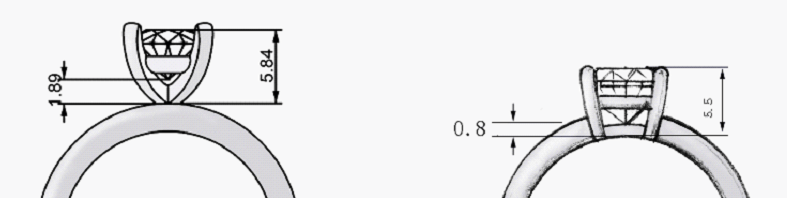
looking at the side profile of the diamond engagement ring you can notice how the stone
is being held in the setting. If it sits low, closer to the band,
it’s called a low setting, but if the stone is held up high and you
can see space between the culet (bottom tip of the diamond) and the
band, it’s considered a high setting.
Both
options are beautiful but let’s explore the pros and cons of each.
High Setting or High Profile

If you have an amazing show-stopping stone of exceptional quality and brilliance and a simple setting such as a solitaire, setting it high will make it seem even bigger and brighter than it already is. Less metal covering the bottom of the stone means more light can filter in and make that stone really sparkle. It’s literally putting your bling on a pedestal and all the rest is the supporting crew. Many women prefer this option for obvious reasons. This way of setting the stone also tends to look more modern and contemporary. The con to this is that when a stone is set very high it can get scratched, loosened, or the prongs can get damaged. Rings with a high setting can also damage other things if you’re not careful, like furniture and snag on clothing, hair and sheets. Those with a very active lifestyle or a career that uses their hands a lot (think doctor, chef or masseuse), can still get a high set engagement ring, but should take extra care not to dent, chip or scratch it; in fact, it’s best to not wear the ring at work and maybe just wear the straight wedding band .
Low Setting or Low Profile

Low setting vintage style engagement rings look great in this type of setting but this is not a hard set rule. Because these settings tend to be more ornate, the center stone is not the only attraction; the overall setting and stone together make the statement. Low set engagement rings are generally preferred by those with a more active lifestyle or hands-on career, because you’re less likely to scratch the stone or hit the ring on hard surfaces. The stone is also less prone to get damaged as it is well set inside the setting and so better protected. The cons to this setting is that the stone brilliance is not maximized and the stone, especially if small, can get lost inside the setting.
Setting
height is not the most important feature in an engagement ring but
from a practical aspect it most definitely deserves consideration.
There are many beautiful ring options available in both setting
types, so consider the wearer’s lifestyle and preferences when
choosing an engagement rings that will best suit her individual style
needs.
Shop all Gabriel & Co. engagement rings here.