Good to Have You Back

Gold jewelry goes through a lot. Lotion, soap, perfume, sweat, sunscreen, cooking oils, dust, and everyday wear can all leave pieces looking dull over time. Even gold rings and chain necklaces, when worn carefully, can gradually lose their shine once buildup starts to collect around the surface, clasps, settings, and small details.
Our jewelry experts broke down how to clean gold jewelry at home, including gentle at-home techniques, deeper cleaning methods, professional options, and common mistakes that can damage your pieces.
Why does gold jewelry get dull?
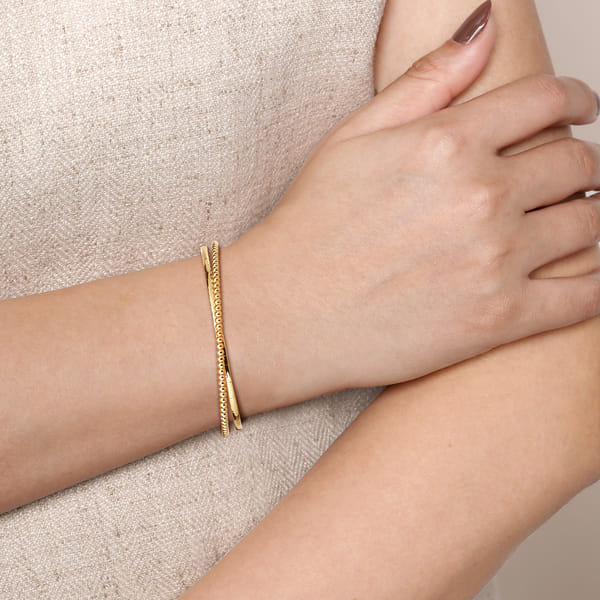
Pure gold does not tarnish easily, but most gold jewelry is made from alloys that combine gold with other metals for strength and durability. Over time, residue from daily wear can coat the surface and reduce its shine.
Some of the most common causes include:
- Soap and lotion buildup
- Hard water residue
- Perfume and hairspray
- Sweat and body oils
- Makeup and sunscreen
- Dust and pollution
- Chlorine and harsh chemicals
Before cleaning gold jewelry, check the type of piece
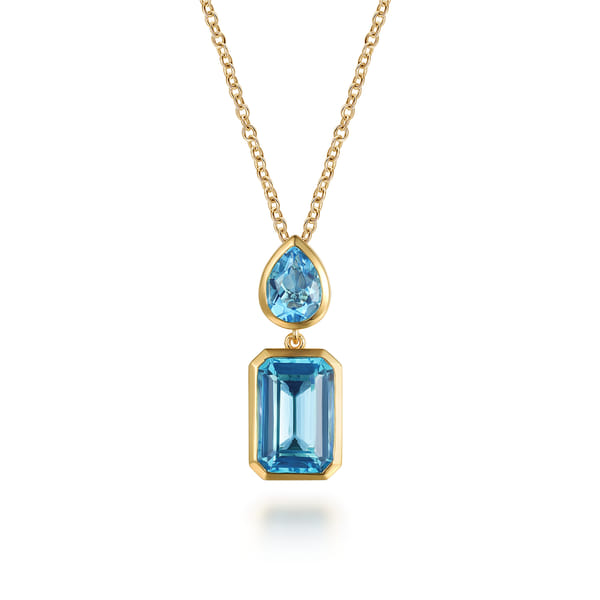
Not every gold jewelry piece should be cleaned the same way. A simple, solid gold band can handle more than a vintage ring with delicate detailing or a necklace with gemstones.
Before cleaning, consider:
- Whether the piece is solid gold, gold vermeil, or gold-plated
- If it contains diamonds, pearls, opals, emeralds, or other gemstones
- Whether the setting has pavé stones or delicate vintage details
- If the piece is antique or heavily worn
- Whether any stones feel loose
When in doubt, professional cleaning is always the safest route.
How to clean gold jewelry at home
These cleaning methods are generally safe for yellow gold jewelry, white gold jewelry, and rose gold jewelry, though pieces with gemstones, delicate settings, or vintage details may require additional care.
Method 1: warm water and dish soap
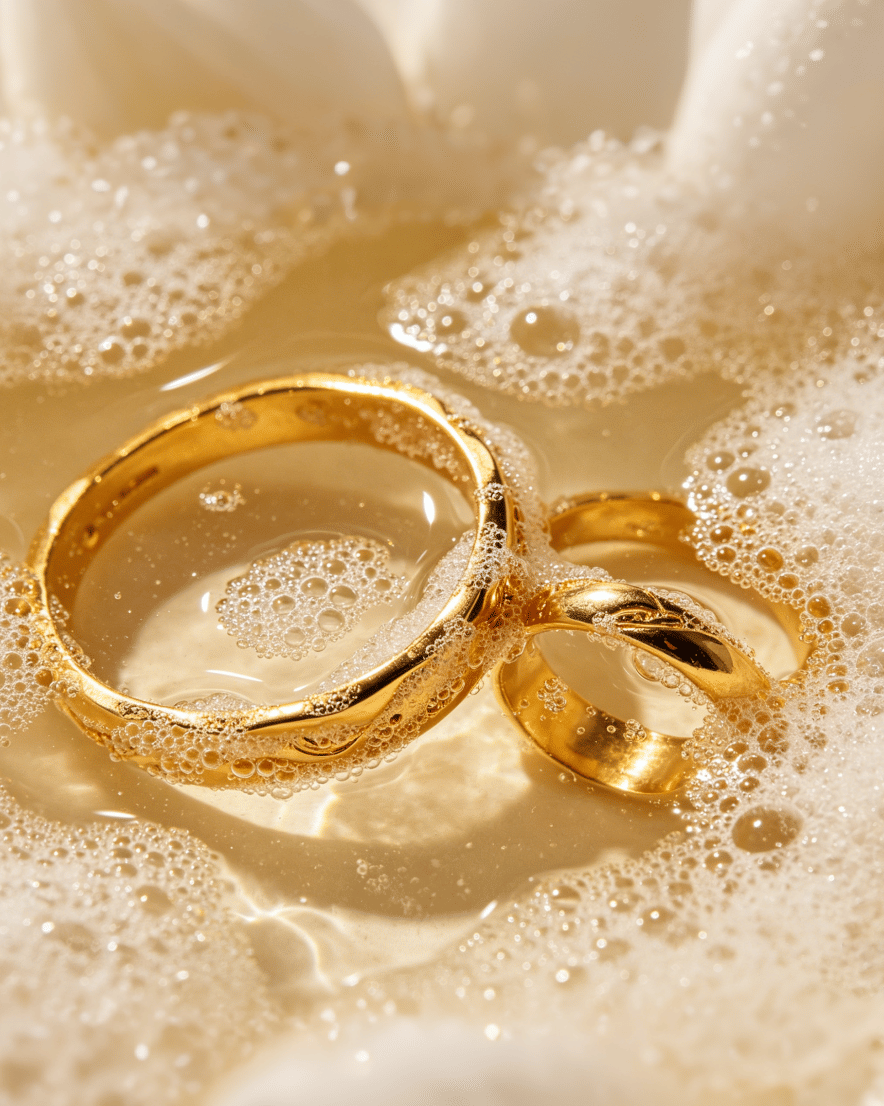
Warm water and dish soap are the best way to clean gold jewelry at home because it helps remove everyday buildup without being too harsh on the metal.
1- Fill a small bowl with warm water and add a few drops of mild dish soap.
2- Let the jewelry soak for 15 to 20 minutes to loosen residue and buildup.
3- Use a soft toothbrush to gently clean around crevices, clasps, and settings.
4- Rinse the piece thoroughly with clean water.
5- Pat dry with a soft microfiber or lint-free cloth and allow it to fully air dry before storing or wearing it again.
Method 2: Jewelry polishing cloth
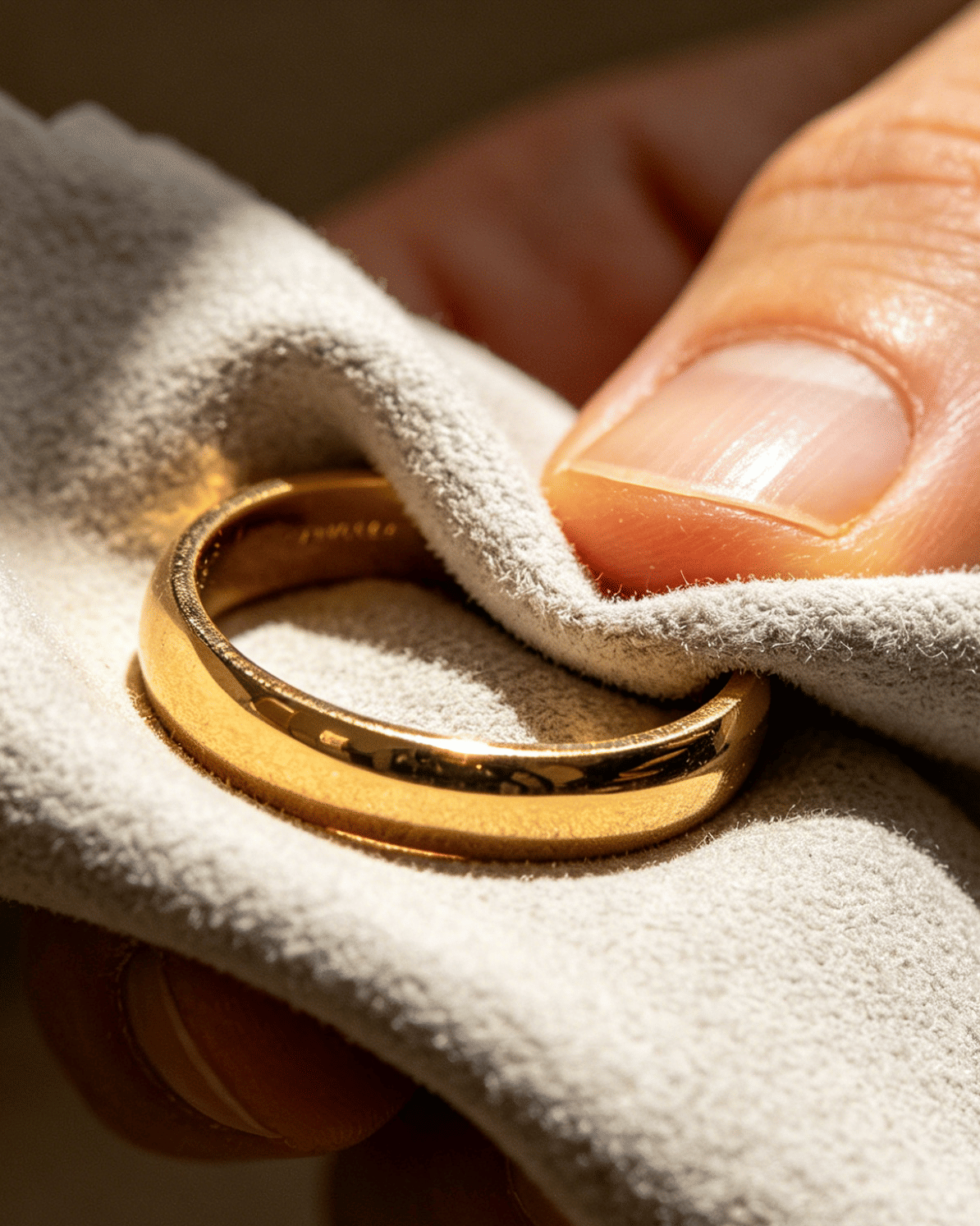
A jewelry polishing cloth is a simple way to restore shine between deeper cleanings, especially for gold jewelry that has started looking dull from everyday wear.
1- Use a clean jewelry polishing cloth specifically designed for fine jewelry.
2- Gently rub the surface of the jewelry using light pressure.
3- Focus on areas where fingerprints, smudges, or residue tend to collect.
4- Avoid rubbing too aggressively around delicate settings or detailed designs.
5- Store the cloth separately to keep it free from dirt and debris that could scratch the metal.
Method 3: Jewelry cleaning solution
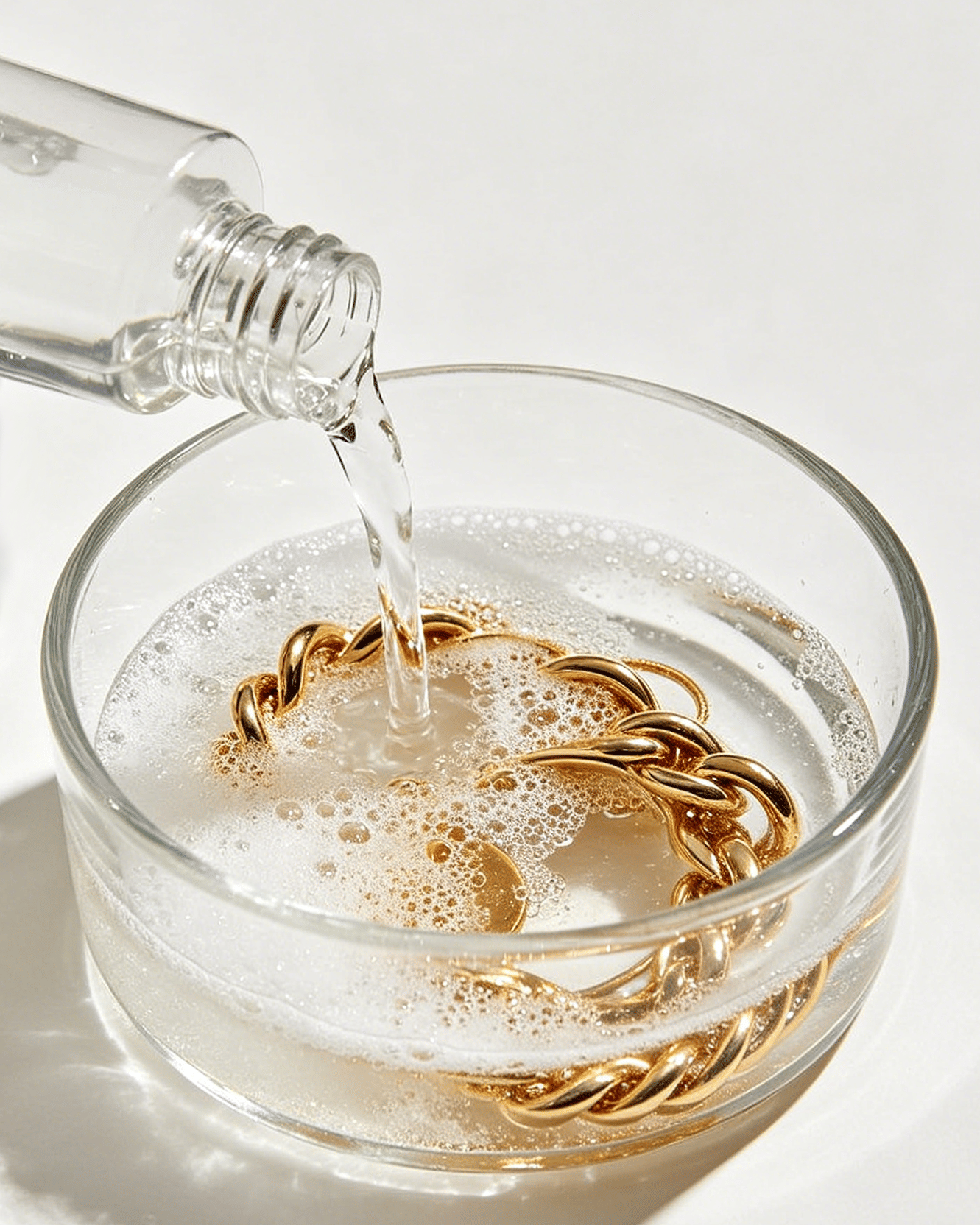
Jewelry cleaning solutions can help remove heavier buildup and restore shine, but it is important to use one that is specifically formulated for gold jewelry.
1- Read the product instructions carefully before use.
2- Place the jewelry into the cleaning solution for the recommended amount of time.
3- Use a soft brush if needed to gently loosen buildup around settings and small details.
4- Rinse the jewelry thoroughly with clean water after cleaning.
5- Dry the piece completely with a soft cloth before wearing or storing it.
Method 4: Ultrasonic cleaner
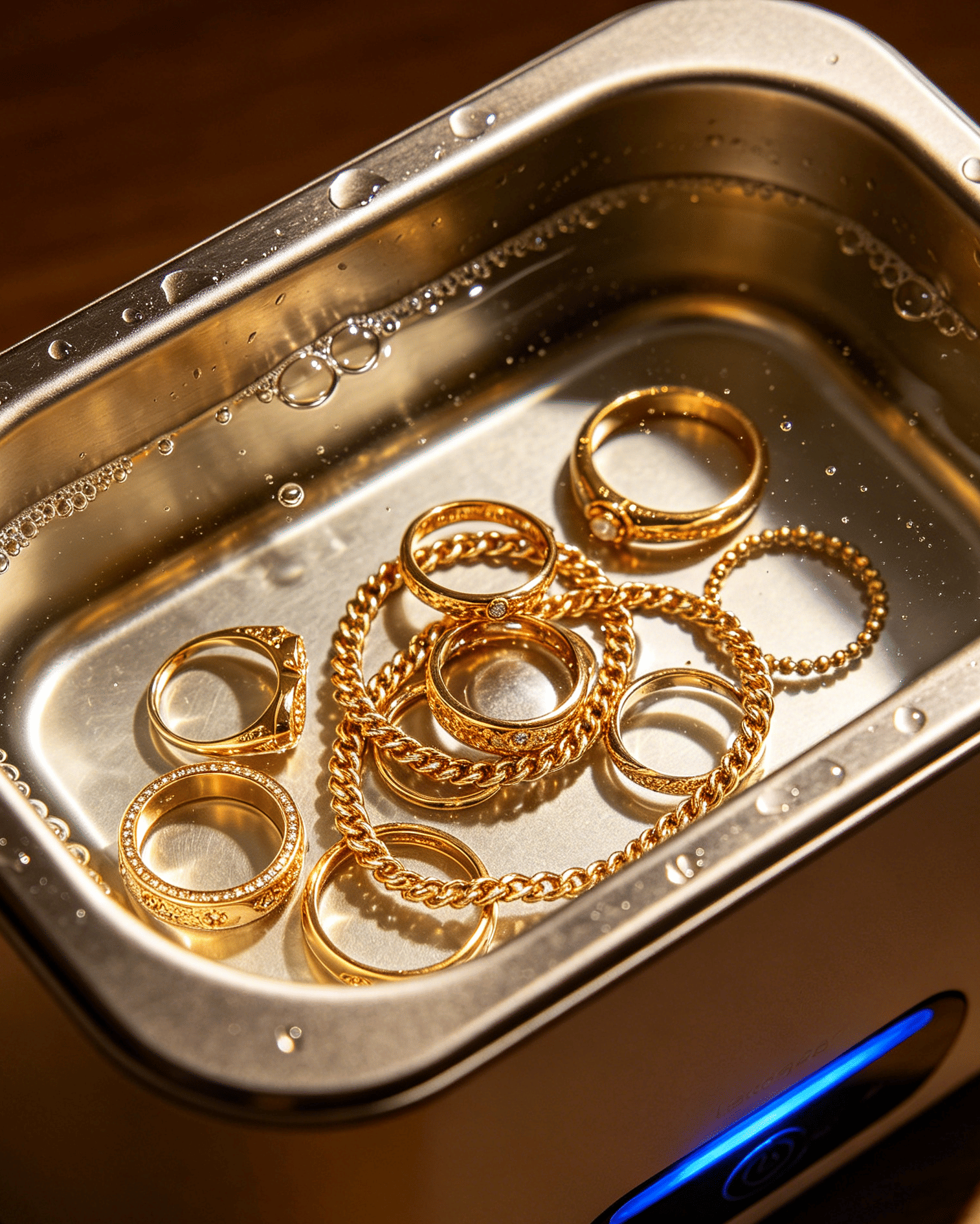
Ultrasonic cleaners use vibrations to lift dirt and buildup from jewelry and are often used for a deeper clean.
1- Fill the ultrasonic cleaner with the recommended cleaning solution or water according to the manufacturer’s instructions.
2- Place the jewelry carefully inside the machine without overcrowding it.
3- Run the cleaner for the recommended cycle length.
4- Remove the jewelry carefully once the cycle is complete.
5- Rinse and dry the piece thoroughly with a soft cloth.
Ultrasonic cleaners may work for:
- Solid gold jewelry
- Diamond jewelry with secure settings
- Durable pieces without fragile stones
Avoid using them for:
- Pearls
- Opals
- Emeralds
- Turquoise
- Vintage jewelry
- Jewelry with loose stones
- Gold plated pieces
If you also wear sterling silver pieces, read our guide on How to Clean Silver Jewelry for expert tips on keeping your jewelry looking its best at home.
Gold jewelry cleaning methods to avoid
Many DIY jewelry cleaning methods circulate online, but not all of them are safe for fine gold jewelry. Some ingredients and techniques can gradually damage finishes, scratch surfaces, weaken settings, or wear down plated layers over time.
Our experts recommend avoiding the following methods when cleaning gold jewelry.
Can you clean gold jewelry with baking soda?
Baking soda is often suggested as a DIY jewelry cleaner because it can help remove buildup, but our experts advise against using it regularly on gold jewelry.
Baking soda, being mildly abrasive, may scratch polished surfaces, wear down finishes, and damage gold-plated jewelry over time. It can also be risky for jewelry with gemstones or delicate detailing.
For routine cleaning, gentler methods are far safer for preserving the appearance and condition of gold jewelry.
Can you clean gold jewelry with toothpaste?
Despite how commonly this tip appears online, toothpaste is not recommended for cleaning gold jewelry.
Most toothpaste formulas contain abrasive particles designed for cleaning teeth, which can leave fine scratches on gold surfaces and dull high-polish finishes over time.
This is especially risky for gold-plated jewelry, vintage pieces, and jewelry with softer gemstones or detailed craftsmanship.
Can you clean gold jewelry with vinegar?
Vinegar is another popular at-home cleaning suggestion, but our experts do not recommend it for routine gold jewelry care.
Because vinegar is acidic, it may be too harsh for delicate settings, plated finishes, and certain gemstones. Repeated exposure can gradually affect the appearance of more delicate jewelry pieces.
For fine jewelry, safer cleaning methods are always the better option.
Other methods to avoid:
- Bleach
- Chlorine
- Harsh household cleaners
- Paper towels or rough fabrics
- Abrasive brushes
- Excessive scrubbing
- Boiling water
- Cleaning unknown gemstones without checking care instructions first
Steam cleaning gold jewelry
Professional jewelers sometimes use steam cleaners to remove buildup quickly and restore shine.
Steam cleaning can be effective for durable gold jewelry, but it should be handled carefully because heat and pressure may damage fragile gemstones or loosen settings.
For most people, professional steam cleaning is safer than attempting it at home.
How to clean gold-plated jewelry
Gold-plated jewelry requires more care than solid gold because the outer gold layer is much thinner and can wear down over time.
Our experts recommend avoiding abrasive cleaning methods, including baking soda, toothpaste, polishing compounds, and rough brushes, since these can strip away the plating more quickly.
Instead:
- Wipe pieces gently with a soft microfiber cloth
- Use lukewarm water with a small amount of mild soap if needed
- Avoid soaking for long periods
- Dry immediately after cleaning
- Keep plated jewelry away from perfume, chlorine, and moisture when possible
How often should you clean gold jewelry?
That depends on how often you wear it.

Everyday jewelry
Rings, bracelets, and gold earrings worn daily can benefit from gentle cleaning every few weeks.
Occasional jewelry
Pieces worn less often may only need cleaning every few months.
Professional cleaning
Experts often recommend professional inspections and cleanings once or twice a year, especially for fine jewelry with stones.
How to keep gold jewelry clean longer
Cleaning helps, but prevention also matters. Here are the small habits that can help preserve shine between cleanings.
Expert tips for maintaining gold jewelry
- Remove jewelry before swimming
- Avoid spraying perfume directly onto jewelry
- Take rings off before cleaning or cooking
- Store pieces separately to prevent scratching
- Wipe jewelry gently after wearing it
- Keep chains and bracelets away from humidity when possible
Wrapping things up
Gold jewelry naturally picks up buildup over time, especially when worn daily, but proper care can help preserve its shine and finish for years. If your piece features diamonds, you can also read our guide on How to Clean a Diamond Ring for more gemstone-specific care tips. And if you love platinum jewelry, we also have a guide on How to Care for and Maintain Platinum Jewelry.
FAQs
How do you clean gold jewelry at home safely?
Use warm water, mild dish soap, and a soft brush. Gently scrub, rinse, and dry with a soft cloth to restore shine without damage.
What is the best way to clean gold jewelry without damaging it?
Stick to gentle methods like soap and water. Avoid harsh chemicals, abrasive materials, and rough scrubbing to protect the finish.
Can you use baking soda or vinegar to clean gold jewelry?
It’s not recommended. These can be too abrasive or acidic and may damage gold or loosen stones over time.
How often should you clean gold jewelry?
Light cleaning every 1–2 weeks and a deeper clean once a month helps maintain shine and prevent buildup.
How do you clean gold rings with diamonds or gemstones?
Use mild soap, warm water, and a soft brush. Avoid soaking delicate stones and always dry thoroughly to prevent residue.
Can you clean gold jewelry with toothpaste?
No. Toothpaste is abrasive and can scratch gold, reducing its shine and smooth finish.
What should you avoid when cleaning gold jewelry?
Avoid bleach, chlorine, ammonia, toothpaste, and rough brushes. These can damage gold and weaken settings.
How do you make gold jewelry shiny again?
Clean with mild soap and water, then polish gently with a soft cloth to restore its natural luster.