Good to Have You Back

Silver jewelry is meant to be worn, not tucked away. Daily wear exposes it to air, moisture, and skin oils, which naturally lead to tarnish over time. While tarnish is normal, using the wrong cleaning methods can cause scratches, surface wear, or faster discoloration. This guide explains how to clean silver jewelry safely, highlights which methods to avoid (even if they’re popular online), and shares practical tips for the best way to clean silver jewelry at home.
Why silver tarnishes in the first place
Tarnish isn’t dirt; it’s a chemical reaction. When silver comes into contact with sulfur compounds in the air, humidity, skincare products, or even certain fabrics, it forms a dark layer on the surface. This doesn’t mean your jewelry is damaged, but it does mean it needs thoughtful care. The key is choosing safe methods to clean silver jewelry that remove tarnish without stripping or scratching the metal.
Before cleaning any piece, it’s worth knowing what type of silver you’re working with. Solid sterling silver, silver-plated jewelry, and other silver alloys all react differently to cleaning methods. If you’re not sure what you have, our guide on silver hallmarks and what they mean can help you identify your jewelry before you begin.
1. Mild soap and warm water (best for regular cleaning)
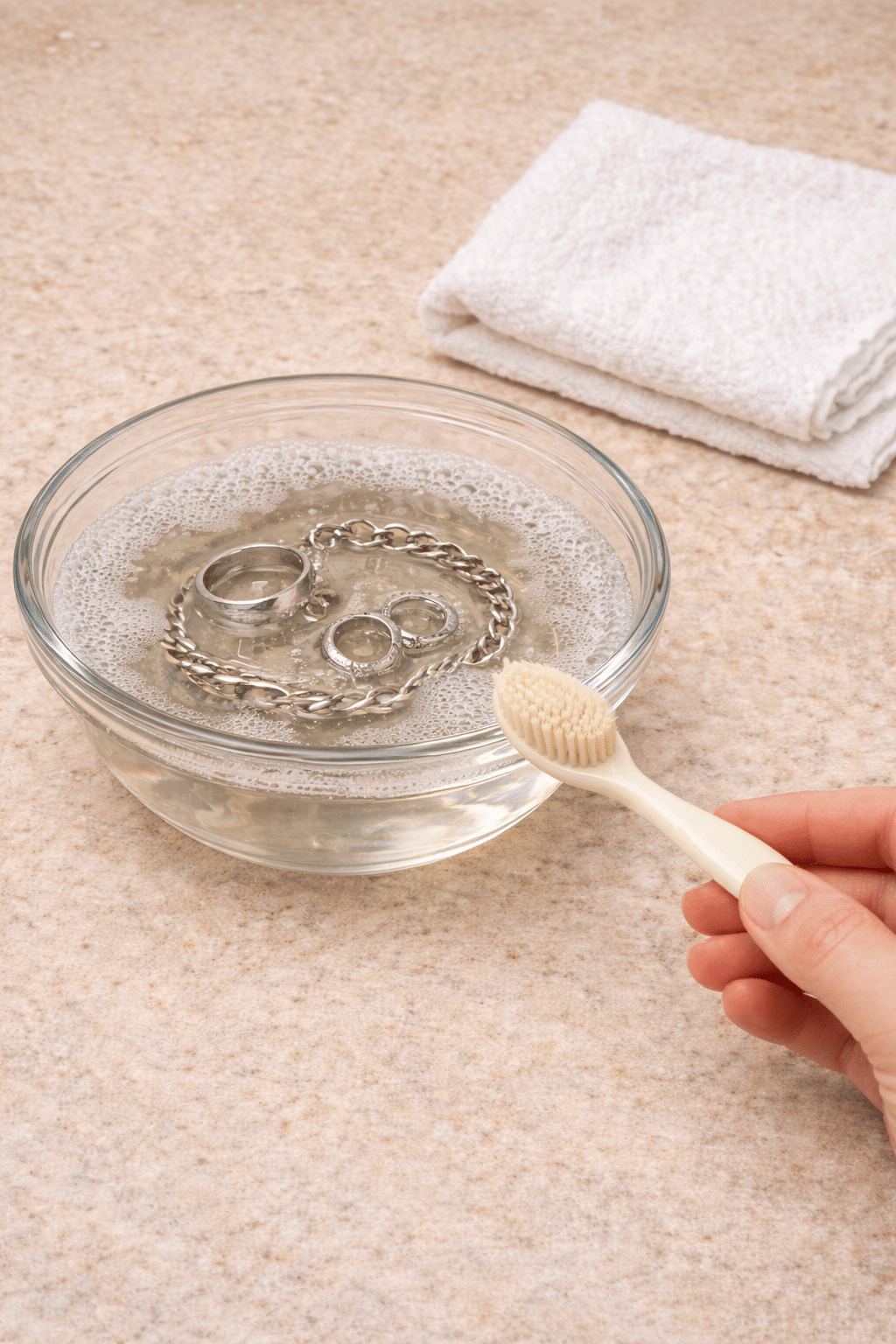
This is the safest and most universally recommended option for routine care and one of the best ways to clean silver jewelry at home. It removes everyday oils, dust, and light tarnish without stressing the metal.
How to do it:
- Mix a few drops of mild dish soap with warm (not hot) water.
- Soak your jewelry for 2–5 minutes.
- Gently clean crevices with a soft toothbrush or cloth.
- Rinse thoroughly with lukewarm water.
- Dry completely with a lint-free cloth.
Why it works:
It’s non-abrasive and doesn’t alter silver’s surface, making it safe for most sterling silver pieces and many gemstone settings.
Quick tip:
Avoid soaking jewelry with porous stones like pearls, opals, or turquoise.
2. Silver polishing cloth (for light tarnish)
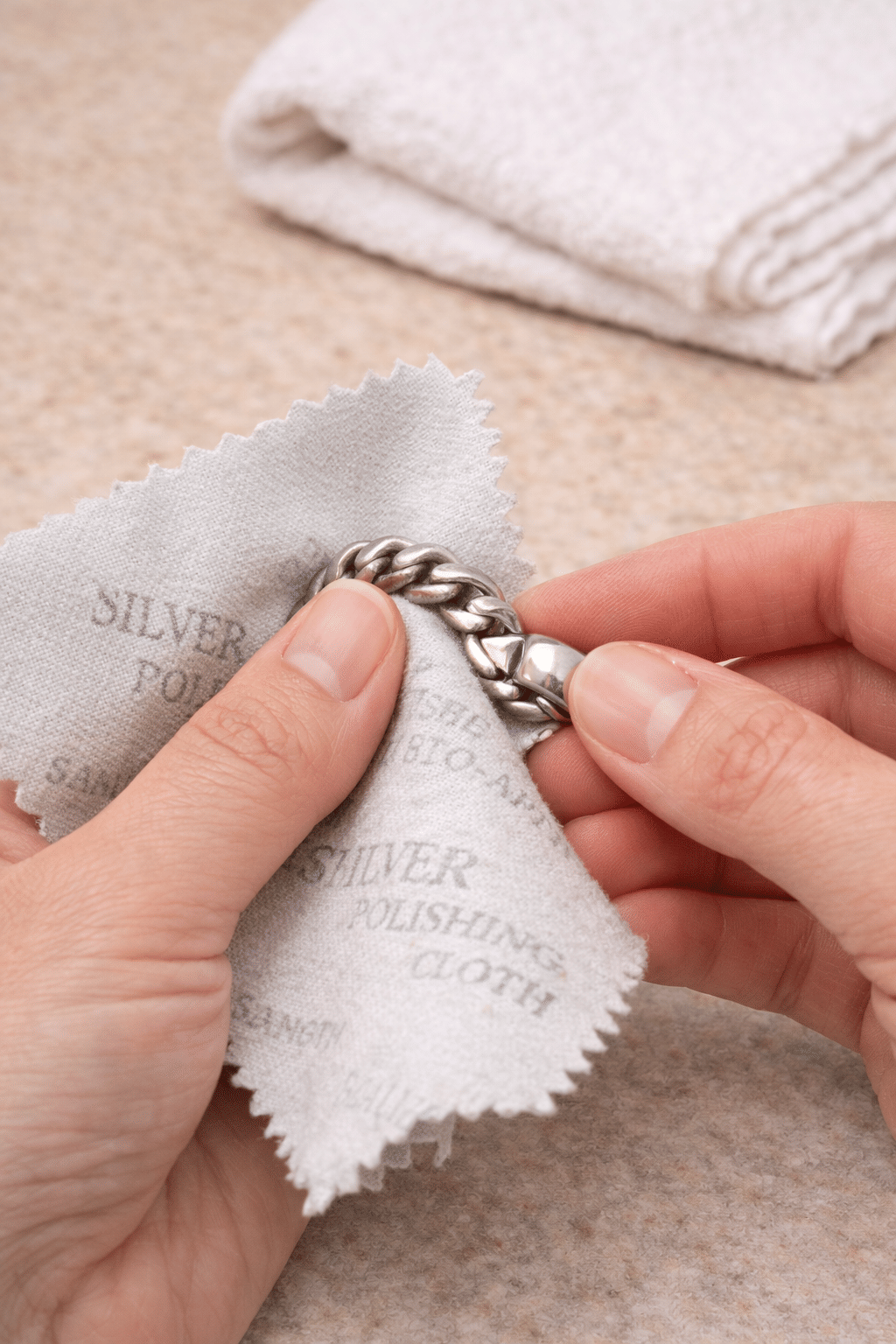
A silver polishing cloth is designed specifically for silver and is one of the safest ways to restore shine when you’re dealing with mild discoloration. It’s especially useful when learning how to remove tarnish from silver jewelry without liquid cleaners.
How to use it:
- Rub gently in straight strokes; don’t press too hard.
- Focus on tarnished areas rather than polishing the entire piece aggressively.
Why it works:
The cloth contains fine polishing agents that clean silver safely.
Use with care:
Avoid using it on silver-plated pieces or designs with intentionally oxidized finishes, as polishing can remove the surface detail.
3. Aluminum foil and baking soda bath (for moderate tarnish)
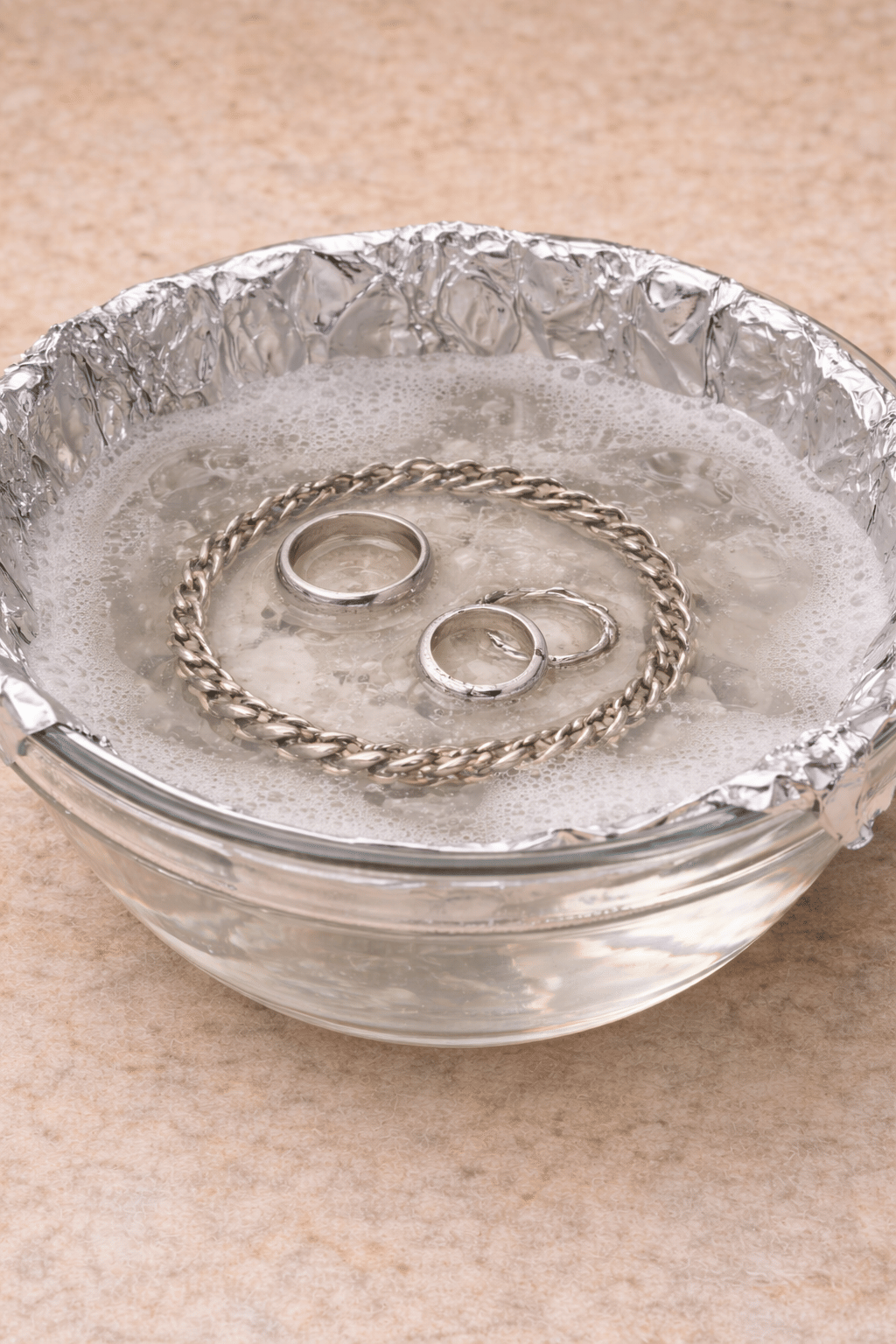
Wondering how to clean tarnished silver jewelry without scrubbing? This method uses a simple chemical reaction to lift tarnish from the silver and transfer it to the aluminum.
How to do it safely:
- Line a bowl with aluminum foil, shiny side up.
- Add warm water and about one tablespoon of baking soda.
- Place your silver so it touches the foil.
- Let it soak for 5–10 minutes.
- Rinse thoroughly and dry completely.
Why it works:
Tarnish transfers from the silver to the aluminum through a natural ion exchange process.
When to avoid it:
Avoid using this method on gemstone-encrusted jewely, silver plated jewelry, and antique or highly detailed designs.
4. Baking soda paste (spot cleaning only)
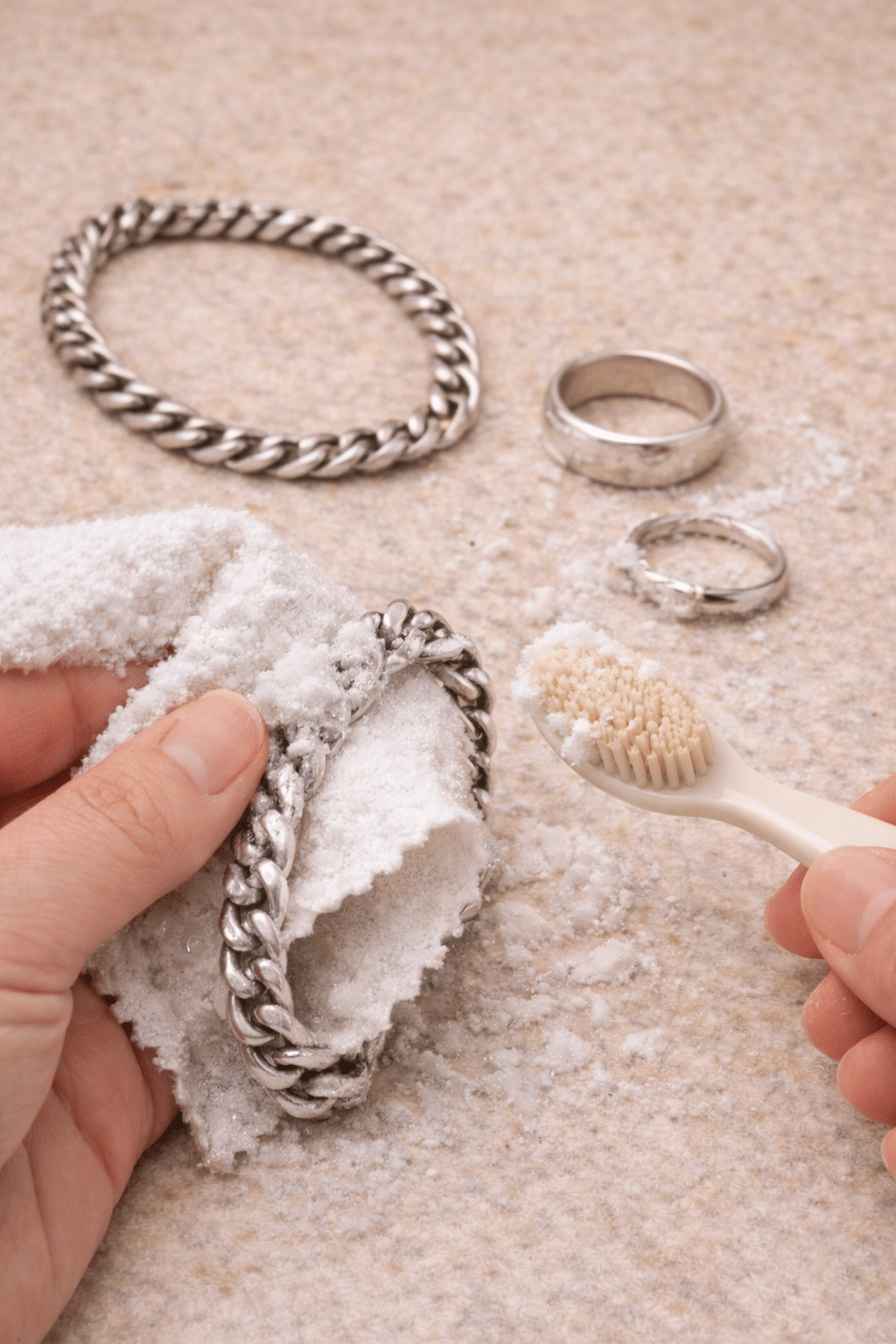
Baking soda can help tackle small tarnished areas, but it should be used gently and only occasionally.
How to use it:
- Mix baking soda with a few drops of water to form a paste.
- Apply lightly with a soft cloth or brush.
- Rinse well and dry completely.
Important caution:
Baking soda is mildly abrasive. Overuse can dull silver’s surface, so this is best reserved for occasional spot treatment on solid sterling silver only.
Jewelry-safe silver cleaner (use with care)
Commercial silver cleaners can help with heavy tarnish when gentler options aren’t enough. These products fall outside natural ways to clean silver jewelry, but they can be useful when used correctly. Always choose a cleaner labeled safe for fine jewelry, follow instructions carefully, and avoid dipping pieces with gemstones, pearls, or oxidized details. This approach aligns with professional silver jewelry cleaning tips used as a last resort.
What not to use on silver jewelry
It can be tempting to try quick online hacks to clean your silver, but many of them can actually do more harm than good over time. Here are some common methods you should steer clear of:
- Toothpaste: It might seem harmless, but toothpaste is often too abrasive and can scratch your silver or damage delicate finishes.
- Vinegar or lemon juice: These acidic solutions can corrode silver if used repeatedly, leaving your pieces looking worse.
- Bleach or hydrogen peroxide: Strong chemicals like these can permanently damage your silver jewelry.
- Soft drinks: The sticky residue combined with acids can harm the metal rather than clean it.
- Rough brushes or steel wool: Avoid scrubbing with anything harsh; scratches happen fast and can be permanent.
- Boiling water: Extreme heat may seem like it will help, but it can stress the metal and even loosen settings.
How to prevent silver tarnish
Cleaning your silver is important, but the real secret to keeping it looking bright and beautiful is prevention. A few simple habits and smart storage choices can make all the difference.
Smart storage
How you store your silver makes a big difference. Keeping your pieces in airtight containers or anti-tarnish bags helps limit their exposure to air, which is one of the main causes of tarnish. Adding a silica gel packet inside the storage container can help control moisture, especially in humid environments. It’s also a good idea to store each piece separately so chains don’t tangle and surfaces don’t rub against each other, which can cause scratches over time.
Daily habits
Everyday habits play an equally important role. Removing your silver before showering, swimming, or exercising protects it from moisture, sweat, and chemicals that can speed up tarnishing. Try to apply perfumes, lotions, and hairsprays before putting on your jewelry, not after. Once you’re done wearing your silver for the day, a quick wipe with a soft cloth helps remove oils and residue before they settle on the metal.
Believe it or not, wearing your silver regularly can actually help slow tarnish. Light friction from everyday use helps prevent buildup, which is why pieces that sit untouched for long periods often tarnish faster than the ones you reach for often.
For a deeper dive into long-term care, check out our full guide on how to keep silver from tarnishing.
When to choose professional cleaning
If a piece is heavily tarnished, antique, or set with delicate stones, professional cleaning is the safest option. A jeweler can restore the surface without removing metal or damaging details, especially important for heirloom pieces.
FAQs
How do you clean silver jewelry at home safely?
Use mild soap, lukewarm water, and a soft cloth or brush. This is widely considered the best way to clean silver jewelry at home without damage.
What is the best way to remove tarnish from silver jewelry?
Light tarnish can be removed with a silver polishing cloth or a gentle baking soda paste. For heavier tarnish, use a jewelry-safe silver cleaner designed for fine jewelry.
Can baking soda damage silver jewelry?
Yes, baking soda is mildly abrasive and can scratch silver if rubbed too hard. It should be used gently and avoided on silver-plated or high-polish pieces.
How often should silver jewelry be cleaned?
Silver jewelry only needs light cleaning every few weeks if worn often. Tarnish removal should be done only when discoloration appears to avoid unnecessary wear.
What should you avoid when cleaning silver jewelry?
Avoid harsh chemicals, abrasive cleaners, rough brushes, and household products like bleach or toothpaste. These can scratch silver or damage finishes and settings.
Is it safe to clean silver jewelry with vinegar or lemon?
No, vinegar and lemon are acidic and can damage silver over time. They may remove tarnish quickly, but often dull the surface and weaken the metal.
Can toothpaste be used to clean silver jewelry?
No, toothpaste contains abrasives that can scratch silver and harm detailed designs. It is not recommended for cleaning jewelry.
How do you clean silver jewelry with gemstones or pearls?
Use mild soap, water, and a soft cloth, and avoid soaking the piece. Pearls and delicate gemstones should only be gently wiped, never submerged.
Why does silver jewelry tarnish so quickly?
Silver reacts with sulfur in the air, moisture, sweat, and everyday chemicals. Poor storage and frequent exposure speed up the tarnishing process.
When should silver jewelry be professionally cleaned?
Professional cleaning is best for heavily tarnished pieces, antiques, or jewelry with delicate settings or valuable stones. A jeweler can clean it safely without causing damage.