Good to Have You Back
To measure ring size at home without a ring, you only need a strip of paper or string and a ruler, but accuracy depends on measuring correctly and avoiding common sizing mistakes. Wrap the strip of paper or string around the base of your finger, mark where it overlaps, measure the length in millimeters, and match it to a US ring size chart. For the most precise result, Gabriel & Co. offers a free printable ring sizer guide designed to help you determine your size confidently before choosing an engagement ring or wedding band. This tool is especially helpful if you don’t have access to a physical ring sizer.
If you don’t have a ring to reference, this simple method gives you a reliable estimate in just a few minutes.
While this method works well, there are 3 common mistakes that can make your measurement inaccurate. Before choosing your size, make sure you avoid them.
At Gabriel & Co., our skilled artisans size thousands of engagement rings and wedding bands each year. This at-home method is based on the same circumference principles used in professional ring sizing tools, helping you achieve a measurement that closely matches an in-store fitting. Because engagement rings and wider band styles require precise sizing for long-term comfort and wear, even a small difference can matter.
Common Ring Sizing Mistakes to Avoid
Even small errors can change your measurement by half a size or more. Here are the most common issues to watch for:
1. Wrapping the string too tightly: Pulling too tight can make your size smaller than it actually is. The string should feel snug but comfortable.
2. Measuring when your fingers are cold: Cold fingers shrink. Always measure in the afternoon or evening for the most accurate result.
3. Ignoring band width: Wider bands fit more snugly. If you’re choosing a thick band, consider sizing up slightly.
4. Measuring only once: Finger size can fluctuate. Take two or three measurements to confirm consistency.
Quick Steps to Measure Ring Size at Home
1. Cut a thin strip of paper or use a piece of string.
2. Wrap it around the base of your finger.
3. Mark where it overlaps.
4. Measure the length in millimeters with a ruler.
5. Compare the measurement to a US ring size chart.
There are several reliable ways to measure your ring size at home, depending on the tools you have available.

Ring Size Conversion Chart (US, UK & EU)
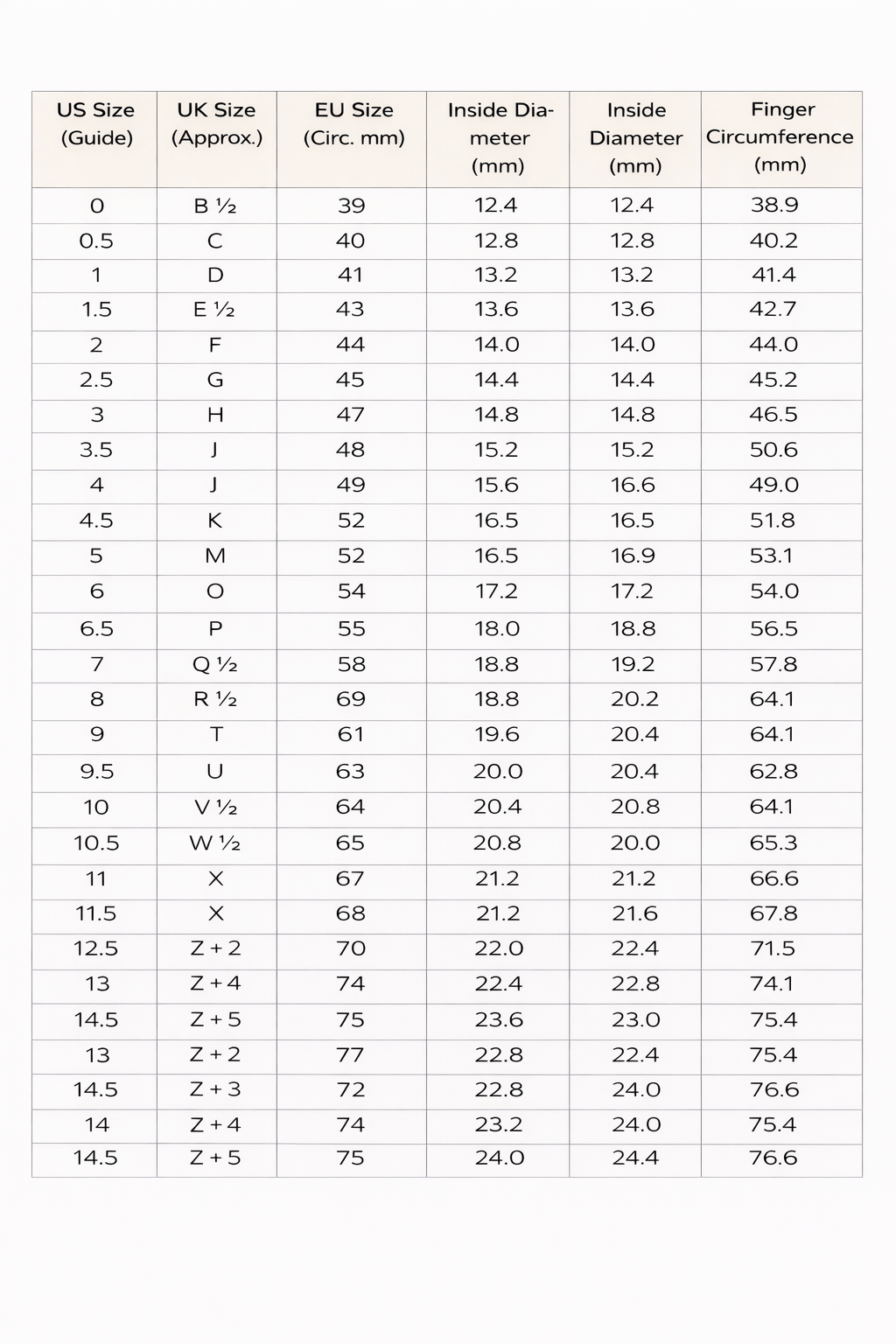
Note: International ring size conversions are approximate. If you’re between two sizes, it’s usually best to size up for comfort, especially for wider bands.
Detailed Methods for Measuring Ring Size at Home
Finding your perfect ring size at home is totally doable; you just need precision. While a visit to the jeweler is ideal, you can absolutely nail the fit yourself by following these tips to the letter.
Using a String or Paper
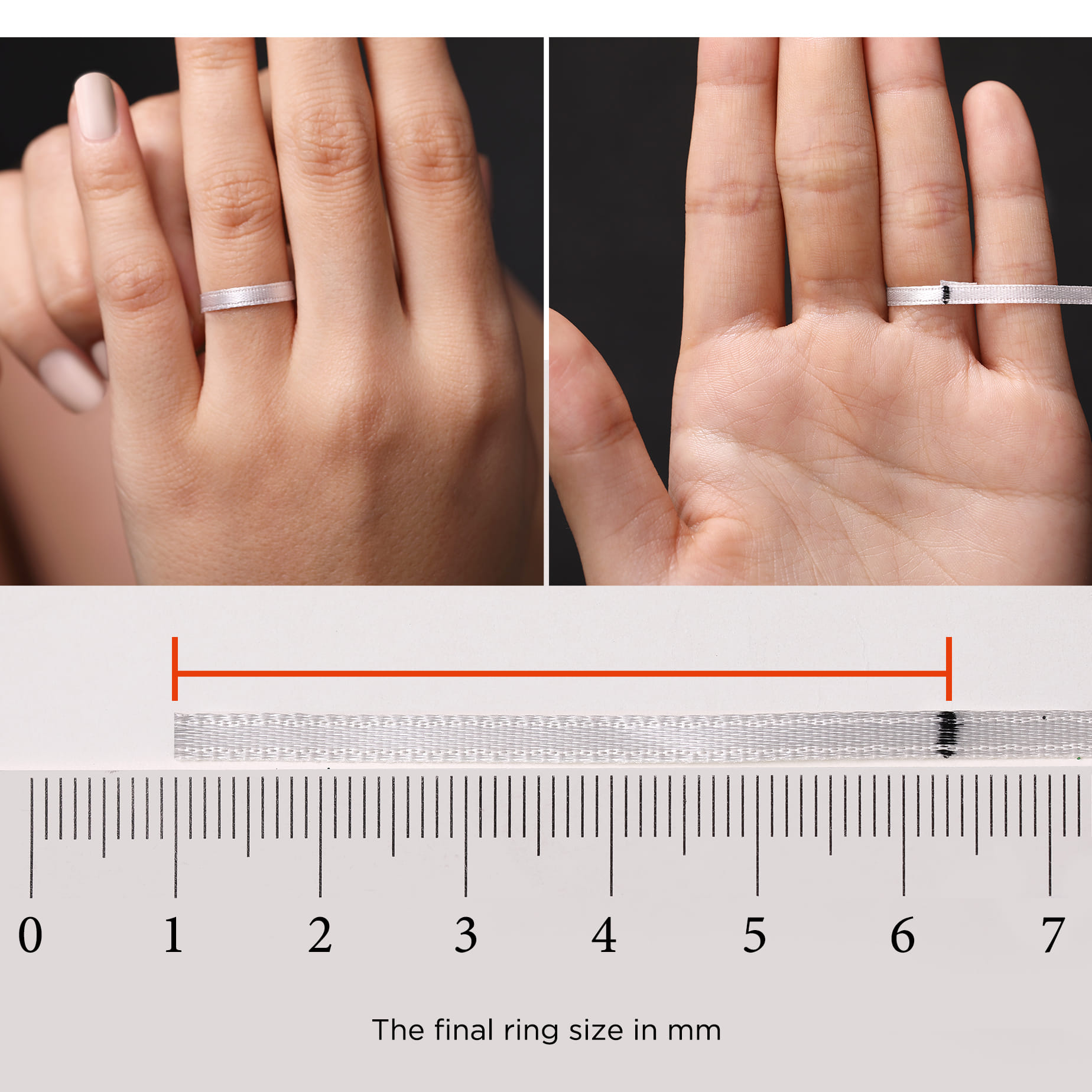
This simple at-home method only requires a piece of string, a ruler, and a few minutes of your time. It’s a handy way to estimate your ring size if you don’t have a ring sizer or chart nearby.
1- Start by wrapping the string around the base of your finger, exactly where you’d wear the ring. Make sure it’s snug but not too tight. You want it to mimic the feel of a real ring.
2- Next, use a thin marker to mark the point where the string overlaps.
3- Lay the string flat against a ruler and measure the length in millimeters from the starting end to the mark you made.
4- Then, compare that number to a ring size chart to find the size that matches your finger’s circumference most closely.
Tip: Try this at the end of the day when your fingers are naturally a bit more swollen. That way, you won’t risk choosing a size that feels tight later on.
Using a Printable Ring Size Chart
Here's how to use our printable ring sizer guide:
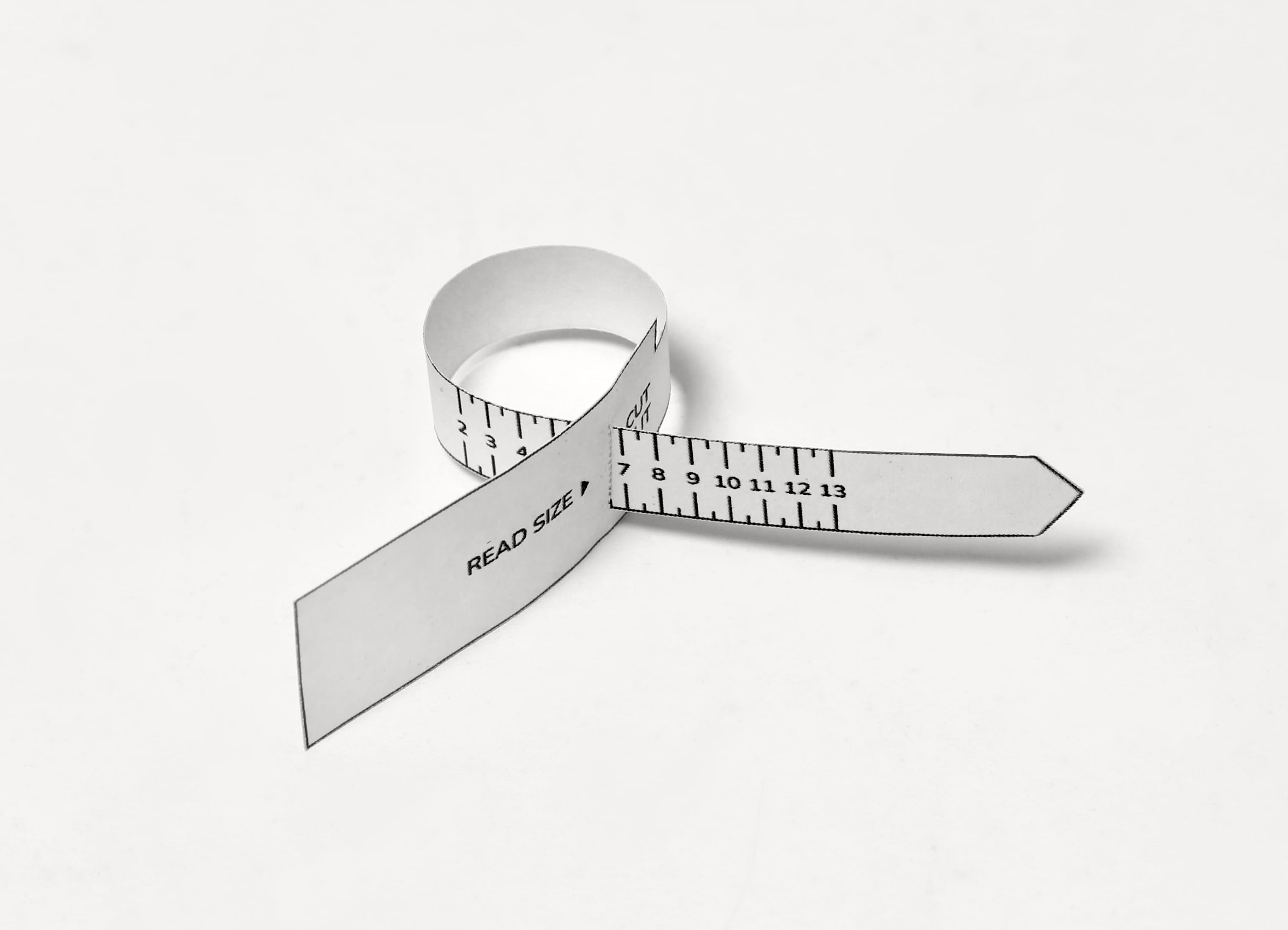
1- Print the ring sizer guide: Download and print the ring sizer on standard US letter-size paper (8.5” x 11”) at 100% scale. Ensure that the printed guide matches a ruler for accuracy.
2- Cut out the measuring tape: Carefully cut along the outline of the measuring tape provided in the guide. Make a slit on the dotted line as indicated.
3- Wrap around your finger: Insert the numbered end of the tape through the slit to form a loop. Place it around the base of your finger, ensuring the numbers are facing outward.
4- Determine your size: Pull the tape snugly around your finger without causing discomfort. The number that aligns with the edge of the slit indicates your ring size.
For wide band rings (band width larger than 10mm), it's recommended to add an additional half size to your regular measurement. For example, if you typically wear a size 6, opt for a size 6.5 for wider band styles.
Measuring a Ring You Already Own
With a ring size chart
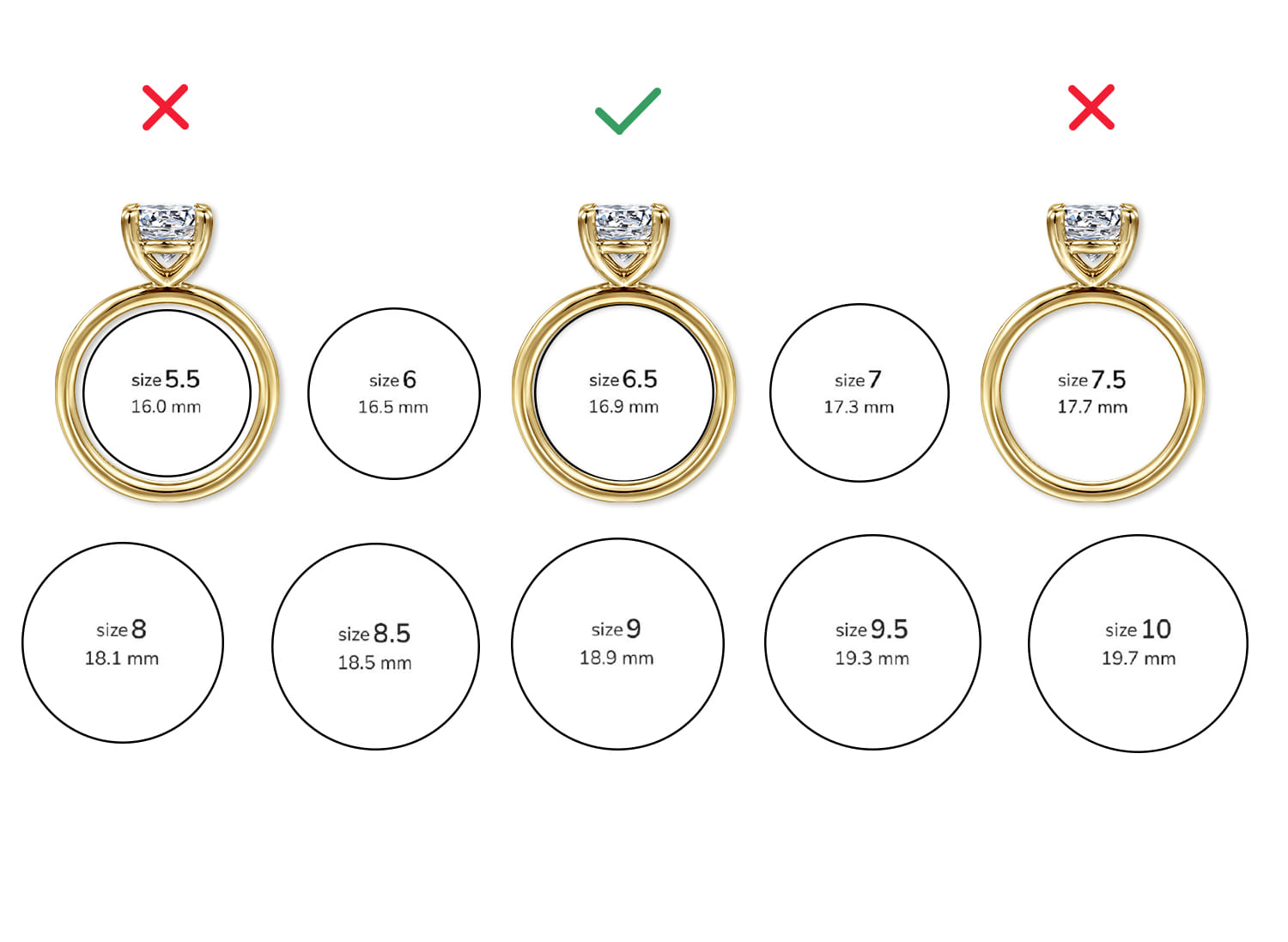
If you already have a ring that fits the intended finger well, you can use it to determine the size, no measuring tape is required.
Download a printable ring size chart featuring actual-size circles labeled with U.S. ring sizes. Place your ring directly on top of each circle until you find the one where the inner edge of the ring lines up exactly with the outer line of the circle. If the ring falls between two sizes, it's best to size up slightly for comfort.
With a ruler
If you don’t have a printable chart on hand, you can still measure your ring size with a simple ruler.
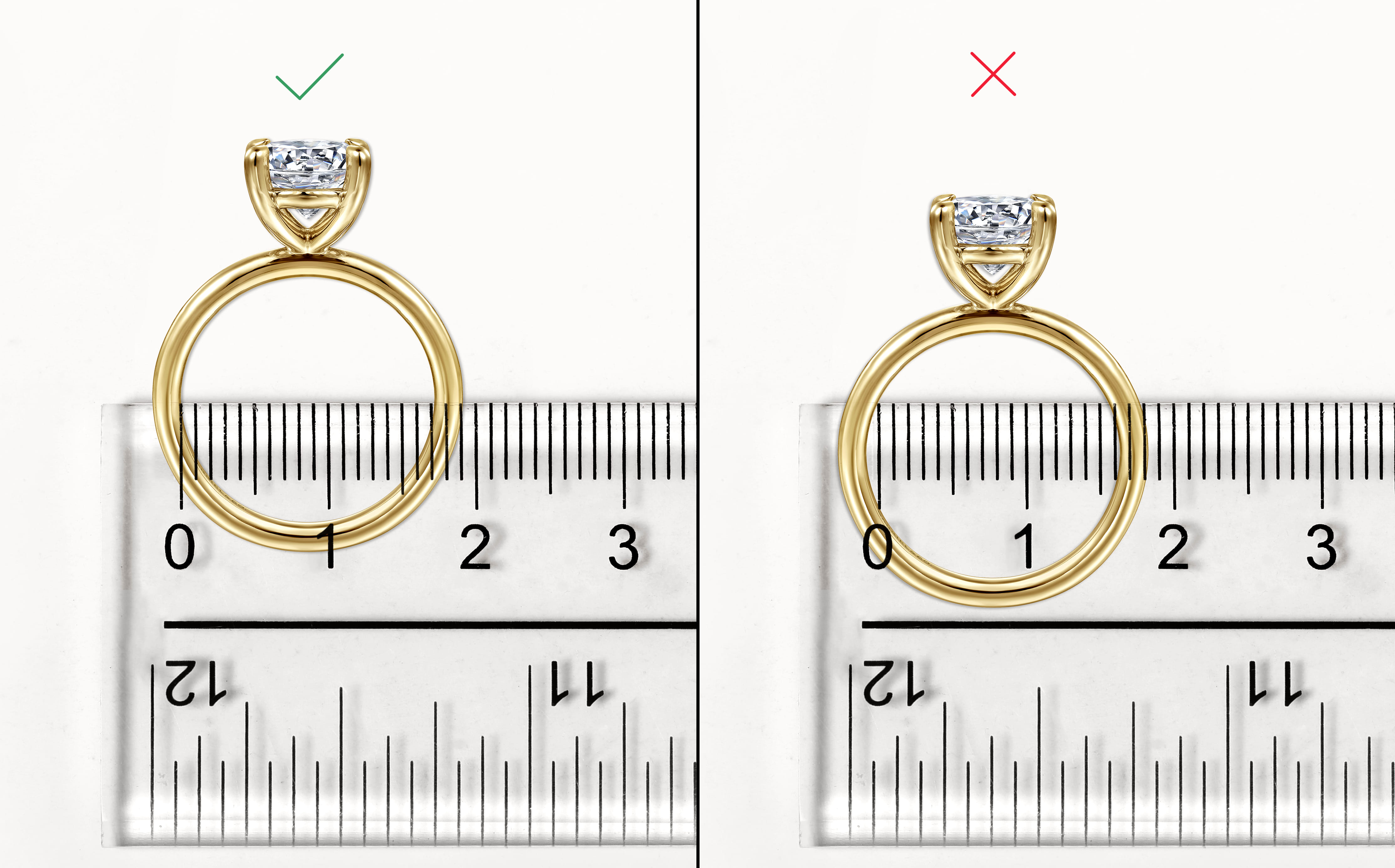
1- Pick a ring that already fits the finger you’re shopping for.
2- Place the ring on a flat surface and measure straight across the inside diameter using millimeters. Be sure to measure from the inner edge on one side directly across to the inner edge on the other side.
3-Match the measurement to a standard size conversion chart to find your closest ring size.
This method works best when you measure carefully, since even a small difference in millimeters can shift the size up or down.
Using an Adjustable Ring Sizer Tool
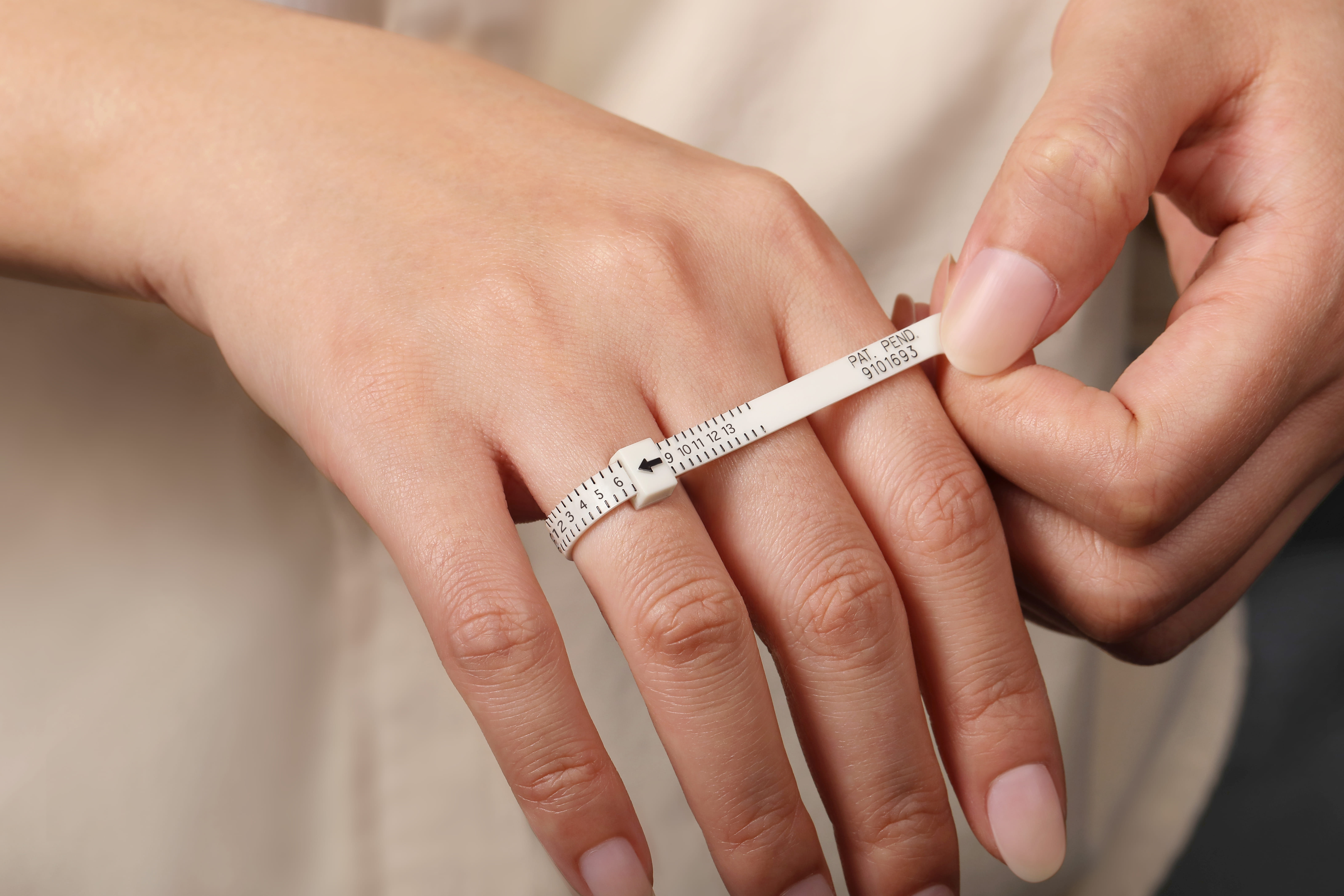
If you want a more accurate measurement, a plastic adjustable ring sizer is a convenient tool. It works just like a belt. This tool is inexpensive, reusable, and easy to order online. They're especially helpful if you're between sizes or buying rings often. Here’s the correct way to use it:
1- Insert the pointed end through the buckle to form a loop.
2- Slip the loop onto your finger and tighten it gradually until it feels snug but comfortable.
3- Make sure it slides over your knuckle with slight resistance but doesn’t feel tight once in place.
4- Read the number on the sizer where it meets the buckle. That’s your ring size.
Ring Sizing Tips for a Perfect Fit
The right ring size feels comfortable, stays in place, and moves naturally with your hand. Here are a few practical tips to help ensure your ring fits just right, no matter the occasion or finger.
1- Measure More than Once
Your finger size can fluctuate slightly depending on the time of day, temperature, and even your hydration level. That’s why it’s smart to measure your finger a few times across different days or times, especially if you’re between sizes. Consistent results mean you can be confident in your choice.
2- Account for the Band’s Width
The width of the ring makes a difference. Wider bands, like statement rings or men’s rings, tend to feel snugger on the finger than delicate, narrow bands (like stackable rings). If you’re going for a thicker style, consider sizing up by a quarter or half size to keep it comfortable.
3- Avoid Measuring When Your Fingers Are Swollen
Heat can cause your fingers to swell, while cold weather can make them shrink. For the most accurate measurement, aim to measure your ring size when your hands are at a neutral or slightly higher temperature than normal; not right after a workout, hot shower, or time spent in the sun.
4- Don’t Guess Someone Else’s Size
Trying to surprise someone with a ring? Guessing can be risky. Instead, borrow a ring they already wear on the correct finger (discreetly, of course) and compare it to a printable ring size chart. This method gives you a much better shot at getting the size right without ruining the surprise.
Ring Sizing FAQs
Q: What's the best time of day to measure my ring size?
A: Measure your ring size in the afternoon or evening when your fingers are slightly larger due to natural swelling. Avoid measuring when your hands are cold or overly swollen as this can result in an inaccurate size.
Q: How do I know if my ring fits properly?
A: A properly fitting ring should slide over your knuckle with slight resistance and sit snugly on your finger without pinching. It should not feel too tight or too loose.
Q: Can all rings be resized?
A: Silver, platinum, and gold rings can be resized. However, Rings made from materials like titanium, tungsten, or ceramic are difficult or impossible to resize. Additionally, rings with stones set around the entire band may require special techniques.
Q: How can I know someone's ring size for a surprise gift?
A: You can try borrowing one of their rings and taking it to a jeweler to have it sized, or ask their friends or family if they know what size they wear. If all else fails, you can go with a stock size (around 6.5 for women and 10 for men) and have the ring resized if needed.
Q: Do ring sizes vary from country to country?
A: Yes, ring sizes differ worldwide. For example, the UK uses a lettering system, while the US uses numbers. It's essential to use a ring size conversion chart when purchasing rings internationally.
Q: What should I do if my finger size changes over time?
A: If your finger size changes due to factors such as weight fluctuations or temperature, consider having your ring resized by a professional jeweler. Some rings can be resized up or down by as much as two sizes without putting excessive strain on the metal.
Why Accurate Ring Sizing Matters for Engagement Rings
Engagement rings are designed to be worn every day, which makes precise sizing especially important. A ring that is too tight can feel uncomfortable over time, while one that is too loose may rotate, shift, or even slip off. This is particularly true for wider bands or styles with larger center stones, where balance and fit directly affect comfort and security. Choosing the correct size from the start helps protect the setting, preserve long-term wear, and ensure your engagement ring feels as beautiful as it looks.
Every ring starts with the right fit; what comes next is entirely up to you. Browse our designer rings and our engagement ring collections to begin.