Good to Have You Back

The difference between diamond and moissanite comes down to composition, brilliance, durability, and value.
Diamonds are natural carbon gemstones formed over billions of years, while moissanite is a lab-created stone known for its intense sparkle and lower price point.
At first glance, they can look almost identical. But once you understand how each one behaves in light, how they wear over time, and what they represent, the choice becomes much more personal than visual.
What Is a Diamond?
A diamond is a naturally occurring gemstone made of carbon, formed under extreme heat and pressure deep within the earth.
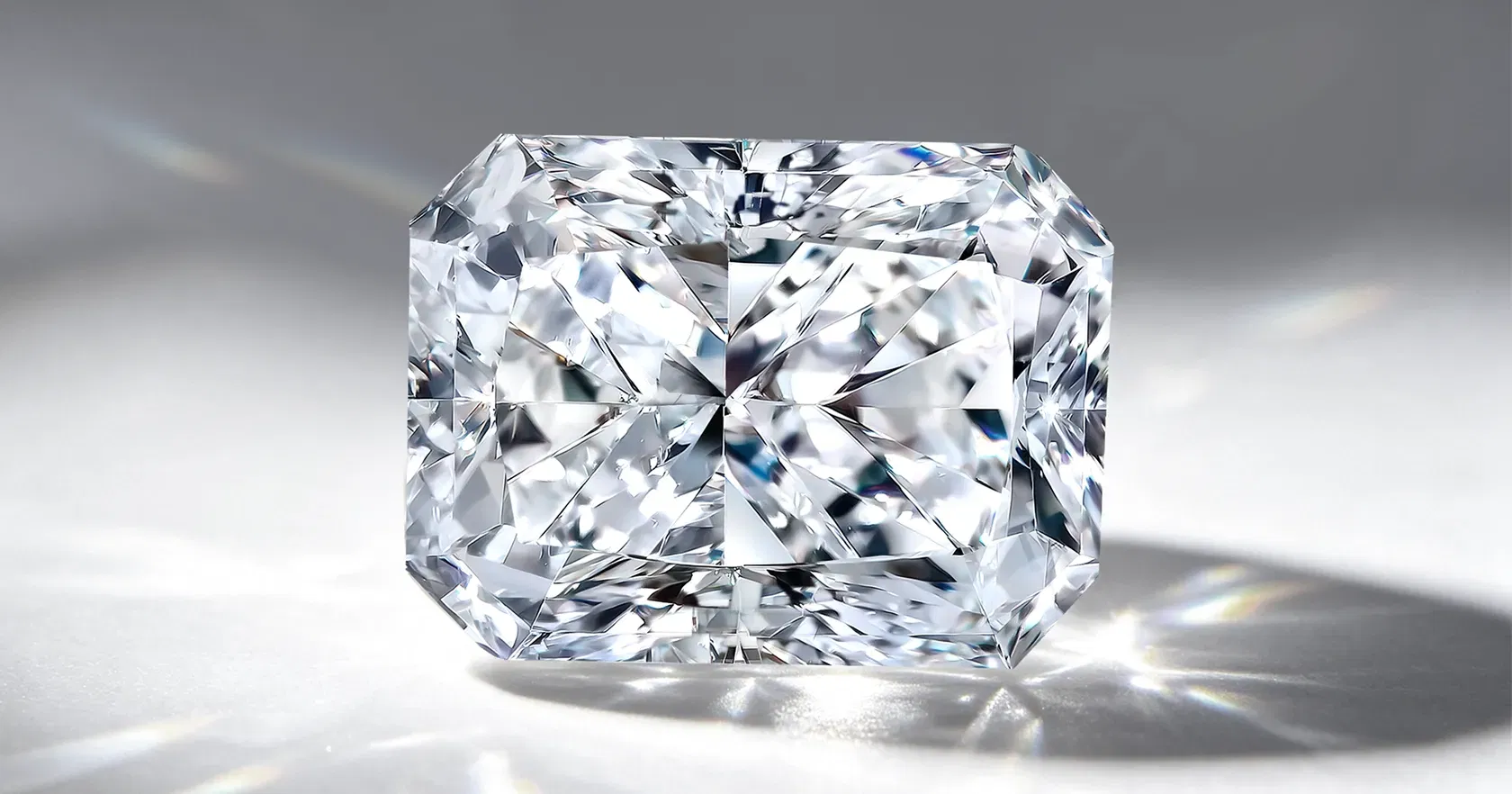
What sets it apart is not just its hardness, but the way it balances brightness, fire, and scintillation. Instead of overwhelming sparkle, diamonds tend to reflect light in a more controlled, crisp way.
They are also traditionally associated with commitment, permanence, and legacy, which is why they’ve remained central to engagement rings.
For a more in-depth dive into diamonds, read our blog on “What Is April’s Birthstone?”
What Is Moissanite?
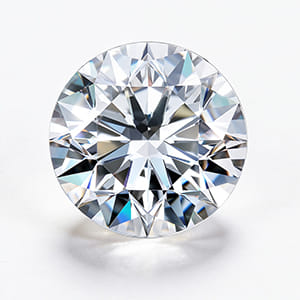
Moissanite is a lab-created gemstone originally discovered in a meteor crater and later replicated for jewelry use.
Its structure is different from diamond, which gives it a higher refractive index. In simple terms, it reflects more light, producing a more noticeable rainbow-like sparkle.
That extra brilliance is what draws people to it, especially if they want a bright, eye-catching stone at a more accessible price.
Moissanite vs Diamond: Side-by-Side Comparison
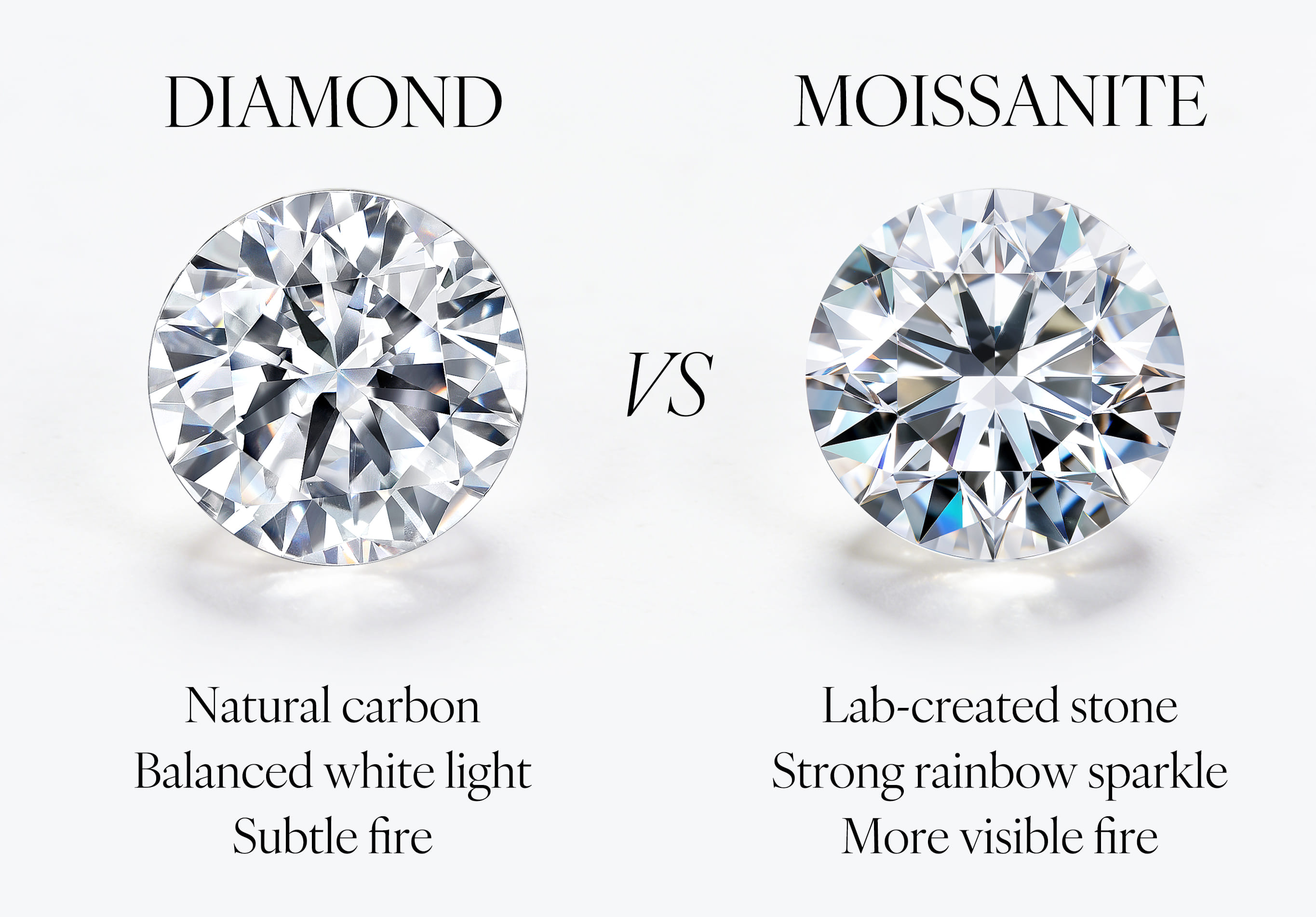
Here’s a more in-depth breakdown of diamond vs moissanite:
| Feature | Diamond | Moissanite |
| Composition | Natural carbon | Lab-created silicon carbide |
| Origin | Natural (earth-formed) | Lab-created |
| Brilliance | Balanced white light + fire | Strong fire (rainbow sparkle) |
| Hardness | 10 (Mohs scale) | 9.25 (Mohs scale) |
| Durability | Extremely resistant to scratching | Very durable, slightly softer |
| Price | Higher | More affordable |
| Symbolism | Tradition, legacy, permanence | Modern alternative, practicality |
Moissanite vs Diamond Sparkle and Brilliance

This is where most people start to see the distinction.
Diamonds reflect a mix of white light and subtle flashes of color, which creates a more restrained, crisp sparkle.
Moissanite, on the other hand, produces more colored flashes (fire). In certain lighting, especially sunlight, this can appear more intense or even slightly “rainbow-heavy.”
Neither is better. It depends on whether you prefer something understated or something that catches attention more quickly.
Wondering which diamond shape and cut shines the brightest? Check out our dedicated guide.
Moissanite vs. Diamond Durability
Both stones are suitable for daily wear, especially in rings.
- Diamonds rank 10 on the Mohs scale, making them the hardest known gemstone.
- Moissanite ranks 9.25, which is still extremely durable.
In real-life terms, both will hold up well over time. Diamonds have a slight edge in scratch resistance, but moissanite is not fragile by any means.
Moissanite vs Diamond Price Difference
One of the biggest differences is cost.
Moissanite typically costs significantly less than a diamond of similar size and appearance. For example, a 1-carat round moissanite usually ranges between $300 and $700, depending on quality and brand. A 1-carat natural diamond with comparable visual quality (near colorless, good cut) can range anywhere from $3,000 to $6,000 or more.
Even when compared to lab-grown diamonds, the gap remains. A 1-carat lab-grown diamond might fall between $1,000 and $2,500, still noticeably higher than moissanite.
This difference is what allows some buyers to choose a larger moissanite stone without increasing their budget.
Diamonds, however, carry value beyond appearance. Their rarity, natural origin, and long-standing role in fine jewelry contribute to their higher price. They are also part of an established grading and resale ecosystem, which influences how they are perceived over time.
Diamond Resale Value vs Moissanite
Diamonds tend to retain some resale value because they are natural, graded, and part of an established market. While they rarely resell for the original price, there is consistent demand, especially for higher-quality stones.
Moissanite does not hold resale value in the same way. As a lab-created stone with wider availability, it is typically not purchased with resale in mind.
In simple terms, diamonds are often seen as holding long-term value, while moissanite is chosen more for its appearance and accessibility at the time of purchase.
Moissanite vs Lab Diamond
If you’re choosing between a lab-grown diamond and moissanite, the key difference is this: lab-grown diamonds are real diamonds, moissanite is a different gemstone.
Lab-grown diamonds have the same chemical structure and appearance as natural diamonds, so they reflect light in the same balanced way and are graded using the same standards. Visually, there’s no difference.
Moissanite, while similar at a glance, reflects more colored light. That extra fire can make it appear brighter in certain lighting, but also slightly different, especially in larger stones.
In terms of choice, it usually comes down to whether you want something that mirrors a diamond exactly, or something that offers a more noticeable, high-sparkle look at a lower price point.
Now that we have established this, you may be wondering about the difference between lab-grown and natural diamonds. Luckily, we have just the guide for you.
Can You Tell the Difference?
To the untrained eye, it can be difficult to distinguish between the two, especially in smaller sizes.
However, under certain lighting:
- Moissanite may show stronger rainbow flashes
- Diamonds tend to appear more neutral and white in their sparkle
Jewelers can easily tell the difference using professional tools, but visually, the distinction becomes clearer mainly in larger stones or direct light.
Ethical Sourcing and Environmental Considerations
When comparing diamond and moissanite, the conversation often extends beyond appearance and price into how each stone is sourced and produced.
Natural diamonds are formed within the earth, which means their journey involves mining. Today, that process is far more regulated than it once was. At Gabriel & Co., we are committed to the Kimberley Process, ensuring that every diamond we use is responsibly sourced, free from conflict, and aligned with global efforts toward ethical and transparent practices. This framework exists to prevent the circulation of conflict diamonds and to support more accountable sourcing across the industry.
Beyond compliance, sourcing today is also about traceability and trust. Knowing where a diamond comes from and that it has been handled responsibly at each stage, has become part of what gives the stone its value.
Moissanite, on the other hand, is entirely lab-created, which removes the need for mining. That is often seen as a more controlled and predictable production process. However, lab creation is not without impact. Producing gemstones in a laboratory requires significant energy, particularly in high-temperature, high-pressure environments or advanced chemical vapor deposition processes.
The difference is not necessarily about one being “clean” and the other not. It is about where the impact occurs. Natural diamonds involve extraction from the earth, while lab-created stones shift that impact toward energy consumption and manufacturing.
For many buyers, this becomes a question of perspective. Some value the natural origin paired with responsible sourcing standards. Others prefer a lab-created alternative that avoids mining altogether. Both choices can align with thoughtful, informed decision-making when transparency is part of the process.
Which One Should You Choose?
Choosing between diamond and moissanite is rarely about which stone is better in a universal sense. It is usually about what you want the piece to hold, how you want it to look in everyday life, and which trade-offs feel worth making to you.
A diamond often appeals to people who care about natural origin and the idea of rarity. There is meaning in knowing the stone was formed within the earth over an immense span of time. For some, that geological history adds emotional weight, especially in engagement rings, wedding rings, anniversary rings, or other pieces meant to mark a lasting milestone. Diamonds also tend to have a more balanced kind of sparkle. They reflect light in a crisp, controlled way that many people associate with a classic fine jewelry look.
Moissanite tends to appeal to people who are led more by visual performance and practicality. It offers a bright, lively look with stronger flashes of color, and that can feel more expressive in certain settings. It also makes size more accessible. If budget plays a major role in your decision, moissanite can allow you to prioritize scale and sparkle without moving into a much higher price range. For some buyers, that trade-off feels smart and intentional rather than like a compromise.
Final Thoughts
At a glance, diamond and moissanite can look similar. But they behave differently, age differently, and carry different meanings.
The right choice is the one that fits how you see the piece, not just how it looks today, but how it will feel years from now.
FAQs
What is the main difference between moissanite and diamond?
The main difference lies in their composition and how they interact with light. Diamonds are natural carbon gemstones with a balanced, white sparkle, while moissanite is a lab-created stone that produces stronger rainbow flashes and a more intense brilliance.
Does moissanite look the same as a diamond?
At a glance, they can look very similar, especially in smaller sizes. However, moissanite reflects more colored light, which can make its sparkle appear brighter and slightly different compared to the more controlled, white light reflection of a diamond.
Which is more durable, moissanite or diamond?
Diamond is slightly more durable, ranking 10 on the Mohs scale, while moissanite ranks 9.25. In practical terms, both are highly suitable for everyday wear, including engagement rings.
Is moissanite cheaper than diamond?
Yes, moissanite is significantly more affordable. It can cost a fraction of the price of a diamond of similar size, which allows for a larger stone without increasing the overall budget.
Can people tell the difference between moissanite and diamond?
Most people cannot tell the difference immediately, especially without direct comparison. The distinction becomes more noticeable in certain lighting or larger stones, where moissanite’s stronger rainbow sparkle stands out.
Is moissanite a good choice for an engagement ring?
Yes, moissanite is durable enough for daily wear and offers a bright, eye-catching look. It is often chosen by those who prioritize size, sparkle, or budget over having a natural diamond.
Does moissanite lose its sparkle over time?
No, moissanite does not lose its sparkle. Like any gemstone, it may appear dull if not cleaned regularly, but its brilliance remains consistent over time.
Why do people still choose diamonds over moissanite?
Many people are drawn to diamonds for their natural origin, rarity, and long-standing association with commitment. Beyond appearance, they carry a sense of history and symbolism that some buyers find meaningful.