Good to Have You Back
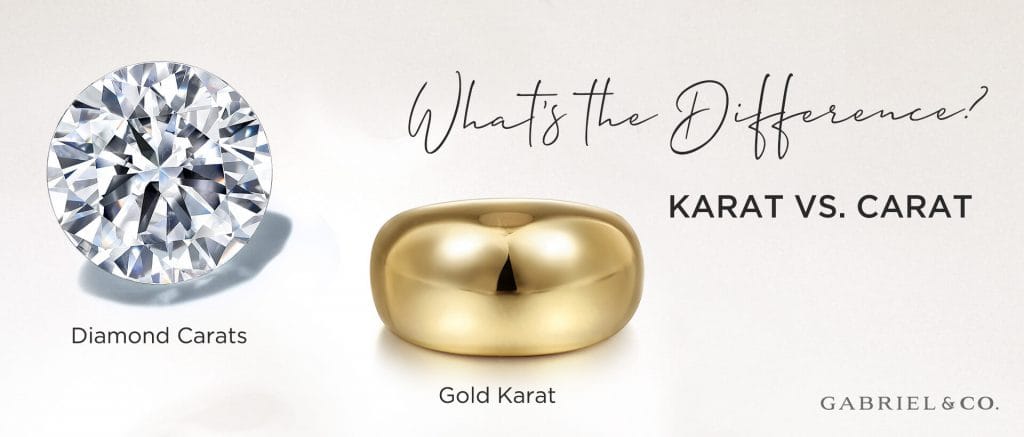
Karat vs. Carat: What's the Difference? These terms may sound alike but have vastly different meanings in the world of jewelry. While karat measures the purity of gold, carat quantifies the weight of gemstones. Understanding these distinctions is crucial; as famously posed by Shakespeare, "What's in a name?" In the context of jewelry, it turns out, quite a bit.
We can easily distinguish between our homophones: carrots, carats, karats, and carets. Feeling overwhelmed by their similar sounds? Let’s simplify things.
First, let’s put aside “carrots” — those are better suited for feeding Peter Rabbit than for any jewelry-related context.
Next, forget about “carets”. Those wedge-shaped marks used by editors to indicate insertions; they’re important in writing but irrelevant in gemology, unless we’re talking about adding zeros to your bank account!
This leaves us with “carat” and “karat,” two crucial terms in the world of jewelry. These are essential for anyone buying, selling, or wearing jewelry.
Let’s dive into the key differences between the two terms.
What's the Difference Between Karat and Carat?
Simply put, karat measures the purity of gold, while carat measures the weight of gemstones. One relates to metals, the other to precious or semi-precious stones. Let’s break it down further.
Understanding Karat – Gold Purity Measurement
In jewelry, karat (K) refers to the purity of gold. When all 24 parts of the metal are pure gold, it is called 24-karat gold (24K). However, pure gold, while valuable and luxurious, is too soft for durable jewelry. For increased strength, gold is often alloyed with other metals. The purity of these alloys is measured in relation to 24 parts of gold:
- 22K gold: 22 parts gold and 2 parts alloy
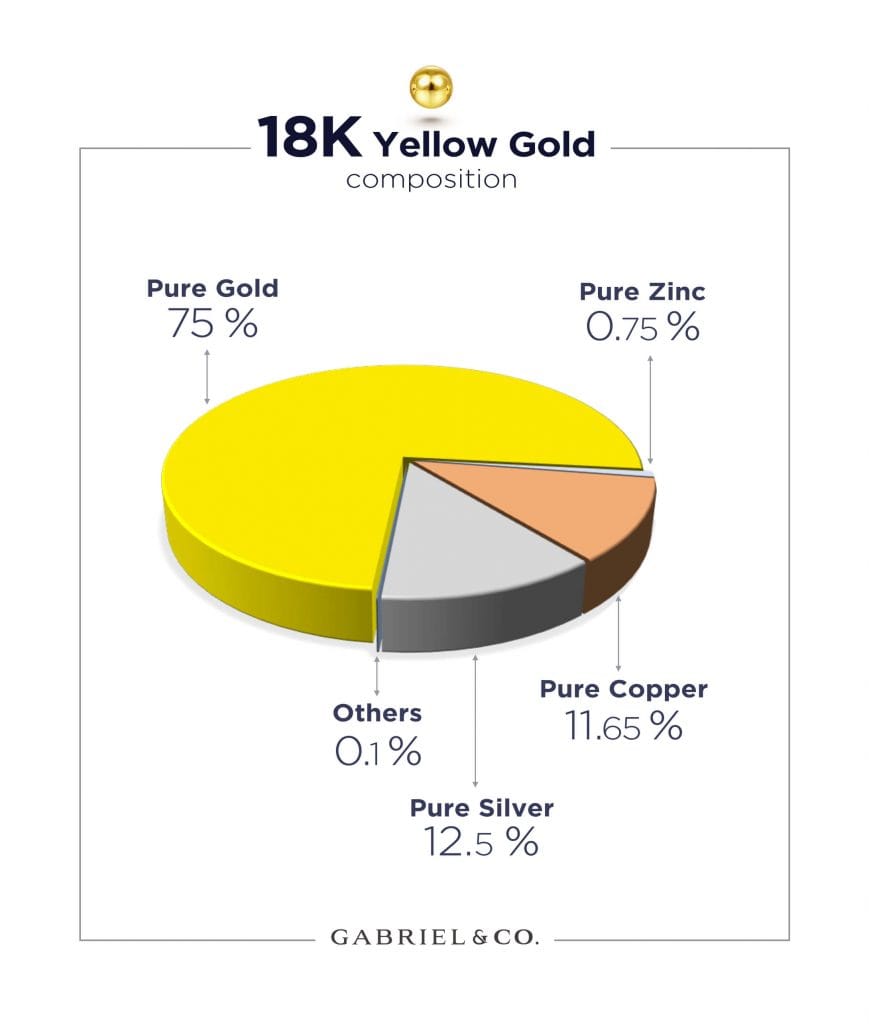
- 18K gold: 18 parts gold and 6 parts alloy, offering 75% gold purity
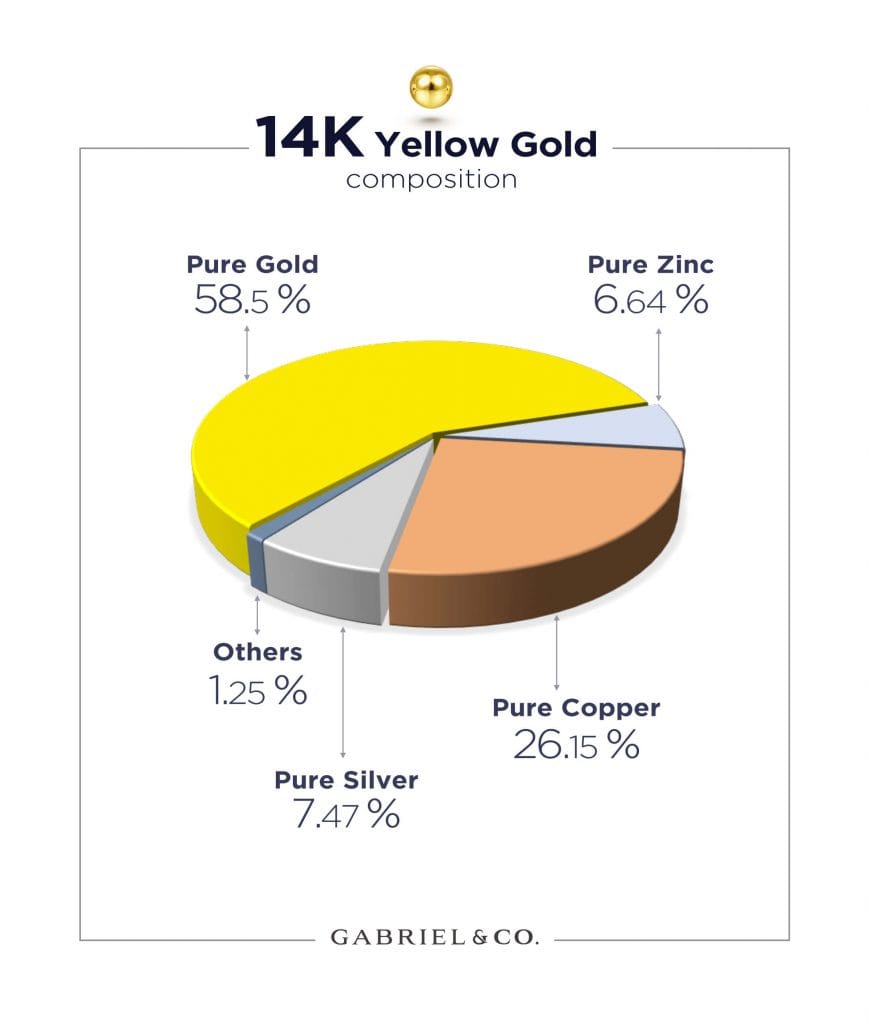
- 14K gold: 14 parts gold and 10 parts alloy, achieving 58.3% gold purity.
The metals used for these alloys can vary based on the type of gold:
- White gold includes nickel and zinc and is often rhodium-plated for added shine.
- Yellow gold mixes gold with copper and silver, preserving its classic hue.
- Rose gold blends gold with copper, giving it a warm, romantic pink tint.
The Gold Karat Scale and Jewelry Quality
The gold karat scale helps determine both value and durability. Higher karat gold is purer but more susceptible to wear, while lower karat gold contains more alloy, increasing its strength:
- 18-karat gold (18K): With 75% gold, it provides a balance of durability and value, making it popular for high-quality pieces like necklaces and studs.You can admire this 18k yellow gold citrine garnet and diamond masterpiece and its intricate design.
- 14-karat gold (14K): At 58.3% purity, 14K gold is especially durable. This composition makes it resistant to scratching and tarnishing. 14K gold is the ideal choice for items like engagement rings or bracelets that withstand the test of time and accompany you through life’s big moments.
Varieties of Gold and Alloy Blends
Each type of gold derives its color and properties from specific alloy combinations:
- Yellow Gold: Mixed with copper and silver, it retains a classic golden hue.
- White Gold: An alloy of gold with nickel, palladium, and zinc, often coated with rhodium for a shiny, silvery look.
- Rose Gold: Noted for its pinkish hue due to a higher copper content, it’s sought after for both modern and traditional jewelry.
By understanding these gold alloys and karat ratings, you can select pieces that best suit your style, budget, and durability needs.
What is Carat – Gemstone Weight Measurement
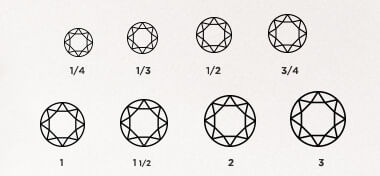
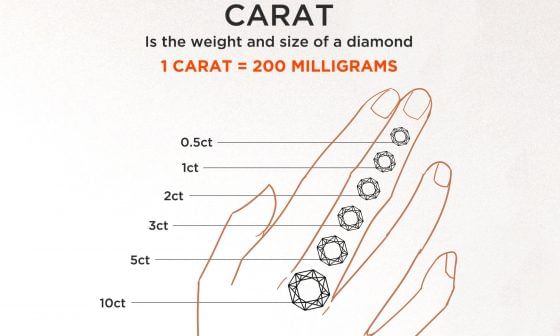
While "karat" refers to metal purity, carat (ct) is a unit of weight for precious stones. Standardized to 200 milligrams, carat weight is used primarily for diamonds but also applies to other gemstones, like sapphires, rubies, and emeralds.
Since gemstones have unique densities, the size of a 1-carat stone can vary between types. For example, a 1-carat diamond will look different in size compared to a 1-carat freshwater pearl. So, while the carat weight is constant, the appearance of stones can differ, making density an essential factor in gemstone sizing.
Though they sound similar, karat and carat are absolutely unrelated, at least in their meanings. Carat is a measurement of the weight of precious and semi-precious stones. It is most commonly associated with diamonds and has even been standardized to 200 milligrams for this stone. 1 carat equals 200 mg of diamond weight. However, other gemstones, from emeralds to sapphires and rubies, are also measured in this unit. Since nature has bestowed each gemstone with its own distinct attributes - density, weight, purity, and more, the size per carat tends to vary for each gemstone type. So, a diamond that weighs 1ct might be a very different size and have an unidentical appearance than a freshwater pearl that weighs the same!
What Are the Origins of the Word Carat and Karat?
Now, this is tricky. It is believed that both words come from the ancient Greek term keration for ‘carob seeds’ – hard to believe, right? But the explanation behind it makes sense. A long time ago, before the metric system (or any system for that matter!) was invented, people had to find other ingenious ways to ensure they weren’t getting cheated vis-à-vis jewelry weights and prices. Voila, carob seeds were the solution! They were used to measure the weight of gold and diamonds simply because they were uniform in size and weight and tended to be more accurate than anything else found in nature.
Both the words had quite a journey before they found their current established status in the jewelry nomenclature. We have pulled out a few snippets of their journey, from history, for you, which are quite interesting. During his reign in the Roman Empire, King Constantine 1 introduced a pure gold coin currency called Solidus to bring down inflation. Each carob bean-carat was equivalent to 1/24th of a gold solidus coin. So it became associated with its proportion of 24 parts, and that is how the metric 24 karats of gold came into existence.
On the other hand, the word carat, too, traversed many parts of the world. When it traveled to Arab, it came to be known as qirat, which translates to bean pod and means 'weight of four grains.' The word then came to be known as carratus in Latin, carato in Italian, and finally, the old French carat, which literally translates to 'measure of gold's finesse.' Since then, the term has stuck, although it has been through several spelling changes worldwide. It was first spelled 'karat' in the early 1900s when the famed American writer, O Henry, used it in one of his stories. If the word was good enough for him, it's good enough for all of us! And so the name stuck.
Which Term Is Used for Gold – Carat or Karat?
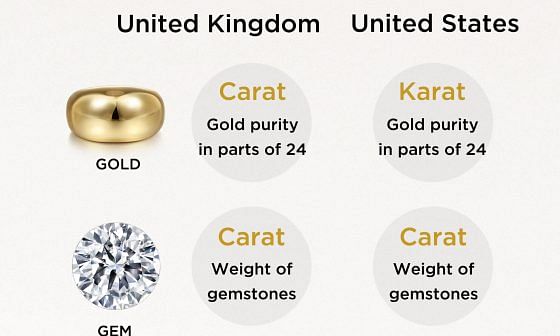
Karat is the correct usage for measuring gold purity in the United States of America. Carat is used only for gemstone weights. But then, as a famous quote goes, “We are separated by a common language.” In many parts of the world, such as the United Kingdom and Australia, carat is used for gold purity and gemstone weight alike. We suppose it’s alright if you look at the jewelry in context and know what you’re signing up for.
Why Is Karat Abbreviated With a K?
Simply because it’s important to ensure that you know what purity of gold to purchase. If your jewelry says 14K, 14 parts (or carats) are pure gold, and 10 parts are another metal. Don’t go around paying more for it than you should. Also, when you see the abbreviation K, you know it necessarily refers to purity. There is no confusion between k and ct – the latter being the abbreviation for the gemstone carat weight.
How Can You Cross Check the Gold Purity?
To ascertain your gold jewelry's karat weight, you must take your jeweler's word for it. This is why it is sacrosanct to visit a reputed brand and get a certified jewelry piece that is hallmarked with the exact purity. How do you ensure your jewelry's legitimacy if you purchase it from a newly established or not a very well-known or coveted jeweler or, maybe, a non-certified dealer? By destroying it. No, we're not joking. It is literally the only way. To reaffirm its authenticity, you have to heat the jewelry to temperatures of over 1000 centigrade and watch the gold and alloys separate. Unfortunately, this means you will only be left with clumps of metal. Another way is to dissolve your ring in a solution of acids. Even X-rays won't help you out here. If your jeweler has used iron (or even plastic or scrap) inside your ring, it can't get past your outer layer to assess this.
In comparison, diamond carats are far easier to measure. Pop it on the weighing scale, and you're done.
How Many Karats of Gold Are Best for Jewelry?
When you buy jewelry, always check the karat of gold, understand the carat weight of gemstones, and think about the design and purpose of the piece.
To be fair, there is no one correct answer for this. The only thing we’re sure of is to avoid 24k or pure gold without alloys since it is too soft and pliable. That isn’t to say that you can’t pick up gold bars or coins that measure 24k. In some geographies like Asia, and Africa, where gold jewelry is considered a precious investment, 22k gold is preferred, but only as gold coins or bars, not as gold jewelry. While buying 18k or 14k gold jewelry, the presence of alloys makes it more durable, but you still have to be mindful of the quality and shell out according to that and not just superficial appearance1. 18k gold is emerging as our favorite – it hits the sweet spot between price, durability, and value. Having said that, for a few designs that need the metal carvings to be more robust and grip the heavy, precious stones more firmly, 14k gold is the ideal choice. Not only is it sturdy, but it is also versatile and slightly lesser priced.
How Many Carats are Good for Diamond Jewelry?
This is one question that leaves us as flummoxed as you. There is no end to how many carats your diamond can be. It entirely depends on your budget and to what extent you are willing to indulge yourself in luxury. Decadence has no cost or price to it, especially when it is something as enthralling as jewelry! The diamond carat you purchase can range from a few cents to a score, or maybe, even more. Just the way our celebrities and people with high net worth like it – a case in point, the queen singer Beyoncé recently wore a diamond necklace featuring a whopping 128.54-carat yellow diamond. Blew our minds off! No, we are not giving your aspirations any far-fetched, delusional wings. Anything from a single carat to a few carats of diamonds in jewelry is wonderful, taking into consideration the scoring of the other 3 C’s as well – color, cut, and clarity.
Head to Gabriel & Co. for a wide variety of gemstones (including diamonds) in various carat weights, set in gold purity across recommended karats. We promise you’ll be spoilt for choice.