Good to Have You Back

Oval and radiant cut diamonds both offer something a round brilliant cannot: a distinctive silhouette with serious sparkle. But the two shapes deliver very different looks, and choosing between them comes down to brilliance style, finger coverage, and how each wears day to day. Here is how oval and radiant cut diamonds compare, and which engagement ring settings bring out the best in each.
Short answer:
Oval cut diamonds have a rounded, elongated outline with 56 to 58 facets that maximizes brilliance and creates the appearance of a larger stone. Radiant cut diamonds have a rectangular or square outline with cut corners and around 70 facets, blending the geometric lines of an emerald cut with the fire of a brilliant cut. Oval suits those who want an elongated, classic shape, while radiant suits those who want bold sparkle with clean, modern edges.
Read on for an in-depth comparison.
What is an oval cut diamond?
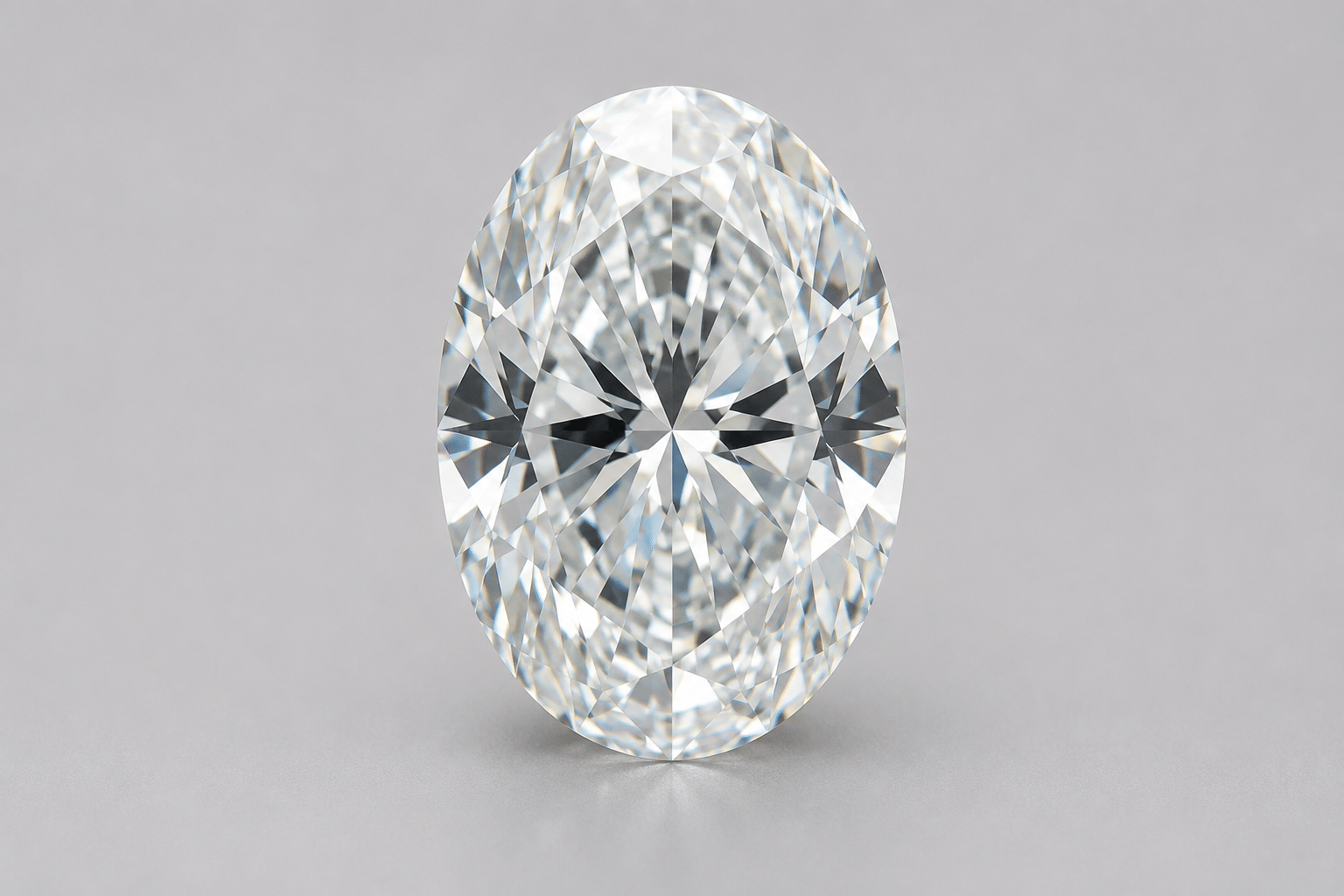
Because the facet pattern is based on the round brilliant, oval cut diamonds tend to hide minor inclusions well and offer strong light performance when cut to good proportions. One characteristic to be aware of is the bowtie effect, a subtle shadow that can appear across the center of the stone. In a well-crafted oval, it is often barely noticeable and can even add depth and dimension to the diamond. How visible it is depends largely on the quality of the cut and the craftsmanship behind it, which is why sourcing from a trusted jeweler matters.
An oval cut diamond is an elongated, rounded brilliant cut, modified from the round brilliant to create a stretched silhouette. It typically has 56 to 58 facets arranged to maximize light return, giving it nearly the same fire and scintillation as a round diamond while appearing larger across the finger for the same carat weight. The modern oval cut is credited to diamond cutter Lazare Kaplan, who refined the shape in the 1960s using faceting techniques developed for round brilliants.
Explore our oval engagement rings
What is a radiant cut diamond?
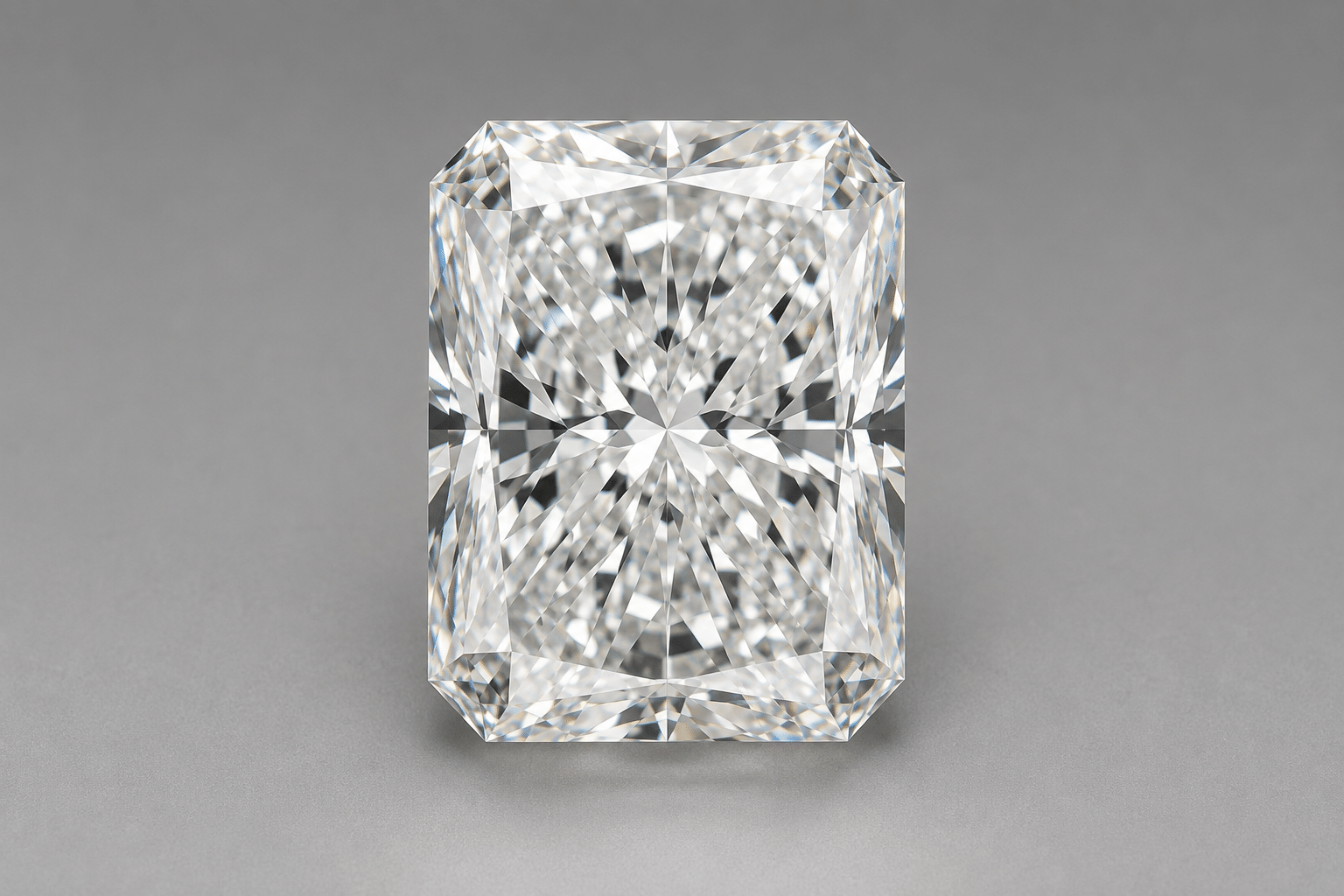
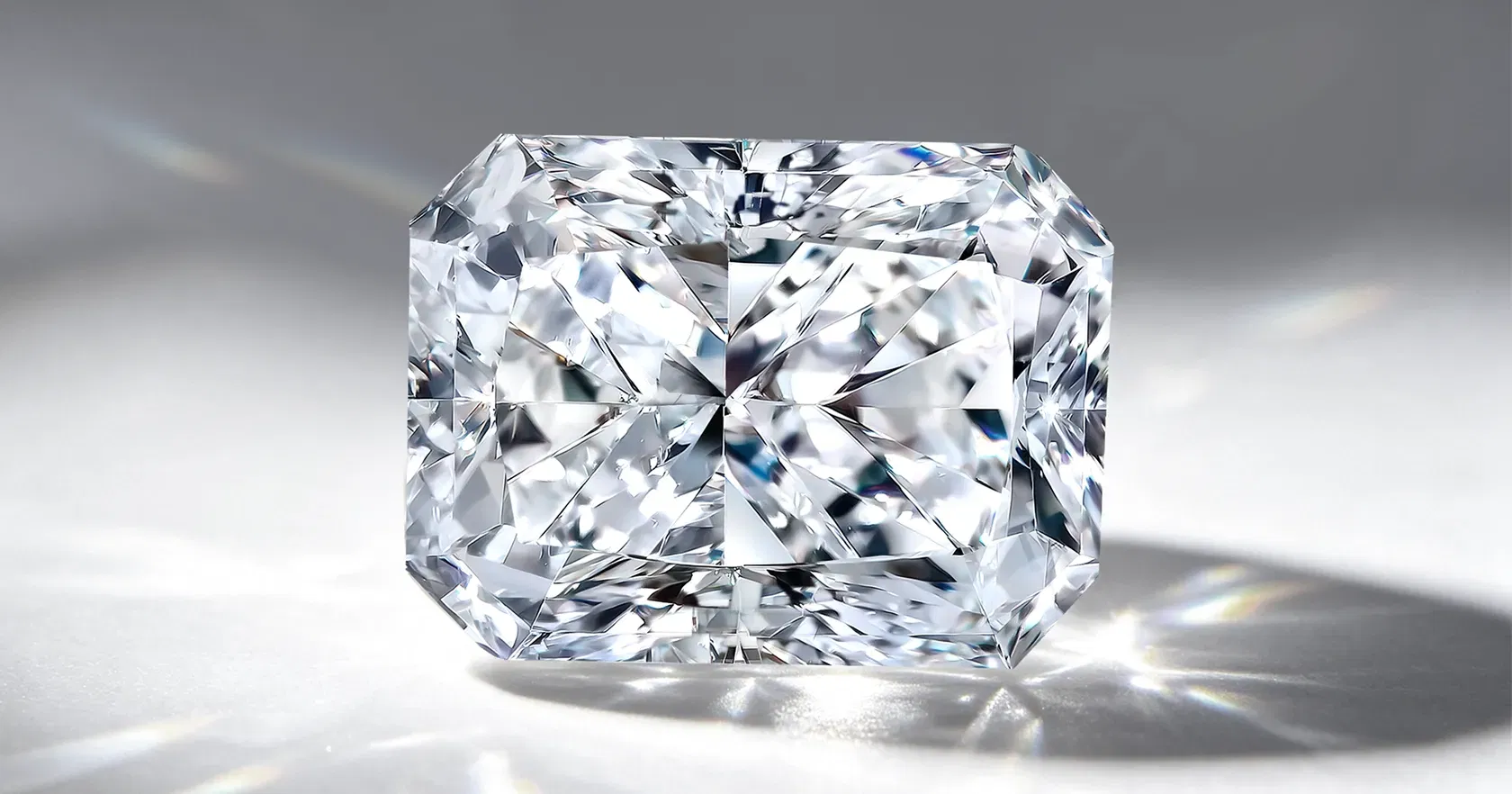
A radiant cut diamond combines the clean, rectangular or square outline of an emerald cut with the faceting style of a brilliant cut. It typically has around 70 facets, more than most other fancy shapes, which gives it noticeably more sparkle than a true step cut like the emerald or asscher. The radiant cut was patented by diamond cutter Henry Grossbard in 1977, designed specifically to combine geometric structure with brilliant cut fire.
The cut corners of a radiant diamond make it more resistant to chipping than pointed shapes, and its faceting pattern is effective at masking inclusions and color tint, which makes it a popular choice for diamonds in the lower color grades that still need to read bright and white.
Explore our radiant cut engagement rings. And for a deeper look at what is a radiant cut and how it stacks up against its step cut counterpart, see our Radiant vs. Emerald Cut guide.
Oval vs. radiant: key differences at a glance
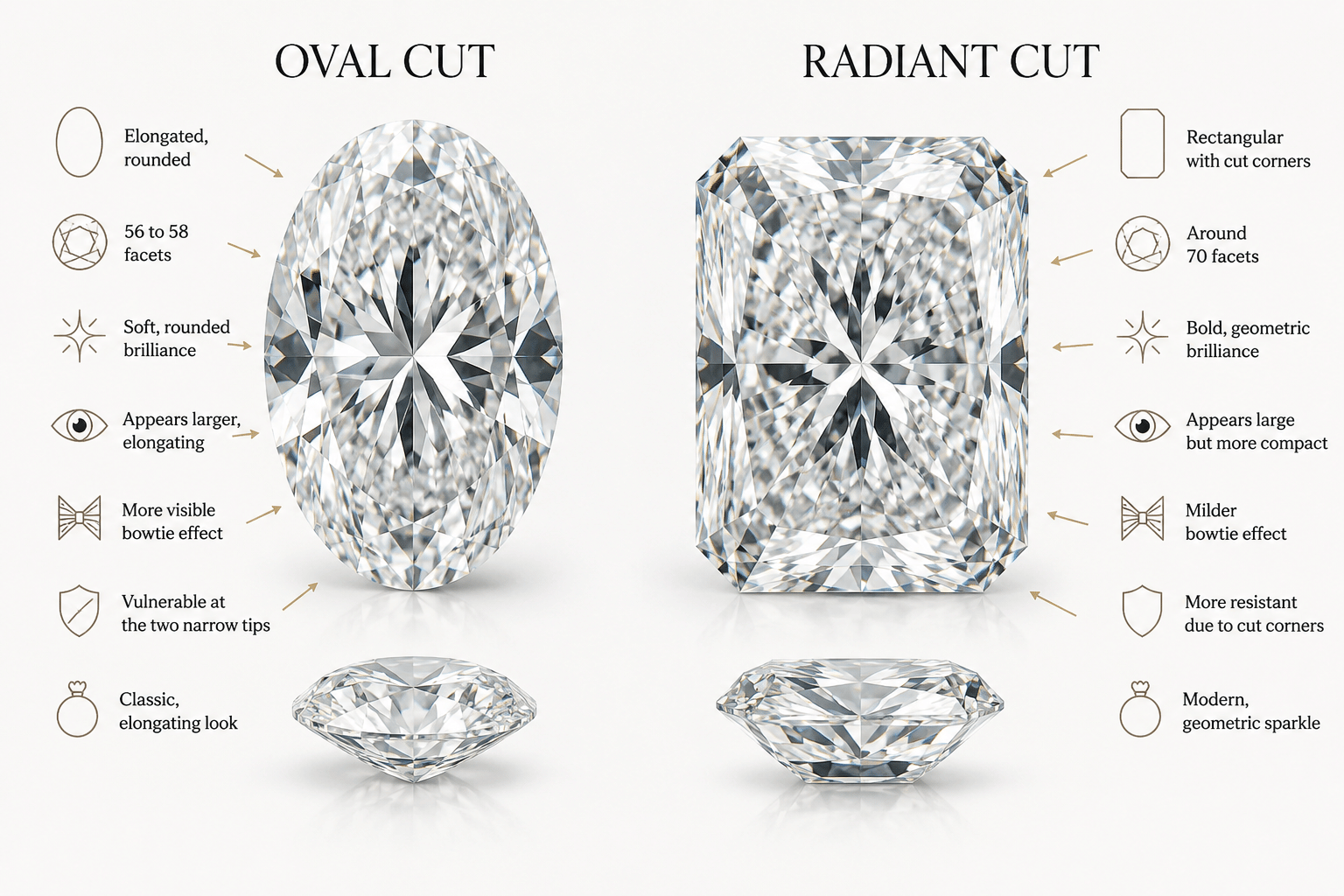
| Feature | Oval cut | Radiant cut |
| Outline | Elongated, rounded | Rectangular or square with cut corners |
| Facet count | 56 to 58 facets | Around 70 facets |
| Brilliance style | Soft, rounded brilliance | Bold, geometric brilliance |
| Finger coverage | Appears larger, elongating | Appears large but more compact |
| Bowtie effect | Common, more visible | Possible but usually milder |
| Chip resistance | Vulnerable at the two narrow tips | More resistant due to cut corners |
| Best for | Classic, elongating look | Modern, geometric sparkle |
Brilliance and sparkle
Oval cut diamonds are built on round brilliant faceting, so they produce a soft, even sparkle with strong light return across the whole stone. Radiant cut diamonds layer brilliant style facets onto a step cut outline, which produces a more structured, high contrast sparkle with flashes concentrated along the corners and length of the stone. Side by side, an oval reads as softer and more romantic, while a radiant reads as bolder and more architectural.
Which looks bigger per carat
Oval cut diamonds generally appear larger than their carat weight suggests because the elongated shape stretches across more of the finger. A 2 carat oval can visually outsize a 2 carat round or radiant of the same weight. Radiant cut diamonds also wear large thanks to a broad, flat table that maximizes face up surface area, but because the outline is more compact, the size difference is less dramatic than with an oval.
If you are also considering a round brilliant, see how the oval compares in our oval vs. round cut diamond guide.
Price per carat
Both oval and radiant cut diamonds tend to cost less per carat than a round brilliant of comparable quality, since both shapes retain more weight from the original rough diamond during cutting. Pricing between oval and radiant is typically close, and the bigger factors are cut quality, color, and clarity rather than shape itself. Working with a jeweler who can show side by side options at your target carat weight and budget is the most reliable way to compare real pricing.
Durability for everyday wear
Radiant cut diamonds have a slight durability advantage because their cut corners are less prone to chipping than the pointed ends found on other elongated shapes. Oval cut diamonds are rounded along most of their outline but do come to two narrower points at each end, which can be vulnerable to chips if knocked directly. A protective setting style, such as a halo, bezel, or cathedral shoulders, helps reinforce either shape for daily wear.
Styling oval cut engagement rings
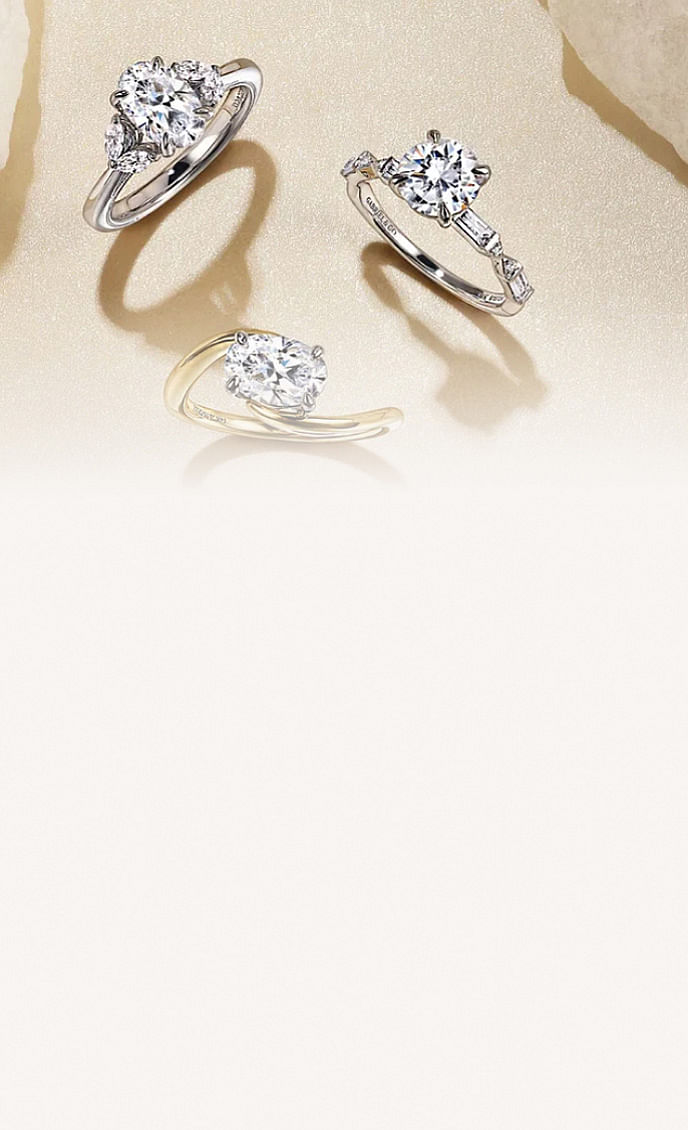
Oval cut diamonds work beautifully in settings that play up their elongating shape. Below are a few Gabriel & Co. engagement rings, each styled to highlight the shape in a different way.
Three stone lotus setting
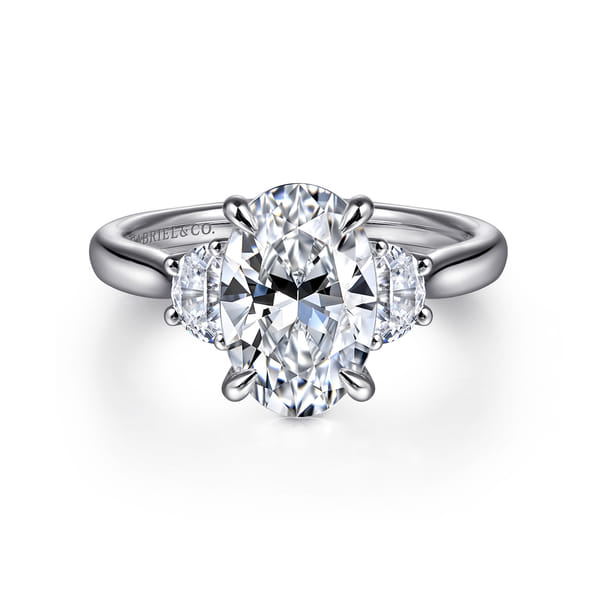
A three stone setting flanks the oval center with smaller side stones, adding extra sparkle along the length of the finger and reinforcing the elongating effect of the oval shape.
Classic solitaire
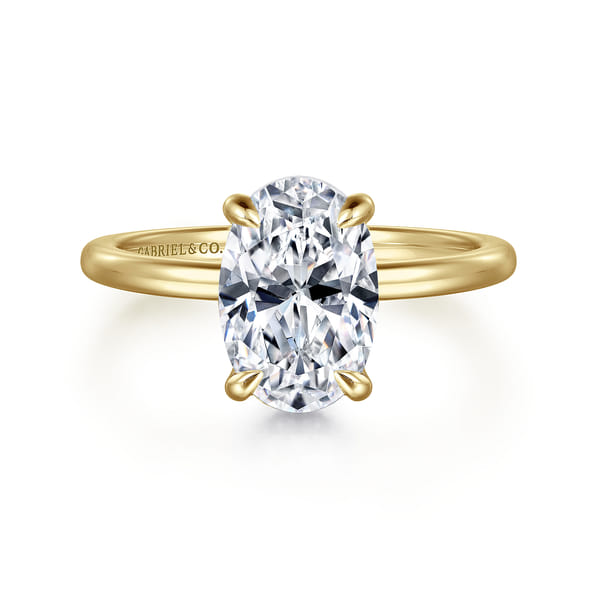
A solitaire setting keeps the focus entirely on the oval diamond's silhouette and brilliance, making it a timeless choice for those who want the shape to speak for itself.
Split shank band
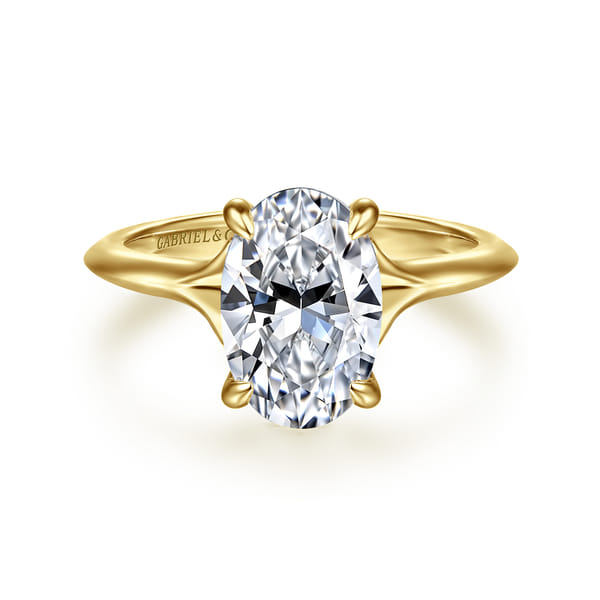
A split shank band adds visual lightness and a contemporary edge, drawing the eye toward the oval center stone from both sides of the finger.
Hidden halo
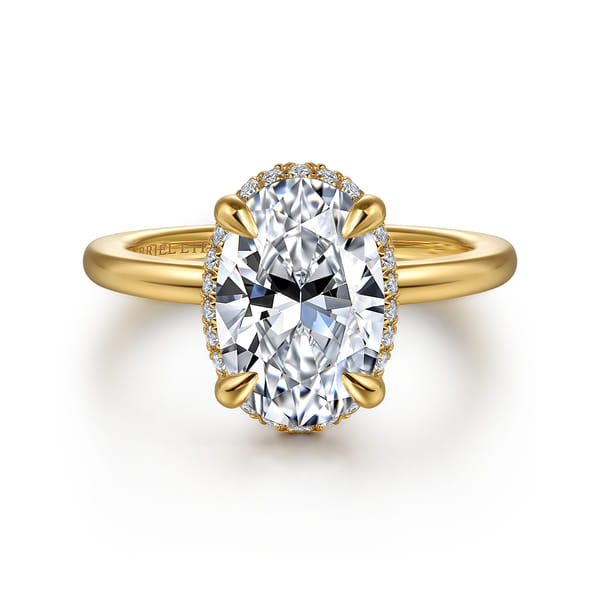
A hidden halo tucks a ring of smaller diamonds beneath the oval center stone, adding extra sparkle and the appearance of increased carat weight without changing the clean profile from above.
Styling radiant cut engagement rings
Radiant cut diamonds suit settings that echo their geometric lines or contrast them with softer, curved details. Below are a few Gabriel & Co. radiant cut engagement rings worth considering.
Three stone setting
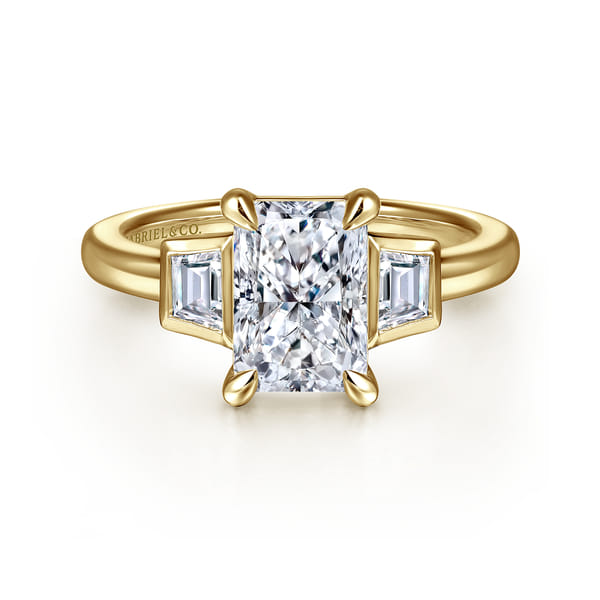
Trapezoid side stones echo the radiant cut's angular lines while adding extra width and sparkle on either side of the center stone.
Classic solitaire
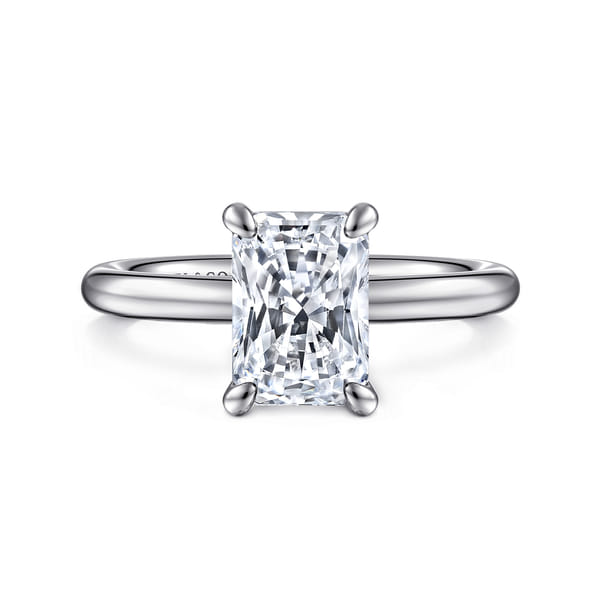
A solitaire setting highlights the radiant cut's sharp lines and broad table, letting the diamond's geometric brilliance stand on its own.
Compass set hidden halo
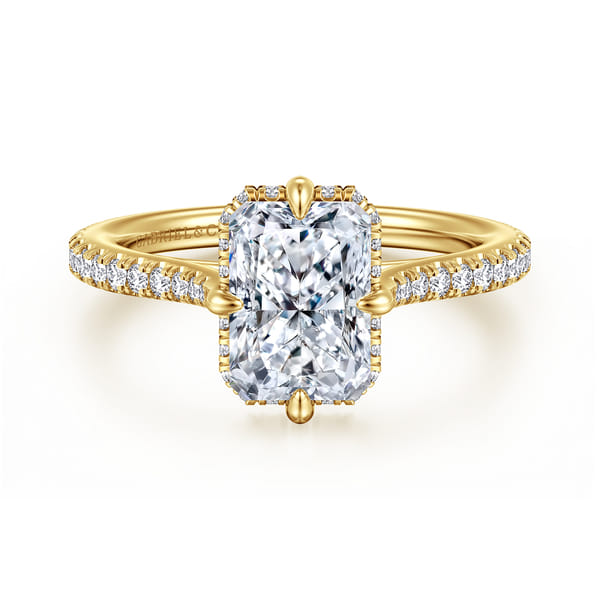
Compass set prongs anchor the radiant diamond at its four points, while a hidden halo beneath the center stone adds sparkle without disrupting the clean rectangular outline.
Bezel set modern edge
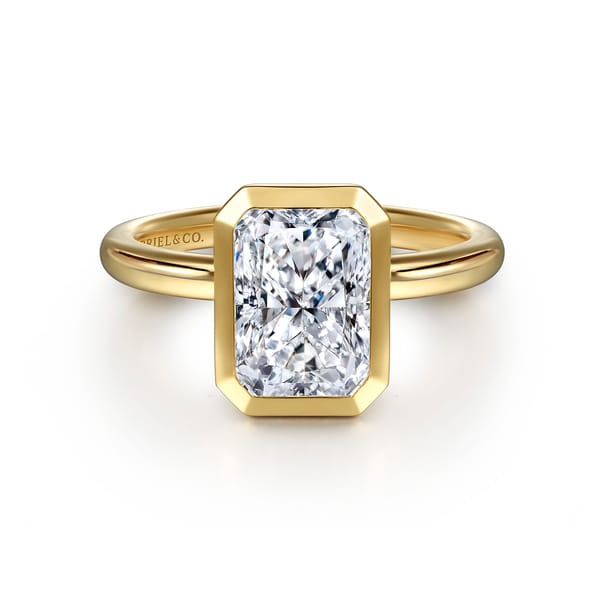
A bezel setting wraps a thin band of metal around the radiant diamond's edges, giving it a sleek, protective frame that suits an active lifestyle without losing any of the shape's signature sparkle.
How to choose between oval and radiant
- Choose oval if: you want an elongating shape with soft, rounded brilliance and a classic engagement ring silhouette.
- Choose radiant if: you want bold, geometric sparkle with clean lines and slightly more resistance to chipping.
- Consider your hand shape: an oval can elongate shorter fingers, while a radiant tends to suit a range of hand shapes evenly due to its compact outline.
- Think about your setting: both shapes pair well with three-stone settings, halo engagement rings, and solitaire styles, so let your preferred setting guide the final decision alongside the diamond shape itself.
If a cushion cut is also on your shortlist, our radiant vs. cushion cut comparison breaks down how the two shapes differ in sparkle, outline, and wearability.
Final Thoughts
Both oval and radiant cut diamonds offer exceptional brilliance, each in their own distinct way. At Gabriel & Co., our jewelry experts are here to help you find the shape, setting, and style that feels right for you. Whether you are drawn to the soft elongating elegance of an oval or the bold geometric sparkle of a radiant, we craft every engagement ring to the highest standard using recycled gold and GIA-verified diamonds.
Frequently asked questions
Is an oval cut or radiant cut diamond more expensive?
Both shapes generally cost less per carat than a round brilliant diamond because they retain more weight from the rough stone during cutting. Between the two, prices are close and depend more on the individual diamond's cut quality, color, and clarity than on shape alone.
Which diamond shape looks bigger, oval or radiant?
Oval cut diamonds tend to look larger for their carat weight because their elongated outline stretches across more of the finger. Radiant cut diamonds also wear large thanks to their broad table, but their more compact rectangular or square shape does not create the same elongating effect.
Do oval and radiant cut diamonds show a bowtie effect?
Oval cut diamonds are known for showing a bowtie shaped shadow across the center of the stone, caused by light blocking itself between facets. Radiant cut diamonds can show a milder version of this effect, but their brilliant style faceting and cut corners tend to disguise it more effectively than a true oval or pear shape.
Which is more durable, oval or radiant cut diamonds?
Radiant cut diamonds are generally considered slightly more durable for everyday wear because their cut corners reduce the risk of chipping at sharp points, a risk that pointed shapes like marquise or pear face more often. Oval cut diamonds, while rounded, can be more prone to chipping at their two narrow ends and benefit from a protective setting such as a halo or bezel.
Can I pair an oval or radiant cut engagement ring with any wedding band?
Yes. Oval cut rings pair well with curved or contoured bands that follow the elongated shape, while radiant cut rings typically pair best with straight or slightly curved bands that complement their geometric outline. A jeweler can custom fit a band to either shape for a seamless look.