Good to Have You Back

Understanding the 4 Cs of diamonds is the foundation of choosing an engagement ring with confidence. In this guide, we break down each C in clear, practical terms, outline how they work together, and highlight what matters most when you’re comparing stones. This diamond buying guide, like all of our educational resources, is carefully reviewed by our gemologists and industry experts, ensuring every detail reflects accurate, current, and professional diamond evaluation practices.
Brief history: why we even talk about “4Cs”
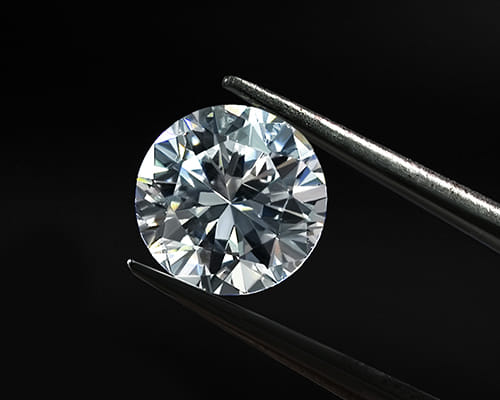
Before a common language existed, descriptors for diamonds were inconsistent and vague: merchants called color “water,” clarity was “with” or “without” flaws, and cut quality was left to subjective judgment. In the 1940s, Robert M. Shipley of the Gemological Institute of America introduced the simple mnemonic “the 4Cs” (Color, Clarity, Cut, Carat) to teach students the four principal characteristics that determine a faceted diamond’s quality.
Over subsequent decades, GIA and its researchers formalized these ideas into scientific grading systems — the D–Z color scale (introduced in the early 1950s) and later a predictive, research-based Cut Grading System (implemented for round brilliants in 2006). These standards turned diamond evaluation from folklore into measurable science and remain the industry’s backbone today.
Diamond cut: the performance engine
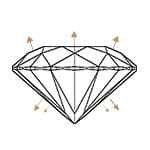
The diamond cut scale

What it is: the cut describes how well a diamond’s facets are arranged and proportioned to return light to the viewer. It is essentially how the stone plays with light. Cut grading evaluates proportions, facet symmetry, and polish to predict brightness, fire, and scintillation.
How it’s graded: For round brilliant diamonds, modern cut grading is a predictive, research-based system that models how proportions and facet relationships affect appearance. Grades usually run from Excellent/Ideal down through Very Good, Good, Fair, and Poor (nomenclature varies by lab). The grade reflects measured proportions plus symmetry, and polish assessments.
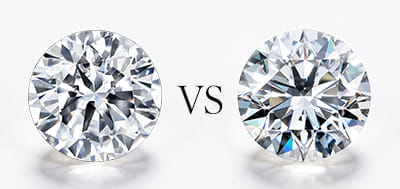
Why it matters: Two diamonds of the same weight, color, and clarity can look dramatically different depending on cut. A well-cut diamond maximizes light return, allowing it to appear larger and brighter than a poorly cut stone of the same carat weight.
Buying tips & trade-offs:
- Prioritize cut when sparkle is your top priority; a stronger cut grade often produces visibly better brilliance than improvements in color or clarity at modest cost.
- If you must trade off, a one-step downgrade in color or clarity usually saves more money than a one-step downgrade in cut.
- For fancy shapes (princess, emerald, marquise, etc.), cut characteristics differ from round brilliants; look for well-proportioned pavilion/crown relationships and good symmetry.
Common misconceptions: “Cut” is not the same as “shape.” Shape = round, oval, pear, etc.; cut = the quality of facet geometry and finishing.
Want to better understand how the cuts impacts light performance? Explore our blog on the ideal number of facets in a diamond.
Diamond color: measured absence of color
The diamond color scale

What is the color of a diamond? Color grading (for the D–Z range) measures the presence of a yellow or brown tint in colorless to near-colorless diamonds. The less tint, the higher the grade—the scale starts at D (colorless) and proceeds alphabetically to Z (noticeable yellow/brown).
How it’s graded: the color is judged by comparison to master stones under standardized lighting and background conditions. Minute differences, often invisible to an untrained eye, determine adjacent letter grades.
Why it matters: Color affects perceived brightness and can interact with cut and setting. A very white setting (platinum, white gold) can make faint tint more noticeable; a warm metal (yellow or rose gold) can mask low-level yellow tints and let you opt for lower color grades economically.
Buying tips & trade-offs:
- For round brilliants, a good cut can compensate for slight color; consider VS/Good cut with an H–I color for a bright look at a better price.
- If you favor a warm-metal setting, you can often choose a lower color grade (J–K) without losing perceived whiteness.
- Fancy-color diamonds (vivid yellows, pinks, blues, etc.) are graded and valued by color intensity, not the D–Z scale — they’re a different category altogether.
Fancy-color diamonds (vivid yellows, pinks, blues, etc.) are graded and valued by color intensity, not the D–Z scale — they’re a different category altogether.
Common misconceptions: “Colorless” diamonds are the only desirable ones. in fact, many well-cut near-colorless diamonds appear visually white once mounted, and some buyers prefer a subtle warmth.
Diamond clarity: inclusions, blemishes, and visual impact
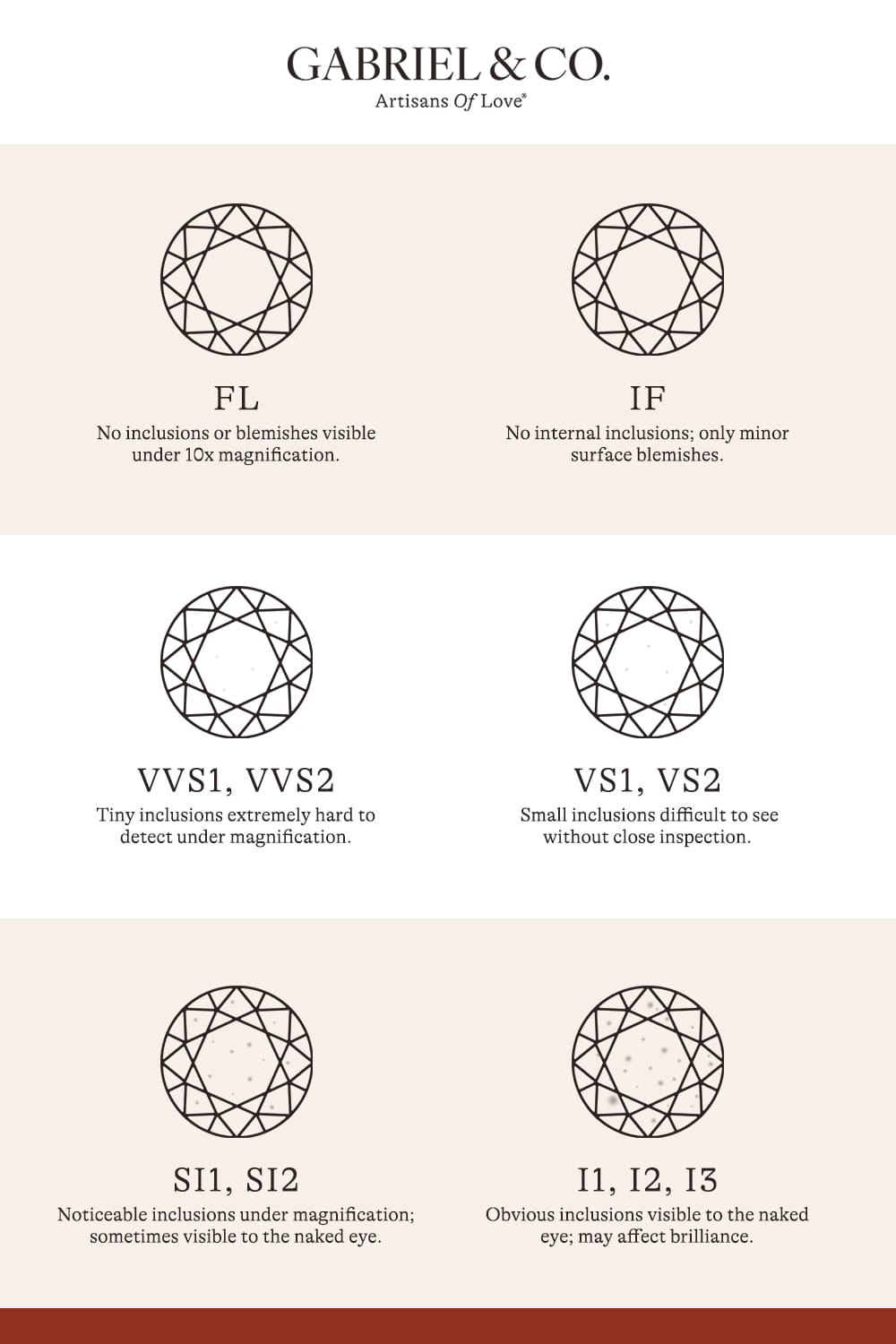
Diamond clarity grades
What is the clarity of a diamond? Clarity measures internal features (inclusions) and surface features (blemishes). The GIA clarity scale includes grades from Flawless (FL) and Internally Flawless (IF) down through VVS (very, very slightly included), VS (very slightly included), SI (slightly included), to the Included categories (I1, I2, I3).
Why it matters: While clarity affects value, many inclusions are microscopic and invisible without magnification. The most valuable clarity grades are rare, but for practical wearability, many buyers choose a grade where inclusions are not visible to the naked eye (often VS or SI, depending on the specific stone and its characteristics).
How it’s graded: Diamonds are evaluated under 10× magnification for number, size, relief, nature, and location of clarity characteristics. The final clarity grade reflects the overall appearance and how much the characteristics affect the eye-visible look of the stone.
Buying tips & trade-offs:
- If you want the best value, look for an “eye-clean” diamond; one with no inclusions visible to the naked eye at normal viewing distance. Eye-clean SI or VS stones can offer substantial savings versus VVS/IF grades.
- Pay attention to inclusion location: an inclusion under the table (center) is more visible than one near the girdle or hidden by a prong.
- For settings with strong bezel or halo coverage, you can often choose lower clarity grades because the setting helps hide minor inclusions.
Common misconceptions: A higher clarity grade doesn’t always mean a visibly cleaner stone. That’s not always the case. The size, position, and type of inclusion matter more than the grade alone.
For a deeper dive into this subject, read our dedicated diamond clarity guide.
Diamond carat: weight, not size
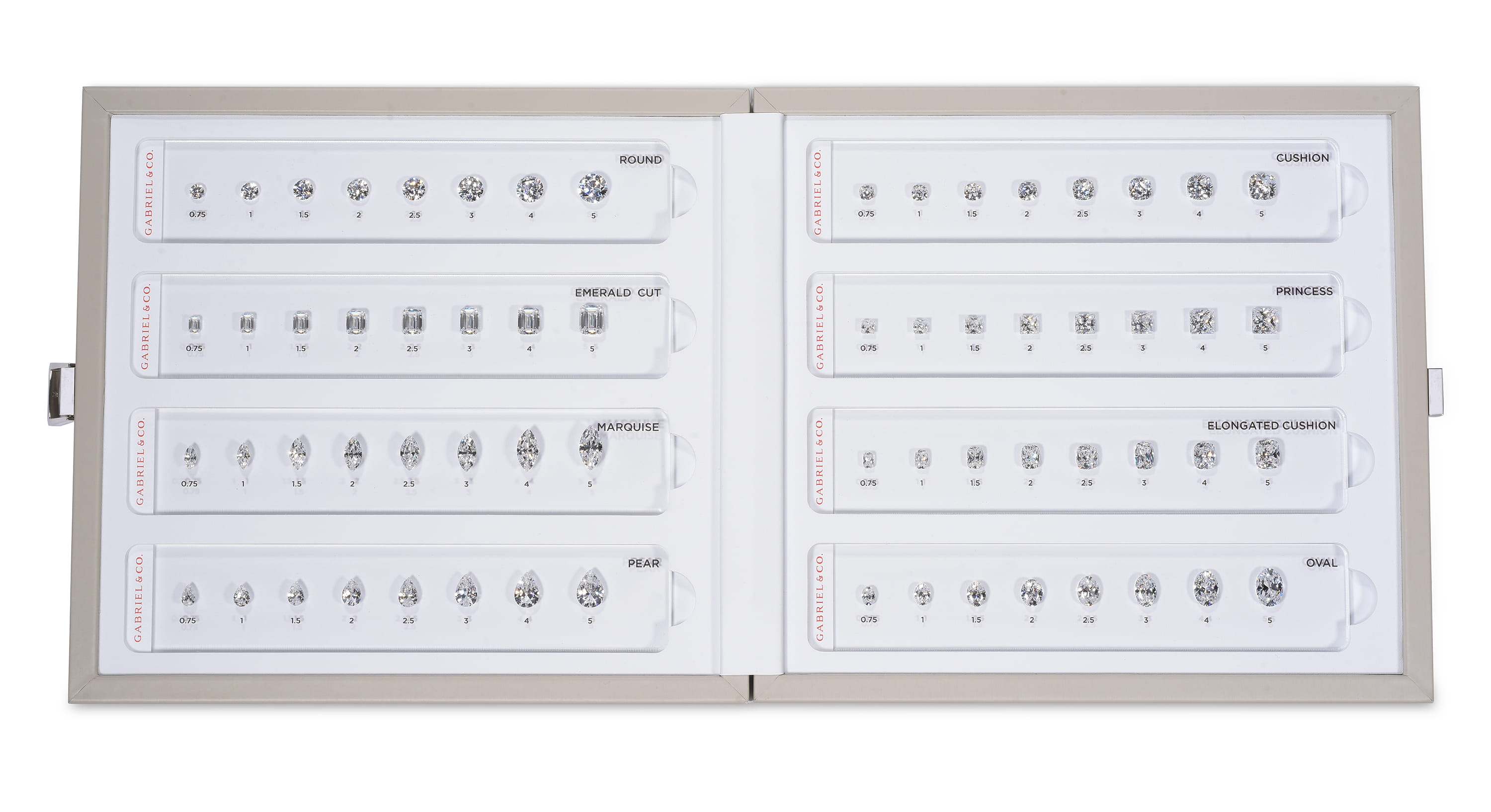
What is the carat weight of a diamond? Carat is a unit of weight. One metric carat = 0.20 grams (200 milligrams). Carat is subdivided into 100 points, so a 0.75 ct diamond = 75 points. Carat does not directly equal visual diameter, because shape and cut proportions influence perceived size.
Why it matters: Carat has a big effect on price because larger stones are rarer. Prices jump at popular “magic” weights (0.50 ct, 1.00 ct, 1.50 ct, etc.). Two diamonds with identical 4Cs except for carat will usually show the largest price difference.
Buying tips & trade-offs:
- Consider slightly under a major threshold (e.g., 0.95 ct vs 1.00 ct) to save money while keeping visual presence similar.
- A well-cut, slightly smaller diamond often looks livelier and sometimes larger to the eye than a poorly cut, heavier stone.
- If you want a strong presence on the hand without the price tag, choose an excellent cut in the 0.90–1.00 ct range rather than a poor-cut 1.2–1.5 ct stone.
Common misconceptions: Bigger always equals better. The visual appeal depends on cut, not only on weight.
Not sure if your stone is genuine? Learn how to tell if a diamond is real.
Diamond shapes: a quick overview

Here’s a look at the most common and most loved diamond cuts, each offering its own character and light behavior. These brief notes can guide your choice before exploring the detailed breakdown in our full diamond shapes guide.
Round Brilliant
A round brilliant diamond is the most widely chosen shape, known for strong light performance and consistent grading standards.
Oval
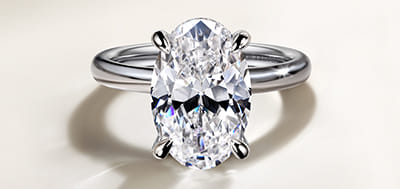
An oval-cut diamond is elongated and flattering, often appearing slightly larger than a round of the same weight.
Emerald
An emerald-cut diamond uses step-cut facets to create a hall-of-mirrors effect that highlights clarity and structure.
Cushion
A cushion-cut diamond features soft edges and varied faceting styles that range from vintage-inspired patterns to more energetic light play.
Princess
A princess-cut diamond boasts a square profile with crisp corners and a lively sparkle, ideal for modern, geometric settings.
Radiant
A radiant-cut diamond blends step-cut and brilliant faceting, delivering bright life with clipped, durable corners.
Pear
A pear-shaped diamond has a teardrop silhouette that lengthens the finger and benefits from balanced symmetry.
Marquise
A marquise-cut diamond is long and tapered, maximizing finger coverage with its distinctive outline.
Putting the 4Cs together: a practical, real-world buying approach
Start with what actually matters to you. If you love a lively, bright look, put cut at the top of your list. If you want the biggest visual presence for your budget, carat weight will naturally play a larger role. If long-term value or future resale gives you peace of mind, leaning a bit higher in color and clarity can make sense.
Find your balance. Most buyers do not need the highest grade in every category. The goal is a diamond that feels right, where the mix of cut, color, clarity, and carat aligns with your taste, your priorities, and your budget.
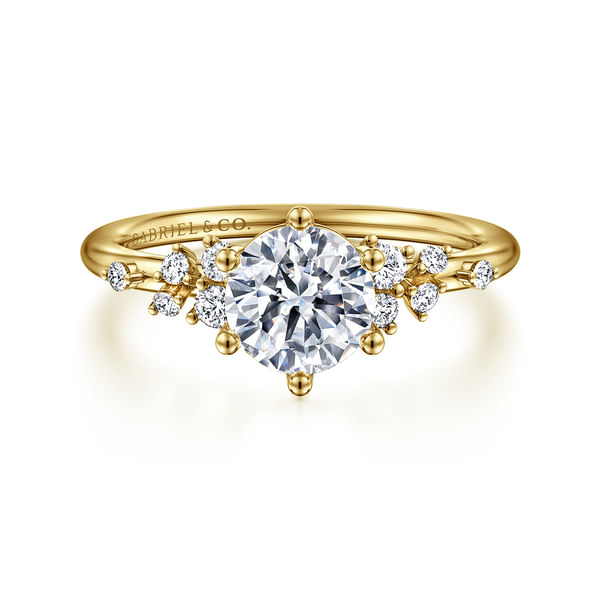
Reena - 14K Yellow Gold 6 Prong Round Diamond Engagement Ring
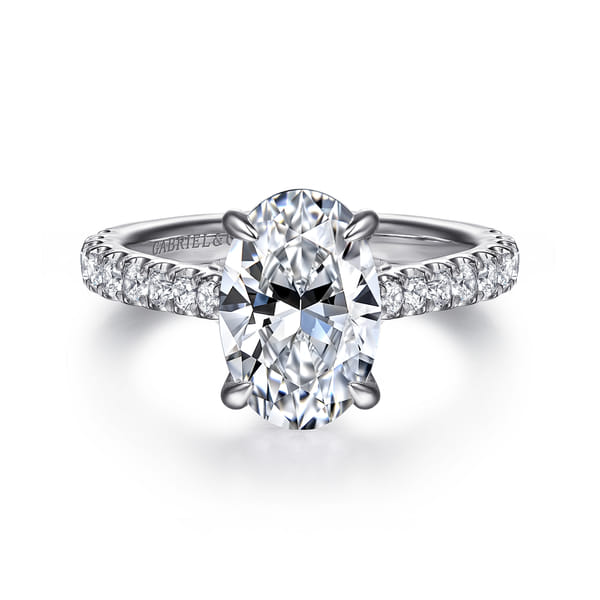
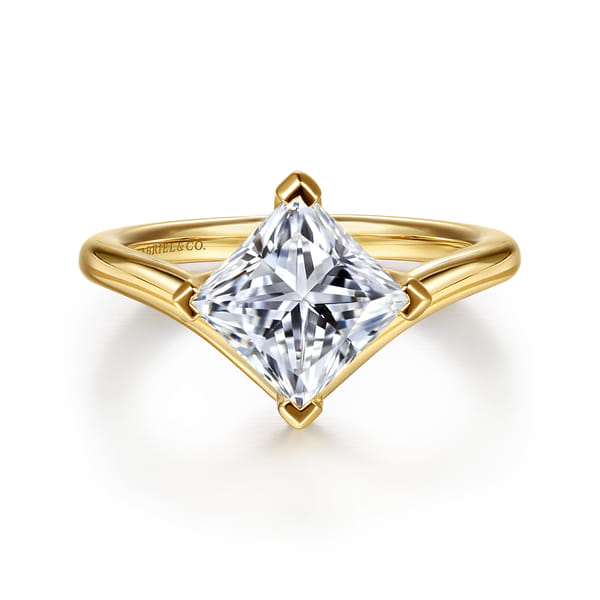
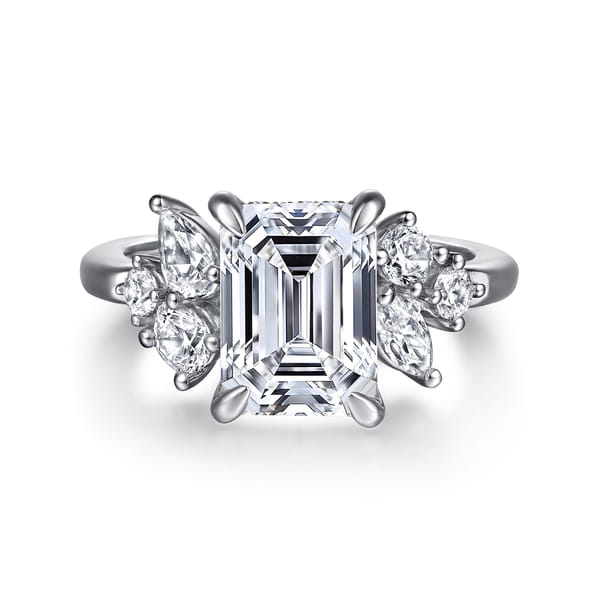
Always check the paperwork. With Gabriel & Co., every purchase comes with a certificate of authenticity and a unique serial number, tracing the ring back to you. The diamonds provided by our retailers for engagement ring center stones, as well as the diamonds we source for our wedding rings and diamond jewelry collections, are GIA-verified, giving you a clear, objective view of the stone you are buying. This removes the guesswork from comparing diamonds and ensures your choice is grounded in facts rather than just sales language.
If you keep these points in mind, choosing a diamond becomes far less overwhelming and a lot more enjoyable. And for those still weighing their budget, our guide on how much to spend on an engagement ring offers helpful insight into finding a comfortable balance between expectations and real-life finances.
FAQs
What are the 4 Cs of diamonds, and what does each one mean?
Cut controls how light reflects and how lively the diamond appears. Color measures how colorless the stone looks. Clarity refers to the presence of natural inclusions or blemishes. Carat is the diamond’s weight and size.
Which of the 4 Cs is the most important when choosing a diamond?
Cut is the most critical because it has the greatest impact on brightness and overall visual appeal.
How do the 4 Cs affect a diamond’s price?
Higher grades in any of the 4 Cs increase value, but size and cut usually influence price most dramatically.
What is the best balance of the 4 Cs for an engagement ring?
Prioritize an excellent cut, choose a near-colorless range, aim for eye-clean clarity, and select a carat size that suits your budget and setting.
Does diamond cut matter more than color or clarity?
Yes. A superior cut can make a lower color or clarity diamond look more vibrant and attractive.
What clarity grade is considered “eye clean”?
Typically VS2 or SI1, depending on the diamond and its inclusions.
What diamond color grade looks best in white gold or platinum?
G to H offers a bright white appearance while maintaining strong value.
Do different diamond shapes change which C matters most?
Yes. Step cuts highlight clarity and color more, while brilliant cuts can better mask inclusions and slight warmth.
How do I choose the right 4 Cs on a budget?
Invest in cut first, then balance slightly lower color or clarity grades that still appear visually clean. Adjust carat size to stay within budget without sacrificing overall beauty.