Good to Have You Back

Stud earrings are small earrings that rest directly on the earlobe rather than hanging below it. A decorative front sits at the piercing while a backing holds it in place, creating a neat, close-to-the-ear look that feels light enough for daily wear but polished enough for fine jewelry styling.
What are stud earrings?
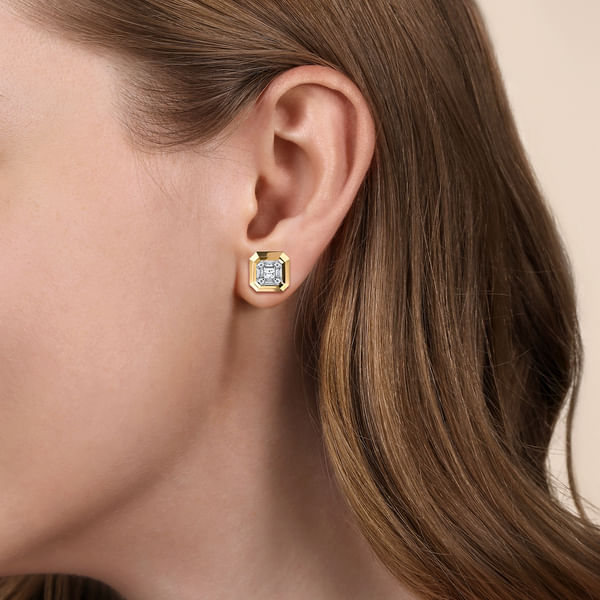
Stud earrings sit close to the ear, so they behave differently from most styles. They don’t swing, snag in your hair, or fight with your outfit. They simply bring everything together and make the look feel finished.
They’re built from three simple components:
- A decorative front (diamond, pearl, gemstone, or metal form)
- A post that passes through the piercing
- A backing that secures the earring behind the ear
That construction changes how they sit on the face. Rather than drawing attention through movement like drops or hoops, studs add detail in a controlled way. They frame rather than dominate, which is why they move easily between everyday wear and more formal settings without feeling out of place.
Stud earring size chart (MM Guide)
Choosing stud earrings usually comes down to proportion. A few millimeters can completely change how noticeable they feel on the face, which is why many people struggle to visualize size from numbers alone.
| Size | How it looks | When it works best |
| 2 mm | Barely visible | Second or third piercings |
| 3 mm | Very subtle | Minimal everyday wear |
| 4 mm | Balanced | Most common daily size |
| 5 mm | Noticeable but easy | Primary everyday studs |
| 6 mm | Prominent | Defines the look |
| 7–8 mm | Bold | Statement styling |
Most first-time buyers feel comfortable between 4 mm and 5 mm because the earring stays visible without taking over the face. Smaller sizes tend to disappear beyond close distance but layer well, while 6 mm and above begin to shape the overall look rather than simply support it.
Keep in mind that ear size, lobe thickness, and even hairstyle can make the same measurement appear different, so the goal is balance rather than choosing the largest size available.
Types of stud earrings
Stud earrings may share the same structure, but their personality changes completely depending on the material, size, and design. Here’s how the most popular types differ and what each one brings to your look.
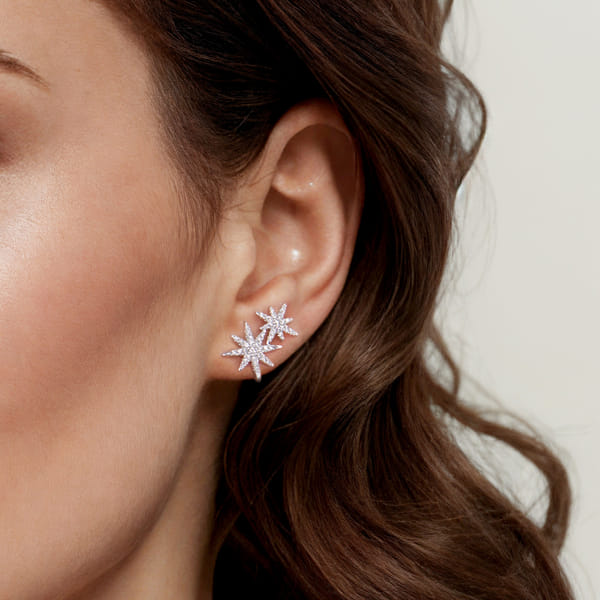
Diamond stud earrings
Diamond stud earrings are usually chosen for reliability more than spectacle. They reflect light consistently, they match almost anything, and they rarely feel overdressed. The effect depends mostly on cut and proportion rather than size, which is why a well-cut, smaller pair often looks sharper than a larger, poorly cut one.
They’re often picked to complement wardrobe palettes or skin tones rather than occasions.
Gemstone stud earrings
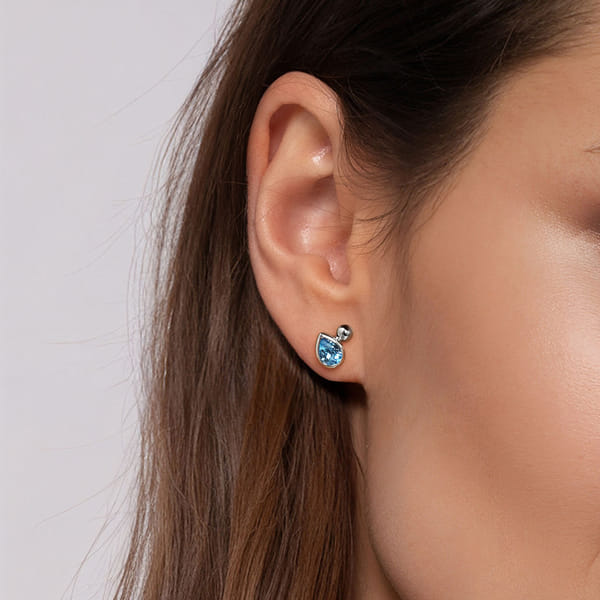
Color changes the mood immediately. Instead of brightness, the focus becomes tone and contrast against the skin.
Common choices include:
- Sapphire for depth
- Emerald stud earrings for richness
- Morganite for softness
- Garnet for warmth
Pearl stud earrings
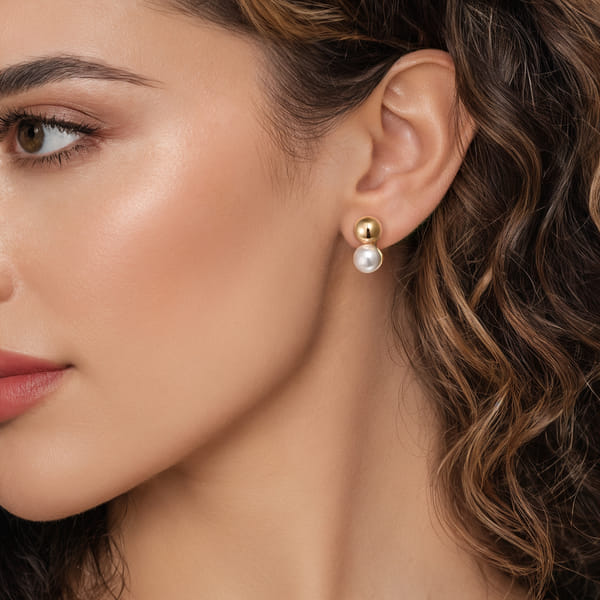
Pearls diffuse light instead of reflecting it, which softens the face. Pearl stud earrings work especially well with tailoring, collars, and structured clothing because they counterbalance sharp lines.
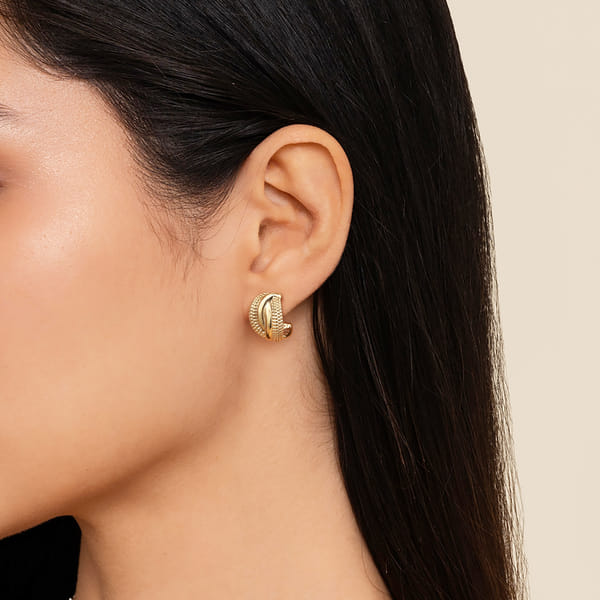
Gold stud earrings
No stones, just form. Domes, knots, discs, and sculpted shapes fall into this category. They read intentional without drawing focus and are often worn continuously.
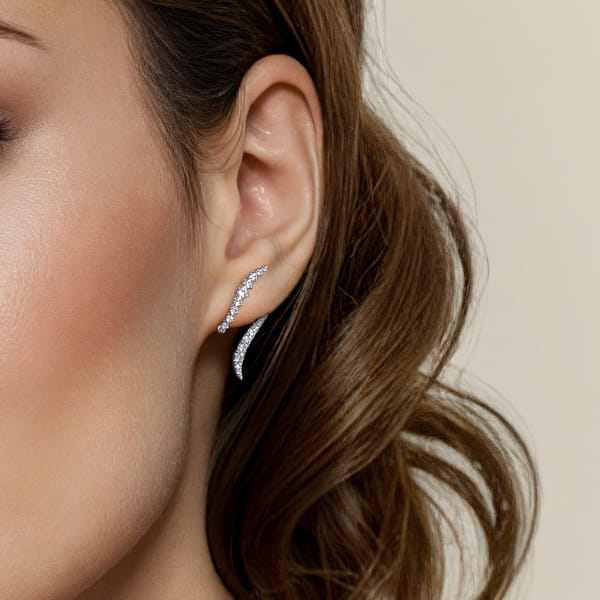
Statement stud earrings
Some studs are meant to stand out. Sculptural curves, wider gold surfaces, or pavé shapes give them presence while still sitting on the lobe. They offer the impact of a statement earring without the movement of drops, which makes them easier to wear with structured clothing or higher necklines.
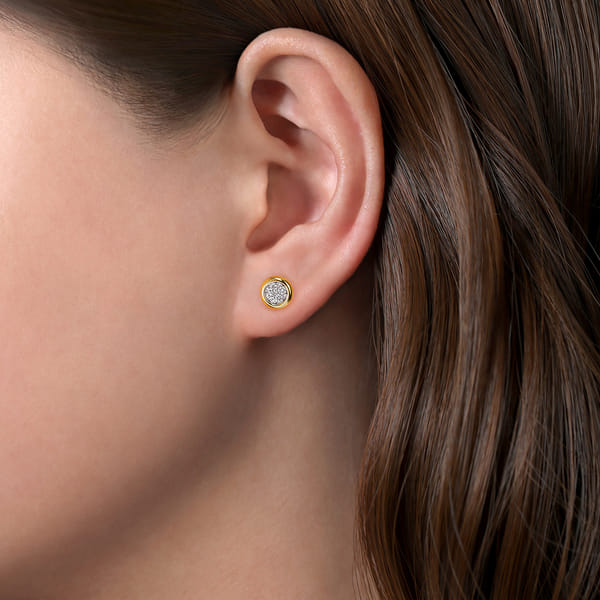
Minimalist stud earrings
These could be gold or silver stud earrings. They may feature very small bars, dots, or micro-stones and are often worn on the second or third piercings, but also worn alone if you’re into that ultra-minimal look. Some of the most popular styles in this category are round stud earrings and ones that carry a simple motif like a heart of a flower.
Settings and types of earring backs for studs
A stud earring is held in place by two things working together: the front setting that carries the design and the backing that stabilizes it behind the ear. The setting determines how exposed or smooth the earring feels, while the backing determines how secure it stays during daily wear.
Because some designs sit heavier or higher on the ear than others, certain combinations simply behave better over time.
| Setting | Recommended backing | What it improves | Best for |
| Prong | Screw or locking back | Prevents rotation and loss | Active daily wear |
| Bezel | Push or flat back | Keeps a low profile comfortable | Continuous wear, sleeping |
| Pavé | Screw back | Keeps stones facing forward | Fine jewelry studs |
| Halo | Locking back | Stabilizes top-heavy front | Dressier studs |
| Cluster | Screw or locking back | Balances weight | Larger designs |
If you want to understand how different earring styles and backings affect comfort and security, our guide to Types of Earrings and Earring Backs breaks it down clearly.
Stud earrings vs other earring styles
| Style | Movement | Visual role | Typical use |
| Studs | None | Controlled detail | Daily wear |
| Hoops | Continuous line | Framing | Casual to dressy |
| Huggies | Subtle contour | Layering | Multiple piercings |
| Drop earrings | Noticeable | Movement | Events |
How to choose the right stud earrings
Choosing studs is less about following trends and more about noticing what you’ll actually keep wearing. A few small details change how they look day to day.
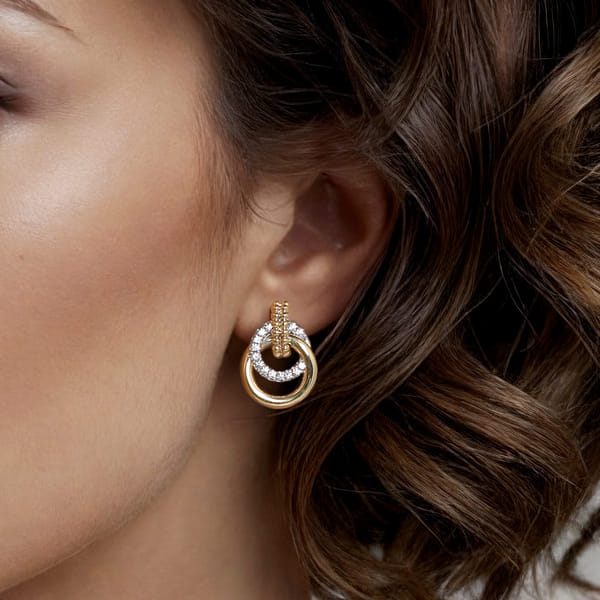
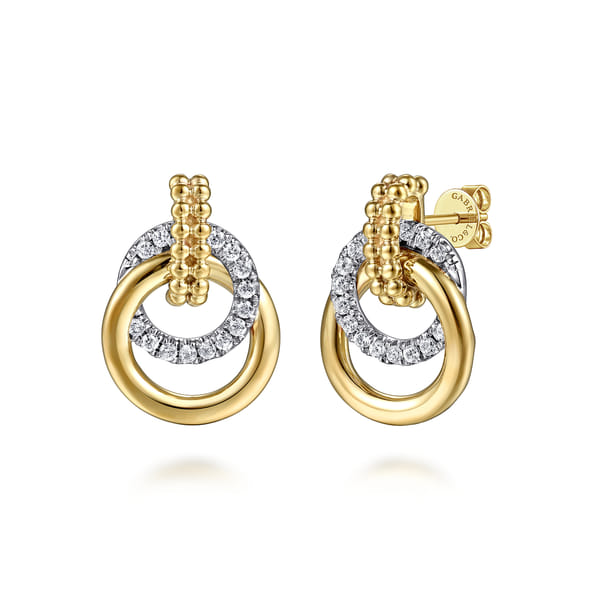
Metal
Most people already favor one metal without thinking about it, and a pair of 14 karat gold stud earrings is definitely a staple. Yellow gold becomes part of the outfit, white gold blends in and lets the stone carry attention, and rose gold softens contrast against the skin. If you lean toward a cooler edge, sterling silver offers a brighter feel that works well for everyday wear. If you wear mixed jewelry rarely, matching the metal you already reach for will make the studs feel natural from the first wear.
Gemstones
The stone determines whether the earring adds light or mood. Diamonds brighten the face and stay adaptable across outfits, while colored gemstone stud earrings shape the overall tone of what you’re wearing. If you want one dependable pair, neutral brilliance works. If you want personality, color does the work.
Size
Studs look best when they match your scale rather than dominate it. Very small pairs disappear beyond conversation distance, while larger ones start defining the look. A moderate size usually feels intentional without becoming the focus. Refer to the chart above for more details.
Face shape
Because studs sit close to the face, outline matters more than expected. Angular shapes add definition to softer features, while rounded stones soften sharper ones. Small adjustments here tend to look more balanced than simply sizing up or down. For a closer breakdown, read Find the Perfect Earrings for Your Face Shape.
Lifestyle
The right pair depends on how often you take them off. If they stay on most days, smoother settings and secure backs prevent irritation and shifting. If you change jewelry frequently, convenience becomes more important than security.
How to style stud earrings
Once you have the right pair, styling becomes about context. The same studs behave differently depending on the outfit and where you’re going.
Everyday balance
Studs rarely decide an outfit, but they often determine whether it feels complete. Because they sit close to the ear, they work more like punctuation than decoration. A simple shirt, knitwear, or relaxed tailoring benefits from a small point of structure near the face, especially when you skip a necklace. The right pair lifts attention upward without changing the mood of what you’re wearing.
For work
At work, earrings are a part of the clothing rather than an accessory. Structured pieces already bring lines and edges, so the jewelry should echo that restraint. Size matters more than brilliance here. Too small disappears, too large interrupts. When the proportion is right, the effect feels deliberate and composed instead of styled.
Building a stack
Studs work best as anchors. Start with one focal point in the first piercing and let the rest support it. Smaller studs above or a close huggie earring further up the ear keeps the composition coherent, so the eye moves naturally instead of jumping between shapes. The stack should look arranged, not accumulated.
For evenings
The instinct for events is often to go larger, but clarity tends to look sharper than size. A well-cut stone close to the ear catches light in a controlled way and pairs easily with open necklines and structured fabrics. The result feels considered without competing with the outfit.
If you’re layering multiple piercings, our Ear Stack Ideas blog shows you how to build a balanced arrangement, and our guide What are Huggie Earrings and How to Wear Them explains how close hoops pair naturally with studs.
FAQs
Are stud earrings good for everyday wear? Yes. Stud earrings are one of the most practical styles for daily wear because they sit close to the ear, don’t pull on the piercing, and rarely get caught in hair or clothing.
What size stud earrings are best for everyday wear?
A moderate size tends to feel the most balanced. Small studs can disappear from a distance, while larger ones start shaping the outfit. Most people prefer something noticeable but not dominant.
Are screw backs safer than push-backs?
Yes. Screw backs are less likely to loosen unintentionally, which makes them a common choice for valuable or frequently worn pairs.
Can you sleep in stud earrings?
You usually can if the setting is smooth and the backing sits flat against the ear. Low-profile designs tend to feel more comfortable overnight.
Do stud earrings suit multiple piercings?
Yes. Their low profile makes them easy to combine across several piercings without the ear looking crowded.
Are diamond studs only for formal outfits?
No. They’re often worn daily because they adapt easily to both casual and tailored clothing.
Which metal is best for sensitive ears?
Higher-quality gold alloys are generally the most comfortable for regular wear.
Do bigger stud earrings look better?
Not necessarily. Proportion to your ear and features matters more than size alone.
How do I keep stud earrings from falling out?
Choose a secure backing, such as a screw or locking back, and make sure it’s fully tightened when worn.