Good to Have You Back
What is January’s birthstone? January’s birthstone is garnet. It is best known for its deep red color and is associated with protection, strength, and love.
January Birthstone Fast Facts
- Primary stone: Garnet
- Common colors: Deep red (almandine, pyrope), also green (tsavorite), orange (spessartine), and pink (rhodolite)
- Meaning: Protection, strength, love, and vitality
- Durability (Mohs hardness): 6.5–7.5
- Best jewelry types: Rings, necklaces, earrings, and everyday gemstone jewelry

January arrives with intention, not hesitation, and garnet stone feels like a natural companion to that energy. Long associated with strength, loyalty, and inner fire, this gemstone has carried meaning across centuries and cultures. Rich in color and layered in symbolism, garnet has earned its place as January’s birthstone, and its story runs far deeper than its signature red. So, what is January's birthstone, what does it mean, and what colors does it come in?
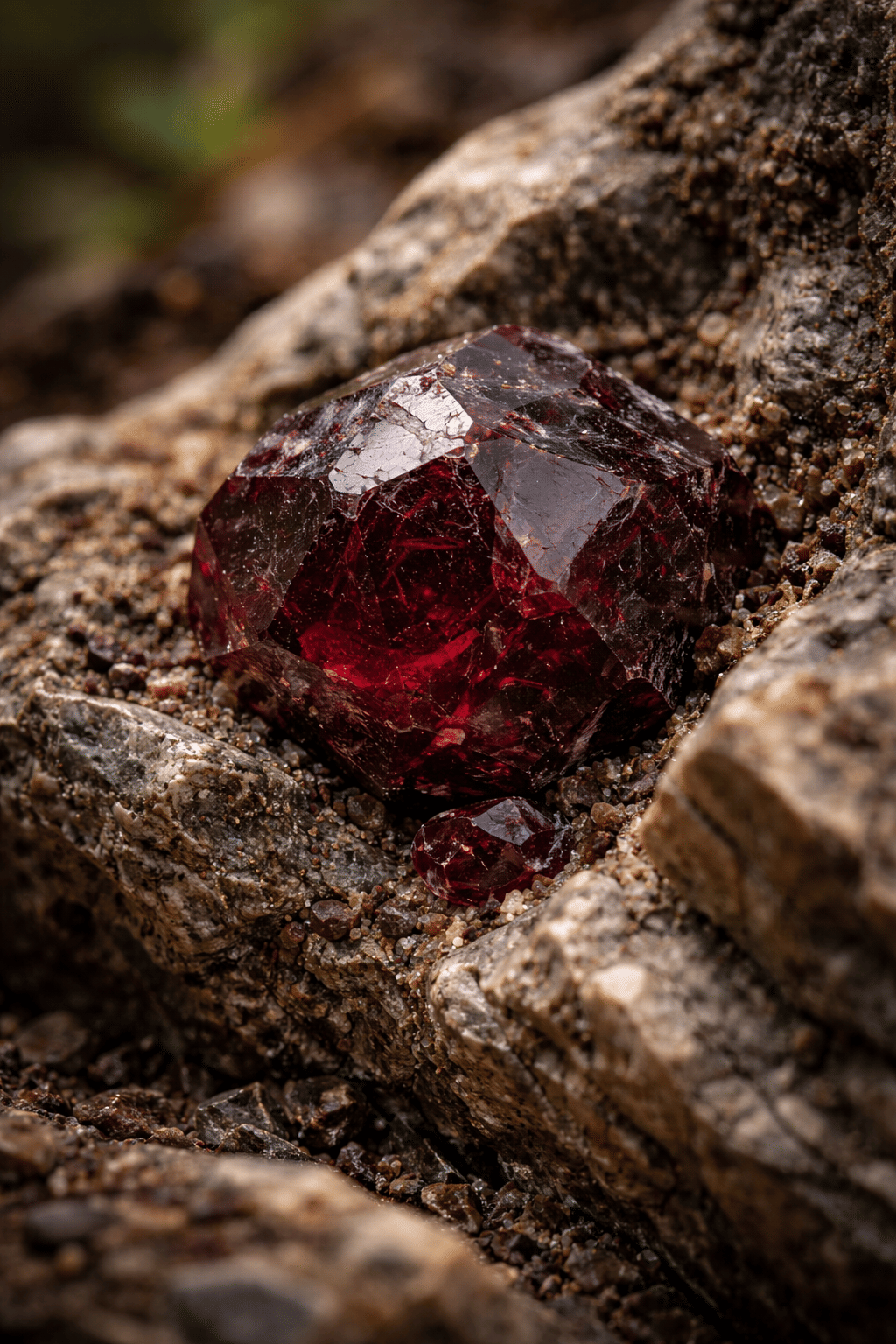
What is garnet?
Garnet refers to a group of closely related gemstones rather than a single stone. What ties them together is a shared crystal structure and a reputation for saturated color and reliable durability.
While deep red garnet is the most recognized variety, garnet stone exists in several distinct types. These include almandine and pyrope, known for their rich red tones, rhodolite with its raspberry hues, spessartine in vibrant orange shades, and tsavorite, a striking green garnet prized for its brilliance. This diversity of natural varieties is one of the reasons the garnet gemstone continues to surprise collectors and jewelry enthusiasts alike.
With that many colors, what exactly makes a garnet a garnet?
What ultimately makes a garnet a garnet is its internal structure and chemical framework. All garnets share the same crystal system and belong to a mineral group with similar atomic arrangements. Variations in elements such as iron, magnesium, manganese, or calcium are what create the different colors and varieties, but the underlying structure stays consistent across the family.
Formed under intense heat and pressure beneath the earth’s surface, garnet develops a dense structure that has supported its use in jewelry for thousands of years. That natural resilience continues to make it a practical choice today.
Garnet stone meaning and symbolism
Across history, garnet has carried a sense of purpose. Ancient civilizations linked it to protection, vitality, and emotional balance. Travelers carried it for reassurance, warriors wore it as a symbol of courage, and healers associated it with renewal and grounding energy.
In a modern context, garnet is often connected with:
- Passion and emotional depth
- Strength during periods of transition
- Confidence, motivation, and drive
- Commitment and enduring connection
Garnet reflects beginnings shaped by resolve rather than impulse. That makes it a fitting birthstone for January, a month rooted in intention, reflection, and forward momentum rather than sudden change.
The history of garnet stone
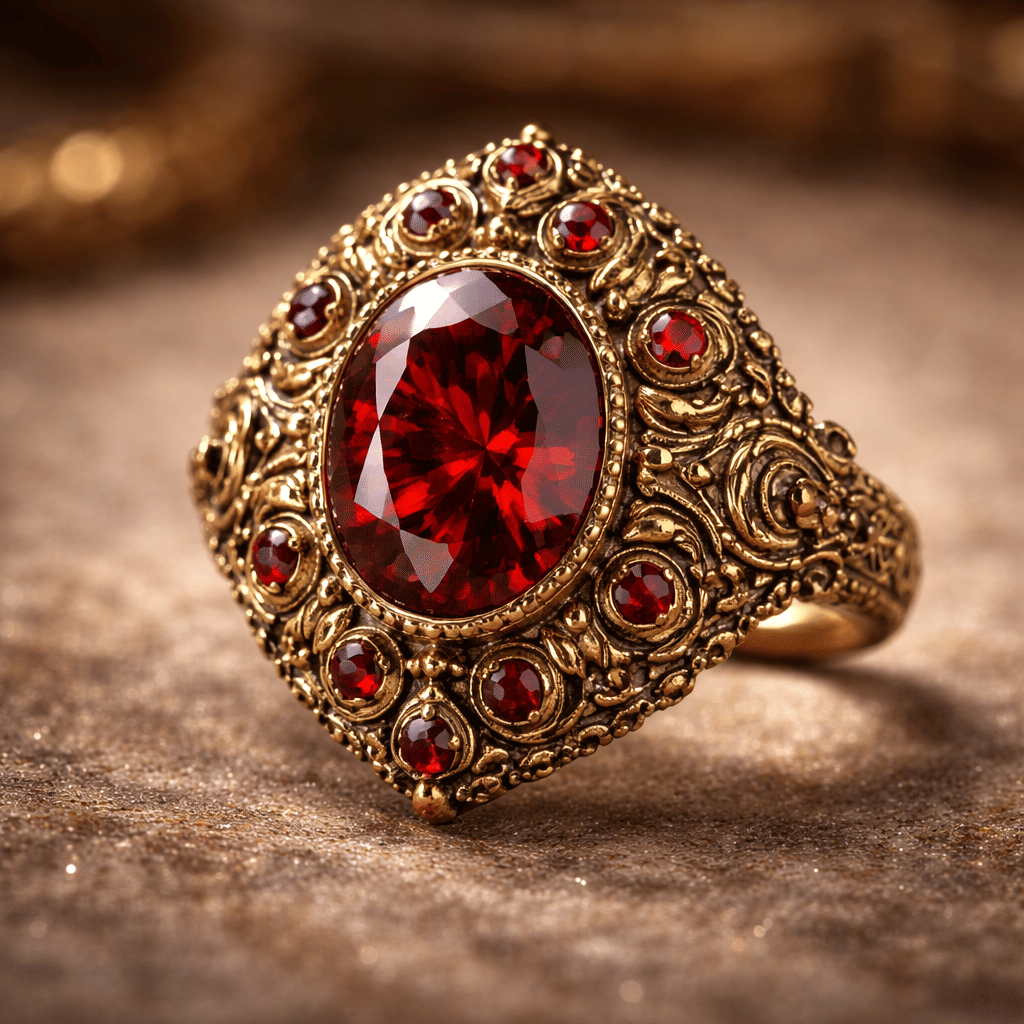
Garnet’s legacy stretches back over five millennia. In ancient Egypt, it appeared in ceremonial jewelry and burial adornments, where it was tied to life force and protection beyond this world. Roman officials favored garnet signet rings, carving them with symbols used to seal important correspondence.
During the Middle Ages, legends described garnet as a guiding light for travelers after dark. Whether myth or metaphor, the story reinforced the stone’s association with loyalty, guidance, and safe passage. Its presence in religious and royal jewelry further cemented its status across social classes.
Garnet jewelry through the ages
Garnet’s visual language has shifted with time while remaining unmistakable. Victorian jewelry often featured closely set garnets arranged in clusters, cut to enhance depth and richness. Earlier pieces leaned toward cabochon and rose cuts, emphasizing color over brilliance.
Contemporary designs explore contrast and individuality, pairing garnet with different metals and unexpected silhouettes. Rhodolite and green garnet varieties, in particular, have gained attention for their expressive character and versatility.
Garnet color
What color is garnet?
Garnet appears in a wide range of colors, from deep reds and purplish tones to vibrant oranges, soft yellows, and rich greens, with each shade shaped by the specific type of garnet.
These varieties are grouped based on their chemical composition, which influences everything from color to brilliance. All garnets fall into two main sub-groups: the Pyralspite series and the Ugrandite series.
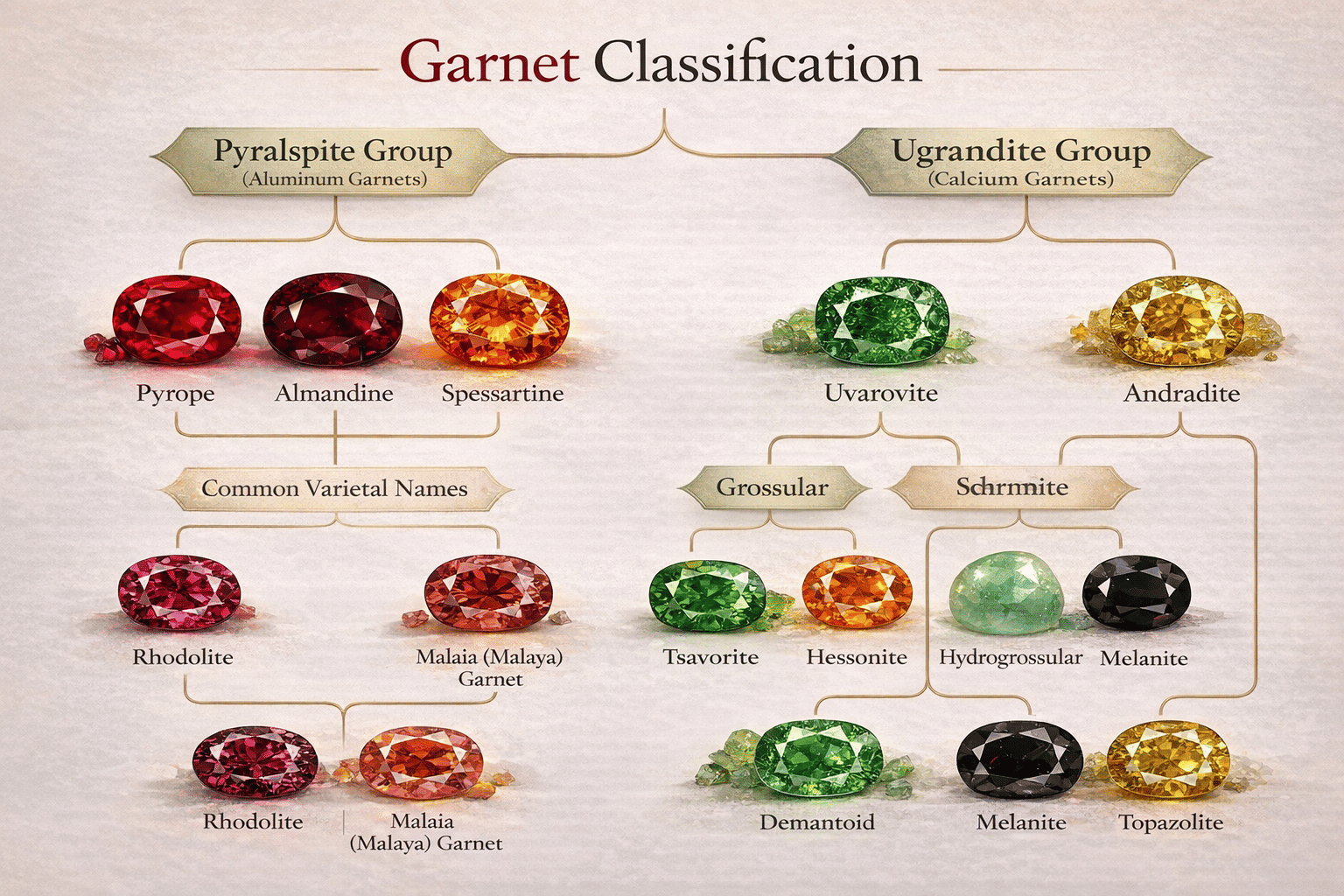
Redish tones: The Pyralspite family
The Pyralspite family includes garnets that contain aluminum as a key component. These stones are best known for their rich red, pink, and orange tones and are the varieties most commonly used in fine jewelry. They tend to have excellent clarity and a vibrant, saturated appearance, making them especially popular for rings, earrings, and pendants.
Garnets in the Pyralspite group include:
- Pyrope: Known for vivid red hues that can lean slightly purplish, pyrope garnets often appear bright and intense in color.
- Almandine: The classic deep red garnet, sometimes showing burgundy or brown undertones. This is one of the most widely recognized garnet varieties.
- Spessartine: Ranging from fiery orange to reddish-orange, spessartine garnet brings warmth and energy that stands out in modern designs.
Common varietal names within the Pyralspite family
Some garnets are natural blends of Pyralspite varieties, resulting in colors that fall between traditional categories:
- Rhodolite: A blend of pyrope and almandine, rhodolite garnet is known for raspberry, rose, and purplish-red tones.
- Malaia (Malaya) Garnet: A rarer variety with colors that range from peach and pink to orange and reddish-brown, often shifting subtly under different lighting.
Green and yellow tones: The Ugrandite family
The Ugrandite family is defined by the presence of calcium in its composition. These garnets are celebrated for their distinctive greens, yellows, and darker tones, as well as their exceptional light performance in certain varieties. While less commonly seen than red garnets, Ugrandite garnets are highly valued by collectors and gemstone enthusiasts.
Garnets in the Ugrandite group include:
- Uvarovite: A vivid emerald-green garnet, typically found in smaller crystal formations rather than large faceted stones.
- Andradite: A diverse garnet type that includes several notable varieties with striking color and brilliance.
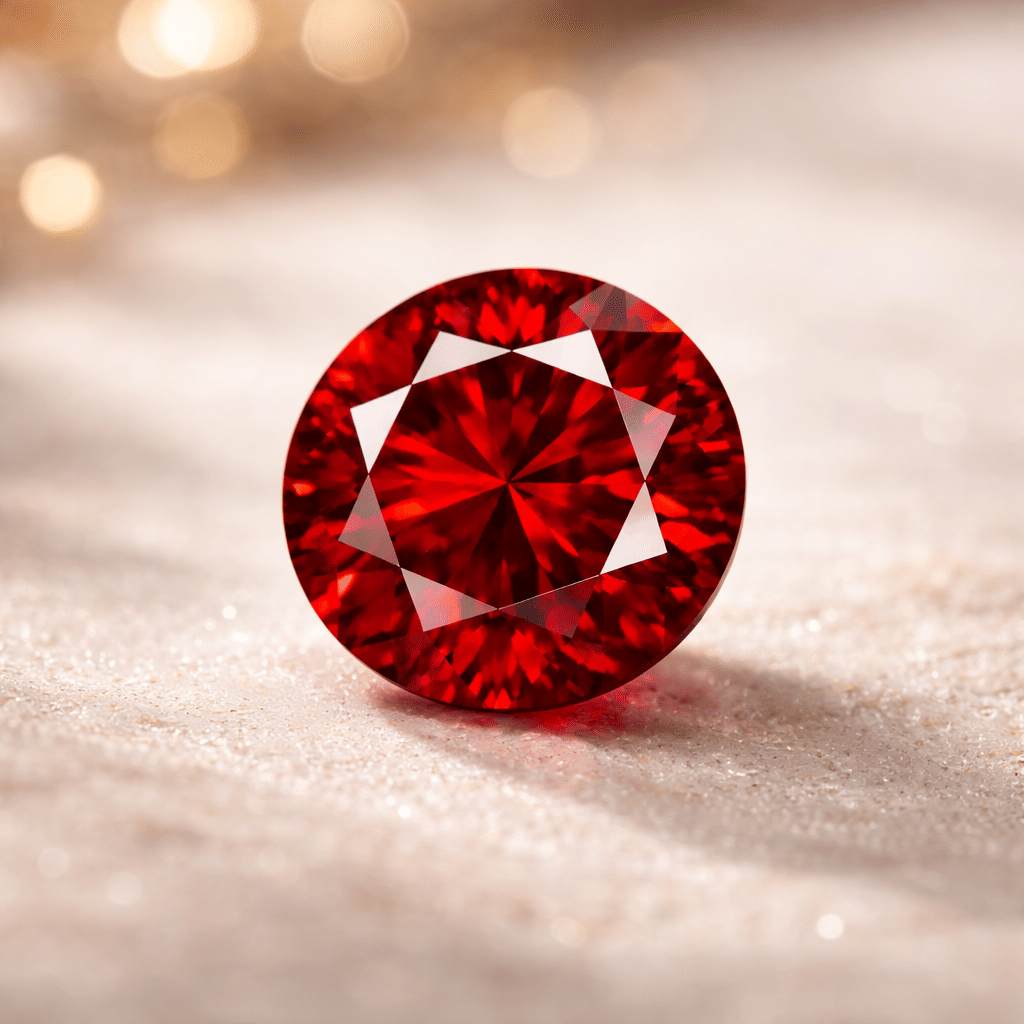
How durable is garnet?
Garnet generally falls between 6.5 and 7.5 on the Mohs hardness scale, depending on the variety. This range supports its use across many jewelry styles, from earrings and pendants to rings worn regularly.
Thoughtful setting choices and mindful wear help preserve garnet’s surface, particularly in pieces exposed to frequent contact.
How to care for garnet jewelry
Caring for garnet is straightforward with a gentle approach:
- Clean using warm water, mild soap, and a soft brush
- Keep away from harsh chemicals and abrasive cleaners
- Store separately to minimize contact with harder gemstones
Garnet as a gift
Garnet has a long tradition as a gift for January birthdays and second wedding anniversaries, making it especially meaningful for moments that celebrate commitment, growth, and shared milestones. Within the Gabriel & Co. January birthstone collection, garnet pieces are designed to highlight the stone’s depth and character while offering a range of styles to suit different tastes. From refined silhouettes to more expressive designs, here are a few garnet jewelry ideas for you to explore.
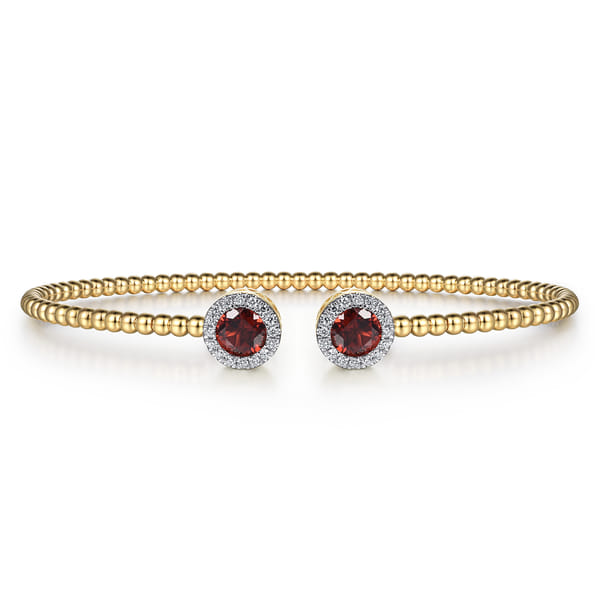
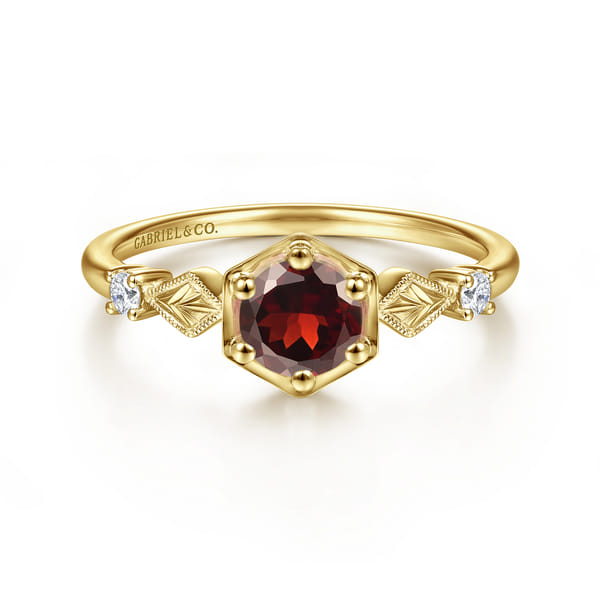
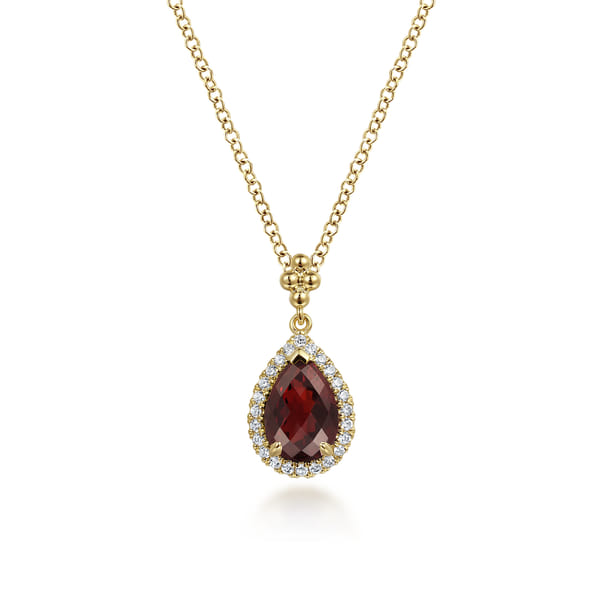
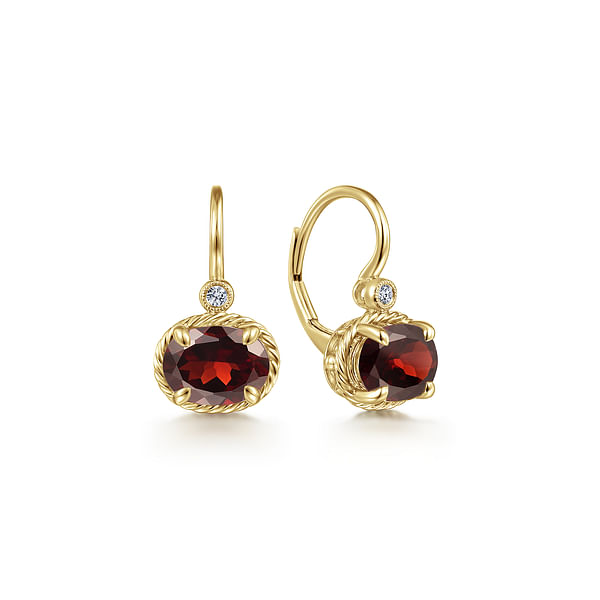
Want to explore more? Check out our collections of a garnet rings, garnet bracelets, garnet earrings, and garnet necklaces.
Fun facts and trivia about the January birthstone, garnet
1. Apart from being the January birthstone, the deep red garnet stone has long been held as a symbol of love and romance. In the Victorian era, it was believed that the stone had the power to bring back lost love for those forlorn in romantic relationships.
2. Demantoid garnets, which are the crystal green, bright variety of the Andradite garnet, are extremely rare and expensive. They are well-known for their ‘fiery’ temperaments, even being able to disperse light better than diamonds. No wonder they are valued and priced much higher than precious diamonds.
3. Garnets are one of the most untreated and interfered with species of gemstones. Garnet accumulations are vast, and there is no need to craft them artificially or enhance their appearance. Garnets are the best pick for those with a propensity towards gemstones in their most natural form.
4. Czechoslovakia was the largest producer of fiery-red garnet stones all through the 14th to 19th centuries.
5. Some rare garnet stones possess the attribute to change their color when viewed under different lighting.
6. The most legendary piece of garnet jewelry ever fashioned in history is the antique pyrope hair comb of the Smithsonian from the Victorian era (1837-1901). The tiara-like fashioned exquisite piece features a brilliant rose-cut garnet in the crest area, surrounded by many smaller garnet gems all around.
7. The red pyrope garnet was majorly popular during Victorian times, and most of it came from Bohemia.
8. The rather occasional and exquisite demantoid garnets came from the Ural Mountains in Russia in the 19th century. In 1998, a 4ct, oval-cut Russian demantoid was sold for $48,000, an exorbitantly high price for a gemstone at that time.
9. In the modern day, Africa is one of the major contributors of garnets in the world. Namibia in Africa produces some of the world’s most expensive green demantoid garnets. Kenya, Tanzania, and Madagascar supply the rare green tsavorites from the grossular garnets family.
10. Apart from these geographies, the spectacular January birthstone is also found in Asian countries like India, Sri Lanka, Pakistan, Afghanistan, Myanmar, Iran, and China. Other important deposits are in Australia and the United States of America.
Garnet’s story is layered, expressive, and full of meaning. Discover our birthstone jewelry collection and find a piece that speaks to January’s energy.
FAQs
What is January’s birthstone? January’s birthstone is garnet. This gemstone has been associated with the month for centuries and is known for its rich color, durability, and symbolic ties to strength, protection, and commitment.
Is garnet the only birthstone for January? Yes, garnet is the traditional and widely recognized birthstone for January. While garnet includes several varieties and colors, they all belong to the same gemstone family.
What does garnet symbolize? Garnet symbolizes strength, passion, protection, and lasting connection. Historically, it was worn to support emotional balance and courage, and today it remains linked to intention, resilience, and commitment.
What color is January’s birthstone? January’s birthstone appears in a wide range of colors. While deep red garnet is the most familiar, garnet can also be found in shades of pink, orange, yellow, green, and even purple, depending on the variety.
Is garnet durable enough for everyday jewelry? Yes, garnet is considered suitable for everyday jewelry. With a hardness ranging from about 6.5 to 7.5 on the Mohs scale, garnet works well in rings, necklaces, earrings, and bracelets when set thoughtfully.
How do you care for garnet birthstone jewelry? Garnet jewelry should be cleaned using warm water, mild soap, and a soft brush. It’s best to avoid harsh chemicals and store garnet pieces separately to prevent contact with harder gemstones.