Good to Have You Back

Choosing your bridal jewelry may seem like a small task… until you actually have to start.
You already have the dress, or at least the vision of it. You may have the shoes, the veil, the hairstyle saved in a dozen screenshots. And then comes the question that feels surprisingly complicated:
How to choose jewelry for a wedding?
Too much and it distracts from the gown. Too little and the look can feel unfinished. The wrong pieces can compete with the neckline, disappear in photographs, or clash with the engagement ring you’ll be wearing forever.
Bridal jewelry works best when it feels intentional yet effortless, like it belongs naturally within the entire look. The goal is not to add decoration. It is to complete the visual story of the bride.
This wedding jewelry guide walks through the decisions professional bridal stylists think about.
Start with the dress
Bridal stylists almost universally agree on one rule: the dress decides the jewelry, not the other way around.
The neckline, fabric texture, and level of embellishment determine how much jewelry the look can support. A heavily beaded gown already reflects light and movement. Adding dramatic jewelry can create visual competition. A clean satin gown, on the other hand, often benefits from jewelry that introduces sparkle and dimension.
Think of the dress as the architecture. Fine jewelry is the finishing layer that highlights its structure.
A minimalist slip gown with thin straps might invite a diamond necklace or sculptural earrings. A lace high-neck dress may look strongest when the neckline is left untouched and attention shifts to the ears instead.
When brides struggle with jewelry decisions, it is often because they are choosing pieces in isolation rather than asking a simpler question:
What does the dress need to feel complete?
Match jewelry to the neckline (the detail that changes everything)
The neckline quietly dictates whether a necklace belongs in the look at all.
Many brides assume a bridal necklace is required, but stylists frequently recommend skipping it depending on the gown. Here are a few bridal jewelry ideas:

Strapless and sweetheart necklines
These necklines create an open canvas around the collarbone. A necklace naturally fills that space and frames the upper body.
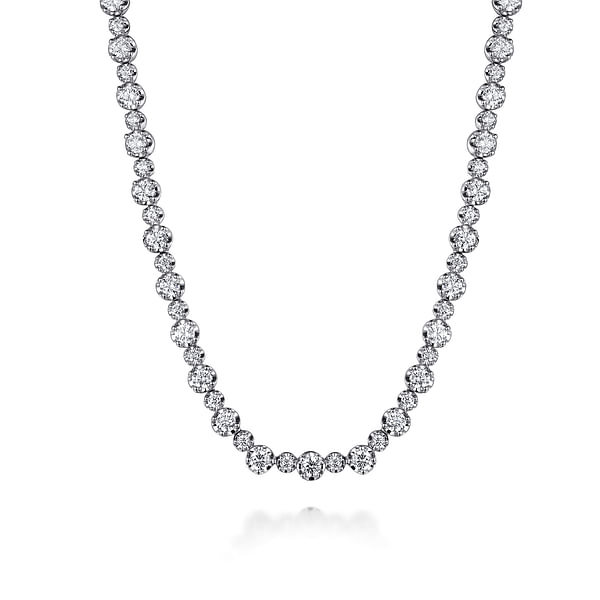
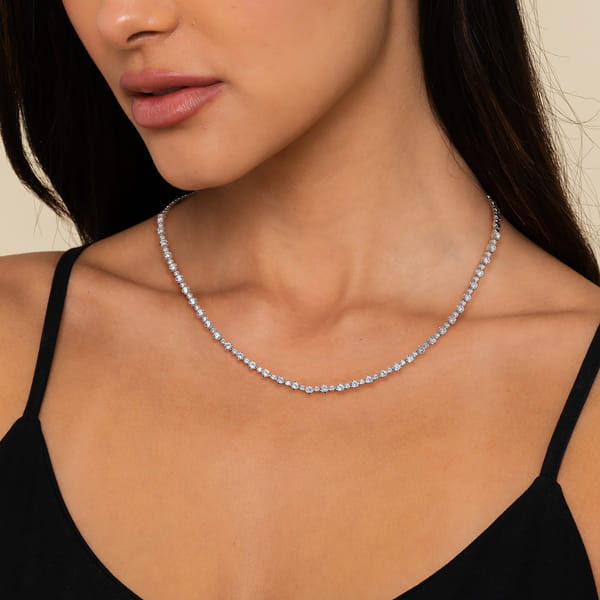
Strapless wedding dress jewelry
Short diamond necklaces, delicate pendants, or vintage-inspired pieces often sit beautifully here. The key is length: the necklace should sit comfortably between the collarbone and the top edge of the dress.
If the necklace drops too low, it can visually break the line of the gown.
V-Neck dresses
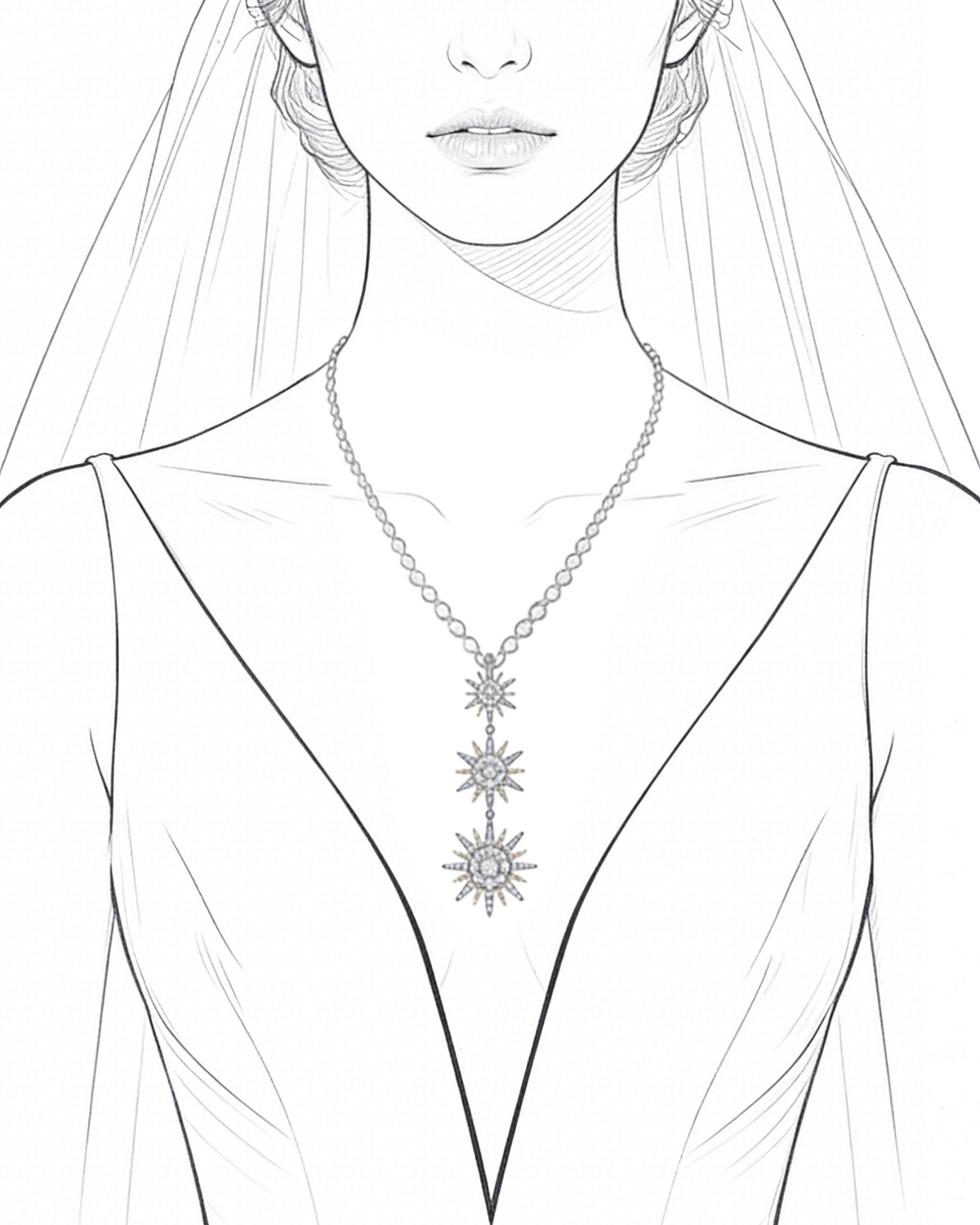
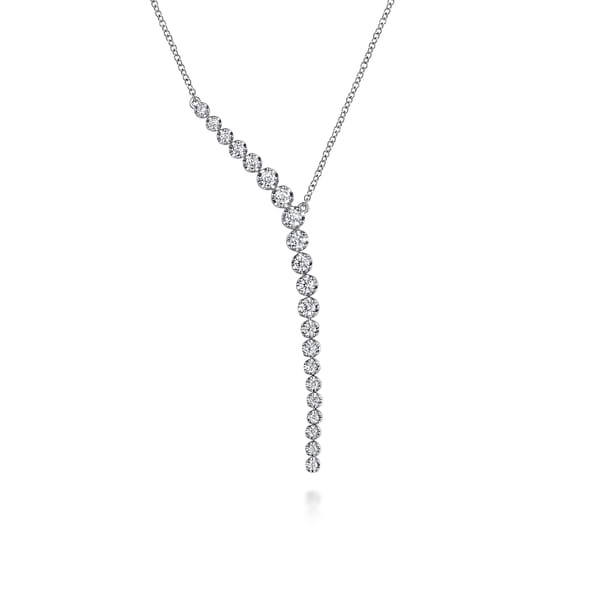
V-neck gowns benefit from jewelry that mirrors their shape. Pendant necklaces or drop designs naturally follow the downward line of the neckline.
V-Neck wedding dress jewelry
Stylists often suggest choosing a pendant that falls inside the V rather than above it, allowing the jewelry to feel integrated with the gown rather than layered on top.
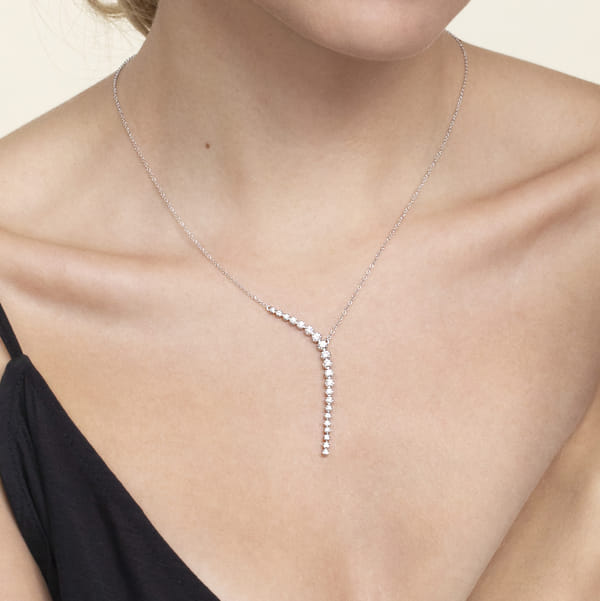
 no necklace.png "How to Choose Jewelry for Wedding")
High necklines and halter dresses
High necklines already fill the visual space near the collarbone.
In these cases, the smartest move is often no necklace at all. Bridal earrings take center stage instead, especially elongated drop earrings or chandelier styles that add movement near the face.
This creates balance without crowding the neckline.
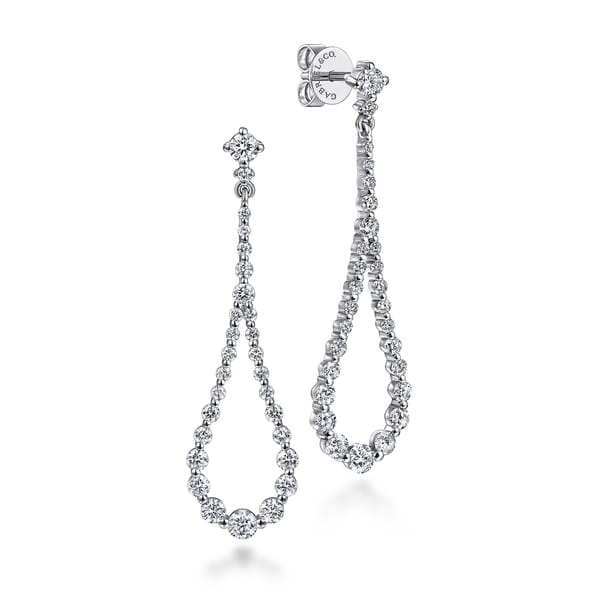
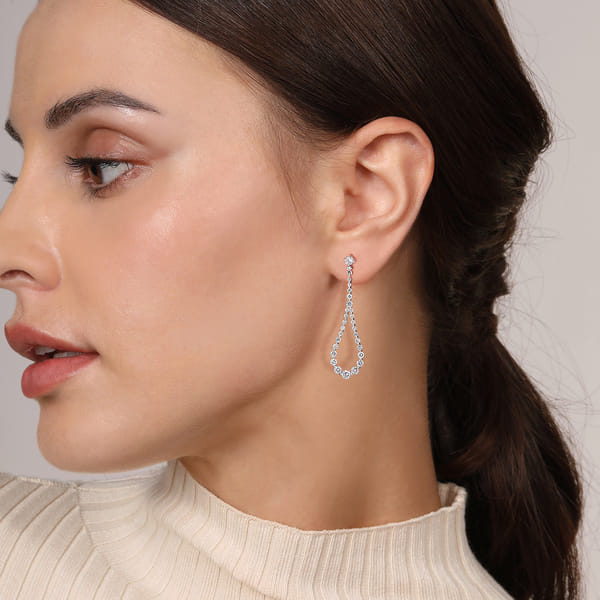
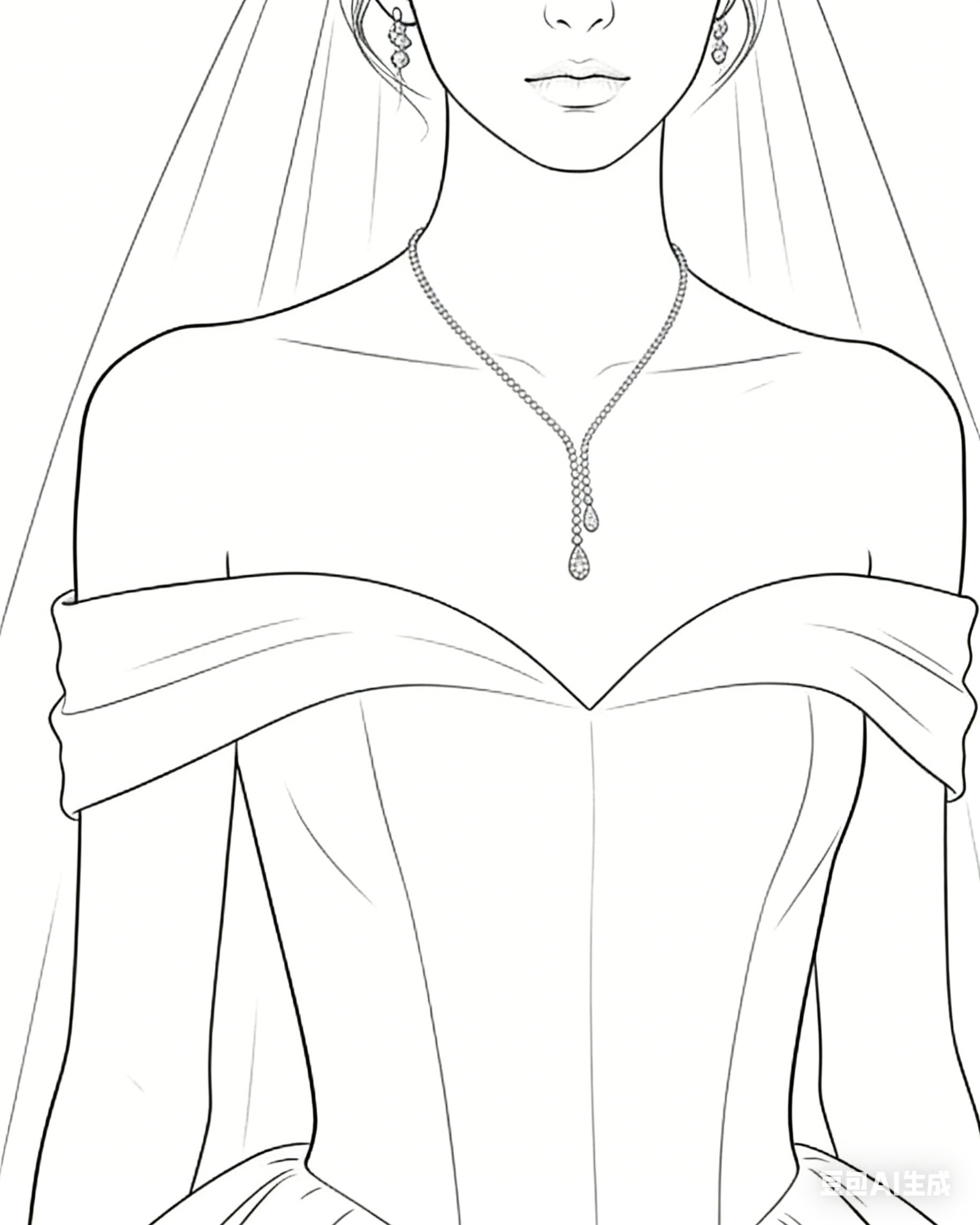
Off-the-shoulder dresses
Off-the-shoulder gowns highlight the collarbone and shoulders, making them ideal for statement earrings or sculptural necklaces.
Off-the-shoulder wedding dress jewelry
Many bridal stylists favor earrings alone here because they keep the neckline open and elegant.
When in doubt, remember a simple rule many stylists repeat:
If the neckline is visually busy, simplify the jewelry. If the neckline is open, jewelry can help frame it.
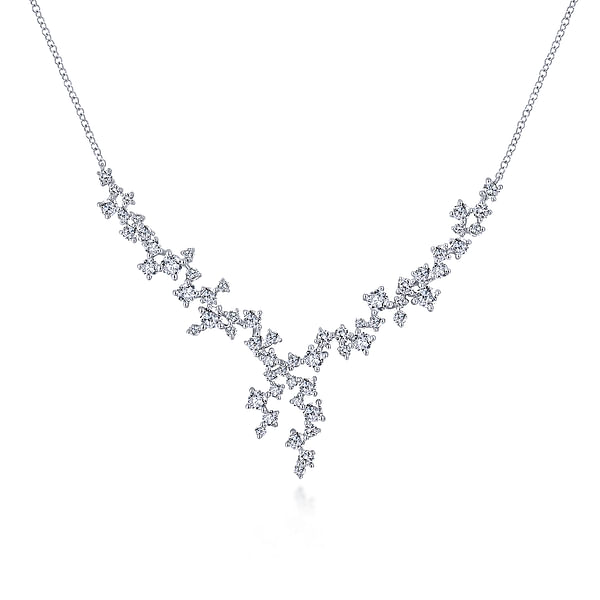
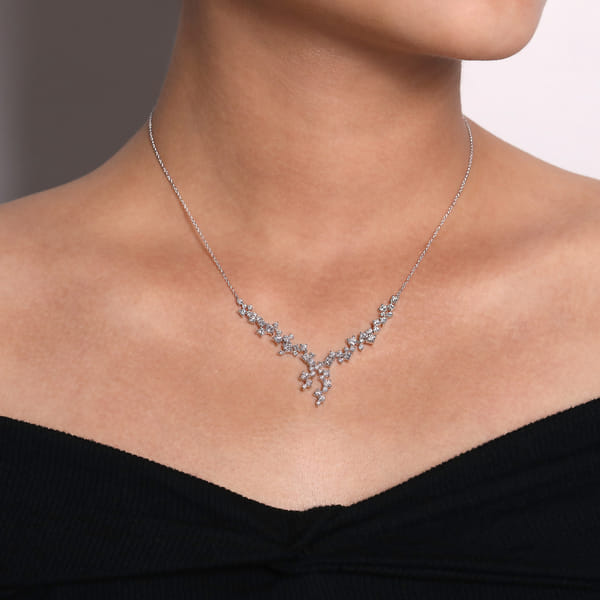
Consider your bridal stack
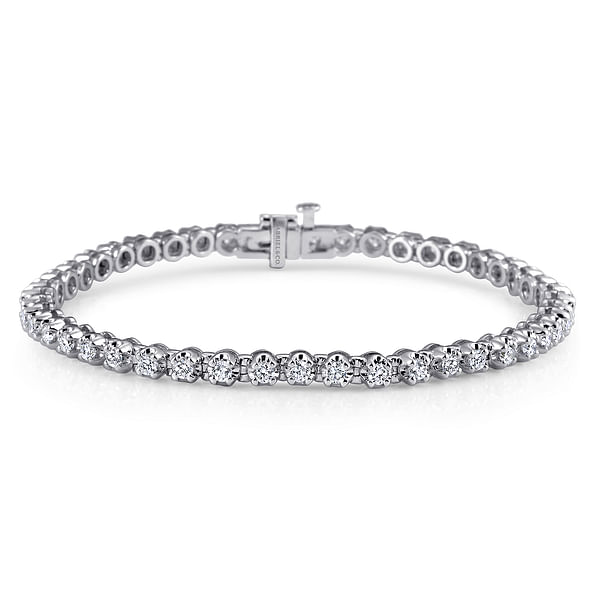
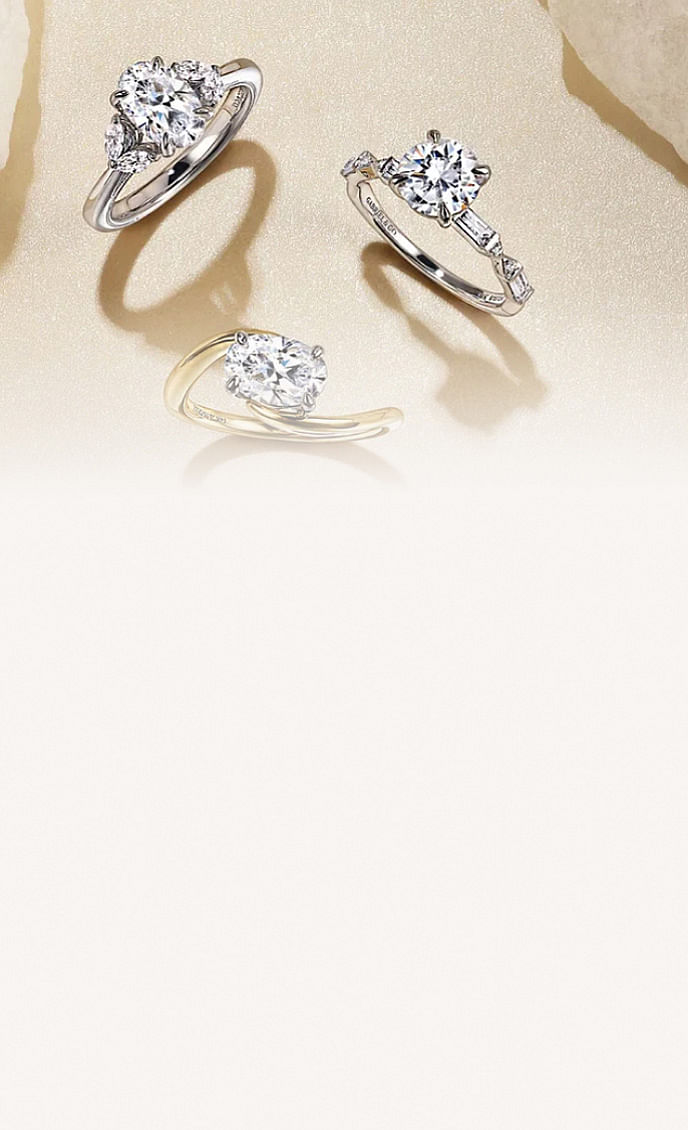
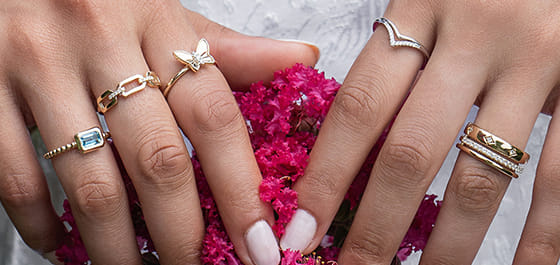
Your engagement ring will not be the only ring visible on your wedding day. Once the ceremony begins, it becomes part of your bridal stack alongside the wedding ring and your bracelet.
Because hands are photographed constantly—during the ring exchange, while holding the bouquet, during toasts, and in close-up detail shots—your other jewelry should feel harmonious with the rings.
Look closely at three elements.
Metal color
Many brides instinctively match their jewelry to the metal of their bridal stack, but the rule is not strict. In fact, it is very common to see yellow gold engagement rings paired with white gold or platinum earrings and necklaces on the wedding day.
Because most bridal jewelry features diamonds, the white metal surrounding the stones reflects more light and tends to photograph brighter against a white dress. The diamond itself becomes the focus rather than the metal.
The idea is not strict matching. The purpose is to choose pieces that feel visually harmonious with your rings while still flattering the overall bridal look.
Stone type
If your center stone is a diamond, most brides naturally gravitate toward diamond earrings or bracelets because they echo the same brilliance without competing with the ring.
If your ring features a colored gemstone you have two options:
1- You can repeat the gemstone subtly, perhaps through small accents in earrings or a delicate pendant, which ties the look together.
2- You can keep the rest of the jewelry diamond-focused, allowing the engagement ring to remain the single source of color.
Both approaches work beautifully. The key is deciding whether you want the gemstone to feel like a theme carried through the jewelry or a focal point that stands alone.
Design style
A vintage-inspired engagement ring with milgrain edges or filigree detailing pairs naturally with jewelry that carries similar detail. A sleek solitaire engagement ring often looks best with cleaner, more minimal pieces.
Your hairstyle should affect your choice of jewelry
This is one detail brides often overlook until the final styling appointment. Your hairstyle dramatically affects how visible jewelry becomes.
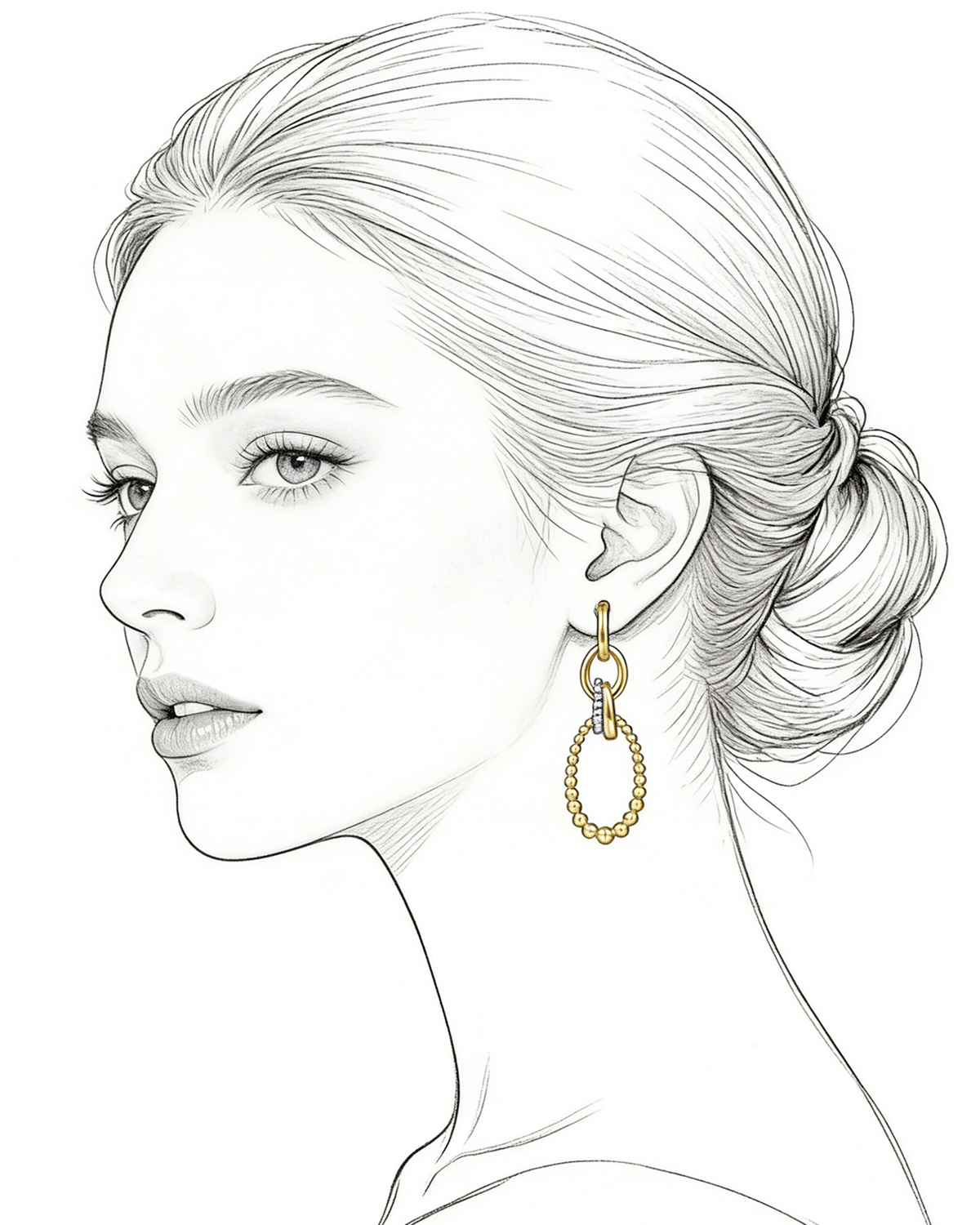
Updos
Hair worn up reveals the neck, ears, and jawline. Earrings immediately become one of the most prominent accessories in the entire look.
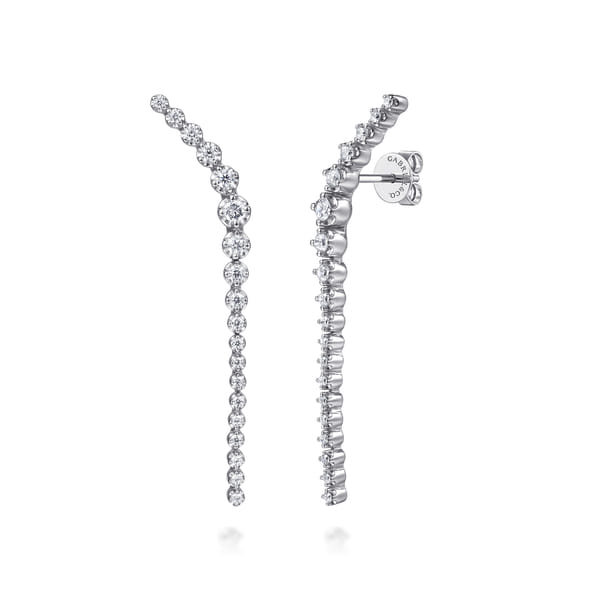
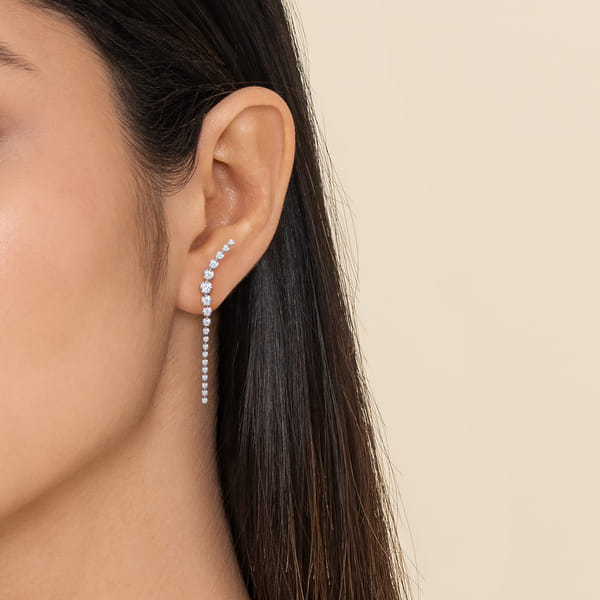
Chandelier earrings, drops, or sculptural designs can look especially striking with updos because nothing competes with them visually.
Hair down
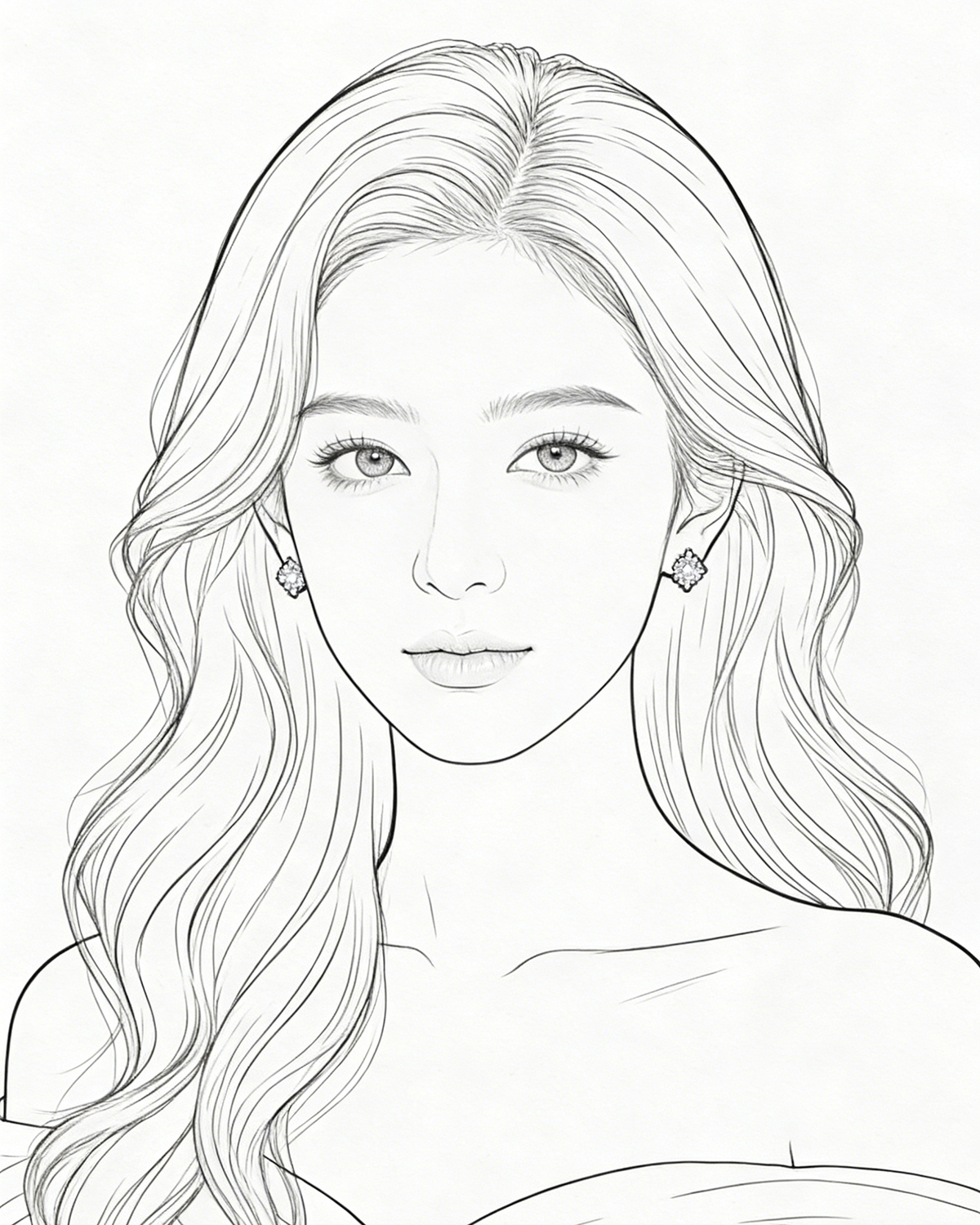
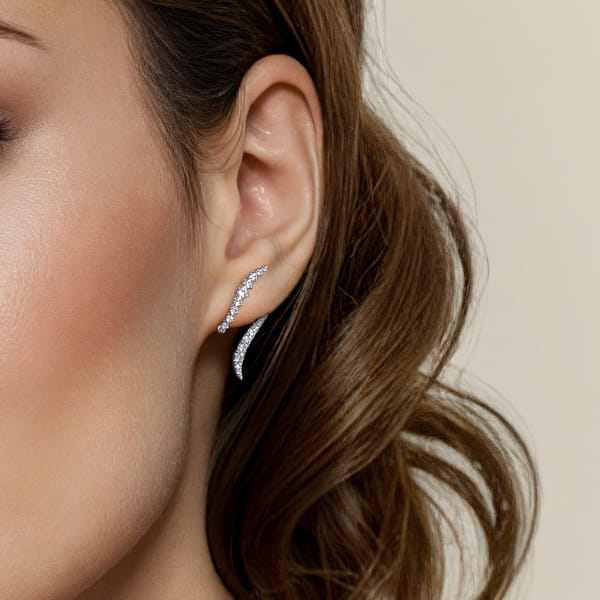
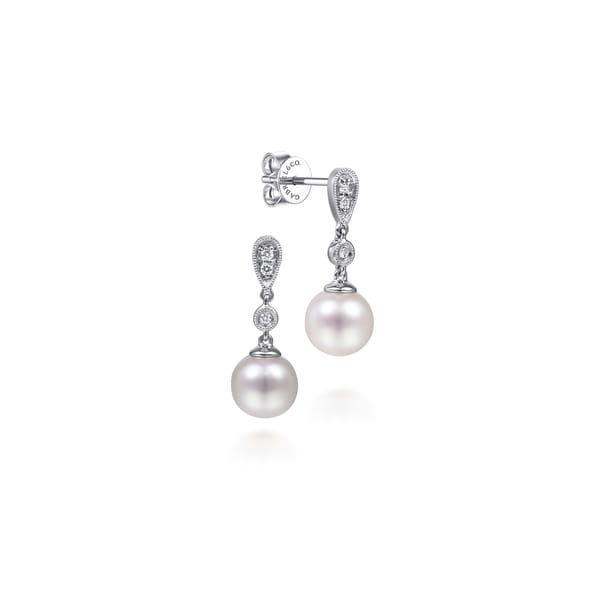
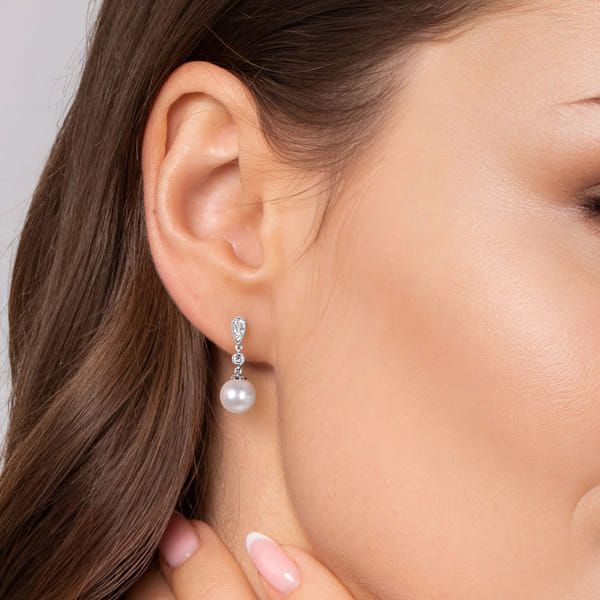
Loose hair softens the look but can hide jewelry. Large earrings sometimes disappear behind the hair, which is why stylists often recommend stud earrings or small drops when hair is worn fully down.
These styles remain visible without fighting against the hairstyle.
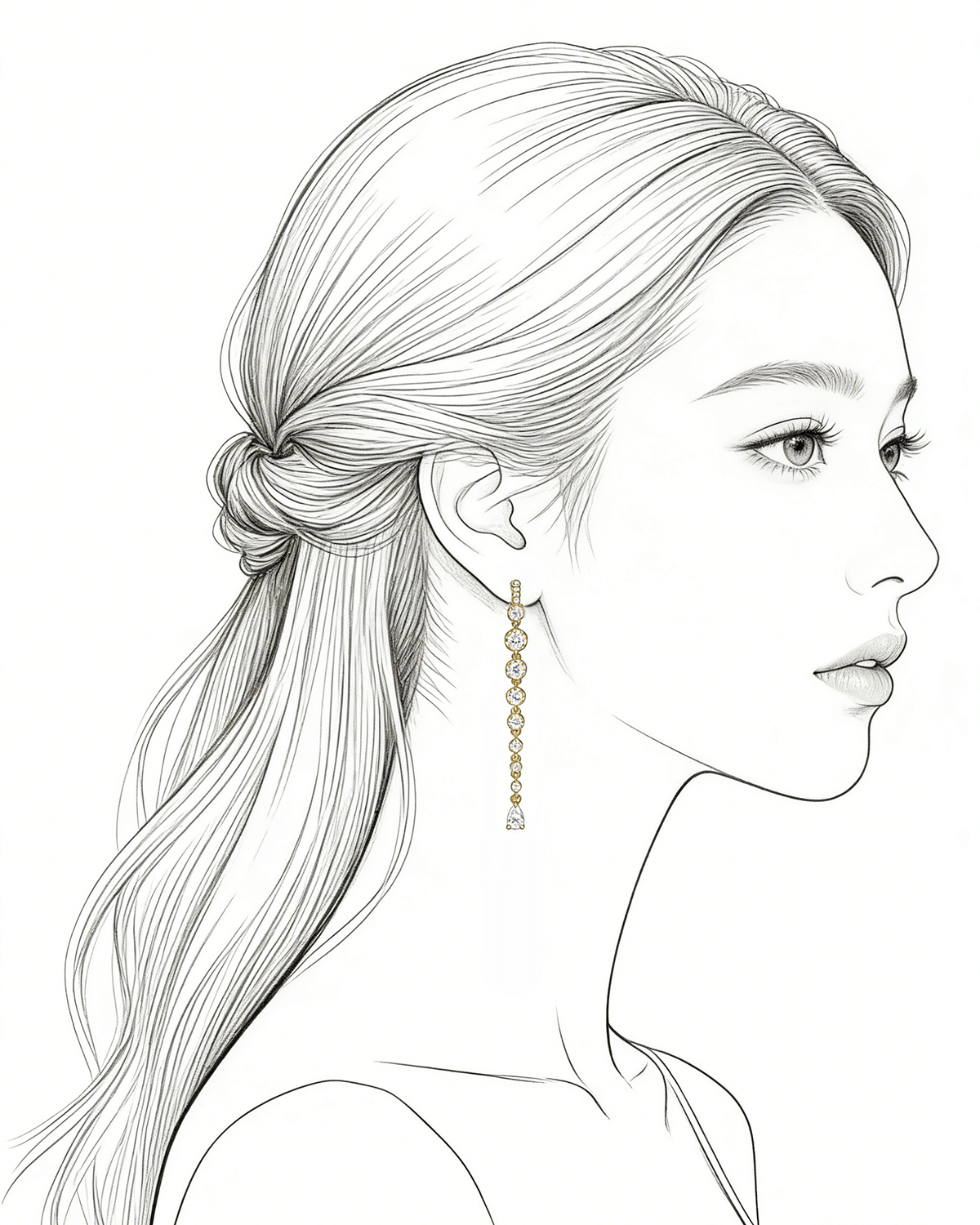
Half-up hairstyles
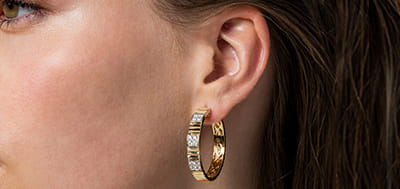
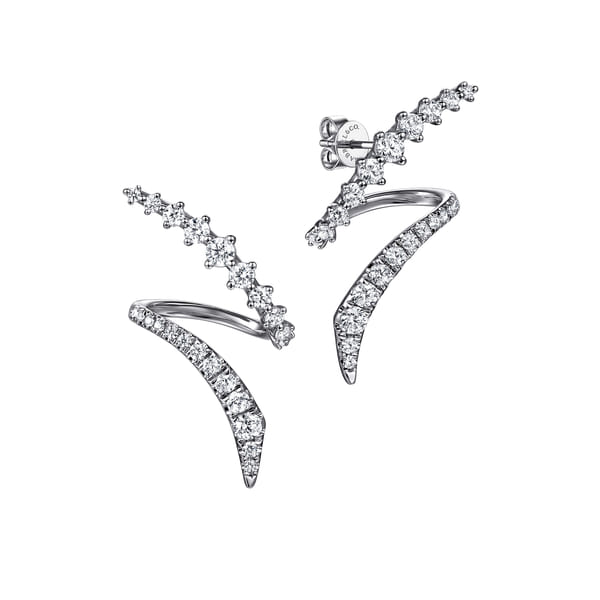
Half-up styles are the most flexible. Medium-length drop earrings or delicate hoops tend to balance beautifully here.
Because wedding photography focuses heavily on the head and shoulders, earrings play an outsized role in how the bridal look reads on camera.
Think about the veil and hair accessories
A veil, tiara, or decorative hair comb already introduces sparkle near the head.
If the veil is heavily embellished, adding dramatic earrings and a necklace can create too many competing elements. Many stylists simplify the jewelry in these cases to maintain balance.
If the veil is minimal or sheer, the jewelry can carry more visual weight.
The easiest approach is to finalize the veil first and then choose jewelry that complements it rather than competes.
Decide where the focus should be
One of the easiest ways to style bridal jewelry is to choose a focal point.
Professional stylists often build a look around one statement element.
That might be:
- Dramatic earrings with no necklace
- A bold necklace with small studs
- A striking bracelet with subtle earrings
Trying to make every piece stand out at once can overwhelm both the dress and the bride.
The most memorable bridal looks usually feel edited rather than overloaded.
Pay attention to scale
Jewelry should feel proportional to both the bride and the gown.
Petite brides often look best in smaller, refined pieces that do not overpower their frame. Brides wearing dramatic ball gowns or structured silhouettes can often support larger jewelry more comfortably.
Fabric weight matters too. Heavy satin, mikado, and brocade gowns can visually carry stronger jewelry. Soft chiffon or lace often pairs best with lighter pieces.
The goal is always balance.
Comfort matters more than brides expect
Wedding days are long. Jewelry that feels fine for ten minutes in a mirror can become uncomfortable after hours of celebration.
Heavy earrings may pull on the ears. Bracelets can slide constantly while holding a bouquet. Necklaces might twist during movement.
Many bridal stylists recommend wearing your jewelry for a few hours before the wedding day to make sure it feels natural.
Comfort allows you to move, hug, dance, and celebrate without distraction.
Should the bride wear a necklace?
Not necessarily.
In fact, many contemporary brides skip necklaces entirely, especially when the dress features lace, beading, or structural neckline details.
Earrings alone often create enough visual focus near the face.
However, when the neckline is open and minimal, a necklace can bring balance to the upper body and draw attention upward in photographs.
There is no universal rule. The dress and hairstyle always guide the decision.
Final thoughts
Choosing wedding jewelry is not about following rigid rules. It is about creating harmony between the dress, the engagement ring, the hairstyle, and the overall tone of the wedding.
When the pieces work together, jewelry does something subtle but powerful: it frames the bride. It highlights the collarbone, catches the light in photographs, and becomes part of the details remembered long after the day itself.
FAQs
How do I choose jewelry for my wedding day?
Start with your dress. The neckline, fabric, and hairstyle will guide what the look needs. For example, a strapless gown can take a necklace, a high neckline often skips it, and an updo allows for longer earrings. Jewelry should complete the outfit, not compete with it.
What jewelry should a bride wear on her wedding day?
Most brides choose two or three pieces: typically earrings, plus a necklace or bracelet, alongside their bridal stack. The exact combination depends on the dress.
How do I match jewelry with my wedding dress neckline?
Follow the shape of the neckline. Open styles welcome a necklace, while higher necklines usually look better without one, shifting focus to earrings.
Should wedding jewelry match the engagement ring?
It should feel cohesive, not identical. Matching metals helps, but mixing is common, especially with diamond pieces.
Is it better to wear gold or silver jewelry for a wedding?
It depends on the look. White metals feel brighter against a white dress, while yellow gold adds warmth. Both can work together.
Should a bride wear a necklace with a strapless wedding dress?
Often yes, but not required. A necklace frames the neckline, while statement earrings can achieve a cleaner look without one.
What earrings work best with different wedding dress necklines?
It’s more about the hairstyle. Updos suit longer earrings, while hair down works better with studs or small drops.
How much jewelry should a bride wear on her wedding day?
Keep it edited. One focal piece with one or two subtle accents usually creates the most balanced look.