Good to Have You Back

Choosing the perfect wedding ring can feel overwhelming. With so many types of wedding rings and details to consider, it’s easy to wonder which ring truly reflects your personality and love story. That’s why we turned to Inna Kushnirski, our Product Owner overseeing Bridal and Men’s Jewelry, to guide you through the options. From classic bands to bold, modern designs, this guide will help you understand different types of wedding bands, which engagement rings they pair best with, and how to choose a wedding band you’ll love wearing every day.
What is a wedding band?
A wedding band, also called a wedding ring, is the ring exchanged between partners during the wedding ceremony. Unlike an engagement ring, which typically features a center stone, wedding bands tend to have a lower profile and are designed to be worn every day as a lasting symbol of your commitment. They can range from a simple polished metal band to diamond-set styles, eternity rings, and beyond.
While engagement rings are usually chosen before the proposal, wedding rings are selected as a pair — which is why understanding the different types of wedding bands makes the decision so much easier. The style you choose should complement your engagement ring, reflect your personal aesthetic, and feel comfortable enough to wear for a lifetime.
Classic wedding bands
If you love simplicity with a touch of elegance, classic wedding rings are your best friend. These rings feel grounded, effortless, and they pair beautifully with almost any engagement ring. They’re perfect for brides who want their wedding set to look polished without trying too hard.
Here’s what to consider:
- Smooth metal bands: If you like a clean, minimal look that works with everything, this is your go-to.
- Diamond-accented classic bands: Pavé, channel-set, or prong-set diamonds add subtle sparkle without overwhelming your engagement ring.
- Mixed finishes: Polished and brushed metal together add visual interest while keeping the traditional shape.
Pairing classic bands with engagement rings
Smooth bands are ideal if your engagement ring already features a standout stone, such as a solitaire ring or anelongated oval. Diamond-accented classics shine next to halos, hidden diamonds, or pavé engagement rings. Think of your band as the steady partner that complements your engagement ring’s drama.
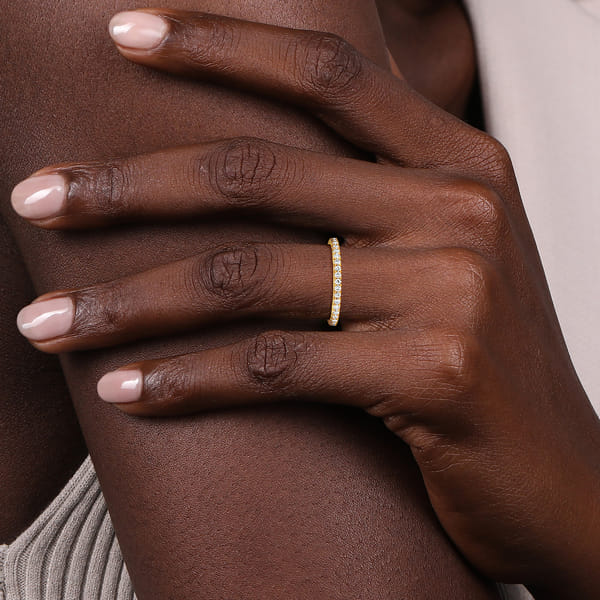
Eternity & half-eternity bands
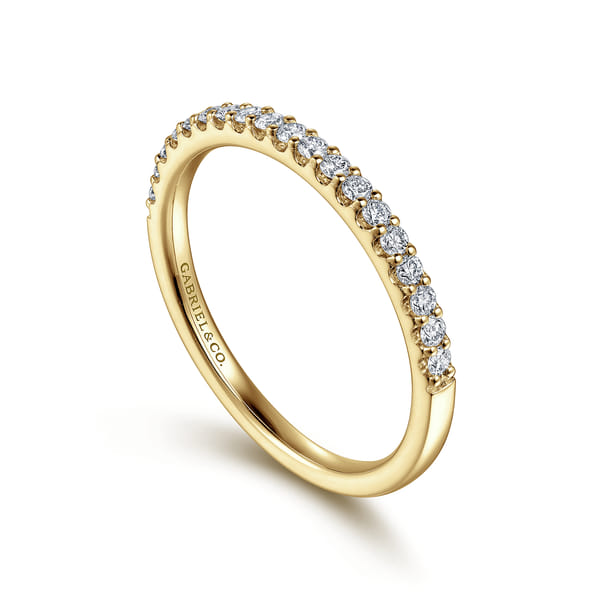
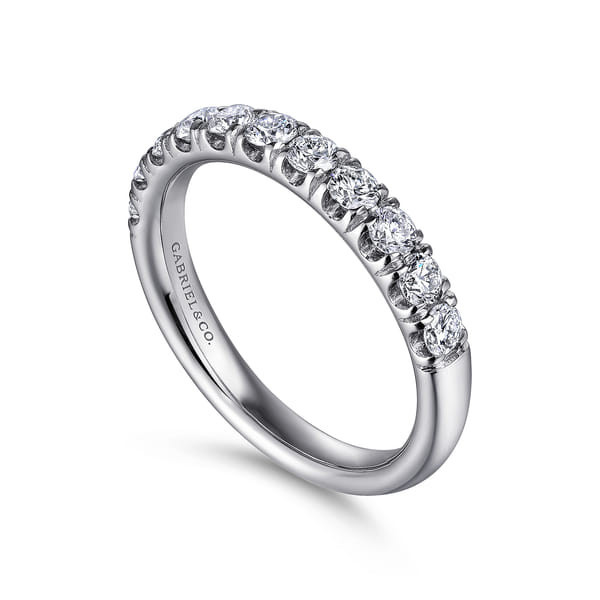
Eternity bands are for brides who want a ring that symbolizes endless love while bringing sparkle to every angle of the finger. Half-eternity options give you the brilliance on top without adding extra weight.
Here’s what to consider:
- Full eternity ring styles: Diamonds encircle the entire band for constant sparkle.
- Half-eternity bands: Stones on the top half offer sparkle without a full circle, which is great for comfort and resizing.
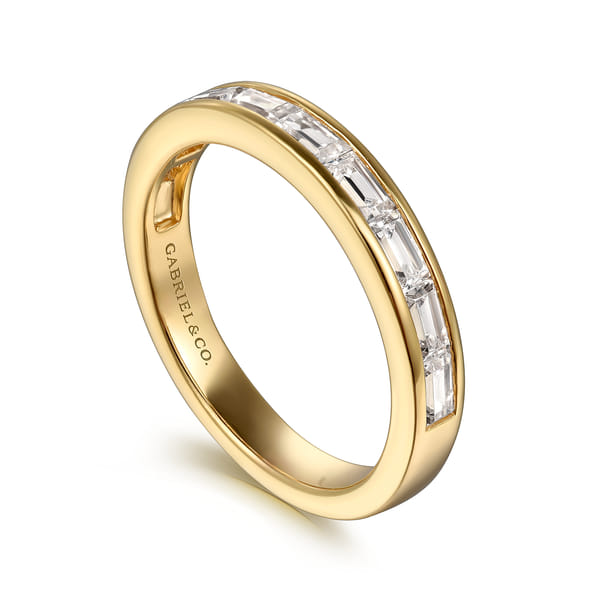
- Diamond shapes: Round, emerald, radiant, or oval create slightly different vibes depending on your engagement ring.
Pairing eternity bands with engagement rings
Eternity bands complement solitaires, three-stone rings, and low-profile engagement rings. They work beautifully with center stones that you want to frame and enhance without overpowering.
Curved, contoured & notched bands
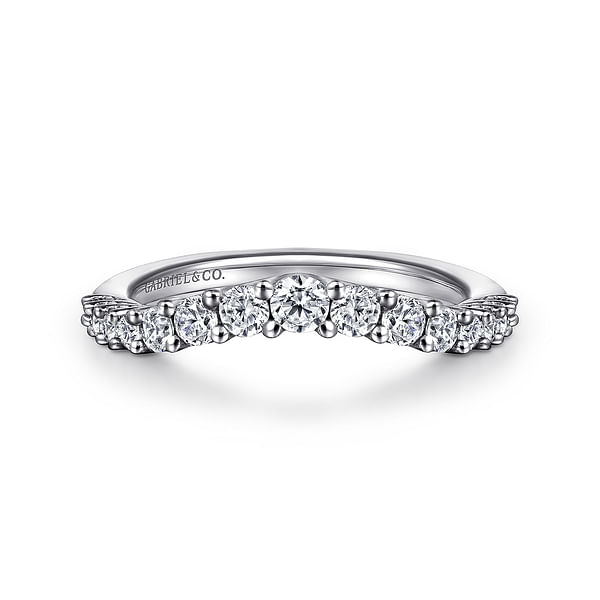
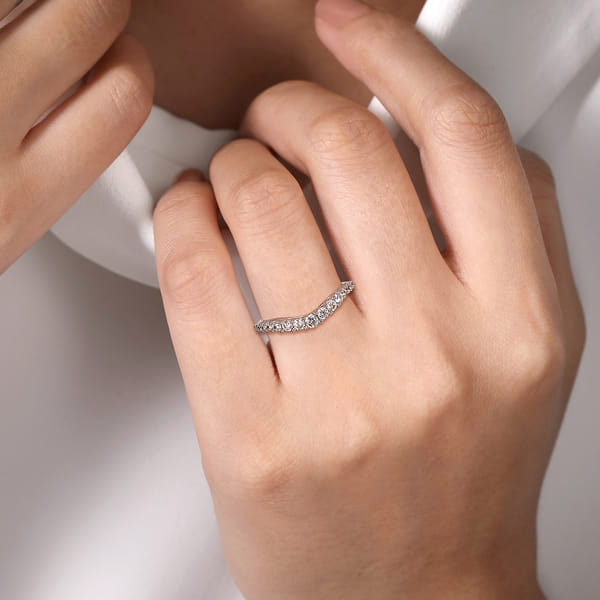
If your engagement ring has an unusual shape, such as pear, oval, marquise, or a halo, this is your category. A contoured or curved wedding band fits snugly around your engagement ring so there’s no awkward gap.
Here’s what to consider:
- Soft curves: Gentle arcs for rounded halos or ovals.
- V-shaped or chevron: Pointy curves for pear-shaped or marquise stones.
- Shadow bands: Nest perfectly with more sculpted engagement rings.
Pairing curved bands with engagement rings
These bands are made to hug your engagement ring. A contour can highlight the stone’s shape and keep your stack looking seamless. If you have a halo engagement ring or a ring with a unique basket, a curved band is the easiest way to get a perfect fit.
Vintage wedding ring styles
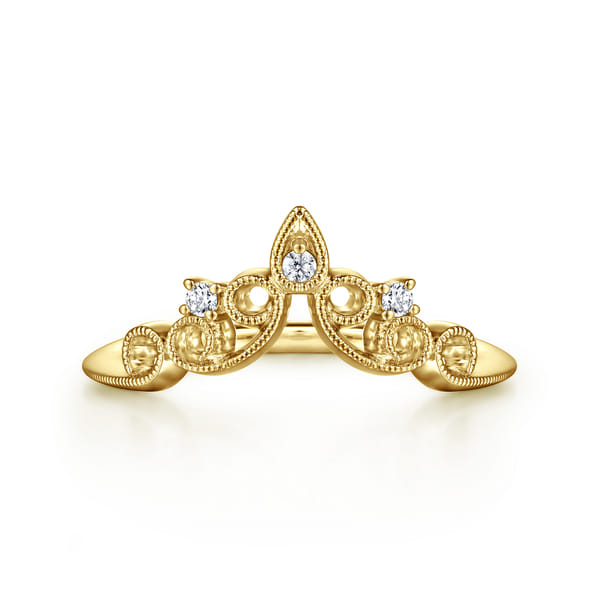
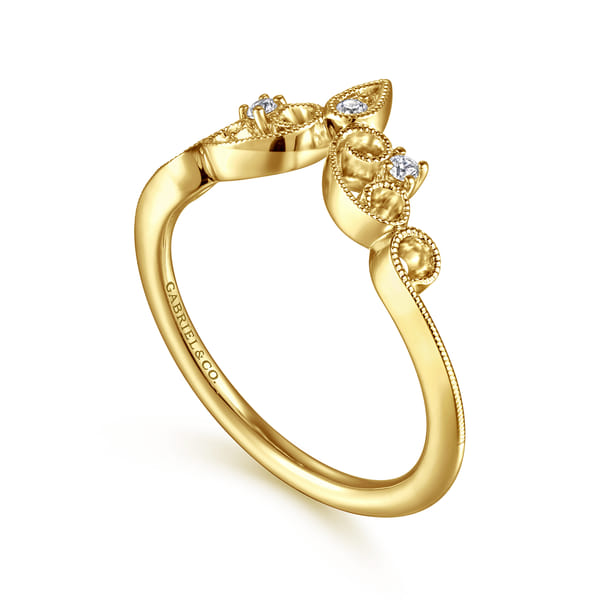
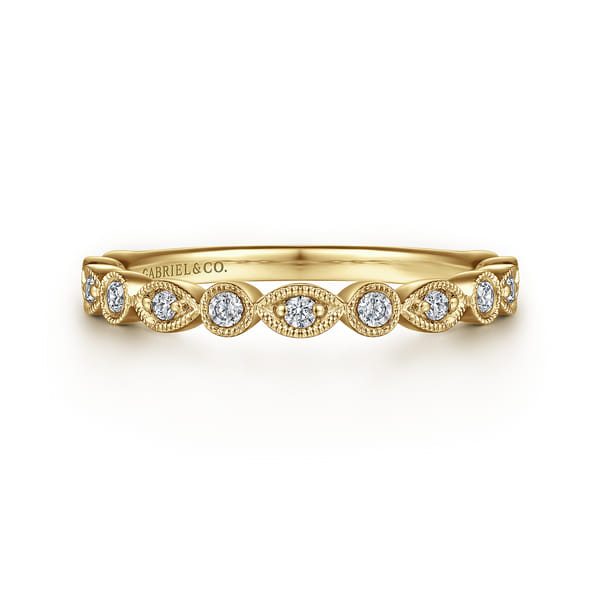
Vintage bands are for brides who want character, craftsmanship, and romantic detail. If you’re drawn to history and artistry, these bands offer personality through intricate metalwork and design.
Here’s what to consider:
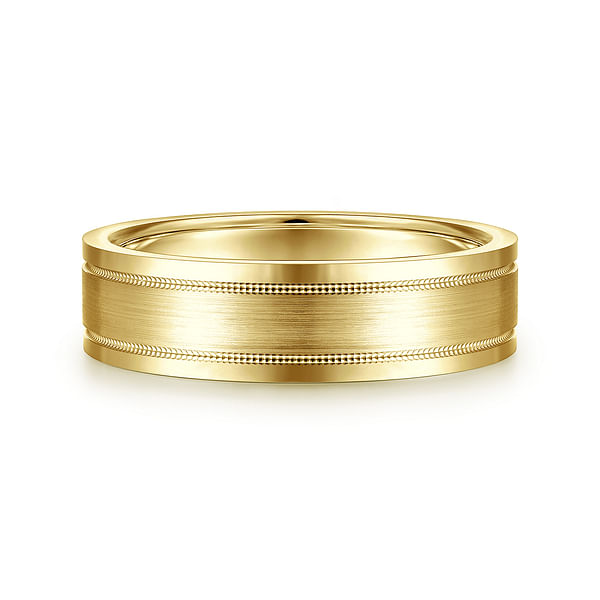
- Milgrain edges: Tiny bead details that add texture and elegance.
- Engraving and filigree: Delicate patterns that feel timeless and artisanal.
- Art Deco, Victorian, or Edwardian styles: Period-inspired shapes and details for brides who love story and character.
Pairing vintage bands with engagement rings
These rings shine next to vintage-inspired engagement rings or halos with intricate details. You can also mix them with modern solitaires for an interesting contrast between old and new.
Mixed metal & two-tone bands
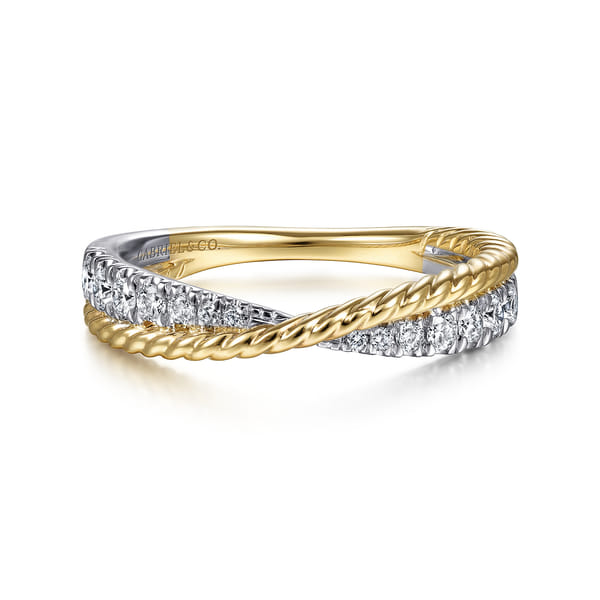
If you like versatility or wear multiple metal colors, mixed-metal bands let you tie everything together. They’re perfect for brides who want something modern and stylish without going overboard.
Here’s what to consider:
- White + yellow gold: Classic contrast with a contemporary twist.
- White + rose gold: Adds warmth and subtle color play.
- Braided or layered metal designs: Combine multiple metals for a unique look.
Pairing mixed-metal bands with engagement rings
These bands work best with solitaires, minimalist halos, or simple engagement rings. They give flexibility if your jewelry collection already mixes metals.
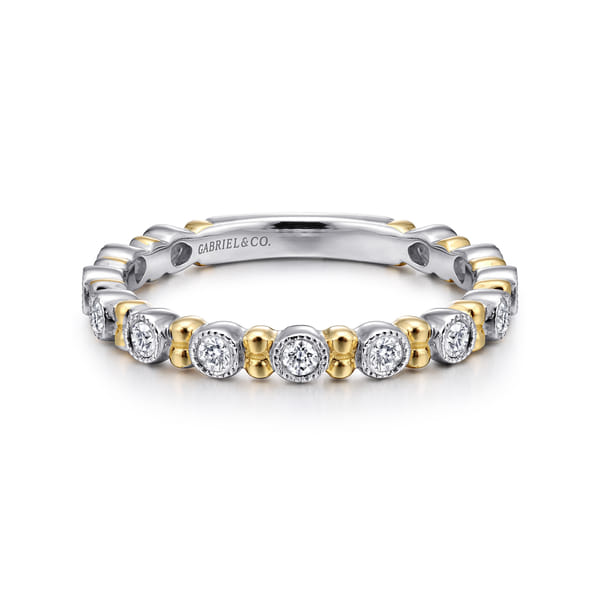
Stackable wedding bands
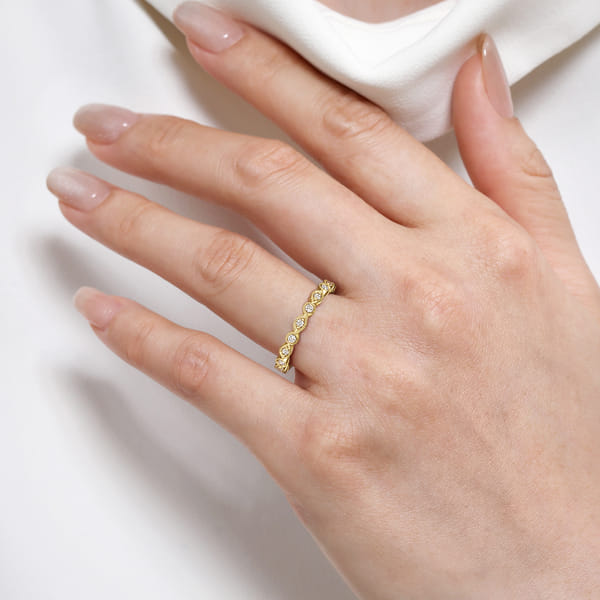
Stackable wedding bands are for brides who love personalization. You can build your own set with slim bands that layer and evolve over time. They’re great as wedding bands, anniversary bands, or just for fun.
Here’s what to consider:
- Thin metal bands: Subtle, everyday-friendly layers.
- Slim pavé or micro-pavé bands: Add sparkle without bulk.
- Contour stackers: Combine with curved engagement rings for a perfect fit.
Pairing stackable bands with engagement rings
Stackable bands pair especially well with solitaires and low-profile engagement rings. Mixing curved, straight, and diamond bands lets you create a custom stack that tells your personal story.
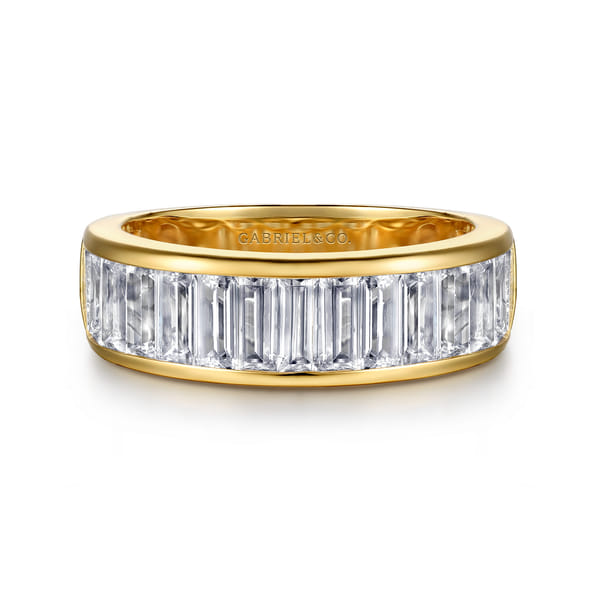
Wide wedding bands
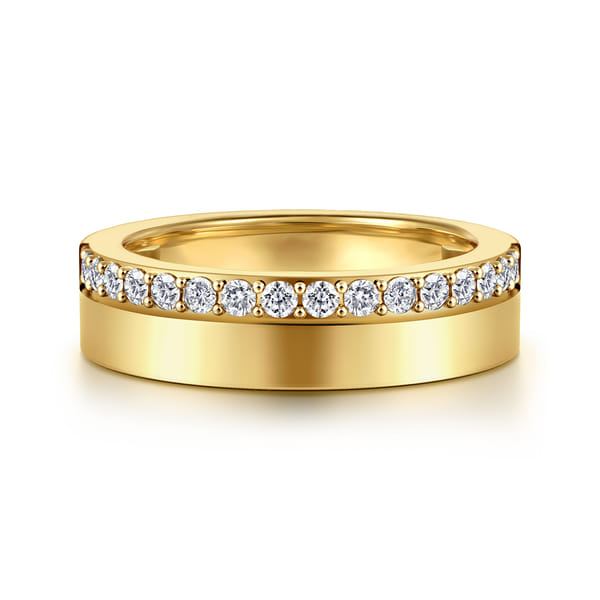
Wide wedding bands are for brides who want a ring that stands out on its own. These bands feel bold and substantial, making a statement without needing extra flair. If you like modern, confident, or architectural looks, a wide band is a great option.
Here’s what to consider:
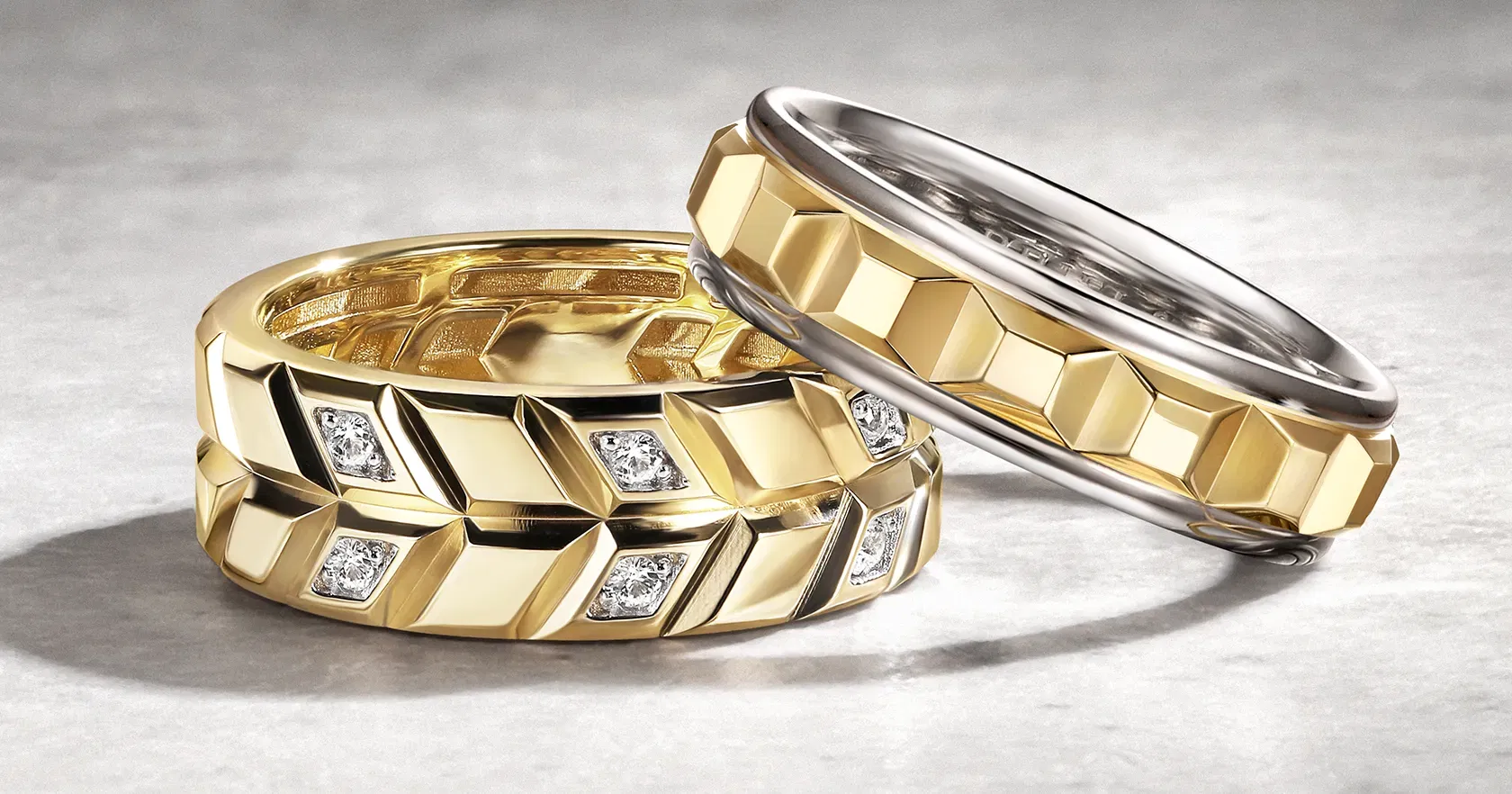
- Cigar-style bands: Smooth, rounded edges with a slightly domed top. It can include flush-set diamonds for subtle sparkle while keeping the classic silhouette.
- Flat wide bands: Sleek and minimalist, also often paired with flush-set diamonds for sparkle that sits seamlessly in the metal.
- Wide diamond-encrusted bands: Pavé, micro-pavé, or full-set diamonds across a wide band create a bold, luxurious statement.
- Textured finishes: Hammered, brushed, or mixed textures add personality without making the width feel heavy.
Pairing wide bands with engagement rings
Wide bands work best with solitaires, elongated shapes like oval or emerald cuts, or low-profile halos. They can stand alone for a bold look or balance a more delicate engagement ring. Flush-set diamonds on wide bands can subtly echo the sparkle of the engagement ring, tying the set together beautifully.
Unique wedding ring ideas
If you’re drawn to rings that break the mold, unique and modern wedding bands are your playground. These designs are sculptural, unexpected, and full of personality; perfect for brides who want their wedding set to feel artistic, editorial, or just a little daring. If your style leans expressive, unconventional, or architectural, this category was made for you.
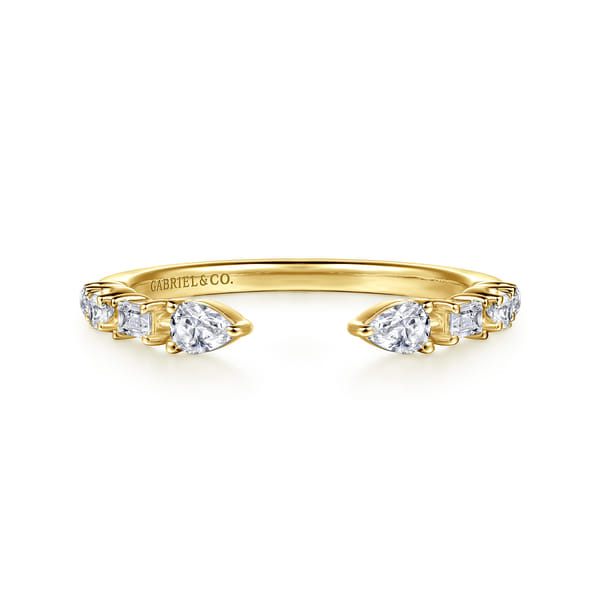
Open bands
Open wedding bands are rings where the two ends don’t meet. This little gap gives your ring movement and airiness.
Pairs best with:
- Solitaire engagement rings (round, oval, emerald, pear-shaped diamonds): The open gap frames the center stone beautifully, adding a subtle wow factor without stealing the spotlight.
- Minimal bezel-set engagement rings: Add dimension and interest while keeping the focus on your center stone.
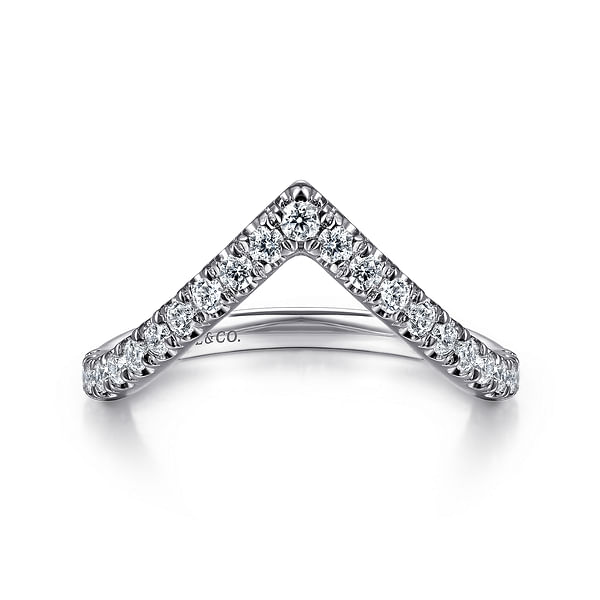
Chevron / V-shaped bands
Sharp or soft “V” shapes create a natural contour that cradles your engagement ring.
Pairs best with:
- Pear and marquise-cut diamonds: The V aligns perfectly with the tip of your stone for a seamless fit.
- Round solitaires: Adds a clean, sculptural contour beneath the center.
Halo rings: Hugs the halo without touching it, keeping the look elegant and cohesive.
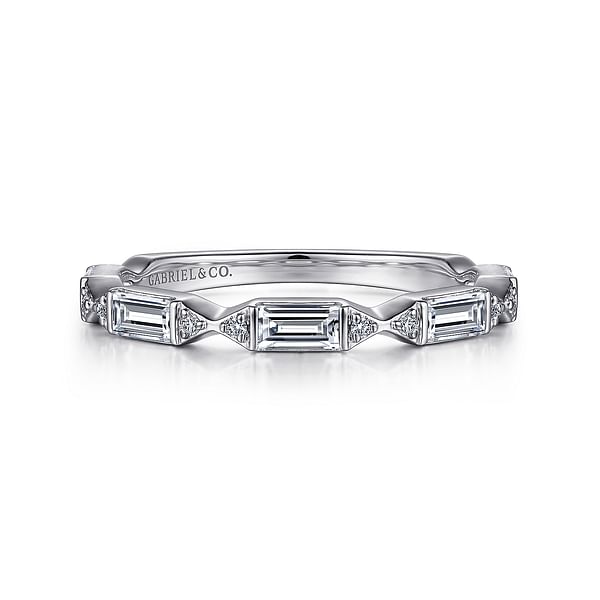
Geometric bands (zig-zag, angular, structured)
Bold angles and structured shapes give your set a contemporary edge.
Pairs best with:
- Emerald solitaires: Geometric lines echo the step-cut precision.
- Princess cut diamonds: Keep the look modern, sharp, and linear.
- Horizontal (East-West) emerald or radiant stones: mirror the bold, squared profile for a harmonious set.
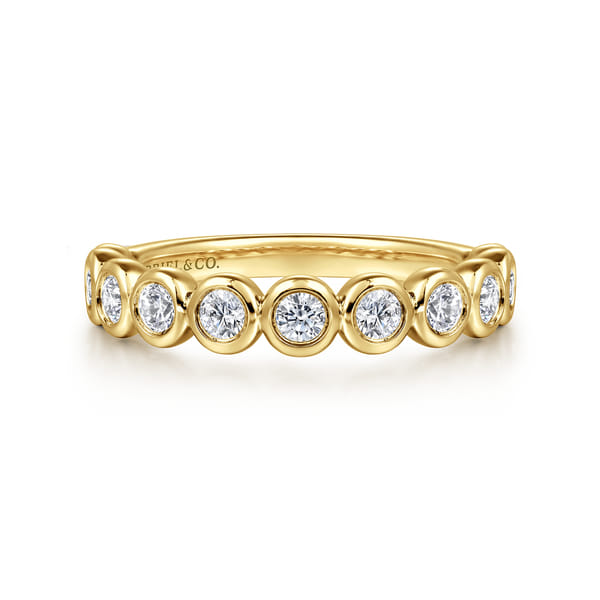
Bezel-set bands
Bezel-set wedding bands feature a metal rim that encircles the diamond or gemstone, holding it securely while giving a sleek, modern edge.
Pairs best with:
- Solitaire engagement rings (round, oval, emerald, pear-shaped diamonds): The bezel band complements the center stone while providing extra protection and a clean, cohesive look.
- Minimal or geometric engagement rings: Enhance contemporary designs and add a subtle, polished detail without overpowering the main stone.
Men’s wedding ring types
When you choose a men’s wedding ring, it should feel like an extension of your style; something you’ll actually enjoy wearing every day. Let’s break down the two main approaches so you can figure out which speaks to you.
Classic men’s wedding bands
If you like clean, understated style that will never feel dated, stick with classic bands. These are the rings you can wear confidently in any setting, from the office to weekend adventures, without worrying they’ll look out of place.
Here’s what to consider:
- Smooth polished metal: Go for this if you want something sleek and effortless. It shines without trying too hard.
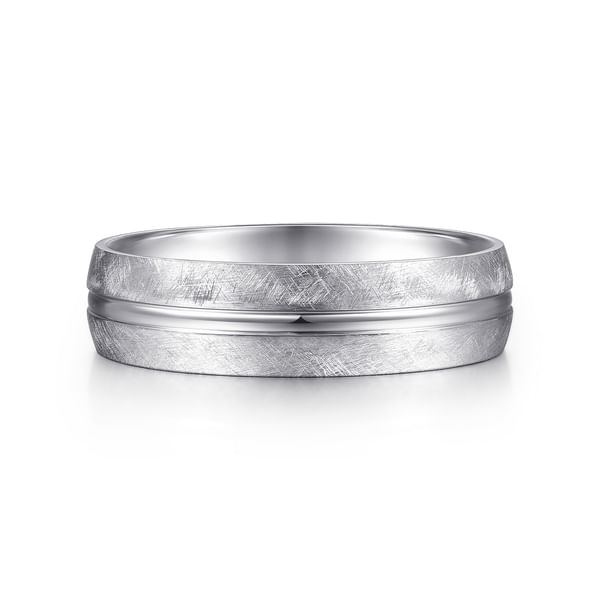
- Brushed or matte finishes: Perfect if you want texture that adds personality but stays subtle.
- Hammered or textured metal: Choose this if you like a bit of rugged character while keeping the overall look refined.
- Diamond wedding bands for men: A small row of pavé or channel-set diamonds can add a hint of sparkle without feeling flashy.
- Mixed finishes: Combine polished and matte surfaces if you want depth and interest in a classic silhouette.
Modern and edgy men’s wedding bands
If you want a ring that makes a statement, consider modern or edgy styles. These rings give you personality without sacrificing comfort or durability.
Here’s what to consider:
- Black rings: Tungsten, ceramic, or titanium are sleek, masculine, and low-maintenance. Perfect if you like a modern, confident look.
- Alternative metal wedding bands: Tantalum (used in our collection), cobalt, titanium, or Damascus steel offer durability and a unique color or texture.
- Gold with black diamond accents: Subtle sparkle with an unexpected edge; great if you like traditional metal but want something bold.
- Black diamond-encrusted bands: These are eye-catching statement pieces for someone confident in their style.
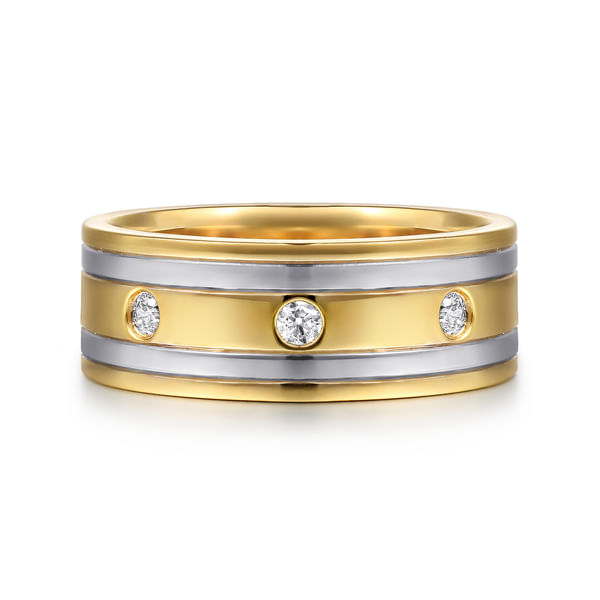
- Mixed metals: Mix gold, platinum, or darker metals if you want a contemporary, layered look.
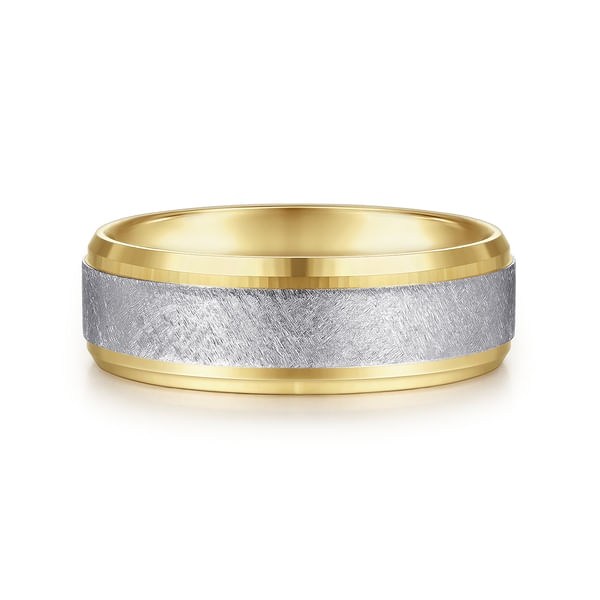
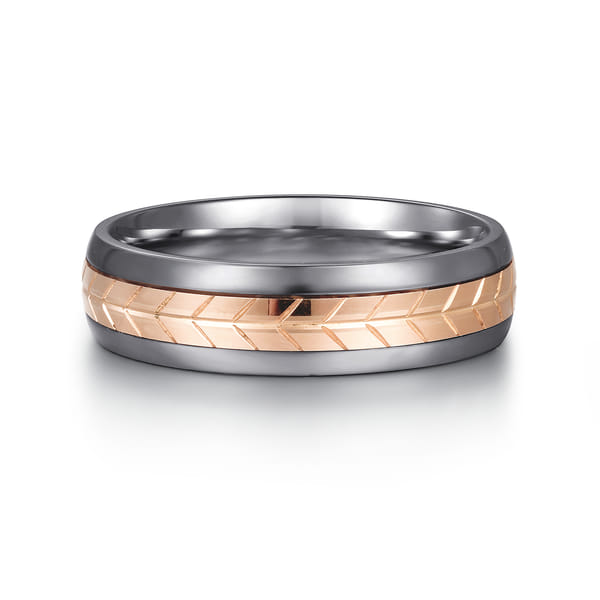
Pro tip: Think about how your ring will pair with your partner’s band or your everyday jewelry. Modern metals and black diamonds are attention-grabbing, so keep your overall look balanced.
Wedding ring metal types
The metal you choose shapes how your wedding band looks, wears, and ages over time. Here is a breakdown of the most popular wedding ring metals and what sets each one apart.
White gold
White gold is one of the most popular choices for wedding bands because of its bright, polished finish and neutral tone that pairs beautifully with most engagement ring settings. It is alloyed with metals like palladium or nickel for durability, then plated with rhodium for its signature white sheen. Over time, rhodium plating may wear and can be easily re-plated by a jeweler.
Browse white gold wedding rings.
Yellow gold
Yellow gold carries a timeless warmth that has made it the traditional choice for wedding rings across cultures for centuries. Gabriel & Co. crafts yellow gold pieces using recycled gold, making it a sustainable choice alongside its classic appeal. It is available in 14K and 18K options — 14K is more durable for everyday wear, while 18K has a richer color and higher gold content.
Browse yellow gold wedding rings.
Rose gold
Rose gold gets its distinctive blush color from a copper alloy, giving it a romantic, warm tone that has seen a huge surge in popularity over the past decade. It pairs especially well with champagne diamonds and morganite, and it looks stunning in both modern and vintage-inspired wedding band styles. Like yellow gold, it is available in 14K and 18K.
Browse rose gold wedding rings.
Platinum
Platinum is the most durable and premium of the precious metals used in wedding jewelry. It is naturally white — it does not need rhodium plating — and its density gives rings a satisfying weight. Platinum is an excellent choice for people with sensitive skin, as it is hypoallergenic. It is also the ideal metal for securing diamonds, since its strength holds prongs firmly over a lifetime of wear.
Browse platinum wedding rings.
Two-tone and mixed metals
Two-tone wedding bands combine white gold, yellow gold, or rose gold in a single ring, giving you the flexibility to match both your engagement ring and the rest of your everyday jewelry. They work especially well for couples whose jewelry collections already mix metals, and they have a contemporary quality that feels fresh without being trendy.
Browse two-tone wedding rings.
Alternative metals
Tantalum, titanium, cobalt, and tungsten are popular choices for men's wedding bands and for anyone who wants a non-precious metal option. These materials tend to be more resistant to scratching, lighter in weight, and available at lower price points. However, most cannot be resized, so it is important to get an accurate ring size before purchasing.
How to choose a wedding band
With so many wedding band styles, metals, and settings to consider, it helps to narrow things down with a few key questions. Here is what to think through before you decide.
Consider your engagement ring first.
The most important factor is how your wedding band will sit next to your engagement ring. If your engagement ring has a high-set stone or a pavé-covered shank, a curved or contour band will sit more flush than a straight one. If your engagement ring is a simple solitaire, almost any wedding band style works beautifully.
Think about your lifestyle.
If you work with your hands or lead an active lifestyle, a lower-profile band in a durable metal like platinum or 14K gold will hold up better over time. Bezel-set or channel-set diamonds are also more protected than prong-set stones for everyday wear.
Match or complement your metal.
You do not have to match your engagement ring metal exactly, but complementary metals tend to look more intentional. White gold and platinum, for example, are very close in tone and look seamless together. Two-tone bands can bridge yellow and white metals if you wear both.
Set a width that suits your hand.
Narrower bands — 1.5mm to 2.5mm — look delicate and stack easily. Wider bands — 4mm and above — make more of a statement and can stand alone. As a general rule, shorter fingers tend to be elongated by narrower bands, while wider bands look striking on longer fingers.
Decide how much sparkle you want.
A plain metal band keeps the focus entirely on your engagement ring. A pavé or eternity band adds brilliance at every angle. Half-eternity and station diamond wedding bands offer a middle ground — sparkle on top without the extra weight of a full-circle setting.
Final Thoughts
At the end of the day, choosing a wedding ring is about how it feels on your hand and how it fits into your life. The right band should complement your engagement ring, reflect your personal style, and feel comfortable enough to wear every day without thinking twice.
If you’re still deciding on your engagement ring or want to make sure your wedding band and engagement ring work beautifully together, our guide on how to pick an engagement ring breaks everything down step by step, so you can make confident choices from the very beginning.
FAQs
What is the most popular type of wedding ring?
Classic diamond wedding bands — particularly pavé and eternity styles — consistently rank as the most popular choice for women, while smooth polished metal bands remain the top pick for men. That said, the most popular wedding ring style is the one that pairs best with your engagement ring and suits your daily lifestyle.
What is the difference between an eternity band and a half-eternity band?
A full eternity band features diamonds or gemstones set all the way around the ring, offering sparkle from every angle. A half-eternity band has stones only on the top half, which makes it slightly easier to resize and more comfortable for some wearers. Both are popular wedding band styles and pair beautifully with solitaire and three-stone engagement rings.
Can you wear a wedding band without an engagement ring?
Yes. A wedding band worn alone is a complete and meaningful piece of jewelry. Many people choose a single bold band — such as a wide diamond band or a mixed-metal style — as their only bridal ring. Stackable bands are also a popular option, allowing you to add rings over time for anniversaries or milestones.
What is the best metal for a wedding band?
There is no single best metal — it depends on your lifestyle, budget, and style. Platinum is the most durable and naturally white. 14K white gold is a more affordable alternative with a nearly identical look. Yellow gold is timeless and available in recycled versions for an ethical choice. Rose gold adds warmth. Alternative metals like tantalum and titanium are scratch-resistant and lightweight, making them great for active lifestyles.
How do I know what wedding band style goes with my engagement ring?
The shape of your engagement ring's center stone is the best starting point. Curved and contour wedding bands are designed to hug rings with pear, oval, or halo settings. Straight bands pair cleanly with round and princess cut solitaires. If your engagement ring has an unusually shaped basket or profile, bring it with you when shopping for a band so you can test the fit in person.
What is a contoured wedding band?
A contoured wedding band — also called a curved or shadow band — is shaped with a gentle arc or V-curve so it nestles snugly against an engagement ring without leaving a gap. They are especially popular with pear, oval, and marquise engagement rings, where a straight band would create visible space between the two rings.
Do men wear wedding bands?
Yes. The tradition of men wearing wedding rings became widespread in the mid-20th century and is now standard practice. Today, men's wedding bands range from simple polished metal to diamond-accented styles, textured finishes, and bold alternative-metal designs.
What is an anniversary ring and how is it different from a wedding band?
An anniversary ring is typically given to commemorate a milestone year of marriage — often the first, fifth, tenth, or twenty-fifth anniversary. It is usually worn alongside the engagement ring and wedding band as a third stacked ring, and often features more diamonds or a bolder design than the original wedding band.