Good to Have You Back
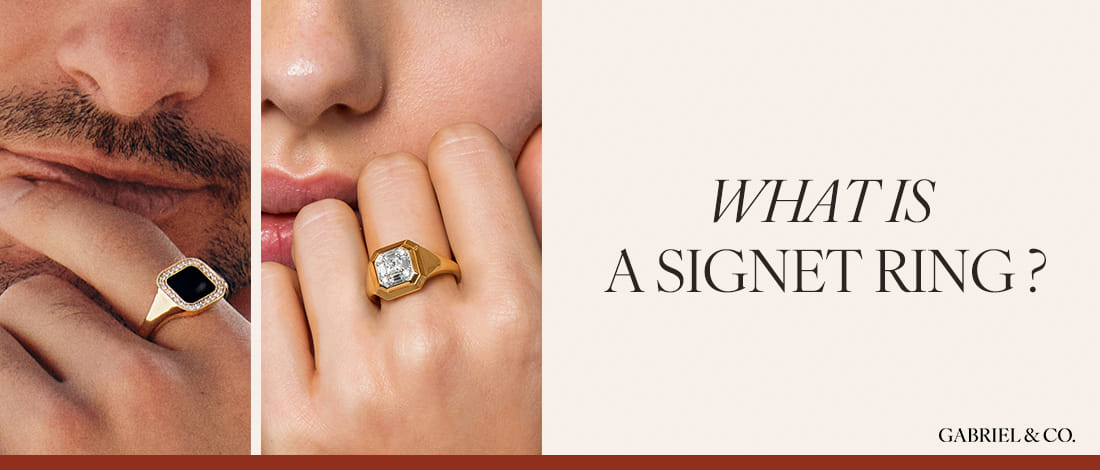
Few pieces of fine jewelry carry as much history as the signet ring. Once the exclusive seal of kings, nobles, and Roman senators, today it sits just as naturally on a pinky finger paired with jeans as it does at a black-tie dinner. In this guide, we cover everything you need to know: what a signet ring actually is, where it comes from, what to engrave on it, and how to wear one in 2026.
What is a signet ring?
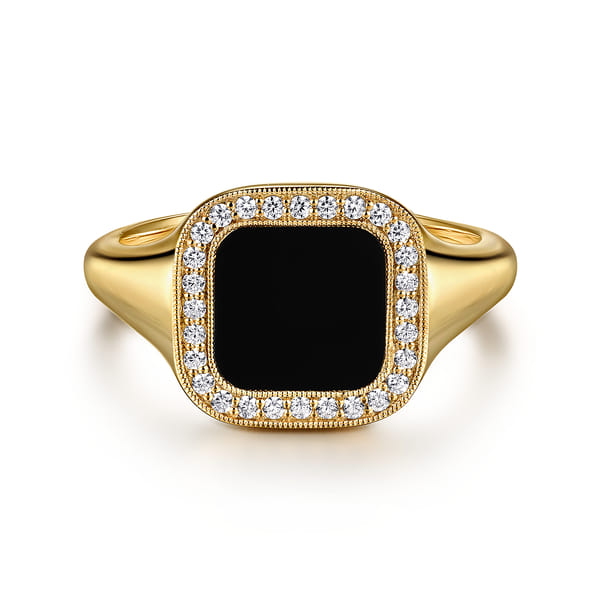
A signet ring is a ring with a flat, broad face (called a bezel) engraved with a personal symbol. That symbol might be a family crest, a monogram, a coat of arms, or any motif meaningful to the wearer. Historically, the engraving was carved in reverse (intaglio), so that pressing the ring into hot wax left a correct, readable impression: a personal seal, the equivalent of a signature.
The word signet comes from the Latin signum, meaning "an identifying sign or mark," the same root as the English word signify. The suffix -et is a diminutive: a signet is literally a "little seal."
Today's women’s and men’s signet rings no longer stamp wax. The bezel may be engraved, set with a stone, left plain, or feature a gemstone. What remains is the form itself: immediately recognizable and deeply personal.
AT A GLANCE: Flat or slightly domed bezel. Engraved design (or plain). Historically used to stamp wax seals.
Signet ring history
3500 BCE Mesopotamia
The earliest known seals were used to authenticate trade and legal records. The idea of a personal mark pressed into clay predates writing itself.
Ancient Egypt
Pharaohs wore scarab rings as signet seals, engraved on the underside and swivelled outward for sealing documents.
Ancient Rome
Rome turned signet rings into a visible class hierarchy. Gold rings were reserved by law for senators and ambassadors. Ordinary citizens wore iron, freed slaves wore silver.
When Emperor Severus extended gold ring rights to all soldiers, it was considered a social earthquake.
13th to 17th century
Kings, nobles, and the Church sealed all official correspondence with signet rings. The papal Ring of the Fisherman was used to seal papal briefs and, upon a pope's death, is ceremonially struck with a silver hammer and destroyed to prevent forgery.
19th century
The signet ring became a cornerstone of the Victorian gentleman's dress code, growing more ornate as its practical function faded.
"Hannibal, the Carthaginian general, reportedly collected over 200 signet rings taken from dead Roman nobles after the Battle of Cannae, sending them home as proof of his victory."
Signet ring meaning today
The meaning of a signet ring today is whatever the wearer brings to it. No longer a legal instrument, its significance is entirely personal, and that makes it more powerful, not less.
- Heritage and family: Passed down through generations as a statement of lineage and continuity.
- Milestone and commemoration: Given to mark a birthday, graduation, or personal achievement, often with a meaningful date engraved on the reverse.
- Style and self-expression: Increasingly chosen purely for aesthetic reasons. No family crest required.
What to engrave on a signet ring
The engraving is the most personal choice you will make. Traditionally, it is carved in intaglio (cut into the surface) so the impression reads correctly when pressed into wax. Today, engraving can be intaglio, raised relief, or purely decorative.
Popular engraving choices:
- Initials or monogram: The most common choice. Single initials feel bold; a traditional three-letter monogram (first, last, middle) is more formal.
- Family crest or coat of arms: If your family has one, this is the traditional choice. If not, a herald can design one for you, and this is more common than you might think.
- Personal symbol or motif: An anchor, a star, a botanical motif, a zodiac sign, or anything with personal resonance. Modern jewelers excel at translating abstract ideas into clean engravings.
- A date: Often placed on the reverse (inside or outside the back of the shank) rather than the face, so the front stays clean.
- No engraving (plain bezel): Increasingly popular for a minimal, architectural look. The flat face catches light beautifully with nothing on it.
Note: If you want your ring to be functionally usable as a wax seal, ensure the design is engraved in reverse (intaglio). Ask your jeweler specifically, as not all engravings are done this way.
How to wear a signet ring: finger placement
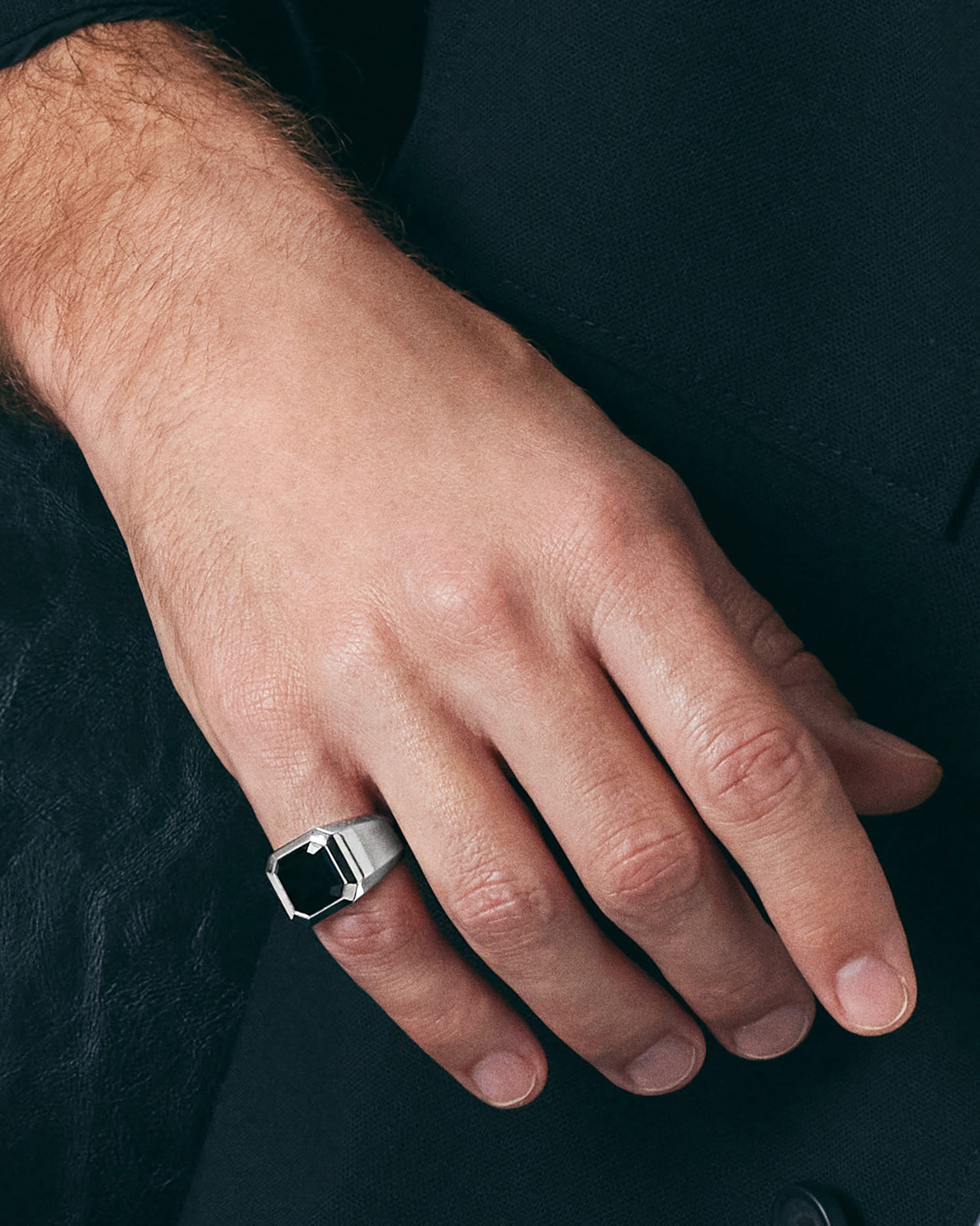
The honest answer is: tradition says pinky, non-dominant hand. Everything else is a matter of culture, preference, and what looks right on your hand.
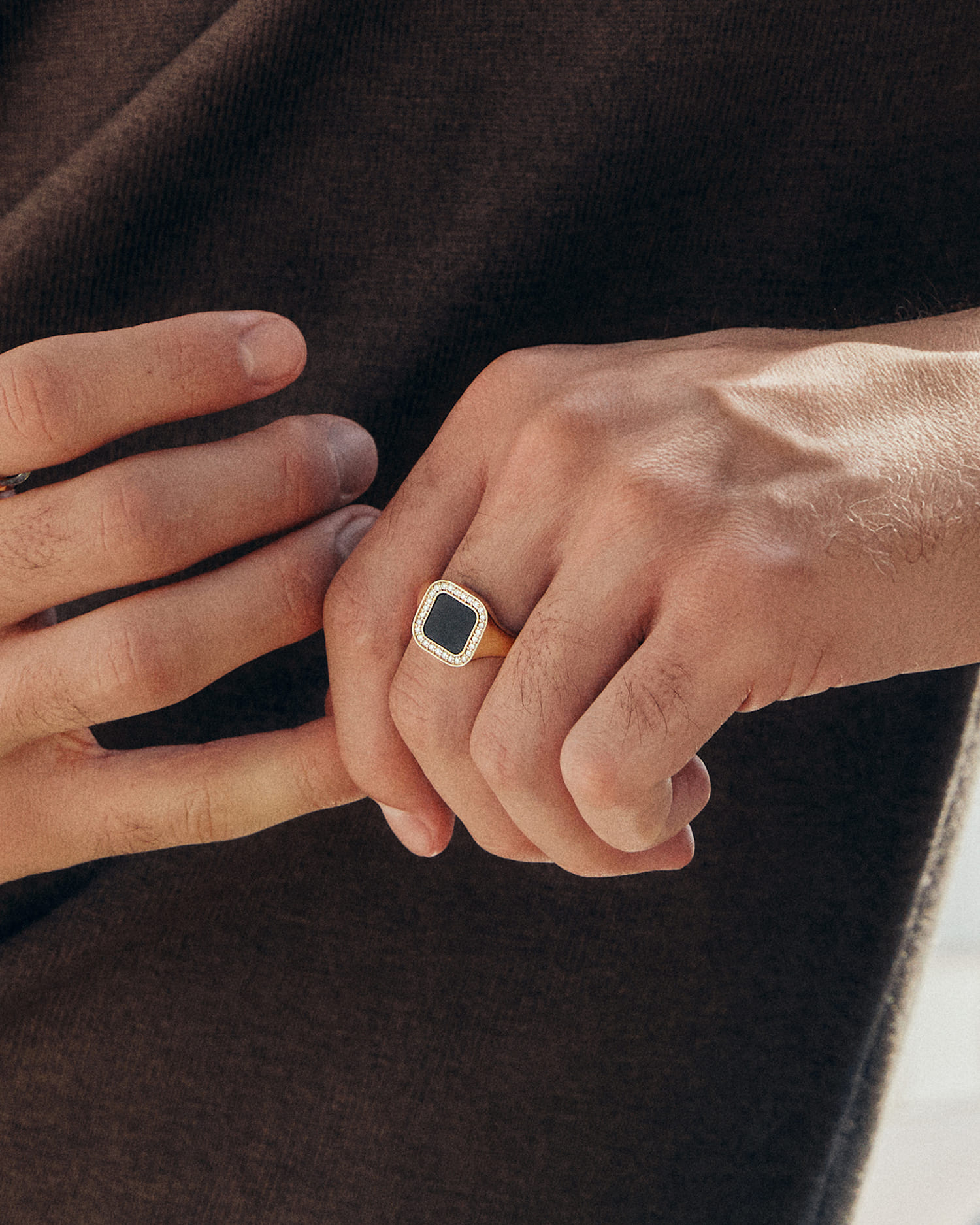
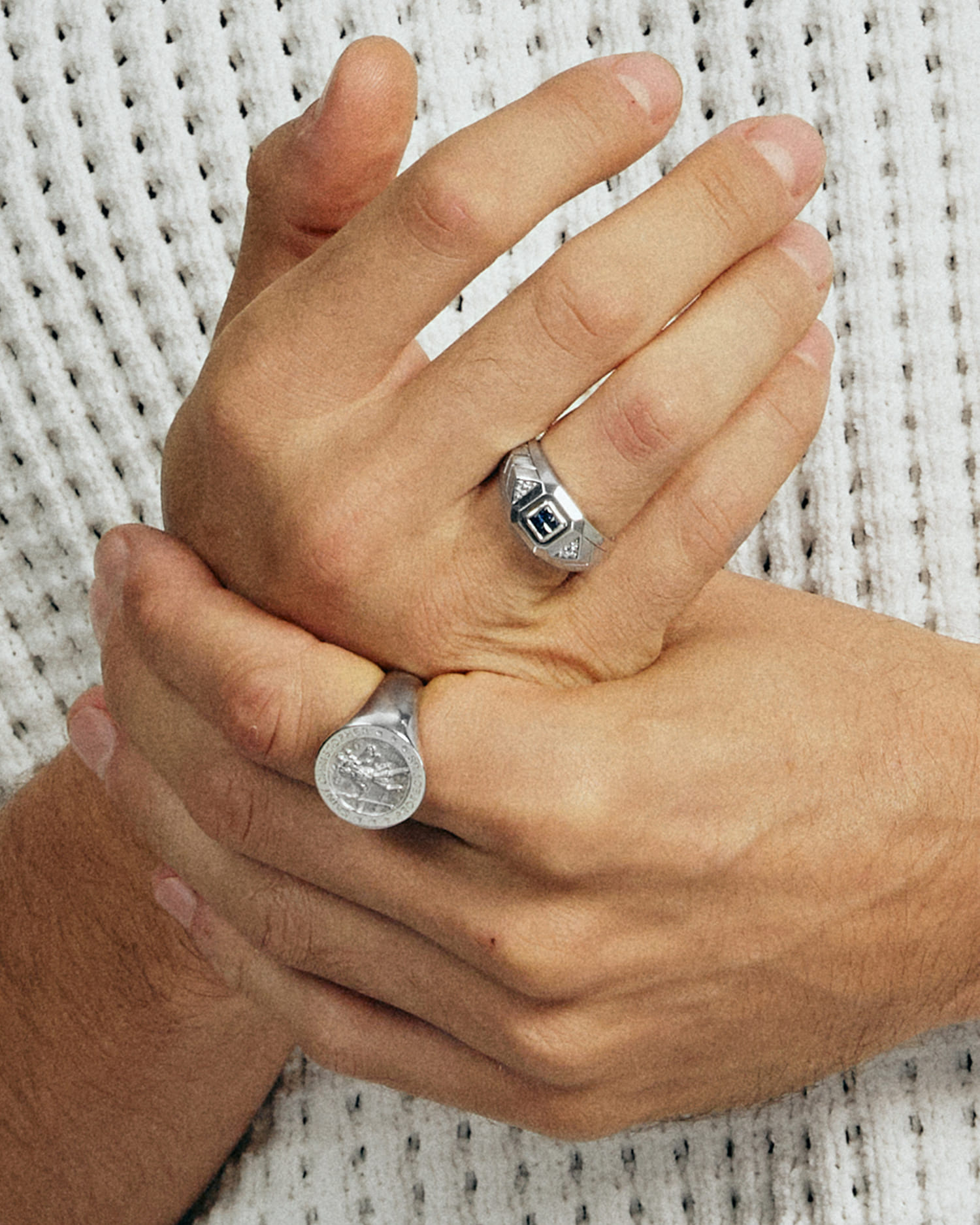
- Pinky finger (traditional): Non-dominant hand. The classic placement rooted in the Greek tradition of keeping the seal hidden from enemies.
- Ring finger (also common): Left ring finger in North America and Germany. Sits alongside or instead of a wedding band. Feels more formal and grounded.
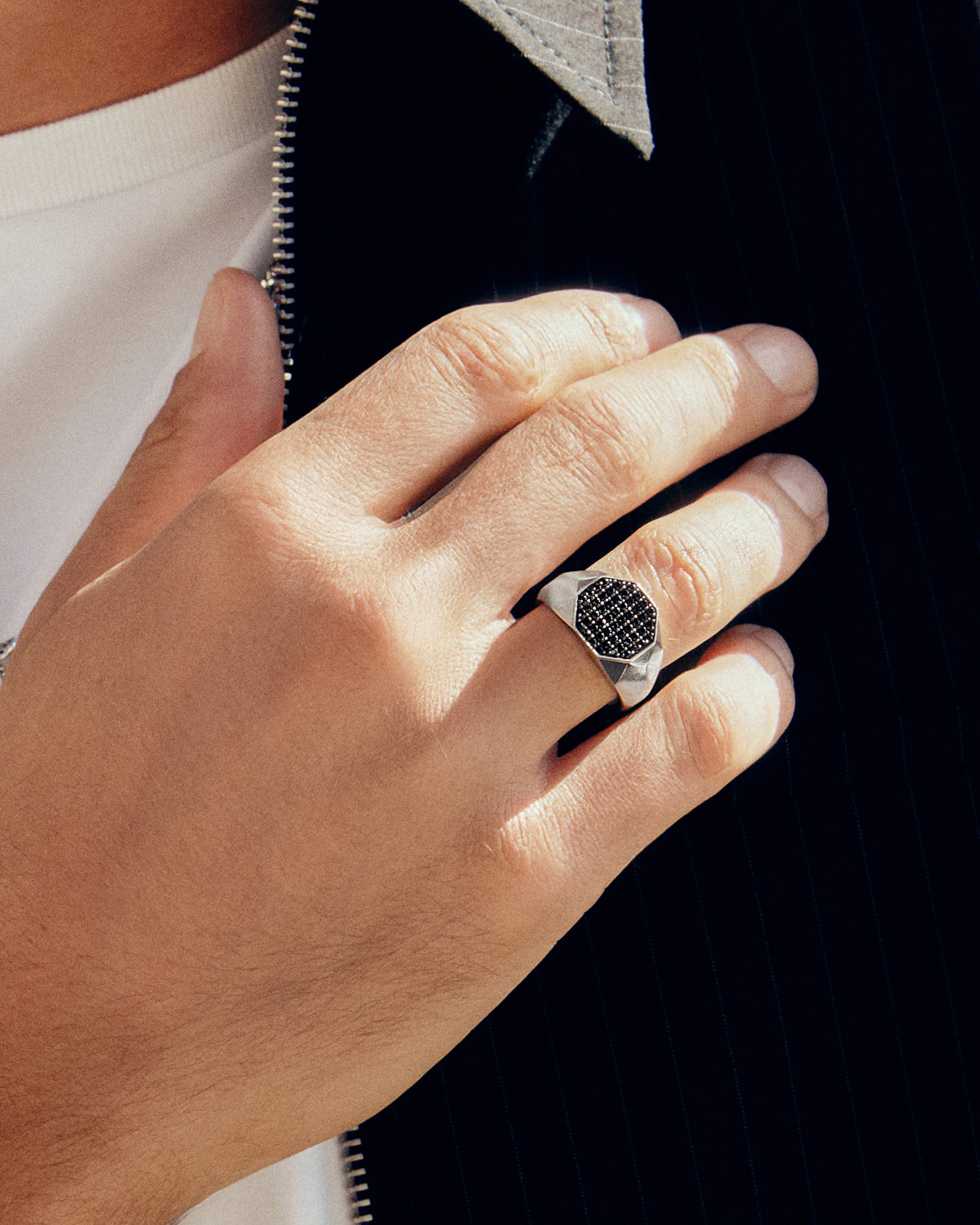
- Middle finger (statement): Commands attention. Historically worn when signet rings were larger, and a bold modern choice that balances a wide bezel well.
- Index finger (bold): The most visible placement. Medieval practice and a modern power move. Works best with a slimmer, elongated bezel.
Country-by-country etiquette
The below are traditional conventions, not rules. Modern wearers everywhere are increasingly guided by personal preference over regional custom.
| Country | Traditional Placement | Notes |
| United Kingdom | Left hand, little finger | The gold standard of signet ring tradition; worn below the wedding ring if both are present. |
| USA & Canada | Left hand, ring finger | Often worn separately from or instead of a wedding band. |
| Germany | Left hand, ring finger | Closely follows North American convention. |
| France | Left hand, ring or little finger | Convention varies; right little finger is also common. |
| Switzerland | Right hand, ring finger | Notably different from much of Western Europe. |
| Netherlands | Left hand, ring finger | Wedding bands are often worn on the right hand, so the signet is worn on the left to balance the look. |
| Italy & Spain | Either hand, little finger | The pinky is preferred, though the right hand is equally accepted. |
How to style a signet ring in 2026
Signet rings are one of those rare pieces that refuse to be boxed in. Wear one to a wedding, wear one to brunch, wear one with nothing but a white T-shirt and you will still look like you meant it. The trick is knowing how to let it shine.
For women
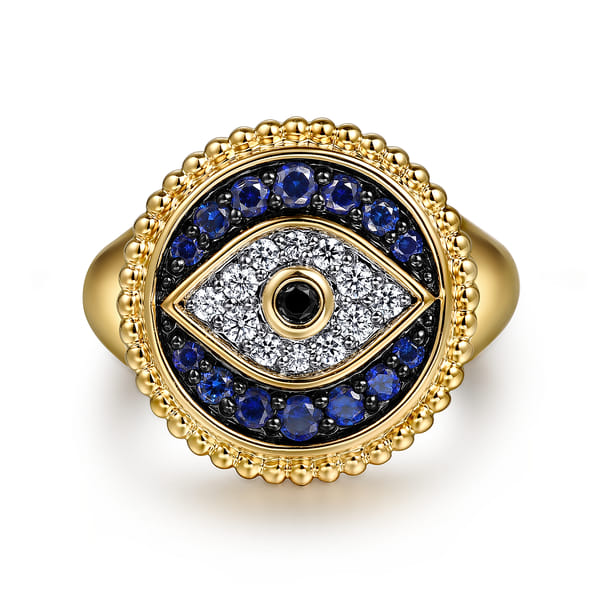
Let the symbol lead. An evil eye signet set with sapphires and diamonds in yellow gold is a perfect example of how far the modern signet ring has evolved. Choose a symbol that carries personal meaning, whether protective, spiritual, or purely aesthetic, and build your look around it. A ring this bold works best worn alone on the hand.
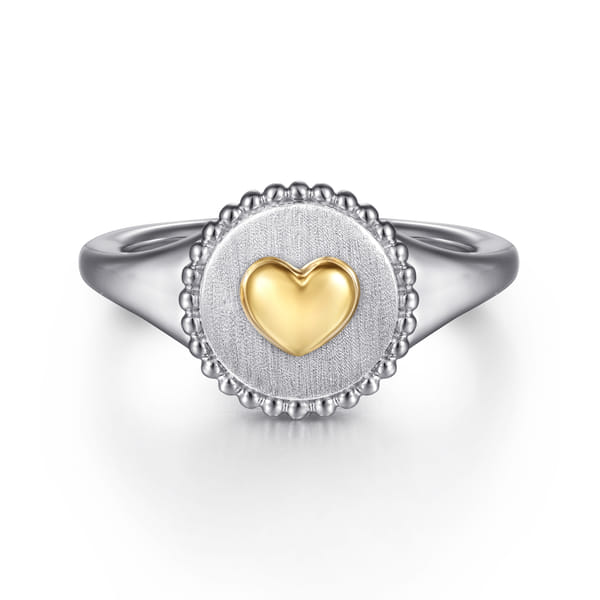
Mix your metals with intention. A heart signet in brushed silver with a yellow gold heart shows that two metals on one ring can feel completely intentional when the design calls for it. Pair this style with either silver or gold on your other hand and let the ring itself bridge the two.
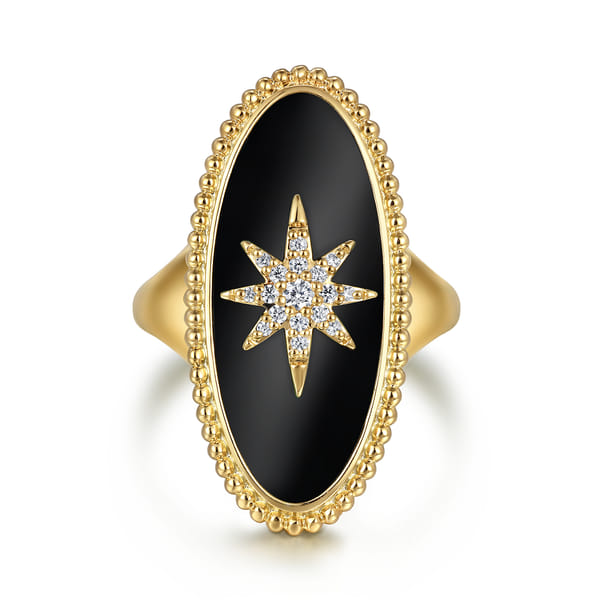
Go dramatic with shape. The elongated oval black onyx signet with a diamond star is proof that a signet ring does not have to be small or understated. A ring this commanding deserves a bare hand and simple outfits. Let it be the only thing people notice.
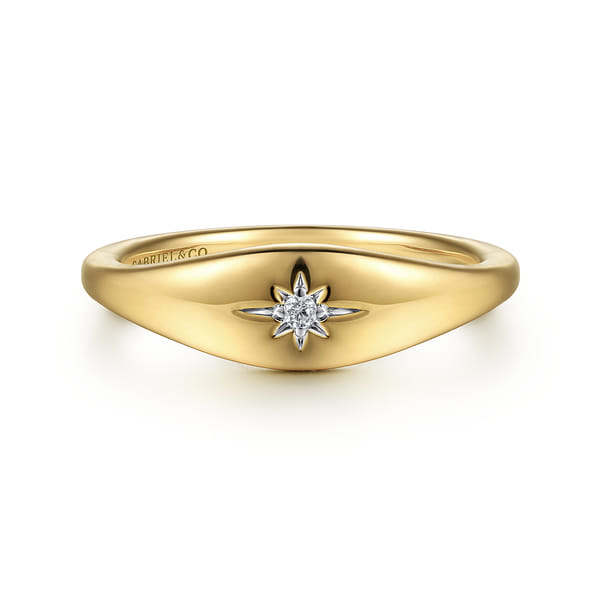
Keep it minimal and stack it up. The slim yellow gold dome with a single diamond is the understated counterpart to everything above. Its clean lines and low profile make it the perfect stacking ring. Pair it with a thin band and a birthstone ring on adjacent fingers for a curated, effortless look that works from morning to night.
For men
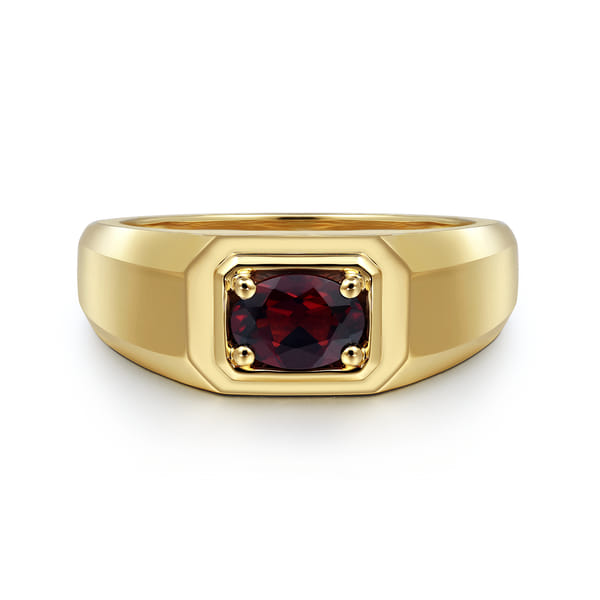
Add a stone, add character. The yellow gold signet with a deep red garnet shows that a gemstone on a men's signet ring is not excess, it is personality. A rich colored stone set into a clean gold bezel reads masculine and considered. Wear it on the pinky and let it do the work while everything else stays simple.
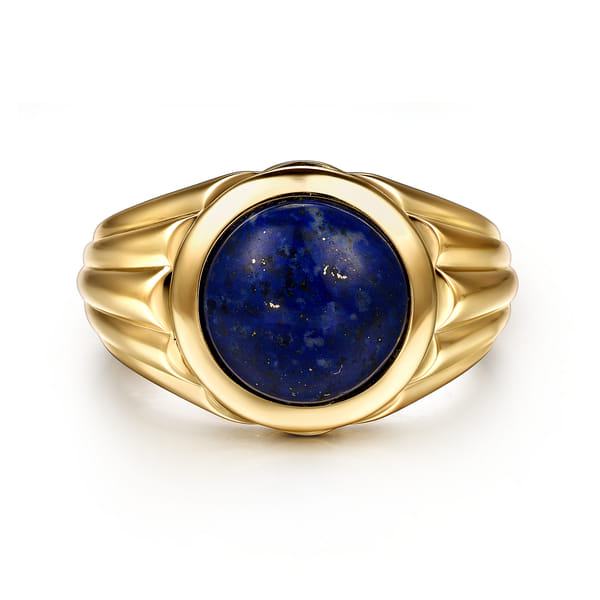
Go bold with color and scale. The round lapis lazuli signet in yellow gold is a statement piece in the truest sense. That deep blue against gold is striking without being flashy. A ring this substantial works best worn alone, paired with a good watch on the opposite wrist and nothing else competing for attention.
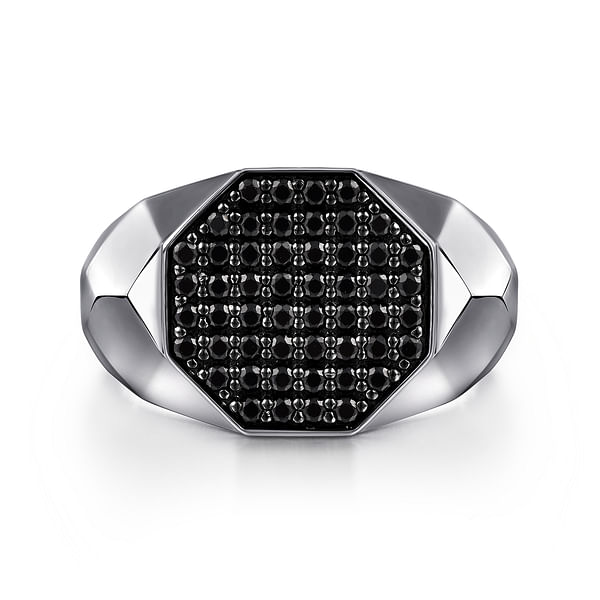
Keep it dark and modern. The octagonal silver signet pavé-set with black diamonds is for the wearer who wants impact without color. The geometric shape and all-black stone surface feel contemporary and sharp. This one pairs effortlessly with silver accessories and works just as well with a suit as it does with a leather jacket.
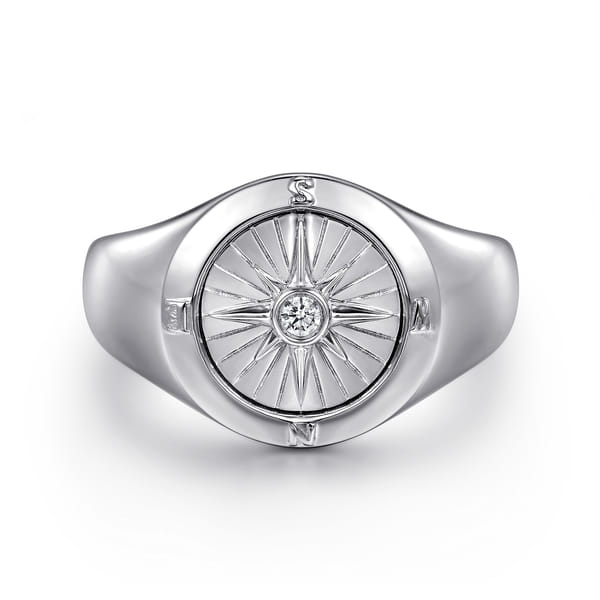
Wear your direction. The silver compass signet with an engraved star and center diamond is the most personal of the four. A navigational motif on a signet ring carries real meaning, a sense of purpose, of knowing where you are headed. The engraved detail on a brushed silver base keeps it refined without being precious.
How to choose and buy a signet ring
Buying a signet ring is a considered purchase and it should feel that way. Here is what to think about before you commit.
Choose your metal
Yellow gold is the classic for a reason. It holds engraving detail beautifully and only gets better with wear. White gold and platinum suit cooler skin tones and bring a cleaner, contemporary edge. Sterling silver is a smart entry point for a more minimal look. Rose gold is warm, versatile, and flattering on almost everyone.
Choose your bezel shape
Oval is the classic and suits almost every hand. Cushion is softer and slightly romantic. Rectangular and square bezels feel modern and architectural. When in doubt, try a few shapes on before you decide. What looks good on a screen and what looks good on your hand can be very different things.
Heirloom or starting fresh?
If you have inherited a signet ring with your family crest or initials, keep the engraving. If it came from a different family line, having the face polished flat and re-engraved is perfectly acceptable. You are honoring the form while making it your own.
FAQ
What is a signet ring?
A signet ring is a ring with a flat bezel engraved with a personal symbol, historically used to press a seal into wax to authenticate documents. Today it is worn as jewelry representing identity, heritage, or personal style.
Which finger do you wear a signet ring on?
Traditionally, the pinky (little) finger of the non-dominant hand. In North America and Germany, the left ring finger is also common. Modern wearers choose any finger based on preference.
Does a signet ring face toward you or outward?
Traditionally it faces outward so others can read the engraving. Some wearers prefer to face it inward as a more personal, private gesture. There is no strict rule today.
Can women wear signet rings?
Yes. Women have worn signet rings since at least the Byzantine era. Today there are no gender rules, and signet rings are widely worn by women in any style, metal, and on any finger they choose.
What should I engrave on a signet ring?
Popular choices include initials or a monogram, a family crest or coat of arms, a personal symbol or motif, or a meaningful date. You can also leave the bezel plain for a minimalist look.
What metal is best for a signet ring?
Gold (yellow, white, or rose) is the most traditional and holds engraved detail well over time. Sterling silver is more affordable. Platinum is the most premium option. The best metal depends on your skin tone, budget, and style.
How old is the signet ring tradition?
At least 5,500 years old. Historical records show signet seals in Mesopotamia around 3500 BCE, with Egyptian pharaohs using engraved scarab rings shortly after.
Can I re-engrave an inherited signet ring?
Yes. Many jewelers can polish the bezel flat and re-engrave it. This is a common and accepted practice, especially when the original engraving belongs to a different family line.