Good to Have You Back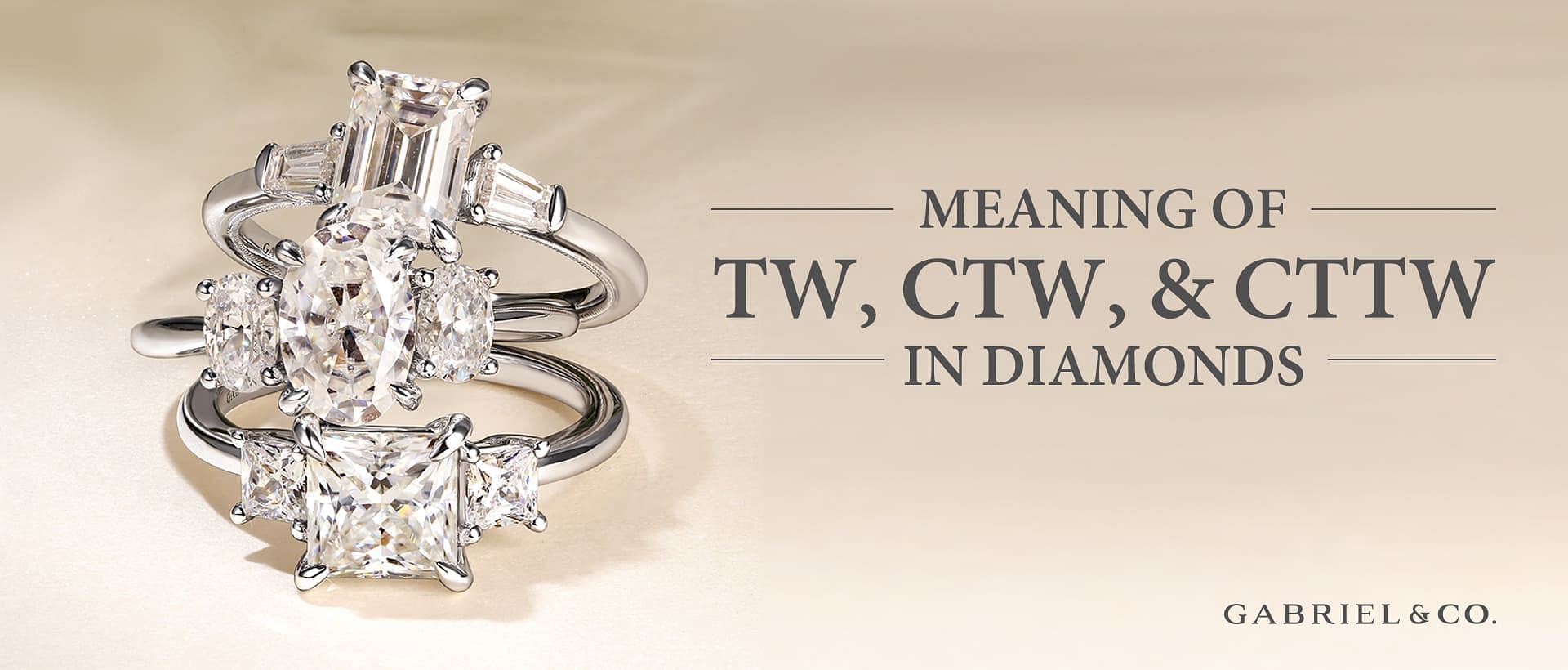
Don't we all have a soft spot for clever abbreviations? Back in the year 2000, early millennials had a blast using acronyms like ROFL (Rolling on the floor with laughter), LOL (Laugh out loud), and even ASL (Age, sex, location – from the ICQ days) to proudly signal their membership in the "cool club." While those linguistic relics might seem like ancient history today, they've given way to a fresh set of catchy phrases, such as FOMO (Fear of missing out), YOLO (You only live once), and IYKYK (If you know, you know).
But the world of jewelry doesn't lag behind when it comes to language. Let's take a journey into the fascinating universe of TW, CTW, and CTTW and uncover the meaning behind these intriguing abbreviations.
Understanding TW, CTW, and CTTW
Size might not be everything for those who adore diamonds, but it's undeniably one of the key factors in selecting the perfect piece of jewelry. The size of a diamond is directly linked to its weight. In this context, there are three essential terms with which you should acquaint yourself. The first is TW, representing Total Weight; the second is CTW, short for Carat Total Weight, and the third is CTTW, an abbreviation for Carat Total Weight.
Total Weight (TW): Unveiling the Significance of TW in Diamond Grading
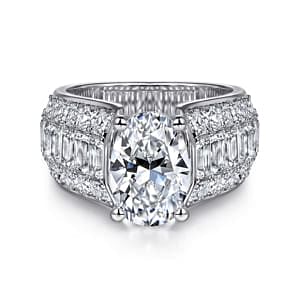
TW, or Total Weight, serves as the cumulative measurement of all the diamonds within a specific piece of jewelry. To illustrate, consider owning a diamond ring as an example. In this ring, the central stone carries a weight of 1 carat, while the smaller stones adorning the surrounding area and the shank collectively contribute another 1 carat in weight. Consequently, the total weight of all the stones in your ring amounts to 2 carats.
It is crucial to differentiate this from a single diamond that inherently possesses a weight of 2 carats on its own. In essence, Total Carat Weight (CTW) denotes the combined weight of all the diamonds present within a piece of jewelry. This distinction clarifies the significance of TW in evaluating jewelry pieces accurately.
Carat Total Weight (CTW): Defining the Importance of CTW in Multiple-Diamond Settings
The allure of multiple diamonds is undeniable, bringing a smile to our faces. However, to truly appreciate these sparkling gems, we must delve into the specifics – how many diamonds are there, their arrangement, and the intricate craftsmanship involved. It's crucial to remember that weight alone doesn't necessarily guarantee a larger visual impact. The diamond's cut and the distribution of its weight play pivotal roles in this regard.
Take, for instance, the comparison between an oval diamond and a round one, both possessing the same weight. Due to its distinct shape and cut, an oval diamond will invariably appear more substantial than its round counterpart. This highlights the critical influence of shape and cut on a diamond's perceived size.
In the context of jewelry featuring multiple diamond settings, we must emphasize two key aspects for absolute clarity. First, the concept of Total Carat Weight (CTW) should be crystal clear – it signifies the combined weight of all the diamonds within the piece. Secondly, understanding the individual weight of each diamond is essential, providing a comprehensive picture of the intricate composition of these precious adornments.
Carat Total Weight (CTTW): Exploring the Concept of CTTW in Complex Jewelry Pieces
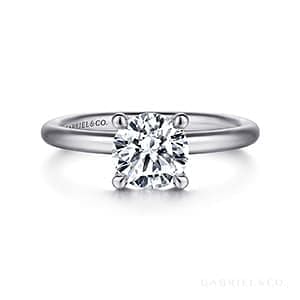
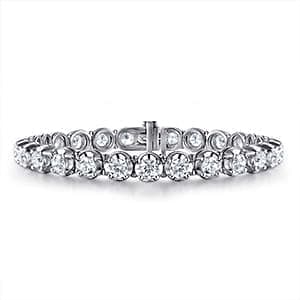
Not all jewelry pieces are created equal. Consider, for instance, a scenario where you possess a stunning diamond tennis bracelet and an elegant solitaire ring. The ring boasts a single diamond with a substantial weight of 3 carats, while the tennis bracelet shines with the brilliance of 15 diamonds, each weighing a modest 0.2 carats. Interestingly, both pieces share an identical Carat Total Weight (CTTW), yet this does not equate to an equal valuation.
The discerning factor here lies in the inherent value of the individual diamonds. In this comparison, the solitaire ring reigns supreme in terms of cost. The reason? Larger, uncut diamonds command a significantly higher price and are considered more precious than their smaller counterparts. Beyond a certain threshold, typically around the 1-carat mark, the price of diamonds escalates exponentially, owing to their rarity and exceptional size. This insight underscores the importance of considering not just the CTTW but also each diamond's inherent quality and size when assessing the value of jewelry pieces.
Why Carat Matters: The Role of Carat Weight in Diamond Value
The significance of the carat is undeniable, as it serves as one of the most precise and quantifiable factors influencing the price of diamonds. Carat weight plays a pivotal role in defining the overall weight, whether it be of an individual diamond or the collective weight of multiple diamonds within a piece of jewelry. However, as we've already established, Carat Total Weight (CTTW) provides an accurate measurement of weight but does not necessarily determine the value of the piece.
To truly assess the worth of a diamond piece, one must consider a multitude of factors. Beyond carat weight, the number of diamonds incorporated, and the size of each diamond contribute significantly to the overall value. These aspects collectively shape the true essence of a diamond's beauty and worth within the world of jewelry.
Precision in Measurement: How Carat Weight Is Determined
A carat, in the realm of diamonds, is precisely defined as 0.200 grams, equivalent to one-fifth of a gram. This universally recognized standard serves as a crucial measure for comprehending the weight and size of diamonds across the globe. Jewelers employ meticulously calibrated, state-of-the-art weighing machines at various stages of the diamond processing journey—prior to, during, and following the crafting process—to ensure precise recording and attainment of the desired carat weight. This meticulous attention to detail underscores the industry's commitment to maintaining the highest standards of accuracy in evaluating diamond worth.
Single vs. Multiple Diamonds: When to Use TW, CTW, or CTTW
When you're evaluating a jewelry piece featuring a solitary diamond, there is no necessity to employ terms like TW, CTW, or CTTW, as these designations are not relevant to single diamonds. However, when a jewelry item showcases multiple diamonds in its design, these terms become invaluable tools for effectively conveying the total weight of diamonds present within the piece. In essence, they come into play when dealing with multi-diamond compositions, offering a concise and accurate means of quantifying the collective diamond weight in the item.
Factors Affecting Diamond Pricing: Beyond Carat Weight
Diamond pricing is influenced by several key factors, with carat weight representing just one facet of the renowned "4 Cs." The remaining three Cs—cut, clarity, and color—play equally significant roles in determining a diamond's value.
The cut of a diamond, for instance, profoundly impacts its price. Diamonds cut in a round shape tend to command higher prices due to their exceptional ability to refract and reflect light, resulting in dazzling brilliance. Conversely, baguette diamonds are typically more budget-friendly with their unique cut.
Clarity, on the other hand, pertains to the presence of "flaws" or "inclusions" within a diamond. The greater the visibility and size of these imperfections, the lower the clarity rating and, subsequently, the more affordable the diamond.
Lastly, the color of a white diamond significantly affects its price. Whiter diamonds, exhibiting less coloration, are generally more expensive. As the diamond's color shifts toward a noticeable yellow tint, its price tends to decrease. These factors collectively contribute to the intricate pricing structure of diamonds, ensuring that each precious gem is assessed based on its unique combination of characteristics.
Avoiding Misunderstandings: Clear Communication When Buying Diamonds
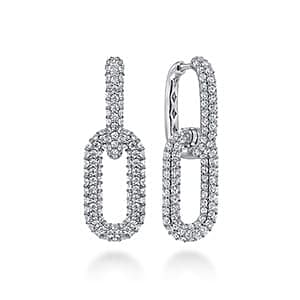
In the world of diamond retail, it's not uncommon for sellers to employ somewhat misleading terminology, potentially giving customers the impression that they're acquiring a single 2-carat diamond when, in reality, the piece comprises multiple smaller diamonds that collectively weigh 2 carats. This underscores the importance of meticulous scrutiny regarding the individual carat weight of each diamond. It ensures absolute clarity regarding what you're investing in.
At Gabriel & Co., we uphold a steadfast commitment to transparency. In every piece of jewelry, we offer, we provide comprehensive information, including the Total Weight (TW), Carat Total Weight (CTW), or Carat Total Diamond Weight (CTTW), making sure you have a clear understanding of the composition and value of your chosen jewelry item. It is interesting to note that every jewelry piece at Gabriel & Co. is marked with an exclusive serial number that helps establish and identify that piece's individuality.
Popular Jewelry Settings Using CTW and CTTW
Eternity rings rely on Carat Total Weight (CTW) and Carat Total Diamond Weight (CTTW) to convey the overall diamond value, primarily because they are adorned with numerous tiny diamonds that radiate brilliance around the entire shank. In stark contrast, engagement rings typically showcase a central gemstone, often surrounded by a halo of smaller diamonds. Consequently, the CTW and CTTW of an engagement ring will exhibit significant disparities from that of an eternity ring.
This serves as a classic illustration of the diversity that exists within similar jewelry styles. It emphasizes how the arrangement and composition of diamonds within a piece can dramatically influence its total carat weight, thereby offering unique expressions of elegance and charm.
How to Shop Wisely with Diamond Terminology Knowledge
Even if you're not a seasoned diamond enthusiast or a first-time shopper in the world of diamonds, there's no need for apprehension. Equipping yourself with a fundamental understanding of the diverse facets related to diamond quality and pricing can be immensely empowering. Our educational blogs delve into various aspects of diamonds, serving as valuable resources for gaining knowledge and making well-informed decisions.
If you aspire to step into a store with confidence and make a purchase you'll be content with, a grasp of diamond terminology will prove invaluable. At Gabriel & Co., we prioritize customer education, aiming to provide you with the insights needed to feel completely assured and satisfied with your choices.