Good to Have You Back

June is one of those rare months that can't make up its mind, and honestly, we love it for that. While most months claim a single birthstone, June gets three: pearl, alexandrite, and moonstone. They share almost nothing in common except a birthday. Pearl is organic, ancient, and worn by queens and Audrey Hepburn. Alexandrite is a geological phenomenon, a stone that literally changes color depending on the light. Moonstone looks like someone trapped a full moon inside a gem.
If you're shopping for a June birthstone gift, or you were born in June and want to understand what's actually yours, here's the full picture.
June's three birthstones at a glance:
- Pearl: White, cream, pink, gold, or black. Organic, lustrous, and the most traditional june birthstone by far
- Alexandrite: Green in daylight, red at night. One of the rarest gemstones in the world
- Moonstone: Milky white with a floating blue glow. Ethereal, mythological, impossible to fake
What is a Pearl? The original June birthstone
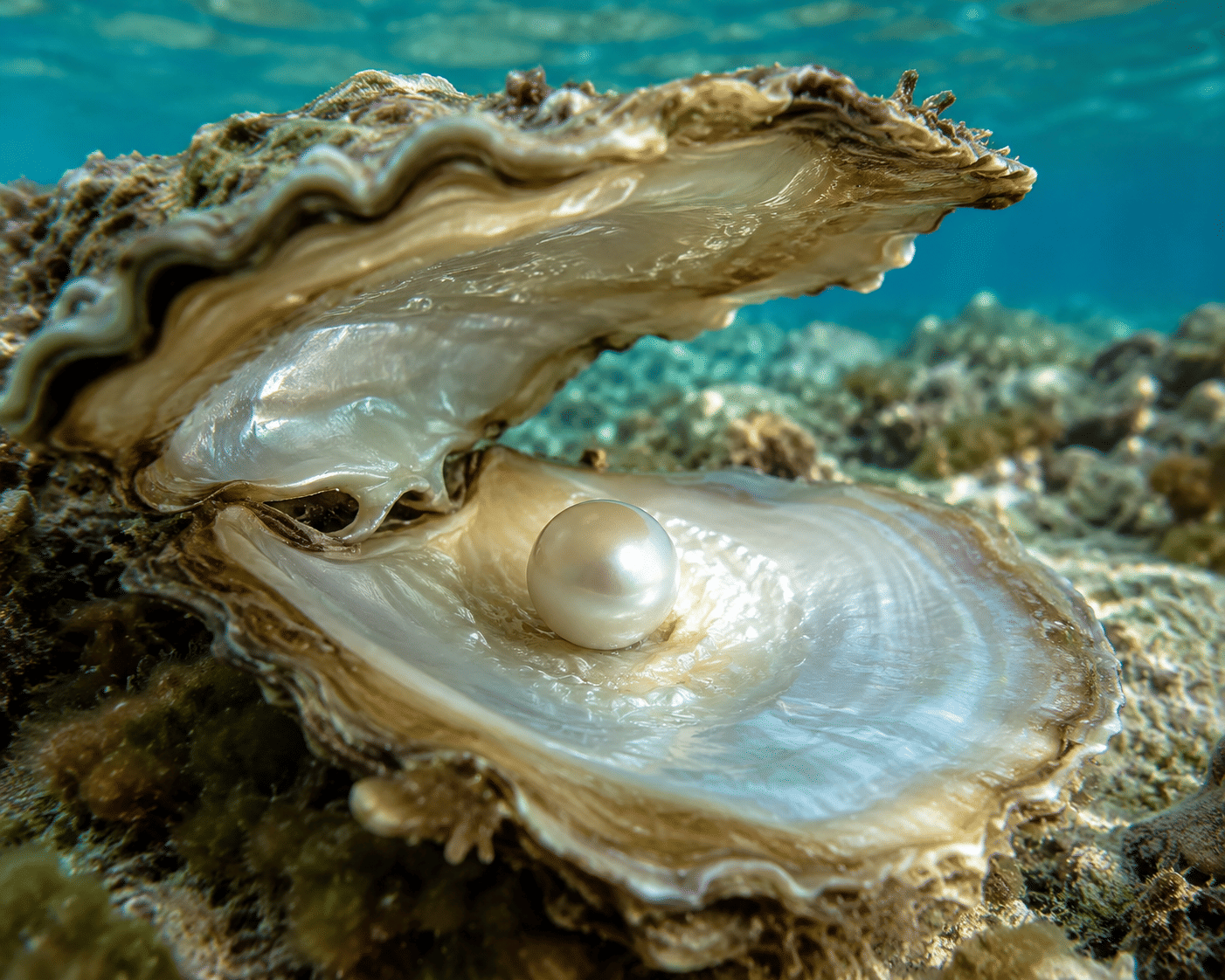
Here's something most people don't know: pearl is the only gemstone that comes from a living creature. Every ruby, sapphire, and diamond forms under geological pressure in the Earth's crust. A pearl begins inside a mollusk, built up layer by layer in a process that has nothing to do with heat or chemistry and everything to do with patience.
When an irritant enters a mollusk's soft tissue, the creature responds by coating it in nacre, a crystalline substance that builds up over months and years. That depth of layering is what creates pearl's most defining quality: a glow that radiates from within, not just off the surface. That's what the luster jewelers call orient, and it's what makes a great pearl look alive.
Types of Pearls
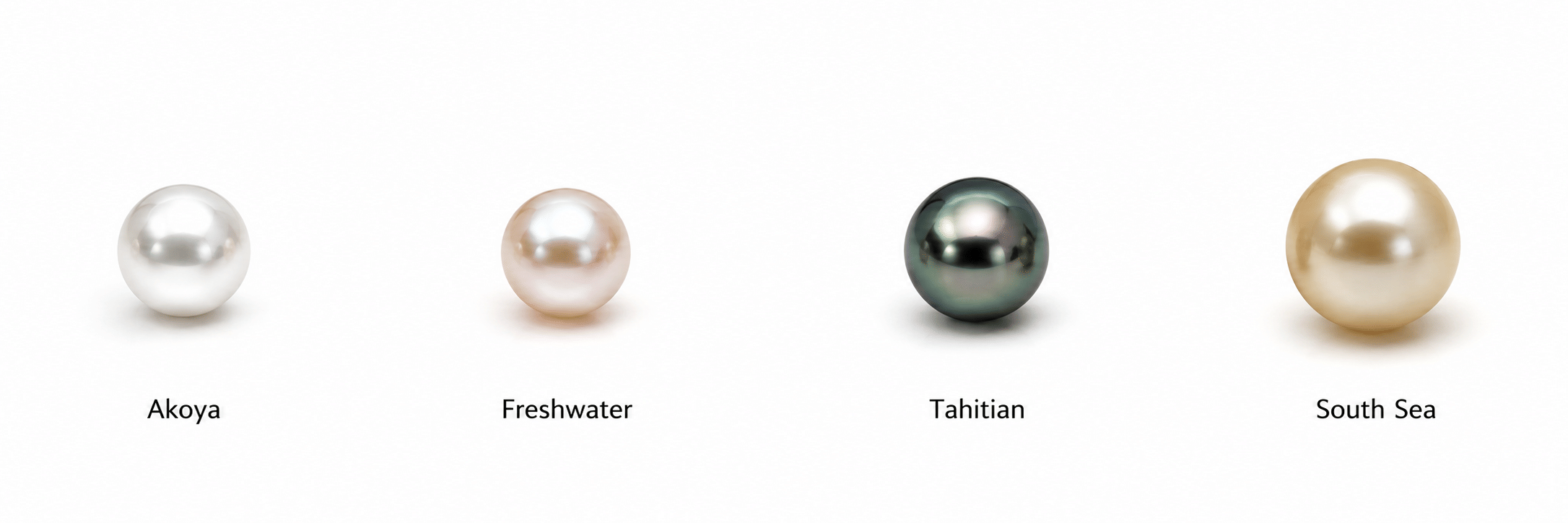
Almost all pearls today are cultured, meaning a technician starts the process before nature takes over. Cultured pearls are real pearls, full stop, not imitations. They come in four main types, each with its own personality, its own price point, its own reason to exist:
- Akoya: The classic white strand pearl. Crisp, mirror-bright luster, the one most people picture
- Freshwater: The widest range of shapes, sizes, and natural colors of any pearl type, and usually the most accessible price point
- Tahitian: Naturally dark, grown in black-lipped oysters in French Polynesia. Colors run from peacock green to deep, inky black
- South Sea: The largest and most luminous of all, grown in white or gold-lipped oysters in Australia and the Philippines
Curious about what goes into a pearl's price tag? Read our guide on "How Much Pearls Are Worth" to understand what separates one pearl from another.
The history of pearls
Pearls have been coveted on every continent for at least five millennia. Roman women wore them layered and sewn into clothing as a public display of status. Julius Caesar reportedly passed a law limiting who was allowed to wear them. Cleopatra, if the story is true, dissolved a pearl in vinegar and drank it to win a bet about who could throw the most extravagant dinner. Queen Elizabeth I draped herself in so many pearls her portraits barely had room for her face.
By the 20th century, the pearl had become synonymous with a certain kind of graceful femininity. Coco Chanel built a visual language around layered pearl ropes. Audrey Hepburn wore a single strand in Breakfast at Tiffany's and made it an icon. Jackie Kennedy's pearls defined the look of an era. These weren't coincidences. Pearl carries something most gemstones don't: the sense that it has already been everywhere worth going.
The meaning of pearls
Across cultures and centuries, pearls have gathered an unusual consistency of meaning: purity, wisdom, calm, loyalty. What's interesting is how well those associations hold up when you know the origin story. A pearl is literally something beautiful that formed slowly, through patience, around something uncomfortable. It's hard not to read something into that.
It's the traditional gift for 30th wedding anniversaries. It's the gemstone most associated with brides across the widest range of cultures. It's also one of the few stones that genuinely suits every age, skin tone, and occasion, which might be the most practical form of symbolism there is.
Pearl is having a moment right now
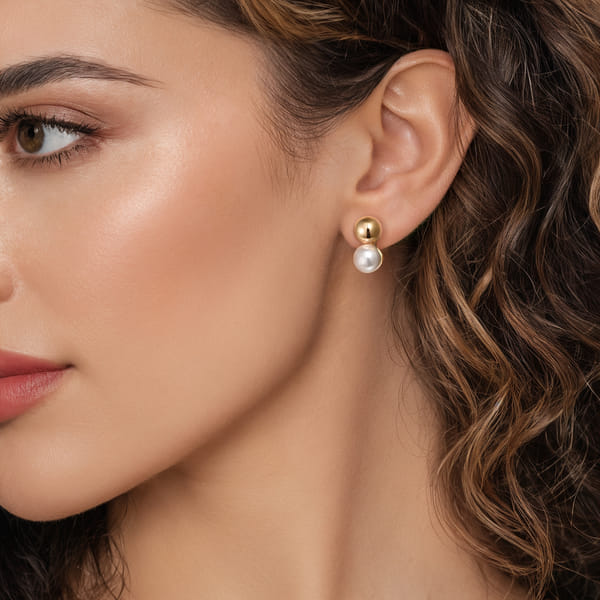
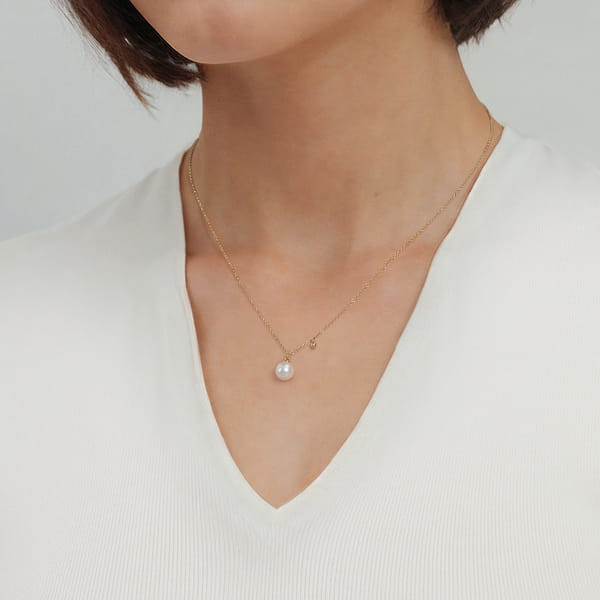
Fine jewelry has been moving away from maximalism for a few years, and the pearl is one of the biggest beneficiaries. Brides especially are reaching for it, pairing pearl drop earrings with clean-lined gowns, layering pearl pendants instead of diamond clusters, stacking pearl rings alongside their engagement rings. It reads modern precisely because it doesn't try to compete with everything else on the table.
If you're dressing for a summer wedding, or shopping for someone who is, pearls work in a way that heavier pieces often don't. It catches light without demanding it. Explore our bridal jewelry collection to see how pearls fit into the full wedding day look.
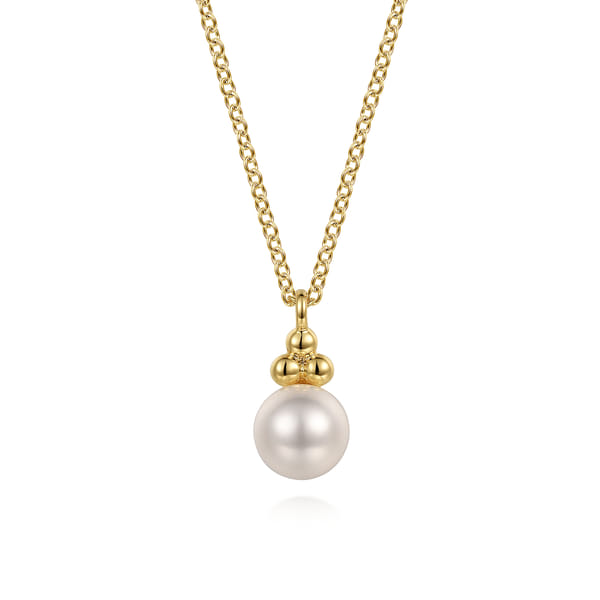
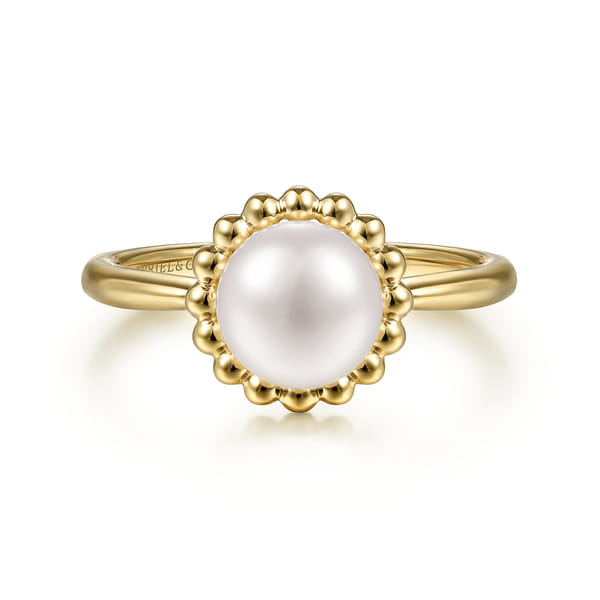
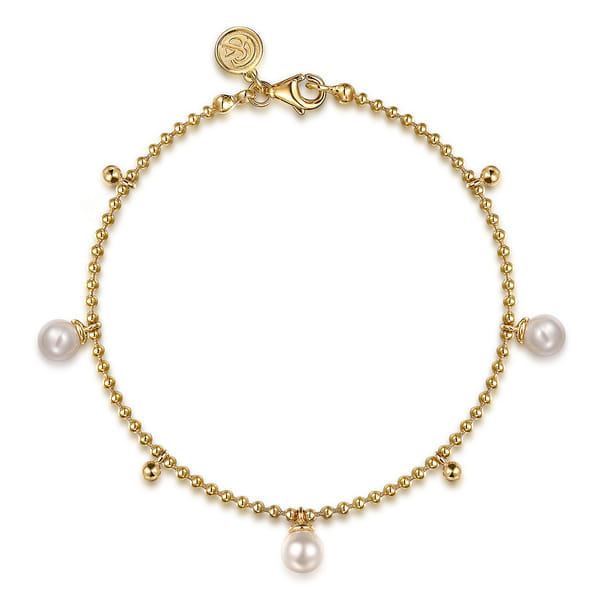
Shop Gabriel & Co. pearl jewelry
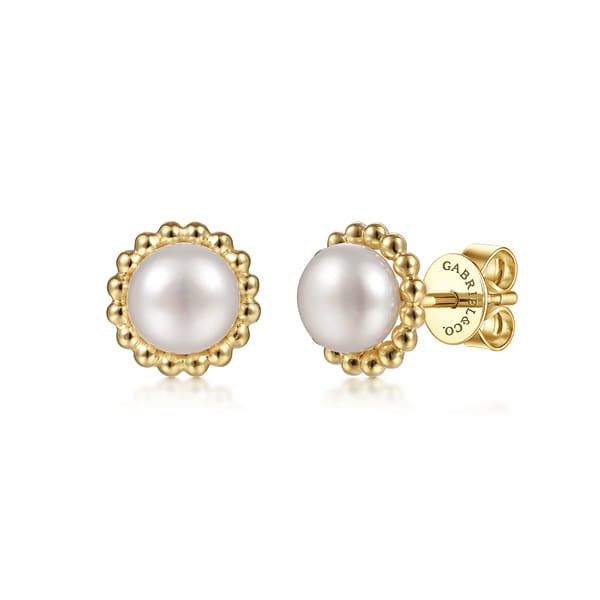
The pearl jewelry collection at Gabriel & Co. pairs cultured pearls with 14k recycled gold settings. The result is pearl that feels current without losing what made it worth wearing for 5,000 years.
Shop by category: pearl earrings | pearl necklaces | pearl rings | pearl bracelets
What is Alexandrite? The birthstone that breaks the rules
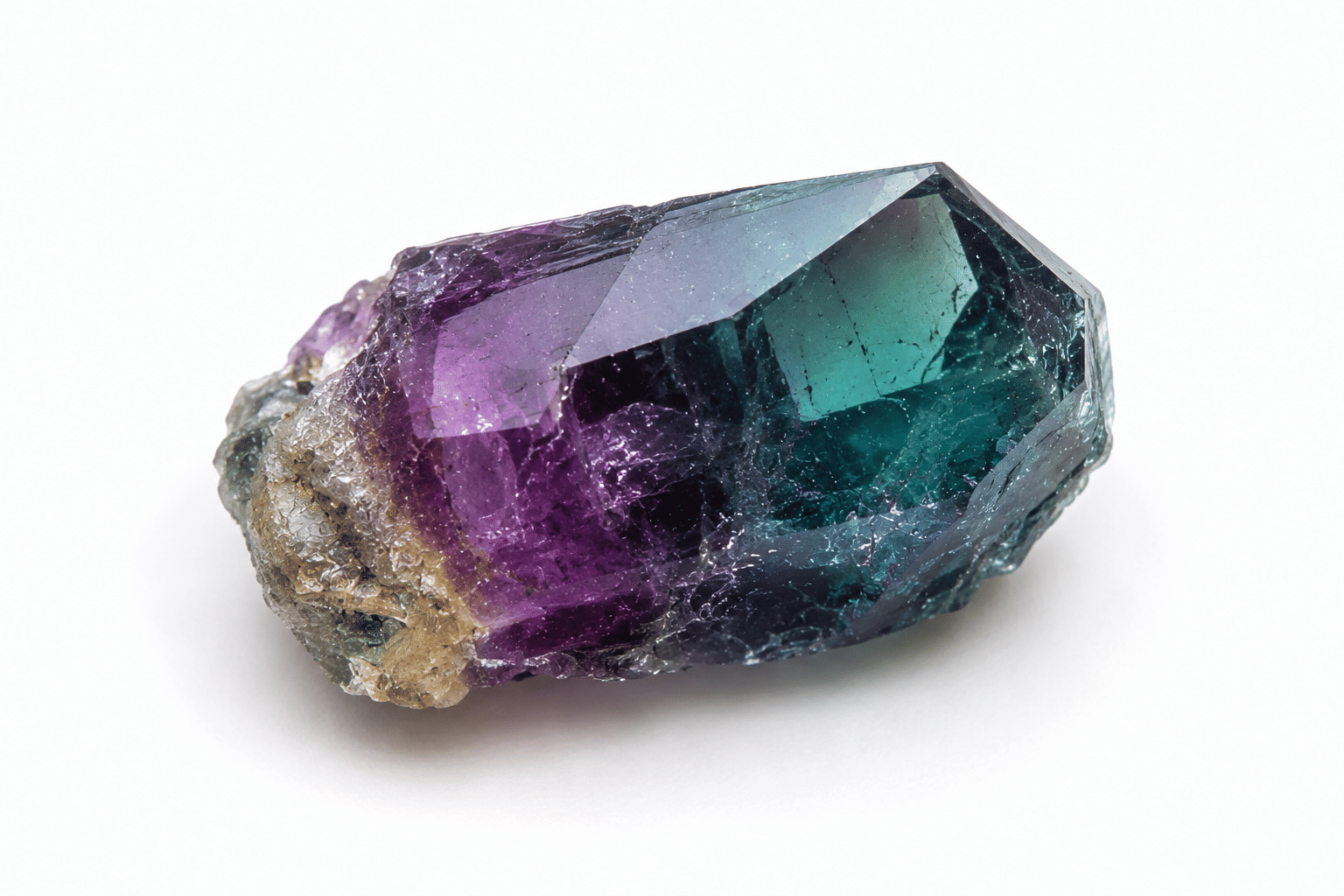
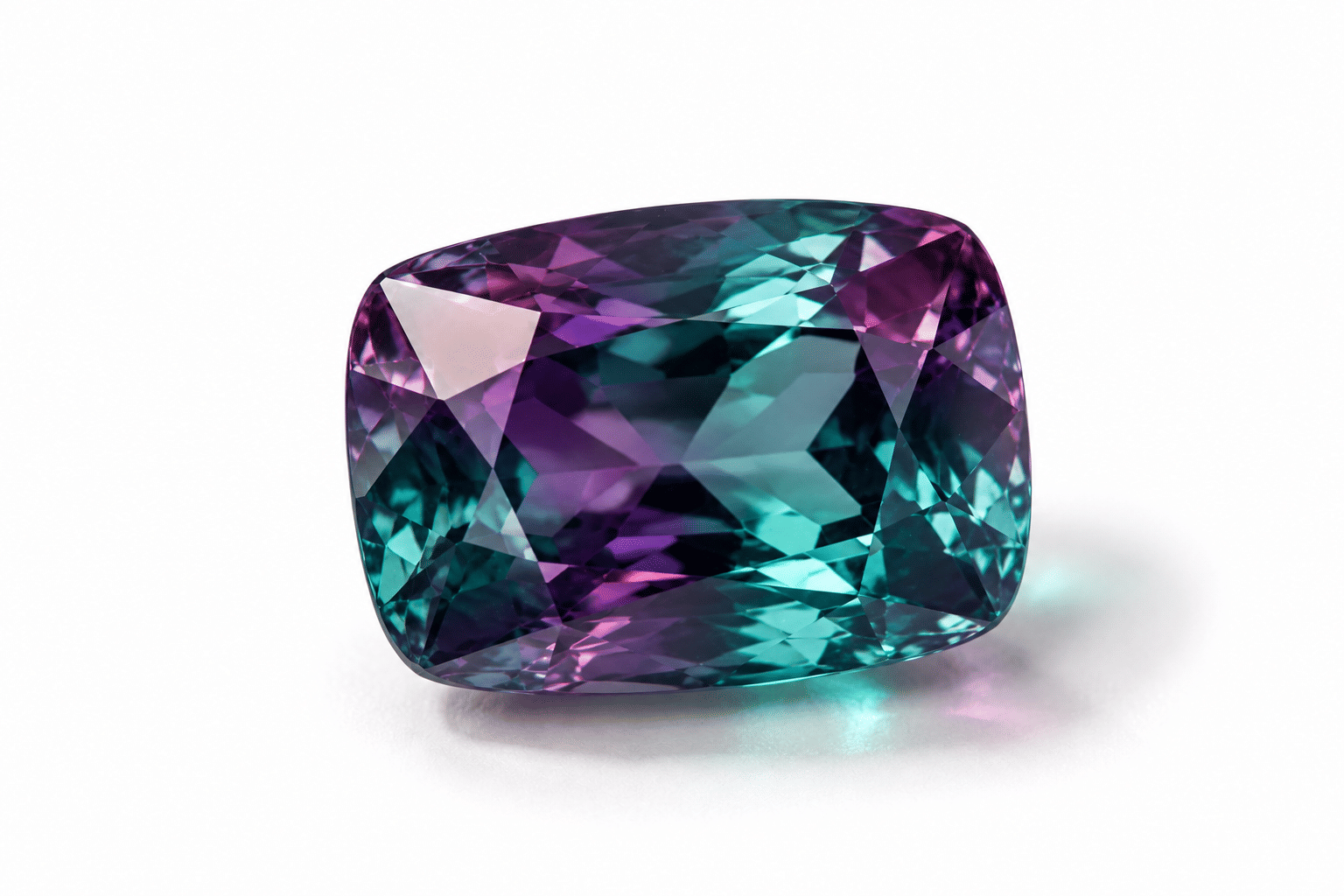
Alexandrite does something no other major gemstone does: it changes color. Not slightly. Not in a way you'd need to look for. Hold it under natural daylight and it's a vivid, saturated green. Bring it indoors under a lamp and it shifts to a deep, warm red. The change is striking enough that jewelers coined a phrase for it: "emerald by day, ruby by night." Two gemstones. One stone.
The science behind it is genuinely unusual. Alexandrite is a variety of chrysoberyl that absorbs light in a way that sits right on the boundary between red and green wavelengths. The human eye essentially has to choose, and it chooses differently depending on the dominant light source. Natural alexandrite is extraordinarily rare, which is why fine specimens command prices that rival top sapphires and rubies.
The Russian origins
The stone was first identified in Russia's Ural Mountains around 1830, reportedly by miners who thought they'd found emeralds. They hadn't. When someone examined the stones by candlelight that evening, the "emeralds" had turned red. The gem was named after the future Czar Alexander II, whose coming-of-age happened to coincide with the discovery. The timing felt significant, and the red-and-green color shift matched Imperial Russia's military colors, so the name stuck.
Russian deposits are now nearly exhausted. Today, alexandrite comes mainly from Brazil, Sri Lanka, and East Africa. Natural stones of any size and quality are rare enough that most alexandrite in the market is lab-grown, which offers the same optical properties at a fraction of the cost.
Alexandrite meaning
Alexandrite is associated with luck, prosperity, and balance. The color-change quality has historically been read as a symbol of duality: the ability to navigate opposing forces without losing yourself. It's the traditional gem for 55th wedding anniversaries, and for June birthdays, it makes an extraordinary gift for someone who appreciates something genuinely rare.
Gabriel & Co. does not currently carry alexandrite jewelry.
What is moonstone? The stone that glows from within
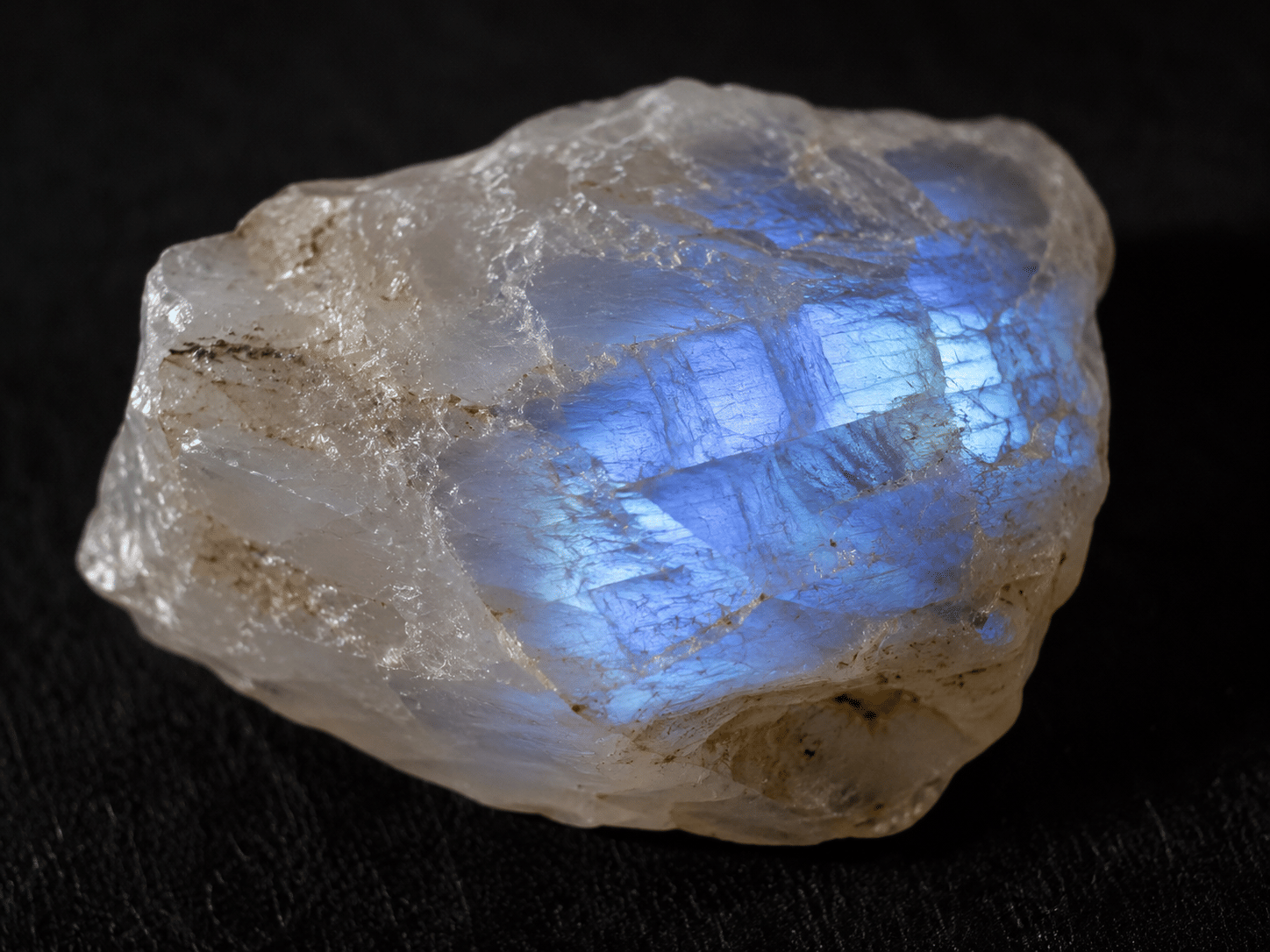
If alexandrite is dramatic, moonstone is dreamlike. It belongs to the feldspar mineral family and has a quality called adularescence: a soft, billowing inner glow that appears to move as the stone shifts in the light. The best moonstones have a colorless body with a vivid blue sheen floating just beneath the surface, like light trapped underwater. It's one of those effects you have to see in person to fully appreciate.
Moonstones also come in peach, gray, and green body colors, each with their own quieter appeal. None of them look like anything else in the jewelry case.
Moonstone history and mythology
Romans believed moonstone was formed from solidified moonlight. Hindu tradition held it sacred: a stone of dreams, intuition, and feminine power. In the Art Nouveau era, designers including Rene Lalique made it central to their aesthetic. It came back in the 1960s and 1970s alongside a broader cultural embrace of the mystical, and it's never really left. The mythology fits because the stone earns it. It genuinely looks like it came from somewhere else.
Moonstone meaning
Moonstone is associated with intuition, new beginnings, and emotional clarity. It's often given at transitions: a move, a graduation, the start of something new. If pearl is the stone of what has been, moonstone is the stone of what's coming.
It rates 6 to 6.5 on the Mohs hardness scale, which means it needs more care than most gemstones. Keep it away from harder stones, clean it gently, and remove it before anything physical. With that kind of attention, it can last for decades.
Gabriel & Co. does not currently carry moonstone jewelry.
Which June birthstone should you choose?
It really comes down to what you want the piece to say. Pearl is the choice if you're drawn to something elegant and deeply personal, a gem with a story that goes back thousands of years and still feels completely current. It works for every occasion, every age, and every style, which is rare for any gemstone. If you're shopping for a bride, a graduate, a milestone birthday, or simply someone who deserves something beautiful, pearl is almost always the right answer.
Alexandrite is for the person who wants something nobody else has. It's a conversation starter, a collector's stone, and one of the few gems that genuinely surprises people who haven't seen it before. If rarity and drama are the brief, this is your stone.
Moonstone is the most personal of the three. It tends to resonate with people who connect with its mythology, its softness, its sense of something otherworldly. It's a wonderful choice for a gift that's meant to feel meaningful rather than impressive.
And if you're a June baby shopping for yourself? There's no rule that says you have to pick just one.
June birthstone FAQ
What is the primary birthstone for June?
Pearl. It's the most traditional june birthstone and the one with the longest recorded history. Alexandrite and moonstone were added as official alternatives later, giving June babies more options depending on taste and budget.
What color is the June birthstone?
Depends which one you mean. Pearl runs from classic white and cream to blush pink, dove gray, gold, and deep black. Alexandrite is vivid green in daylight and red-purple indoors. Moonstone is milky white with a soft blue or rainbow inner glow.
Why does June have three birthstones?
The modern birthstone list was revised in 1952 by the American Gem Trade Association, partly to give buyers a broader range of price points. Pearl and moonstone were the original June stones. Alexandrite was added at that revision, and all three have been official ever since.
Which June birthstone is most valuable?
Fine natural alexandrite is among the most expensive gemstones in the world, often exceeding high-quality sapphire and ruby at comparable sizes. Fine natural pearls are also extremely valuable, though most pearls today are cultured and significantly more accessible. Moonstone is generally the most affordable of the three.
Can I wear more than one June birthstone?
There's no rule against it, and some combinations are genuinely beautiful. Pearl and moonstone together have a soft, luminous quality that works especially well in summer. If you're building a collection over time, having pieces in all three is a lovely way to own the full range of what June holds.
Is pearl jewelry right for everyday wear?
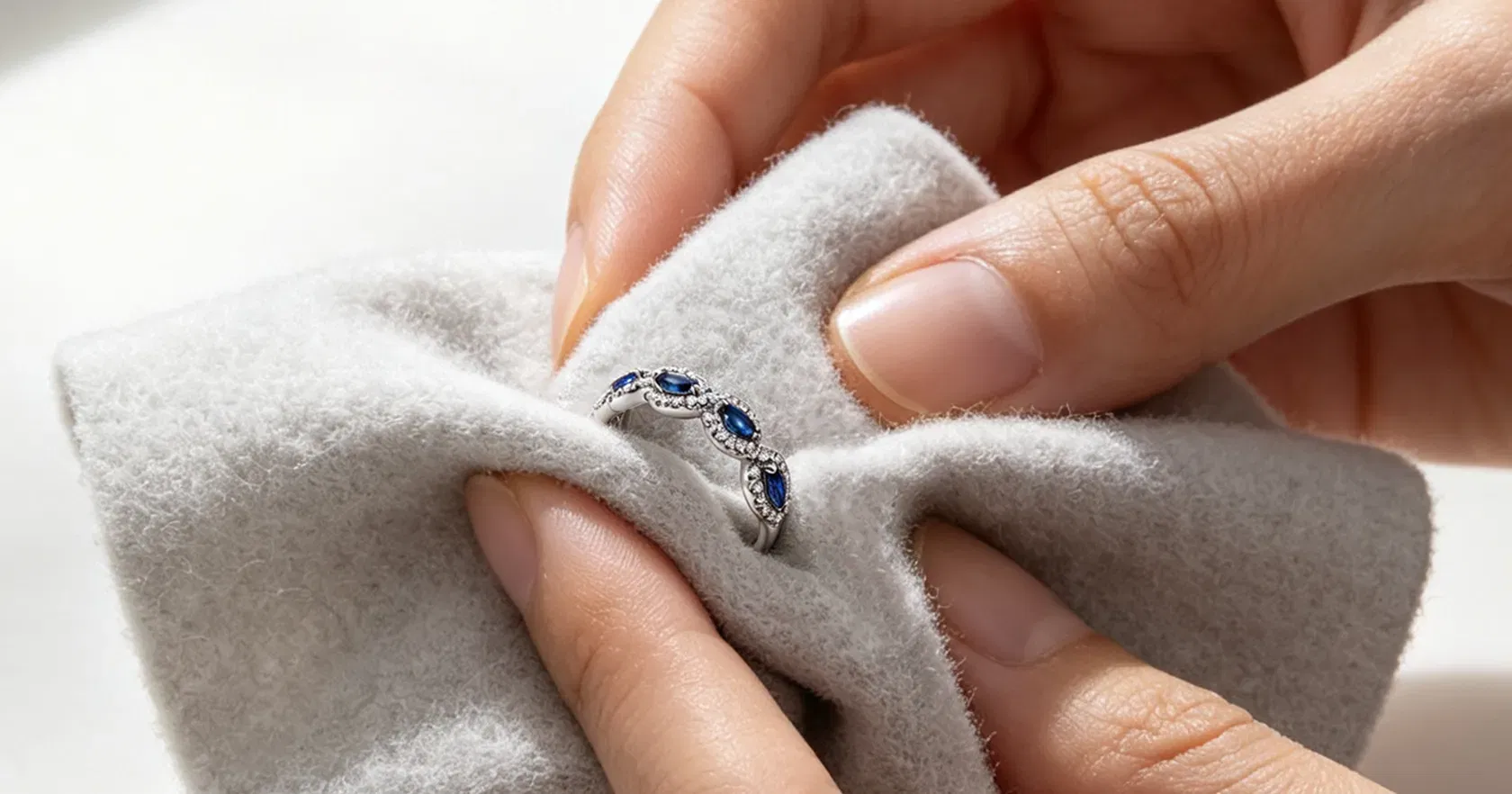
Yes, with a few habits in place. Put the pearl on last (after perfume, lotion, and hairspray), wipe it down gently after wearing, and store it separately from harder stones. Rings get the most wear and benefit from the most care. Done right, daily pearl jewelry can last a lifetime and actually develops a richer luster over the years as it absorbs natural skin oils.