Good to Have You Back

“Gems, in fact, are a species of mineral flowers; they are the blossoms of the dark, hard mine; and what they want in perfume, they make up in durability,” said writer Harriet Beecher Stowe. Indeed, durability is one of the key hallmarks of a good gemstone. They are precious and desirable primarily because they withstand the tests of time and wear and tear. That said, not all gemstones are created equal. Some are softer and more malleable, while others are hard enough to slice through the glass! How, then, does one measure this element of durability? One way to do so is to measure the gemstone’s hardness. The harder it is, the more durable and damage-resistant it is. There is a credible method to assess its hardness attribute, a technique that has been used for over two centuries and honed over time – the Mohs Hardness Scale.
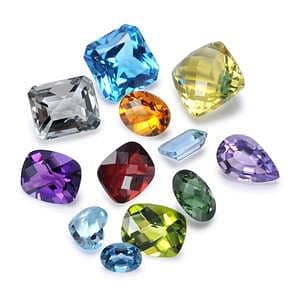
Different Gemstones Used in Jewelry
What is Mohs Scale of Hardness?
Introduced by a German mineralogist, Friedrich Mohs, in 1812, it started off as a way to classify minerals by their physical characteristics. How did he measure strength and hardness? The scale is essentially based on differentiating which gemstone can scratch the other. So, a harder gemstone that scores higher on the Mohs scale can scratch a softer gemstone that scores lower. The Mohs scale was initially meant to take into account all minerals. However, over time jewelers realized that it is better applied specifically to gemstones to study their properties and use the information in making and maintaining jewelry. For this, it is first important to understand the Mohs hardness scale.
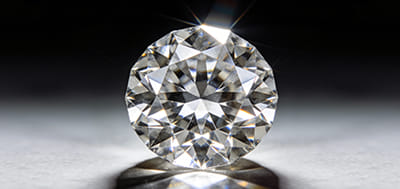
The hardest mineral on the scale is the diamond, scoring 10. Any other mineral on the Mohs hardness scale cannot easily scratch a diamond. On the other hand, Corundum, which is the umbrella mineral for both sapphires and rubies, scores a 9 on the Mohs scale. Both sapphires and rubies, and any other gemstone scoring a 9 on the scale, can only be scratched by a diamond, and by no other mineral on the scale, and definitely not by each other, as well — a good reason for you to buy more of your favorite sapphire and ruby jewelry designs.
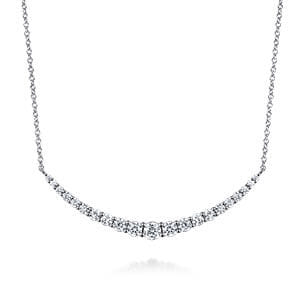
This white gold necklace features a stunning array of diamonds, which are all graded as 10 on the Mohs hardness scale, making it one of the most luxurious and durable buys that you could indulge in.
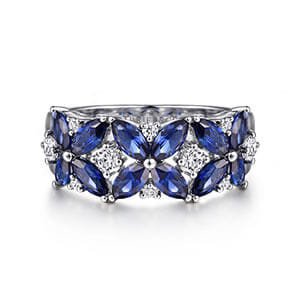
If you prefer functional and durable yet colorful jewelry, consider this bewitching floral ring. Crafted in white gold, the design features diamonds and sapphires, both scoring grades 10 and 9 on the Mohs scale, respectively. Boasting such hard gemstones, you can adorn this glittering ring on special occasions and daily.
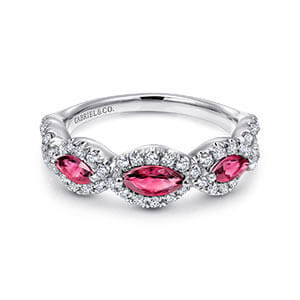
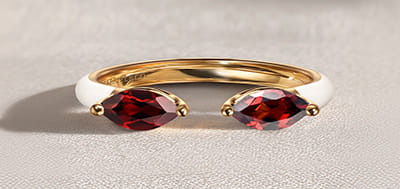
Another beautiful option that adds a vibrant hue is this white gold ring with twisted diamond rows and ruby marquise stones, graded at 9 on the Mohs scale. If you prefer warm tones over cooler gemstones, this is a great idea.
What Score on the Mohs Scale Signifies a Durable Gemstone?
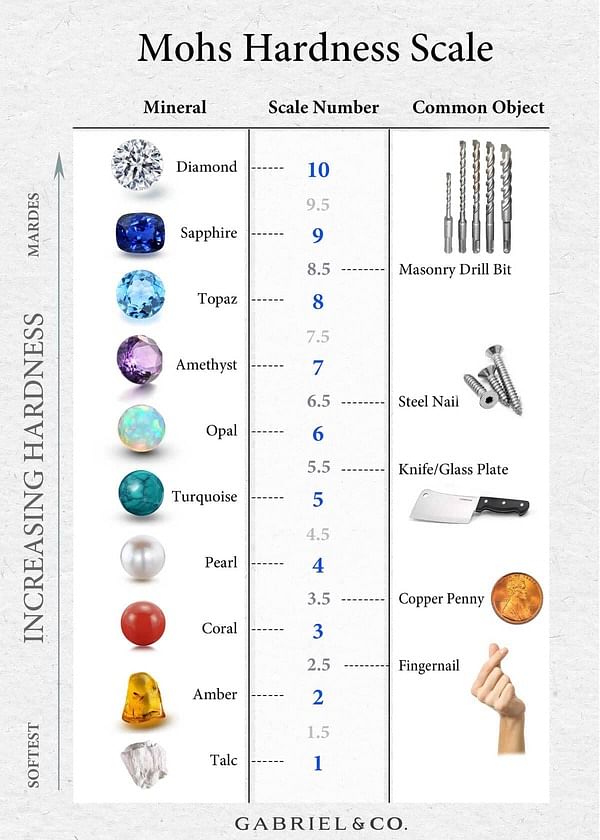
Generally speaking, any gemstone or mineral that measures 7 or higher on the scale is considered hard and resilient enough for use in jewelry. Even gold, in its purest form of 24k gold, is only around 2.9 at best on the Mohs scale. This innate softness is predominantly the reason why gold needs to be alloyed to enhance its strength and durability. For every 14 parts of gold, when 10 parts of another metal are added, it is referred to as 14k gold jewelry. Besides rubies and sapphires, only a few other gemstones are graded high for hardness on the Mohs scale. Beryl is one such constituent mineral of emeralds and aquamarine that scores 7.5 – 8 on the Mohs scale. Topaz is another gemstone that scores 8 on the Mohs scale. Anything below 7, which is quartz-grade, is considered soft, as it cannot scratch glass easily. While the Mohs scale is largely considered near-accurate, one should treat the numbers more like ranks rather than a scale where the gap between each progressive number is equal.
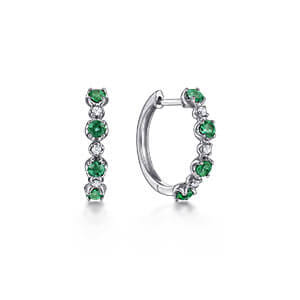
Belonging to the beryl family, emeralds measure anywhere between 7.5 – 8 on the Mohs scale. These stunning green earrings are further long-lasting since they happen to be set in 14k white gold.
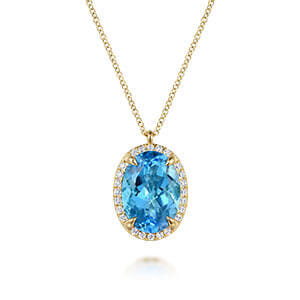
This gorgeous pendant is an interesting addition to your jewelry box. It is the bright blue shade of topaz, which measures 8 on the Mohs scale and is encircled by tiny diamonds. The whole effect on a warm 14k yellow gold chain is dazzling.
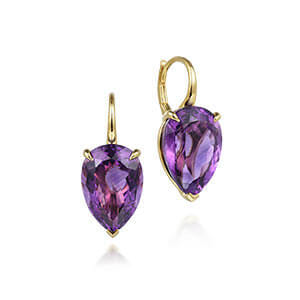
Quartz gemstones measure 7 on the Mohs scale, which falls within the purview of acceptable hardness and durability. Amethysts are the stunning violet-purple variety of quartz, the color of royalty – and this pair of teardrop earrings is affordable, strong, and beautiful, a win-win on all counts.